§8 Verbs
Pine's verbal morphology can be intimidating and rightly so – Pine is a very verb heavy language, meaning much information is encoded in the verb through various means. Most notably, Pine verbs can be polypersonal – information about all participants of the verb is found inside the verb itself. Perhaps the most unusual feature of the polypersonal Pine verb is that object and subject markers are not fixed – the ending -i in the indicative present may refer to a third-person animate, a fourth person, a third-person inanimate or an third-person obviate, depending on what the other argument of the verb is. For example, neg- ‘see’ can be combined with various pronominal prefixes and -i to yield different subject-object alignments:
| ga-neg-i | ‘I see her/him’ | (ga- ‘I’) |
| t-ṇeg-i | ‘s/he sees someone/something) | (t- ‘s/he’) |
| mi-neg-i | ‘someone sees it’ | (mi- ‘someone’) |
| neg-i | ‘it sees it’ | (Ø- ‘it’) |
The suffix -i thus does not mark an object directly but rather tells us about the relationship between the pronominal prefix and the object. If it is instead following by -em-, then it tells us about the relationship between the object pronominal prefix and the subject:
| ga-neg-em-i | ‘s/he sees me’ |
| t-ṇeg-em-i | ‘someone sees her/him’ |
| mi-neg-em-i | ‘it sees someone’ |
This is a fundamental mechanism in polypersonal verbs – one participant is overtly marked and its relationship to the other participant is expressed through endings.
Verbs are by far the most morphologically complex and rich category of the language, boasting a large array of prefixes, suffixes, modifiers, root elements, extensive derivational morphology and a complex pronoun system. Pine verbs have a fusional morphology, meaning each affix can carry a range of morphemes. In addition, many ideas commonly expressed with nouns, adverbs and adjectives in English instead appear as verbs in Pine, most notably predicative adjectives – while the adjective tammet ‘big’ can stand before a noun as an attributive adjective like in English, as in tammet vukvi ‘a big bird’, it appears as a verb when it is the argument of the verb ‘to be’ in English, as in tammegan vukvi ‘a/the bird is big’, literally ‘a/the bird bigs’. Verbs are an open and very productive class that can accommodate new roots easily. The various elements of Pine verbs are organised around the root into slots, which can or must be filled with various components which give information beyond that found in the basic meaning of the root.
Valency greatly affects the morphology of verbs. Monovalent verbs, those which only have one participant (whether singular or plural) differ markedly from polyvalent verbs, which have more than one participant (transitive and ditransitive verbs). This is because participants are directly and indirectly marked on the verb. The alignment system of polyvalent verbs in Pine is remarkably different from that found in most European languages. Pine indicates polyvalency by means of a system of alignment called coordinate positional alignment. Participants are ordered hierarchically, and only the hierarchically higher participant, called the suprapositional pronoun, is overtly marked. Moreover, the first and second person are grouped together as ‘local’ pronouns while other pronouns, namely the third-person animate (3a), the fourth person (4), the third-person inanimate (3i) and the third-person obviate (3o) are called non-local pronouns.
pine pronominal hierarchy
[2 ⟫ 1] [3a ⟫ 4 ⟫ 3i ⟫ 3o]
All non-suprapositional participants are encoded into the verb as a function of their distance and direction from the suprapositional pronoun. For example, the marker -i indicates one degree of distance from the suprapositional pronoun. Therefore, ga-Ø-i indicates 1⟫3a (I verb her/him), while t-Ø-i indicates 3a⟫4 (s/he verbs someone/something). The distance is measured in degrees of separation from the suprapositional pronoun based on its relative hierarchical position to the suprapositional pronoun. For example, the marker -i is said to be of the 1˚ (first degree). The direction of this distance is measured as preceding from the top of the hierarchy to the bottom. Moving in the opposite direction to the hierarchy (from lower to higher) is the retrograde alignment (which in the examples above is encoded by the marker -em-), while moving with the hierarchy (from higher to lower) is called the prograde alignment. The form ga-Ø-em-i is therefore in the 1˚ retrograde and indicates 3a⟫1 (s/he verbs me).
Thus, information about participants in a verb is given as a sort of grammatical coordinates. As such, polyvalent verbs may have a prograde (from higher to lower hierarchical position) or retrograde alignment (from lower to higher hierarchical position) of anywhere between the zeroeth degree to the fourth degree (0˚, 1˚, 2˚, 3˚ or 4˚). This is true of both participants in transitive verbs, and the position of the direct object in ditransitive verb, which is anti-ergative (meaning the indirect object of a ditransitive verb is treated as the direct object of a transitive verb, which in Pine grammar has been called the antergate, a syntactic indirect object but morphologically a direct object), is relative to the suprapositional pronoun as well. In other words, instead of thinking about who the various participants of a verb are, a Pine speaker thinks of their distance and direction in relation to which ever participant is hierarchically highest. Rather than stating directly who is the subject and who is the object, polyvalent Pine verbs tell us about one participant and how to get from there to the other participants, while also telling us whether the reference point is the subject or the object. This is a very different way of thinking about participants than what most are used to, and requires a good level of familiarity with verbal morphology. As such, polyvalent verbs can represent the biggest hurdle to students of Pine.
Beyond the complex polypersonal nature of verbs, Pine also overtly differentiates agentivity – whether an actor is in control, acts willingly or consciously, or whether the action is experienced by the actor rather than controlled, occurring without their willing or conscious intent. Aspect and translativity are also prominent features of Pine verbal morphology, with stative and translative verbs differing markedly from active verbs in various ways, as will be described in this section.
§8.1 Overview of Verbal Morphology
It is important to separate Pine verbal morphology into two distinct categories. Monovalent verbs behave very differently from polyvalent verbs (transitive verbs with two participants and ditransitive verbs with three participants), and they must be considered separately. However, many elements are common to both. This section aims to detail those elements which form the common core of all verbs in Pine.
The core of the Pine verb is a root, which carries the fundamental meaning of the verb and cannot be analyzed further. The root is what is left when all affixes have been removed, for example migv- ‘eat’. The verbal root can change depending on tense. The past tenses (past and pluperfect) of the realis moods causes the nucleus of the root to change through a type of ablaut called rhizal apophony, either called fronting or backing apophony, for example migv- ‘eat’ ⟫ mỉgv- ‘ate’. A verbal root cannot stand alone, which is why it is written with a hyphen. Affixes added onto the verbal root are either called prorrhizal (coming before the root), such as ga- ‘I, me’ or metarrhizal (coming after the root), for example -va, which indicates a local subject of an intransitive verb in the autonomous indicative present. Combining pro- and metarrhizal affixes yields grammatical, conjugated forms of verbs, for example ga-migv-a ‘I eat’. The most important affix of verbal morphology is called the theme, which is metarrhizal. The theme houses the majority of the information contained in a conjugated form of a verb. Verbs rely heavily on changes to the theme to convey information beyond the bare meaning of the root.
Pine verbs convey a great deal of information through inflection, a combination of various morphemes. Inflections give information about voice (whether the participant acts, acts upon itself, changes state or is the recipient of an action), order (main or subordinate clause), mood set (whether the statement is real or unreal), evidentiality (whether the information is reliable and actual or whether there is a measure of doubt about it), tense (the time at which the action takes place) and participants. The aforementioned categories are obligate, meaning a verb form cannot be grammatical without specifying this information. Other parts of the verb may appear or be left out without causing the verb to be agrammatical. These morphemes are called facultative, and they include aspectual markers. Order, mood sets, evidentiality, moods and tenses combine to give 30 possible combinations. The result of each combination, for example the autonomous realis assertive indicative present, is called an inflection.
Obligate inflectional categories are given below with a description of their function and meaning:
voice - information about the relationship between the action and its participants
active - the participant performs or experiences the action
middle - the subject and the object are one and the same
translative - the participant experiences a change of state
passive - the patient of a transitive verb is promoted to the subject of an intransitive passive verb
order - information about the type of clause
autonomous - main clause
hyponomous - subordinate clause
mood set - information about whether the statement is real or not
realis - the event or statement is factual, real
irrealis - non-factual events, either conditions or potential events
mood - further information about the relationship of the verb to mood set and evidentiality
irrealis moods - the statement is not factual, true
conditional - the statement would be factual (if…)
potential - the statement could be factual (if…)
realis moods - the statement is either inferential or assertive
assertive - the statement is reliable, first-hand information, factual
indicative - the statement is true/declarative
imperative - the statement is a declarative command
inferential - the statement is either dubitative or optative
dubitative - the statement is may or may not be factual
optative - the statement represents a wish, command, hope, desire
tense - information about time
present - the event is concurrent to the frame of reference
past - the event precedes the frame of reference
perfect - the event occurs and ends before the frame of reference
pluperfect - the event had occurred before a past reference point
future - the event will occur at some time beyond the current reference point
| dependent forms - forms required to form connegatives, relatives and connegative relatives | connegative - dependent form of a negative verb |
dependent - basic dependent form of a non-negative verb
§8.1.1 Voice
Voice gives information about the relationship between the action and its participants. The active voice shows that the subject peforms or experiences an action, which is the default voice of verbs. The middle voice, whose formant is -VttV(g)- is found in verbs whose subject and object and one and the same, meaning the subject acts upon itself, and as such correponds to reflective verbs, for example gaddet ‘I control it’s but gadduttuva ‘I control myself, I have discipline’. The translative voice indicates that the subject undergoes a change of state, and as such all translative verbs are obligate unagentive. Lastly, the passive voice tranforms the recipient or object of a transitive verb into the experiencer of an intransitive verb, and corresponds roughly to the passive of English.
§8.1.2 Order
Pine verbs can appear in one of two orders called the autonomous and hyponomous order. The autonomous order is found in main clauses, while the hyponomous order is found in subclauses, relative clauses and in certain specific constructions. Hyponomous can thus best be described as a conjugation pattern that is not found in main clauses. For example, gamikva ‘I go’ is in the autonomous order (ga-Ø-v-a) but įu gamigga ‘when I go’ is in the hyponomous order (ga-Ø-a), where the pronoun ga- ‘I’ is unchanged but the ending -v-a becomes -a. This ending contains multiple layers of information, such as locality, order, mood, tense and assertivity.
§8.1.3 Mood Sets
All verbs also have two main sets of moods called the realis and the irrealis. Mood sets are a higher order classification than moods, and therefore all moods are part of either the realis or irrealis mood set. Furthermore, the realis mood set distinguishes three moods which are either assertive (the indicative mood) or inferential (the dubitative and optative moods). Thus, each mood is classified according to its evidentiality and mood set.
The irrealis set contains conjugation paradigms that confer to the verb a sense that the information is not realised, not true. For example, gilkka simply means ‘I go’ and is in the realis (more specifically in the indicative mood) because the information is understood to be real or accurate. There are three realis moods: the indicative (gilkka ‘I go’), the dubitative (gilkku ‘I may go, I apparently go’) and the optative (gilgusut ‘I want to go, may I go’). The form gilkkatṡat ‘I would go’ on the other hand is in the irrealis (more specifically the conditional) because the action of going has in fact not occurred and is conditional or imagined. There are two irrealis moods called the conditional (gilkkatṡat ‘I would go’) and the potential (gilkkulut ‘I could go’). The root of a verb in the irrealis mood set is not affected by tense, which sets the irrealis mood set appart from the realis mood set, where past tenses are affected by a change in the nucleus of the root through a process called rhizal apophony. Rhizal apophony is also dependent on order. The realis mood set in the autonomous undergoes fronting, and backing in the hyponomous, while the opposite is true of the irrealis mood, which has backing when autonomous and fronting when hyponomous.
§8.1.4 Evidentiality
The realis mood set further distinguishes evidentiality. All realis verb forms can either be assertive, meaning the utterance is seen as factual, true or that the information comes from first-hand knowledge, or they can be inferential, which indicates some level of doubt, that the information is not confirmed, that the information is perceptual or sensory or that it is second-hand information or reported. As such, the realis mood combines with the assertive to form the indicative mood, and with the inferential to form the dubitative and optative mood. For example, gamidda įa ỏhakittṡu tsesiḷḷuttun ‘I know that you did something’, where tsesiḷḷuttun ‘you did (something)’ has assertive evidentiality (in the indicative mood) contrasts with mittyt nukka, ỏhakittṡu e tsesiḷḷuttun ḷu ‘I don’t know whether you did something’, where tsesiḷḷuttun has inferential evidentiality (in the dubitative mood), because it is a statement of doubt. The dubitative and optative moods have a pluperfect form found only in the hyponomous order, and the dubitative also has a future tense in both orders. The only distinction between gilkka ‘I go’ and gilkku is that the first statement ‘I go’ is seen as factual or gnomic, while the second statement ‘I may/apparently go’ tells us that the information conveyed is not entirely factual, is not first hand information, unconfirmed, speculative or otherwise not guaranteed. Because of their intrinsic unagentive nature, translative verbs lack an optative and instead, the same endings in the translative instead have an inchoative meaning, indicating that the change of state is beginning, for example ḥilgumi ‘it apparently goes’ (unagentive) gains an inchoative meaning with the addition of the translative marker -uƛ-: ḥilguƛumi ‘it starts to go, it gets going’.
§8.1.5 Mood
Pine has five moods: the indicative, the dubitative, the optative, the conditional and the potential. Moods are classified by evidentiality (assertive, inferential) and mood set (realis, irrealis). Irrealis moods do not distinguish evidentiality as evidentiality is a feature of realis moods.
| mood set | realis | irrealis | |||
| evidentiality | assertive | inferential | |||
| mood | indicative | dubitative | optative | conditional | potential |
Each mood has its own set of tenses. For example, the dubitative and optative have a pluperfect not found in the indicative (an obligate hyponomous tense), while the dubitative contains the future tense, and irrealis moods only have a present and past, while all realis moods have a perfect tense.
§8.1.6 Tense
Pine distinguishes six tenses. Verbs can be found in the present to indicate that an action is happening now or happens in general, in the past to show that the action occurred before the present, the perfect to indicate that an action occurred and ended before the present, the pluperfect to show that an action occurred and ended before a set reference point in the past (which must appear in the autonomous order, while the pluperfect action must always occur in the hyponomous order), the future to show that an action will or is likely to occur in the future (and is part of the inferential, which confers a certain sense of uncertainty), and finally the imperative to indicate that the action is a command.
§8.1.7 Participants
Participants are the people or things that are involved in the action described by the verb. Intransitive verbs have one participant, transitive verbs have two and ditransitive have three. Participants in intransitive verbs always appear as prorrhizal pronominal affixes, such as ga- ‘I’ or mi- ‘some(one/thing)’. Polyvalent verbs are also found with only one pronominal affix, and the other participant is indicated through metarrhizal elements found mostly in the theme. Pine distinguishes two types of participants based on their agentivity. Agentivity refers to the level of control the subject of a verb has. A subject which is seen to be aware, in control or willing will be found in the agentive, while a subject which is seen to be unaware, not in control, acting by accident, unwillingly or seen as more of an experiencer will be in the unagentive. Pronominal affixes convey this information, meaning there is one set of pronouns called the agentive pronominal set and a second set called the unagentive pronominal set. For example, ga- ‘I’ is agentive, while ṇe- ‘I’ is unagentive. This means that the verb form g-ilg-va ‘I move’ indicates that the first person is acting of its own volition, while its unagentive counterpart ṇ-ilg-va ‘I move’ indicates that the moving is involontary. Agentivity can be obligate (meaning a verb is only considered grammatical if the pronominal set is either agentive or unagentive) or facultative (meaning both agentive and unagentive pronominal sets are grammatical) as in the example of ilg- ‘move’.
The participants in Pine are given here in their hierarchical order:
| participant | abbreviation | translation |
| second person | 2 | ‘you’ |
| first person | 1 | ‘I’ |
| third-person animate | 3a | ‘s/he’, occasionally ‘it’ |
| fourth person | 4 | ‘someone, something’ or indefinite pronouns |
| third-person inanimate | 3i | ‘it’ |
| third-person obviate | 3o | ‘s/he2’ |
§8.1.8 Overview of Inflections
The combination of order, mood set, evidentiality, mood and tense combines to give the main inflectional forms of verbs. The table below summarises these combinations. When talking about an inflected verb, it is enough to specify its order, mood and tense, as mood sets and evidentiality combine to form moods.
| order | autonomous | ||||
| mood set | realis | irrealis | |||
| evidentiality | assertive | inferential | |||
| mood | indicative | dubitative | optative | conditional | potential |
| tense | present | present | present | present | present |
| past | past | past | past | past | |
| perfect | perfect | perfect | |||
| future | |||||
| order | hyponomous | ||||
| mood set | realis | irrealis | |||
| evidentiality | assertive | inferential | |||
| mood | indicative | dubitative | optative | conditional | potential |
| tense | present | present | present | present | present |
| past | past | past | past | past | |
| perfect | perfect | perfect | |||
| future | |||||
| pluperfect | pluperfect | ||||
Pine verbal morphology is complex and rich and goes far beyond these fundamental elements. In order to properly describe how verbs work, intransitive and transitive verbs will be described separately in much greater detail below. First however, components common to both transitive and intransitive verbs will be described here.
§8.2 Structure & Components of Verbs
The Pine verb is structured around its root. Elements assemble around the root in a fixed and predictable way. The various elements of the inflected verb have a fairly rigid internal order. The internal structure of the verb can be described as being composed of slots. A slot is a fixed position relative to the root and other positions, which can be filled or left empty by verbal elements. Elements may appear in a certain slot in one case, but in a different slot if other elements force it to move to that slot. For example, the first-person pronoun ga- always appears in the same slot, but it can be preceded and followed by other elements. Elements that form the core of the inflected verb are called nucleic elements. Other elements are termed non-nucleic elements, and can be conditionally obligate, meaning they must appear in combination with other elements, or they can be facultative, meaning their presence or absence does not determine the grammaticality of an inflected verb. Non-nucleic elements are categorised by their position relative to the root – initials appear first, medials appear after the root, and finals are found as the last elements of a verb.
At the most abstract, elements are classified by their position in relation to the root – prorrhizal elements come before the root while metarrhizal elements follow it. There are three prorrhizzal slots and three metarrhizal slots. Slots may also contain subslots, which also show a rigid internal order. Slots are numbered starting from the root. The furthest slot before the root is numbered -3, the next -2, and the slot immediately preceding the root is numbered -1. Similarly, metarrhizal elements may appear directly after the root (1) or in either of the following slots (2, 3 or 4). Thus, one can say that there are three prorrhizal slots and three metarrhizal slots, for a total of six main slots. Additionally, verbs can be found with clitics, which are not technically part of the verb (although it could be argued that they in fact are), which are hyphenated to the verb.
The general internal structure of the verb can be abstracted in the following way, with nucleic elements in bold:
| prorrhizal elements | metarrhizal elements | |||||
| initials | pronouns | preverbs | root | medials | theme | finals |
| -3 | -2 | -1 | 1 | 2 | 3 | |
| motion location manner | agentive unagentive | direction ditransitivity | -Ø- | category type manner aspect | thematic/athetic elements | telethetic elements plural locality |
§8.2.1 The Root
The root is the most fundamental part of the verb – the part which cannot be further analyzed. Only one verb in Pine has no clear root, the copula. Although it has a dependent form in naġan and a connegative form in uġun, it may not be useful to think of the inflected copula as consisting of a root. Some have analyzed it to have a present root in -a- and a past root in -i-, but even that may not be completely accurate in all cases. Unfortunately for students of Pine, the copula is irregular in nearly all aspects and differs enormously from regular verbs.
Regular verbs however always consist of a root with elements arranged around it. The root can never stand alone, but the dictionary included in this book lists verbs as their bare roots. For example, ḷủl- ‘talk, speak’ is the root given in the dictionary. By combining the root with ga-Ø-va to form the first person singular, present indicative form of the autonomous order, one can generate the conjugated form gaḷủlla ‘I speak’.
The vast majority of verb roots in Pine are mono- or bisyllabic, and all end in a consonant.
The root -ṡkv- ‘come/be/proceed in a certain order’ is unique in that it contains no nucleus, and must appear with a kinetic initial, such as s-ava-ṡkv- ‘come first, be first, happen first’ and g-ava-ṡkv- ‘come second, be second, follow, be subsequent’.
§8.2.1.1 Prosthophonic Roots
Most verbal affixes, excluding medials, are weakly prosthothesising, meaning they have no specific front-rounded versions. For example, the intransitive dubitative ending -u in siġġu 'it apparently rains' has no specific front-rounded form, and therefore prosthothesises to -ů, for example in můertṇimů 'it apparently drizzles'. Prosthothesis is therefore only triggered by the presence of prosthophonic vowels in the word, except in a small number of verbs where no prosthophonic vowels exists but which still trigger prosthothesis. These roots are called prosthophonic roots, and all are otherwise amphiphonic. Prosthophonic roots are:
| illį- | 'live' | (eastern dialects only) |
| king- | 'catch' | |
| teḷḷ- | 'coat, cover' | |
| tser- | 'have fever' | |
| ṛiḍ- | 'weave' |
In these verbs for example, the dubitative uses prosthophonic endings: pitserrů 'you apparently have fever' rather than the expected *pitserru.
§8.2.2 Verbal Slots
Verbal slots represent the internal position of inflectional verbal elements in relation to others. Slots can be composed of subslots when there is internal order within a slot. Pine verbs have 8 slots, but only two must always be filled, the pronominal and thematic slot, with the exception of impersonal verbs which have an empty pronominal slot and can appear with only the thematic slot (although many speakers include a final). The pronominal slot may have a zero surface form, which means that the surface form of a verb may only have one slot occupied.
For example, the impersonal verb siġġ- ‘rain’ can have the present form siġġa ‘it rains’ (alongside siġġan or siġġami, all acceptable). The form hiḍḍan ‘s/he dives’ is an example of a minimally filled verb with a non-local person, where -a- is the thematic slot and -n is a final (the pronominal slot has an underlying t- ‘s/he’, which has no surface form before h-). Likewise, gahiḍva ‘I dive’ only has two occupied slots, the pronominal slot (ga- ‘I’) and the thematic slot (-va). It is acceptable to drop the first-person pronoun with monovalent verbs, so the form hiḍva ‘I dive’ may also be heard, where the pronominal slot is empty (or alternatively has a 0 surface form pronoun) and only the thematic slot containing -va.
§8.2.2.1 Slot -3
Slot -3 or the tritomeric prorrhizal slot is the first slot of the verb. It houses initials, and contains two subslots, numbered -3a and -3b. Initials are morphemes that give information about location, motion and manner. Examples of this include kinetic initials such as the translocative initial gi-/ge(g)- ‘from, away, down’ and the cislocative initial si(s)-, which appear in the subslot -3b, as well as adverbial initials such as uṡ(ṡa)- ‘wrong, incorrectly, with difficulty’ or keu-/kem- ‘together, along’, which are found in the subslot -3a. When directly preceding the local pronouns g-i(m)-/ṇ-(i)m- and ts-(i)m-/p-(i)m-, the kinetic initials appear as si-/gi- and cause changes of the pronoun, such that si-g-i ⟫ siski-, si-ṇ-i- ⟫ sitṇi-, si-ts-i- ⟫ sittsi-, si-p-i- ⟫ sippi- and gi-g-i- ⟫ geggi-, gi-ṇ-i- ⟫ getṇi-, gi-ts-i- ⟫ gettsi- and gi-p-i- ⟫ geppi-.
| tritomeric prorrhizal slot -3 | |
| -3a | -3b |
| adverbial initials | kinetic initials |
In the examples below, the tritomeric prorrhizal slot is in bold:
| ge-ggiminna | ‘I walk away/down/out/there’ | min- | ‘walk’ |
| keu=si-ttsimigvilġotṡin | ‘we dine together here’ | migvilġ- | ‘eat a meal’ |
| si-ttsibidnuṡ ảlįỉn | ‘you will arrive here soon’ | bidn- | ‘arrive’ |
| kỉl=issu-giggeddit | ‘they gathered (here) again’ | issu-gigged- | ‘gather’ |
Adverbial initials are a type of imbedded adverb, which may be semantically obligate, meaning it may be necessary for an alternative meaning of a verb. For example, tsůḷḷ- alone means ‘carry’ but key-tsůḷḷ- means ‘mean, signify, imply’.
Kinetic initials are also semantically obligate in some cases, and are conditionally obligate with the motion preverb -i-. The two most common kinetic initials are the cislocative si(s)- and the translocative gi-/ge(g)-. The cislocative can mean a variety of things, most commonly that the actions occurs here, now or that there is movement up, closer, towards the subject or inside. Conversely, the translocative indicates that the action occurs there, then or that there is movement down, further or away from the subject of outside. Kinetic initials are very common, and Pine speakers often use them generously. Kinetic initials can appear in combination with each other, for example in(u)- ‘around’ and the trans- and cislocative combine to form iss(u)- and igg(u)-, ‘around here’ and ‘around there’ respectively. Likewise, the inceptive a- ‘go and, start’ can appear as asi(s)- and agi-/age(g)- ‘come (here) and’ and ‘go (there) and’ respectively, or with lengthening as assi(s)- and aggi-/-agge(g)-, although the sequence a-ge-g-i- (inceptive with first-person agentive pronoun g(a)-) is commonly found as ag-ge-g-i or a-g-g-i-.
§8.2.2.2 Slot -2
Slot -2 or the deuteromeric prorrhizal slot houses pronouns. Pine has two distinct sets of pronouns, the agentive and unagentive pronominal sets. The agentivity of the pronominal sets always refers to the agentivity of the subject (objects have no agentivity per se as they do not act), whether it be suprapositional (overtly marked) or infrapositional (inferred). Each set of pronoun has a distinct present and past form. This means that four different sets of pronouns may appear in the deuteromeric prorrhizal slot. The table below shows the four different forms of the second, first and second-person pronouns.
| deuteromeric prorrhizal slot -2 | ||||
| agentive | unagentive | |||
| present | past | present | past | |
| 2 | ts(a)- | ts(e)- | p(i)- | |
| 1 | g(a)- | g(e)- | ṇ(e)- | ṇ(i)- |
| 3a | (t)- | Ø- | (s)- | |
| 4 | m(i)- | |||
| 3i | (ḥ)- | (h)- | ||
| 3o | (t)- | Ø- | (s)- | |
Below are examples of verbal pronouns of the deuteromeric prorrhizal slot -2:
| ts-ƛủlla | ‘you speak’ | (*ts-ḷủl-va ⟫ tsƛủlla) |
| tse-midin | ‘you knew’ | |
| pi-ṇįeḷva | ‘you are (feeling) sick’ | |
| pi-saskin | ‘you awoke’ |
| ga-ḷủlla | ‘I speak’ |
| ge-midin | ‘I knew’ |
| ṇe-ṇįeḷva | ‘I am (feeling) sick’ |
| ṇi-saskin | ‘I awoke’ |
| ƛủlan | ’s/he speaks’ | (*t-ḷủlan ⟫ ƛủlan) |
| middi | ’s/he knew’ | (*Ø-mid-vi ⟫ middi) |
| s-ṇįeḷḷan | ’s/he is (feeling) sick’ | |
| saski | ’s/he awoke’ | (*Ø-sask-i ⟫ saski) |
§8.2.2.3 Slot -1
Slot -1 or the proteromeric prorrhizal slot houses preverbs and immediately precedes the verb root. By far the most common preverb is the kinetic preverb -i(m)-. Preverbs are elements that come in between pronouns and the root, and they are conditionally obligate. The kinetic preverb has two main functions: to mark motion and to indicate ditransitivity. A less common preverv is -av(a)-, which indicates (temporal) ordering. Motion preverbs are required when certain kinetic initials are present. Commonly, the kinetic preverb -i(m)- is required to indicate movement, to indicate location (here or there), but it is generally absent with the simple kinetic initial inu-, and to indicate the promotion of an object to the role indirect object (ditransitive verbs), whether a direct pronoun is found or not (hemiditransitive and anthemiditransitive verbs)’.
| sisk-i-minna | ‘I walk here’ |
| gegg-i-minna | ‘I walk there/away’ |
| inuga-minna | ‘I walk around’ |
| issugg-i-minna | ‘I walk around here’ |
| iggugg-i-minna | ‘I walk around there’ |
| agg-i-minna | ‘I begin/set off walking’ |
| asisk-i-minna | ‘I begin/set off walking here’ |
| agegg-i-minna | ‘I begin/set off walking there/away’ |
| g-im-alkettit | ‘I give it to him’ |
A second, less common motion preverb is -ava-, which is found in the special case of the verb -ṡkv- ‘come in a specific order’ in combination with the trans- and cislocation: s-ava-ṡkv- ‘come/be first’ and g-ava-ṡk- ‘come/be second/then’, which is also possible to chain directly onto regular verbs instead, for example:
s-ava-ṡkvami kin įa tsƛįeḍḍisitṡis, g-ava-ṡkvami go įa tsatṡẻlġġisitṡis
or ṡkvami kin įa ts-ava-lįeḍḍisitṡis, ṡkvami go įa ts-ava-tṡẻlġġisitṡis
‘first we boil it, then we roast it’
In some instances, the preverb -ava- can be shortened to -av- and precede ditransitive preverbs, for example inu-g-av-im-alk-et-tit ‘first I go around giving it to her/him/them’.
The ditransitive preverb -i(m)- does not give any information about the relationship between the subject and the objects, only that the verb itself has an increased valency. Instead, ditransitive alignment is expressed through two different sets of suffixes. Retrograde markers are found in subslot 2d, indicating that the degree shown by the ditransitive paragogic final proceeds in the retrograde direction from the subject. Ditransitive paragogic finals are found in subslot 3c and show either a relative coordinate of the indirect object (1˚, 2˚ or 3˚), or an absolute indirect object (3o, 2 and 1).
There are two ditransitive retrograde markers (-ƛi-/-ƛen- and -nnu-/-nnon-), the former being the suprapositional retrograde marker (indirect object is suprapositional to the suprapositional pronoun, sometimes called ultrapositional) and the latter being an ipsigrade (retrograde) marker, indicating that the indirect object and subject are at a 0˚ degree position from one another (not the same agent but the same person).
| g-im-alket-tit | ‘I give it to her/him' | (1⟫3a⟫⟫3i) |
| m-i-niṡ-i-kin-nit | ‘someone brings it to her/him’ | (4⟫3i⟫⟫3a) |
| m-i-niṡ-i-nnunnit | ‘someone brings something to it’ | (4⟫4⟫⟫3a) |
§8.2.2.4 Slot 1
Slot 1 or the proteromeric metarrhizal slot is the first slot immediately following the root, and it houses medials. It is complex, meaning it contains three subslots numbered 1a,1b and 1c.
| proteromeric metarrhizal slot 1 | ||
| 1a | 1b | 1c |
| voice medials | derivative medials | aspectual medials |
Medials are semantically obligate or facultative. In other words, they can add aspectual information or be required with certain verbs, altering the root’s meaning. Many medials are sensitive to tense, and they may have a present and past form. There are three categories of medials: voice medials housed in subslot 1a, derivative medials housed in subslot 1b and aspectual medials, housed in subslot 1c.
There are only two common types of voice medials: translative medials such as -ụƛ- or -ụθ-, and the passive voice medial -ϕụt=ụθ- (along with its augments: -ϕ(ụss)=iv=ụθ- ‘-able’ and -ϕ(ụt)=oġ=ụθ- ‘un-Ø-ed, un-Ø-able’, where the initial part of the medial -ụt-/-ụss- can be dropped, but the initial archephonemic -ϕ- is present). The translative voice medials can sometimes be preceded by -(i)s- (which indicates an inchoative translative) or -(i)n- (which indicates an automatic translative), both are also elements of other medials, for example -isƛuθ- and -unguθ- . However, these elements are generally fused with the root, and as such stand somewhere between a vestigial premedial and a root augment. Both are semantically obligate. The passive voice medial -ut=u- can also be found in special augmented forms in -ϕ(uss)=iv=uθ- (‘can be Ø-ed), -ϕ(ut)=oġ=uθ- (‘un-Ø-ed’ or ‘un-Ø-able’) to form verbs in -ϕ(uss)ivuθ- and -ϕ(ut)oġuθ-, which indicate the possibility or impossibility of a passive respectively, for example mikv-utuθ- ‘be eaten’, mikv-(uss)ivuθ- ‘be eadible’ and mikv-(ut)oġuθ- ‘be inedible, be uneaten’. In a few cases, the translative voice medial can also be combined with -iv- and -oġ-.
| tsint-tutu-tt-ami | ‘it is drunk’ |
| tsint-t(uss)ivu-tt-ami | ‘it is drinkable’ |
| tsint-t(ut)oġu-tt-ami | ‘it is undrinkable, undrunk’ |
| tsint-iv-uƛ-ami | ‘it becomes drinkable’ |
| tsint-oġ-uƛ-ami | ‘it becomes undrinkable’ |
Derivative medials are used to form new verbs from other roots, be they nouns, adverbs, adjectives or even pronouns, and a such they are semantically obligate. Some derivative medials cause phonological changes in the root, either diaphony, rhizal apophony or both. For example, the derivative medial -ỉg- is a transivitiser for non-verbs (causing diaphony) – from the noun vabna ‘smoke’, the verb root vapṇ-ỉg- ‘smoke (food/skin)’ is formed. The reason these elements are considered medials not an integral part of the root is that some are sensitive to tense, and only the nucleus of a root is affected by rhizal apophony (hence its name) in the past. One of the most common derivative medial is -isƛụθ-, which forms a so-called unagentive automatic verb (often corresponds to English ‘get Ø-ed’). It is closely related to the translative -ụƛ-, and in fact was originally a combination of -ụƛ-, -is-, a vestigial inchoative marker and -ụθ-, a stative medial.
Aspectual medials are a rather large and varied set of affixes, many of which are polysemantic, and can be both semantically obligate or more commonly facultative. Their function is to give information on the aspect of the verb, for example making the verb semelfactive (-iḷḷ-, -iθ-, -iġ-, -isk-, -itṇ-, indicating various manners of short duration, a single quick or sudden occurrence as in aḷḷ-iḷḷ- ‘change quickly’, kauk-isk- ‘strike once’, tảį-itṇ- ‘sneeze’, sask-iθ- ‘wake up quickly’), modulative (-ib-, -iṡ-, -ir/-ur-, indicating endearment, diminutive or augmentative aspects, tảį-ib- ‘sneeze (once, a little, cutely)’, tảį-ir- ‘sneeze loudly’, paį-ur- ‘for something large to fall’, ḷủl-iṡ- ‘speak (in an endearing/diminutive way)’, durative (-ulġ-, -ilġ-, indicating a longer duration as in migv-ilġ- ‘eat a meal, feast’, hįulk-ulġ- ‘fall/snow/rain for a long time’), irresultative (-its-, indicating that the action does not reach an end point as in aḷḷ-its- ‘change over time, slowly, shift’, doll-its- ‘continue, go on’) or frequentative (-aƛƛ-, -add-, -aṡt-, indicating a repeated or recurring action, an activity or that something happen casually, habitually or is distributive, as in tselkv-aƛƛ- ‘camp, tent’, ỉtủl-add- ‘ponder, reflect’, bevved-add- ‘decorate many things’ ).
§8.2.2.5 Slot 2
Slot 2 or the thematic slot is the most central and complex slot of the Pine verb. It houses the theme, which is a combination of obligate inflectional affixes that house morphemes related to order, mood set, evidentiality, mood, tense and alignment and more. The theme is made up of various elements, and although it is said to be housed in a medial slot, thematic elements can and do appear as finals. The theme can be thought of as the core of the verb, whose elements appear in the thematic slot, but which can also appear as finals. As such, thematic elements are not purely defined by their location inside the verb, but by their location and their morphosyntactic role. Under certain conditions, some thematic elements occur in the thematic slot, and under other conditions, they may appear both in the thematic slot of in final position. Thematic elements founds in the thematic slot are called nucleic elements. Thematic elements found outside the thematic slot are called non-nucleic thematic elements.
| theme | core inflectional part of the verb |
| thematic slot | slot that houses most thematic elements |
| nucleic elements | elements found exclusively in the thematic slot |
| nucleic theme | thematic slot elements which are not retrograde markers |
| non-nucleic thematic elements | elements of the theme that appear as finals |
The thematic slot itself is composed of multiple subslots and exhibits mesotomy in polyvalent verbs, which is the splitting and shifting of elements between the subslots or to a final position. At the core of the thematic slot is the nucleic theme. The nucleic theme is usually a vowel specific to an inflection, and is separate from other parts of the theme such as -v- versioners, plurality markers or alignment markers. A distinguishing feature of the nucleic theme is that it excludes any finals. For example, in the inflected form tsṇegimmuts ‘I want to see you’, the theme is -imm-u-t-s. The nucleic theme is -i-, the retrograde marker is -imm-Ø-t, which itself is composed of the medial -imm- and the final -t. The thematic slot houses both the retrograde marker -imm- and the nucleic theme -i- (and it can be said that its underlying form also houses the optative marker -s-). Likewise, the optative -s- here is normally a medial, but it has migrated to the final position through a process called sigmatropic migration, and as such cannot be considered to be part of the nucleic theme, as it can only appear in medial position.
| Mono- and polyvalent themes are markedly different. For example, the intransitive theme in the inflected form gamin-na ‘I walk’ has the underlying form -v=a (the sequence -n-v=a has the surface form -nna), with the so-called -v- versioner which indicates locality in the singular autonomous indicative present, and similarly the nucleic theme which has the form -a-, which is common to the autonomous indicative present. Both the -v- versioner and the nucleic theme are found within the thematic theme in this particular example. | The same inflection in the transitive with a third-person inanimate object, gamin-e-t ‘I walk it’ has a completely different theme, which is composed of the nucleic theme -e-, which is specific to the autonomous indicative present, and the final -t, which combine to show a 3˚ prograde autonomous indicative present inflection. The fusional nature of the theme makes it difficult to assign a specific semantic or morphosyntactic role to each component. In other words, the theme is -e=t, which is composed of the nucleic element -e- and the non-nucleic thematic element -t. |
§8.2.2.6 Slot 3
Slot 3 or the teleutameric metarrhizal slot houses finals. Finals are suffixes which are by definition the last elements of an inflected verb. The teleutameric metarrhizal slot is composed of three subslots (termed 3a, 3b and 3c) belonging to two categories.
| teleutameric metarrhizal slot 3 | ||
| 3a | 3b | 3c |
| progogic finals | paragogic finals | |
| obviate inclusive finals | non-polyvalent paragogic finals | polyvalent paragogic finals |
The first final subslot houses progogic finals. There are three types of progogic finals – three obviate and one inclusive progogic final. Obviate progogic finals exclusively found in polyvalent verbs and are the obviate markers -mi- and -ni(n)-, which respectively indicate a prograde third-person obviate infrapositional object to a local subject and a retrograde third-person obviate infrapositional subject to a local object. In other words, if a verb has either -mi- or -ni(n) as its progogic final, the third-person obviate and a second or first person are involved. The inclusive progogic final include -tṡi-, which is the first-person plural inclusive pluraliser (you and me, we) of intransitive verbs. The intransitive obviate marker -mi- also appears in the progogic slot.
| tsṇegemi-nin | ’s/he2 sees you’ | tsṇegi-mi | ‘you see her/him2’ |
| tsaįaƛƛo-tṡi-n | ‘we two study’ | ||
| įu tsaįaƛƛa-tṡi-t | ‘when we two study’ |
Paragogic finals those that appear in subslots 3b, 3c and 3d. There are two types of paragogic finals: non-polyvalent (3a and 3b) and polyvalent paragogic finals (3c). Non-polyvalent paragogic finals include the past marker -n, three non-polyvalent pluralisers (which themselves have an internal hierarchy and cannot co-occur), and the sigmatropic optative -s- (the optative element -s- which moves to the paragogic position through a phenomenon called sigmatropic migration). Polyvalent paragogic finals are polyvalent pluralisers, the very last elements of transitive and ditransitive verbs.
| sṃairra-t | ‘they laugh’ | |
| tsṇegit-s | ‘you want to see it’ | |
| tsenegganni-n | ’s/he saw you’ | |
| tseneggannin-in | ‘they saw you’ | |
| tsaruoḍḍek-ki | ‘you (pl.) burn them’ | (⟪ tsa-ruoḍḍ-et-(a)gi) |
§8.2.2.7 Verbal Clitics
Verbal clitics are clitics which directly follow the verb, without being part of it. They are hyphenated to the verb. There is a number of clitics, but perhaps the most common is the particle -(d)di which indicates a probability when combined with the dubitative, for example ƛullun di ‘s/he’s probably leaving’. A word cannot be hyphenated on both ends – instead, only the initial hyphen is used.
§8.2.3 Verbal Pronouns
Verbal pronouns are elements of the verb that indicate one participant. They occupy the deuteromeric prorrhizal slot, and are obligate. Pine only ever overtly marks one person through its pronominal set. In the case of intransitive verb, the only participant of the verb will be housed in this slot. Polyvalent verbs similarly only overtly mark one pronoun in the deuteromeric prorrhizal slot, while the rest of the arguments are encoded through other means. The deuteromeric prorrhizal slot is one of two obligate slots of Pine verbs along with the thematic slot. Some pronouns, namely the third-person animate and inanimate, may have no overt surface form, meaning the slot appears to be unfilled.
Pine verbs have two pairs of pronominal sets: one agentive and one unagentive pronominal set. Each pronominal set has a present (found in the present, future and perfect, the present pronominal set) and past form (found in the past and pluperfect, the past pronominal set), which gives rise to four distinct pronominal sets.
Pine has six verbal pronouns. Pronouns are organised according to a hierarchy, which is extremely important in polyvalent verbs, but which does not affect monovalent verbs, given here in their hierarchical order. Pronouns are either local (the second and first person) or non-local (the third-person animate, fourth person, third-person inanimate and the third-person obviate).
| local | 2 | you |
| 1 | I | |
| non-local | 3a | he, she, it |
| 4 | one, someone, something, indefinite/interrogative pronouns | |
| 3i | it | |
| 3o | he2, she2, (they2) it, they (which…) |
All pronouns except the third-person obviate can be found in the plural, and there is a distinction between an inclusive first person plural (you (and others) and me) and an exclusive first person plural (I and others, excluding you). Pronoun pluralization occurs through different mechanisms in monovalent verbs and in polyvalent verbs. Additionally, the non-local pronouns are sensitive to animacy. Animacy is not a very a salient feature of Pine, but speakers do distinguish animacy when it comes to the choice of a third-person pronoun. People are obligate animates, and many living things such as animals, plants, even natural phenomenon, can be referred to with an animate pronoun. Generally speaking however, the third-person animate mostly refers to people or animals. The third-person inanimate exclusively refers to non-persons, whether living organisms or not.
§8.2.3.1 The Fourth Person
The fourth person (m(i)- irrespective of tense or agentivity) is a pronoun which refers to an indefinite person or pronoun. Generally if the fourth person is agentive, it will refer to ‘someone’ or ‘one’, or can be equivalent to a sort of impersonal or more general ‘we’ (much like ‘one’ can be used for a more impersonal ‘we’ in English). When unagentive, or the object of a polyvalent verb, the fourth person can equally refer to ‘someone’, ‘one’ or ‘something’. In addition, indefinite pronouns (daddas, ỏhakammi ‘someone’, gaggas, ỏhakiṡki ‘something’, gvaiddas, gvaiggas ‘all, everyone’) and interrogative pronouns (kammi ‘who’, kammet ‘who pl.’, kiṡki ‘what’) must be referred to with the fourth person.
| silįeḍḍat mi-lukki-t kin | ‘one/we must first boil it’ |
| mi-lįeḍḍi daddas | ‘someone boils it’ |
| mi-paitṇi ỏhakittṡu | ‘something fell’ |
| mi-midat gvaiddaski | ‘everyone knows’ |
§8.2.3.2 Obviation
Pine distinguishes two third person animate by function: the third person animate and the third person obviate. Obviation refers to the ranking of two third person animate arguments, where obviation demotes one third person to a secondary role, among other things.
The third-person obviate has three functions. Firstly, it distinguishes between two third-person animate pronouns within the same verb, for example negget ‘s/he saw her/him’. This means that two third-person animate pronouns in a verb cannot co-exist, and one of the two third-person animate arguments must be obviated – the obviated argument is most commonly the object. Its second role is very similar, but extends beyond a single verb and operates on a discourse level, where the third-person obviate refers to less salient animate participants. Obviation in Pine is used to distinguish two third-person animate participants of opposing salience. The obviate third person is non-salient compared to the third-person animate (sometimes called the third person proximate when contrasting the two third animate third persons). For example, in the phrase ‘he told him that he was sick’ in English, it is impossible to know distinguish between the two third persons, and as a result we cannot infer if the person doing the telling is sick, or if the person who is being told is sick. This problem is solved by obviation in Pine, as the distinction between a proximate and an obviate person can give rise to two different readings:
| peġummet įa s-ṇįeḷḷin | he1 told him2 that he1 was sick |
| peġummet įa s-ṇįeḷḷi-mi-n | he1 told him2 that he2 was sick |
In the first example, without any further context, the person who tells is the person who is sick. Replacing pronouns with names may illustrate this better: John told Peter that he [John] was sick. In the second example, the person who is being told is sick: John told Peter that he [Peter] was sick. Obviation in Pine is context dependent – whatever third-person pronoun is less central to the utterance can appear in the obviate. One and the same argument may be obviate in one context but proximate in a different context.
Thirdly, obviation is used in prerelative clauses, where an antecedent is introduced in a clause and more information is given in a subordinate clause or later in the discourse, whether animate or inanimate. For example, the expression tsakoggimin tsỉn ỉ bỉlįu-t ba, namut tsapuiįįisinin ỉ, literally ‘you only get the berries that you picked’, the antecedent ỉ bỉlįu-t ba is obviated because it functions as a prerelative, which is also reflected in the form of the polypersonal agreements tsa-Ø-imin (2⟫3o). The antecedent must be obviated, but the precedent is not obviated in such prerelative obviate constructions.
As such, obviation serves the following three purposes:
1. To distinguish two third-person animate arguments involved in the same polypersonal verb
2. To distinguish saliency between two third-person animate arguments on a discours level
3. To indicate prerelative antecedents
The third-person obviate is restricted with regard to pluralization. Independent pronouns and suprapositional pronominal markers are only found in the plural. Pronominal pluralization therefore only occurs through infrapositional pluralization markers such as -in and -an. This means that there is a discongruence of number in monotransitive verbs with a plural obviated subject – the referent noun may be pluralised, but the monovalent verb will not, and neither will a suprapositional polyvalent obviate pronoun.
| (1) | ỉllyt muįįủnit ṇeumi tsitelkkin sagvemit ỉ tủġekki |
| iilla-t mujjuunit n-i-umi c-iti-lkin sagfi-mit ii/ tuug-i-kki | |
| [ˈiːlːʏt ˈmʊjːuːnɪt ˈn̥ɛu̯mɪ t͡sɪˈtɛlːkɪn ˈsakᶣːɛːmɪh iː ˈtuːɣɛʰkɪ] | |
| ỉl-ϕyt m=uįįủn=it ṇeu=mi tsi-telk-ϕin sagve-mit ỉ t-ủ=ġ-et-gi | |
| know-conneg.tr that.3o.elat pron.1.illat.pl.excl 2.ag.pst-write-loc.hyp.pst man-acc.pl pron.3a.pl 3a.ag- neg.aux-3˚.prs-pl.ambi | |
| ‘they don’t know the men you wrote to us about’ |
In this example, obviation is found in the mit- restrictive relative pronoun muįįủnit ‘that…from’, which is not pluralised, as well as in the non-pluralised independent pronoun go (muįįủnit…sagvemit go ‘the men that…from/about’), where the preceding noun is pluralised. The negative auxiliary verb tủġekki ‘they do not…them (3a⟫3o)’ has an ambiplural marker -kki (-et-agi ⟫ -ekki), which shows that the third-person obviate is pluralised.
§8.2.4 Pronominal Sets
Pine has two sets of pronouns depending on the agentivity of the subject: the agentive and the unagentive pronominal set. The agentive pronominal sets appear when the subject of a verb has agentivity, regardless of the positionality of the pronoun – agentivity is always encoded in the suprapositional pronoun, and only subjects are affected by agentivity (as all patients are unagentive), which means that the agentivity of the suprapositional pronoun always reflects that of the subject, whether the suprapositional pronoun is the subject or the object. For intransitive verbs, an agentive subject will automatically require the agentive pronominal sets, but this is not true of polyvalent verbs. Likewise, the unagentive pronominal set is used whenever the subject (regardless of whether it is supra- or infrapositional) is unagentive.
The third person obviate and third person animate share the same pronominal prefix but are distinguished from one another through an obviate suffix in intransitive verbs.
The table below shows pronominal prefixes for the agentive set. Pluralization is marked through metarrhizal elements, which are valency specific, such that monovalent pluralisers differ from polyvalent pluralisers.
| person | agentive | unagentive | ||
| present | past | present | past | |
| 2 | tsa-, ts- | ts(e)- | p(i)- | |
| 1 | g(a)- | g(e)- | ṇ(e)- | ṇ(i)- |
| 3a | t-, Ø- | Ø- | s-, Ø- | |
| 4 | m(i)- | |||
| 3i | ḥ-, Ø- | h-, Ø- | ||
| 3o | t-, Ø- | Ø- | s-, Ø- | |
In its present form, the second-person pronoun tsa- will appear without a vowel (ts-) before certain consonants, for example tsṃihet ‘you like it’ (<*tsa-miḍ-et). The first-person pronouns ga- likewise appears in its short form g- before vowels, but it can also be dropped all together, which is very common in non-formal registers. In the past form, the second person does not cluster with the onset of a verb, but if a verb begins with a vowel or the pronoun is followed by one, then ts- and g- are used. In other words, the second-person pronoun contracts in the present but not the past.
Likewise, the third-person animate and inanimate only appear in certain environments. For the animate pronoun, it only appears before vowels and certain to consonants in the present, and is completely absent in the past. The third-person inanimate pronoun ḥ- only appears before vowels and does not distinguish tense forms. The fourth person is mi- before consonants and m- before vowels irrespective of tense or agentivity, and the third-person obviate is identical to the third person animate.
Here is the agentive set used with the conjugated verb ḷủl- ‘speak’ in the present and past indicative autonomous, and the unagentive set is illustrated with the verb sask- ‘wake up, be woken up’.
| agentive | unagentive | |||
| present | past | present | past | |
| singular | ||||
| 2 | tsƛủlla ‘you speak’ | tseḷủlin ‘you spoke’ | pisaskva ‘you wake up’ | pisaskin ‘you woke up’ |
| 1 | (ga)ḷủlla ‘I speak’ | (ge)ḷủlin ‘I spoke’ | ṇesaskva ‘I wake up’ | ṇisaskin ‘I woke up’ |
| 3a | ƛủlan ‘s/he speaks’ | ḷủlli ‘s/he spoke’ | saskan ‘s/he wakes up’ | saskvi ‘s/he woke up’ |
| 4 | miḷủlan ‘(some)one speaks’ | miḷủlli ‘(some)one spoke’ | misaskan ‘(some)one wakes up’ | misaskvi ‘(some)one woke up’ |
| 3i | ḷủlami ‘it speaks’ | ḷủlli(mi) ‘it spoke’ | saskami~haskami ‘it wakes up’ | saskvi(mi)~haskvi(mi) ‘it woke up’ |
| 3o | ƛủlamin ‘s/he2 speaks’ | ḷủllimi ‘s/he2 spoke’ | saskamin ‘s/he2 wakes up’ | saskvimin ‘s/he2 woke up’ |
| plural | ||||
| 2 | tsƛủlon ‘you speak’ | tseḷủlinin ‘you spoke’ | pisaskon ‘you wake up’ | pisaskinin ‘you woke up’ |
| 1.incl | tsƛủlotṡin ‘you and I speak’ | tseḷủlinetṡin ‘you and I spoke’ | pisaskotṡin ‘you and I wake up’ | pisaskinetṡin ‘you and I woke up’ |
| 1.excl | (ga)ḷủlon ‘we speak’ | (ge)ḷủlinin ‘we spoke’ | ṇesaskon ‘we wake up’ | ṇisaskinin ‘we woke up’ |
| 3a | ƛủlat ‘they speak’ | ḷủllit ‘they spoke’ | saskat ‘they wake up’ | saskvit ‘they woke up’ |
| 4 | miḷủlat ‘(people) speak’ | miḷủllit ‘(people) spoke’ | misaskat ‘(people) wake up’ | misaskvit ‘(people) woke up’ |
| 3i | ḷủloat ‘they speak’ | ḷủlliat ‘they spoke’ | saskoat~haskoat ‘they wake up’ | saskviat~haskviat ‘they woke up’ |
§8.2.4.1 Pronominal Mesoclisis
The present agentive pronominal set contains forms with a long and short form – the second and first person have both short and long forms, while the third-person animate and inanimate have has a short form. The third-person inanimate agentive has a short form only found before vowels, while the third-person animate short form can appear before vowels and certain consonants. In other words, short forms appear systematically before vowels, such as ts-oaṛva ‘you drive’, but they may also combine with the onset of verbs in the absence of proteromeric elements, as in ts-ṃigva ‘you eat’. The rules that describe how pronouns are prefixed to verbs are called pronominal mesoclisis.
§8.2.4.1.1 Second-Person Mesoclisis
The second-person agentive present pronoun ts- appears conditionally before consonants with which it can form a legal initial cluster. In the past, it is tse- before consonants and ts- before vowels. The table below shows what initial consonants require the short form of the second-person pronoun tsa-.
| present short form | verb onset | surface form | example |
| ts- | m- | tsṃ- | mind- ‘come’ ⟫ tsṃindva ‘you come’ |
| ṃ- | ṃairr- ‘laugh’ ⟫ tsṃairva ‘you laugh’ | ||
| v- | ts(a)v-, ts- | vukv- ‘fly’ ⟫ tsvukva ‘you fly’ | |
| n-, nį- | tsṇ-, tsṇį- | neg- ‘see’ ⟫ tsṇeget ‘you see it’ | |
| ṇ-, ṇį- | ṇuvv- ‘shake’ ⟫ tsṇuvvet ‘you shake it’ | ||
| l-, lį- | tsƛ- | laiḥ- ‘greet’ ⟫ tsƛaiḥi ‘you greet her/him’ | |
| ƛ- | ƛisƛ- ‘sing’ ⟫ tsƛisƛva ‘you sing’ | ||
| ḷ-, ḷį- | ḷinƛ- ‘be boring’ ⟫ tsƛinƛva ‘you are boring’ | ||
| s- | ts- | saskod- ‘awake’ ⟫ tsaskotsi ‘you awake her/him’ | |
| h- | ts-, tsah- | haḍg- ‘swear’ ⟫ tsaḍget ‘you swear it’ | |
| ġ- | tsġ- | ġopp- ‘knock’ ⟫ tsġoppa ‘you knock’ |
The present contracted form tsƛủlla ‘you speak’ therefore becomes tseḷủlin in the past (not *tsƛủlin). Verbs with an onset in v-, s- and h- can also be commonly found with the long form, especially in more formal language, such that tsaḍget ‘you swear’ is commonly found as tsahaḍget. The short form never occurs before hį-.
Some idiolects also allow further contractions, such as ts-k- / ts-g- ⟫ tsk-, ts-r- ⟫ tsġ- and even ts-t- / ts-d- ⟫ tst-, though these contractions are mostly restricted to familiar registers, or specific dialects. Western dialects for example tend favor contractions.
§8.2.4.1.2 First-Person Mesoclisis
The first-person pronouns do not form clusters with verb onsets like the second person. However, it is generally acceptable to drop the first-person pronoun if it is agentive. In some western dialects, the first person can form onset clusters, but only in familiar registers, with the following onsets:
| g-m- | ⟫ | gm- |
| g-ṃ- | ⟫ | kṃ- |
| g-n(į)- | ⟫ | gn(į)- |
| g-(ṇ)į- | ⟫ | kṇ(į)- |
| g-v- | ⟫ | gv- |
Forms gm- and gn- have become somewhat more acceptable or common in eastern dialects in younger generations. Forms in gv- are acceptable across all dialects but tend to be more common amongst men.
The past agentive form ge- appears before consonants and g- before vowels. Likewise, the present unagentive forms are ṇe-/ṇ- and in the past they are ṇi-/ṇ-.
§8.2.4.1.3 Third-Person Animate & Obviate Mesoclisis
The third-person animate agentive and third person obviate, who both share the same pronouns, has two possible forms in present tenses. Before certain consonants and vowels, it has the form t-. In all other cases, it does not appear at all. In the past, the agentive form is always Ø-. In the unagentive, there is no tense distinction, and the pronoun has the form s- before certain consonants and vowels, otherwise Ø-. Before any element in slot -3b (the initials si(s)-, gi-/geg-, inu-/inug-, issu-/issug-, and iggu-/iggug-), the third-person animate and obviate are -Ø-, and the short forms of the initials are used without their vowel, becoming s-i-/g-i-. The third-person animate and obviate pronoun retains its surface form in the past with the negative auxiliary copula and the copula. For certain verbs, the third-person animate therefore has no surface form at all, regardless of agentivity of tense.
There are six conditions which trigger the appearance of one of the three forms in the present set:
| present short form | verb onset | surface form | example |
| agentive | |||
| t- | m- | tṃ- | mind- ‘come’ ⟫ tṃindan ‘s/he comes’ |
| ṃ- | ṃairr- ‘laugh’ ⟫ tsṃairva ‘you laugh’ | ||
| v- | tv- or d- | vukv- ‘fly’ ⟫ tvukvan~dukvan ‘s/he flies’ | |
| n-, nį- | tṇ-, tṇį- | neg- ‘see’ ⟫ tṇega ‘s/he sees it’ | |
| ṇ-, ṇį- | ṇuvv- ‘shake’ ⟫ tṇuvva ‘s/he shakes it’ | ||
| l-, lį- | ƛ-, ƛį- | laiḥ- ‘greet’ ⟫ ƛaiḥet ‘s/he greets her/him’ | |
| ƛ- | ƛisƛ- ‘sing’ ⟫ ƛisƛvan ‘s/he sings’ | ||
| ḷ-, ḷį- | ḷinƛ- ‘be boring’ ⟫ ƛinƛan ‘s/he is borings’ | ||
| s- | ts- | saskod- ‘awake’ ⟫ tsaskodet ‘s/he awakes her/him’ | |
| ṡ- | tṡ- | ṡaįog- ‘prepare’ ⟫ tṡaįoga ‘s/he prepares it’ | |
| į- | įoakk- ‘attack’ ⟫ tṡoakket ‘s/he attacks her/him’ | ||
| ġ- | tġ- | ġopp- ‘knock’ ⟫ tġoppa ‘you knock’ | |
| unagentive | |||
| s- | m- | sṃ- | migvisig- ‘be hungry’ ⟫ sṃigvisigan ‘s/he is hungry’ |
| ṃ- | ṃuoįuƛ- ‘get warmer’ ⟫ sṃuoįuƛan ‘s/he is getting warmer’ | ||
| p- | sp- | piskv- ‘become upset’ ⟫ spiskvan ‘s/he gets upset’ | |
| b- | baiḷḷess- ‘give heartburn’ ⟫ spaiḷḷessema ‘it gives her/him heartburn’ | ||
| t- | st- | tabnuƛ- ‘make a mistake’ ⟫ stabnuƛan ‘s/he makes a mistake’ | |
| d- | uṡ-tid- ‘misstep’ ⟫ uṡṡastidan ‘s/he missteps’ | ||
| n-/nį- | sṇ-, sṇį- | neguƛ- ‘be visible’ ⟫ sṇeguƛan ‘s/he is visible’ | |
| ṇ-/ṇį-/tṇ(į)- | ṇįird- ‘shake’ ⟫ sṇįirdan ‘s/he is shaking’ | ||
| l-/lį- | sƛ-, sƛį- | lỏm- ‘sleep’ ⟫ sƛỏman ‘s/he sleeps’ | |
| ƛ- | ƛaiƛƛyƛ- ‘fracture’ ⟫ sƛaiƛƛyƛan ‘s/he gets a fracture’ | ||
| ḷ-/ḷį- | ḷįỉsk- ‘slip’ ⟫ sƛįỉskan ‘s/he slips’ | ||
| k- | sk- | kvavvutuθ- ‘be fooled’ ⟫ skvavvututtan ‘s/he is fooled’ | |
| g- | giḍḍ- ‘forget’ ⟫ skiḍḍa ‘s/he forgets it’ | ||
| h- | sġ- | hallunguθ- ‘get lost’ ⟫ sġallunguttan~hallunguttan ‘s/he gets lost’ | |
| ġ- | ġunnį- ‘snore’ ⟫ sġunnįan ‘s/he snores’ | ||
Most speakers have the zero form Ø- before h-, such that sġallunguttan ‘s/he gets lost’ is most commonly heard as hallunguttan. The opposite is true of v-, which many speakers realise s-v- as s-
The table below summarises the mesoclitic rules of the third-person animate:
| form | example | |
| agentive forms | ||
| before vowel | t- | ilg- ‘travel, go’ ⟫ tilgan ‘s/he travels’ |
| onset cluster | mid- ‘know’ ⟫ tṃidan ‘s/he knows’ | |
| past | Ø- | migg- ‘go’ ⟫ mikvi ‘s/he went’ |
| zero form | raġin- ‘chat’ ⟫ raġinan ‘s/he chats’ | |
| zero form with kinetic initial | si-mind- ‘come here’ ⟫ simindan ‘s/he comes here’ | |
| unagentive forms | ||
| before vowel | s- | ỏġn- ‘yawn’ ⟫ sỏġnan ‘s/he yawns’ |
| onset cluster | kalkk- ‘starve’ ⟫ skalkkan ‘s/he is starving’ | |
| zero form | Ø- | skukkis- ‘be tired’ ⟫ skukkisan ‘s/he is tired’ |
| zero form with kinetic initial | mi-piṡkviġ- ‘react’ ⟫ mipiṡkviġan ‘s/he reacts’ | |
§8.2.4.1.4 Third-Person Inanimate Mesoclisis
The third-person inanimate has three forms which are not sensitive to tense: ḥ- or Ø- when agentive and h- or Ø- when unagentive. The agentive form ḥ- only occurs before vowels (and į- and v-, though this glides often result in zero-form), whereas Ø- occurs everywhere else. The unagentive form h- also occurs before vowels but also devoices consonants which can be devoiced (m-, v-, į- n-, nį-, l-, lį- and r-), and for most speakers, deletes an onset in s- to form h-. Like its animate counterpart, the third-person inanimate does not have a surface form after kinetic initials in the subslot 3b, and the cis- and translocative elements combine with the preverb -i- in their short form.
| present short form | verb onset | surface form | example |
| unagentive | |||
| h- | m- | ṃ- | ůl-min- ‘be related’ ⟫ ůlpṃinami ‘it is related’ |
| v- | p- | vattuθ- ‘be closed’ ⟫ pattuttami ‘it is closed’ | |
| į- | hį- | įunƛ- ‘get compressed’ ⟫ hįunƛami ‘it gets compressed | |
| n-, nį- | ṇ-, ṇį- | nįůlg- ‘bend’ ⟫ ṇįůlgami ‘it bends’ | |
| l-, lį- | ḷ-, ḷį- | lunkv- ‘accumulate’ ⟫ ḷunkvami ‘it accumulates’ | |
| r- | ṛ- | rủv- ‘burn’ ⟫ ṛủvami ‘it burns’ | |
| s- | h- or s- | sissuƛ- ‘stretch out’ ⟫ hissuƛami~sissuƛami ‘it stretches out’ | |
The table below summarises the mesoclitic rules of the third-person inanimate:
| form | example | |
| agentive forms | ||
| before vowel | ḥ- | aį- ‘be clear’ ⟫ naįami ‘it is clear’ |
| zero form | Ø- | beyƛiss- ‘be important’ ⟫ beyƛissami ‘it is important’ |
| zero form with kinetic initial | mi-įůįį- ‘lie here’ ⟫ miįůįįami ‘it lies here’ | |
| unagentive forms | ||
| before vowel | h- | ell- ‘grow’ ⟫ hellami ‘it grows’ |
| onset cluster | lald- ‘glow’ ⟫ ḷaldami ‘it glows’ | |
| zero form | Ø- | ƛukƛ- ‘fit’ ⟫ ƛukƛami ‘it fits’ |
| zero form with kinetic initial | geg-esƛuθ- ‘start flowing (of ice)’ ⟫ gimesƛuttami ‘it starts flowing’ | |
§8.2.4.1.5 Fourth-Person Mesoclisis
The fourth-person pronouns are similar in that they distinguish neither tense nor agentivity. They do differ in that the fourth person has a plural form but the third-person obviate is normally never pluralised, at least in the standard language. The fourth person appears as mi- before consonants and m- before vowels.
§8.2.4.2 Overview of Pronominal Sets
The table below outlines the unagentive and agentive pronominal sets.
| agentive | unagentive | |||
| present | past | present | past | |
| 2 | ts(a)- | ts(e)- | p(i)- | |
| 1 | g(a)- | g(e)- | ṇ(e)- | ṇ(i)- |
| 3a | t-, Ø- | Ø- | s-, Ø- | |
| 4 | m(i)- | |||
| 3i | ḥ-, Ø- | h-, Ø- | ||
| 3o | t-, Ø- | Ø- | s-, Ø- | |
§8.2.4.3 Impersonal Verbal Pronouns
Impersonal verbs monovalent are verbs with no subject or agent. Impersonal verbs have no pronominal prefixed but have a non-local form, generally without any -n in non-past tenses. This is equivalent to a third person inanimate without a pronoun and without the -mi marker.
| įeḍḍa | ‘water runs, flows' |
| pỉƛƛa | ‘the ground is red’ |
| hỏġƛva | ‘the wind is warm’ |
| siġġa | ‘it rains’ |
§8.2.5 Pronominal Pluralization
Pluralization of verbal pronouns in Pine is marked through finals. These elements appear as the last element of a verb and give show that a participant is plural. Because intransitive verbs only have a subject, monovalent pluralisers are fairly uncomplicated. Monovalent pluralization is localised, such that local and non-local pronouns have different pluralisers. In addition, pluralization of intransitive verbs also involves the alternating presence or absence of the locality marker -v-. Polyvalent pluralization differs from monovalent pluralization in that it is not localised, and instead gives information about the position of the pluralised participants.
§8.2.5.1 Monovalent Pluralization
There are two sets of pluralization markers for all monovalent pronouns, both agentive and unagentive. One is found in the autonomous order and the other in the hyponomous order. Pluralization of pronouns is localised, meaning one set of ending occurs with local pronouns (2 and 1), and a second set of ending occurs with non-local pronouns (3a, 4, 3i, the third-person obviate has no plural form). These plural markers are mesotomic. Pluralization will yield for other telethetic markers, such as the past marker -n (the sequence -t-n is not allowed, and has the surface form -n).
In the autonomous order, local pronouns have a plural marker in -(V)n (either -on/-un or -en/-in, harmonizing with the alignment of the previous vowel) while the non-local pronouns gain a -(V)t (either -ot/-ut/-at or -et/-it, harmonizing with the alignment of the previous vowel) or in the case of the third-person inanimate, -a=t. Note that unlike other plural finals, the third person undergoes sigmatropic migration, whereby the form -a-t (progogic -a- and paragogic -t) becomes -at-s (progogic -at- and paragogic -s).
In the hyponomous order, local pronouns have a plural marker in -ot/-ut/-at or -et/-it, while non-local pronouns have a plural in -(V)s (either -us/-as or -is), harmonizing with the alignment of the previous vowel). Animacy is not conserved in the plural of the hyponomous order, which means that the third-person animate and inanimate plural is identical.
The plural marker’s vowel does not appear at all if the theme of the verb a diphthong:
| įu gamigvinga | ‘when I have eaten’ |
| įu gamigvingat | ‘when we have eaten’ |
| gamigvinga | ‘I have eaten’ |
| gamigvingon | ‘we have eaten’ |
The first person plural inclusive appears with the second-person pronoun and the element -tṡi- inserted between the vowel and the plural marker, while the first person plural exclusive lacks this element and appears with the first-person pronoun.
Pluralization can thus be summarised as follows:
| autonomous order | hyponomous | |
| local | -on, -un -en, -in -n | -ot, -ut, -at -et, -it -t |
| 1.incl | -o-tṡi-n, -u-tṡi-n -e-tṡi-n, i-tṡi-n -tṡi-n | -o-tṡi-t, -u-tṡi-t, -a-tṡi-t -e-tṡi-t, -i-tṡi-t -tṡi-t |
| non-local | -ot -et, -it -t | -us, -as -is |
| 3i.pl | -a=t -t |
§8.2.5.1.1 Monovalent Locality & Pluralization
Monovalent verbs have comarkers of both locality, pluralization and tense. The -v- versioner is a thematic element which sometimes co-occur depending on the locality, number and tense of a specific inflected form. For example, in the autonomous indicative, the -v- versioner is found in local singular pronouns in the present, but in non-local singular and plural pronouns in the past. As such, simply knowing which monovalent pluraliser to use is not enough to grammatically encode plurality or tense in monovalent verbs – one also has to know in which case the -v- versioner is required for each tense and for which pronouns. In polyvalent verbs, -v- versioners do not comark plurality, but instead mostly depend on tense.
| ga-mind-v-a | ‘I come’ |
| t-ṃind-an | ’s/he comes’ |
| ga-mind-on | ‘we (excl.) come’ |
but
| ge-mind-in | ‘I came’ |
| mind-v-i | ’s/he came’ |
| mind-v-it | ‘they came’ |
§8.2.5.2 Polyvalent or Positional Pluralization
Polyvalent verbs (verbs with a valency of two or more) have so-called positional pluralization, where the pluraliser gives informational about whether it applies to a suprapositional pronoun, infrapositional pronoun or both (called ambigrade). Unlike monovalent pluralisers, polyvalent pluralisers are not localised, instead they only give information about the number of the participants and their position. There is a total of six positional pluralisers, though it can also be described as three pluralisers that can also appear with the first-person inclusive pluraliser -tṡi-: the suprapositional pluraliser -s, the infrapositional pluraliser -n and the ambigrade pluraliser -gi. Like pronouns, positional pluralisers have a present form (found in the present, future and perfect) and a past form (found in the past and pluperfect). The present form appears with an -a- if the precending element ends in a consonant and the past form appears with an -i- if preceded by a consonant:
| tsṇegesetan | ‘they see you (sg.)’ | (-a-n) |
| tseneggassitin | ‘they saw you (sg.)’ | (-i-n) |
The six polyvalent pluralisers are:
suprapositional plural
Only the suprapositional pronoun is plural.
inclusive suprapositional plural
The first person inclusive plural is suprapositional and the infrapositional pronoun is singular.
infrapositional plural
Only the infrapositional pronoun is plural.
inclusive infrapositional plural
The first person inclusive plural is infrapositional and the suprapositional pronoun is singular.
ambigrade plural
Both supra- and infrapositional pronouns are plural.
inclusive ambigrade plural
Both participants are plural and there is a first person inclusive plural involved.
Polyvalent pluralization can be summarised in the table below:
| pluralization | position | form | ||
| suprapositional | infrapositional | present | past | |
| suprapositional plural | plural | singular | -(a)s | -(i)s |
| infrapositional plural | singular | plural | -(a)n | -(i)n |
| ambigrade plural | plural | plural | -(a)gi | -(i)gi |
| inclusive suprapositional plural | 1pl.incl | singular | -tṡi-s | |
| inclusive infrapositional plural | singular | 1pl.incl | -tṡi-n | |
| inclusive ambigrade plural | 1pl.incl | plural | -tṡagi | -tṡigi |
| plural | 1pl.incl | |||
§8.2.6 The Theme
The theme is the core inflectional element of a verb. Thematic elements are combined to inflect a verb, in addition to pronominal sets, plurality markers and other markers. The theme is very sensitive to valency, and for that reason, monovalent and polyvalent themes must be considered separately.
§8.2.6.1 The Monovalent Theme
The theme of intransitive and impersonal verbs is significantly less complex than that of transitive and ditransitive verbs, which is not to say that it is simple. The monovalent theme is composed of elements found in various subslots of the thematic and/or teleutameric metarrhizal slot, whose elements can shift and move between slots. The exact configuration fo the theme is dependent on many factors. One element may appear in a specific slot under certain conditions, but the presence of a second element may shift the first element to a different position. For that reason, the monovalent theme is best described according to its order. Elements common to both autonomous and hyponomous intransitive verbs are described below.
§8.2.6.1.1 -v- Versioner
The -v- versioner in monovalent verbs is involved in contrasting locality and number across mood, tense in the autonomous order for transitive verbs and in both orders in intransitive verbs. It is called a locality and number staggered comarker, as it does not have a meaning in and of itself, but is dependent on the co-occurrence or absence of other markers, and conditionally appears or lacks in opposing patterns. In the indicative autonomous present, it indicates a singular local pronoun, but in the indicative autonomous past it indicates a non-local person, both plural and singular. It also appears in transitive and ditransitive verbs but serves a different purpose with a similarly staggered or contrasting pattern. The -v- versioner does not always appear as is, but instead may coalesce with a presending consonant resulting in a geminate.
| order | tense | locality | singular | plural |
| autonomous | present | local | -v- | -Ø- |
| non-local | -Ø- | -Ø- | ||
| past | local | -Ø- | -Ø- | |
| non-local | -v- | -v- |
§8.2.6.1.1.1 -v- Versioner Coalescence
One characteristics of the -v- versioner is that it coalesces with a number of preceding consonants or consonant clusters (either the root onset or a medial) in predictable ways. The result may be a geminate (-n-v- ⟫ -nn-), a labialised geminate (-ƛƛ-v- ⟫ -ƛv-), a labialised lenis cluster or a delabialised fortis cluster (-ld-v- ⟫ -ldv- or -ltt-) or a labialised fortis cluster (-mb-v- ⟫ -mpp-). Labials form a special category as they only ever become geminate (-bb-) or fortis when part of a cluster (-cpp-). A number of clusters are unaffected by the v-versioner, and other clusters cannot be labialised.
Lenis clusters in l-, r- and n- excluding those containing a labial (-ld-, -lg-, -rd-, -rg-, -nd-) have two alternative form, either labialised and lenis or delabialised and fortis (-ltt-, -lkk-, -rtt-, -rkk-, -ntt-), which are more formal. In some contexts, fortis forms are preferred, such as in medials (the affective medial -ir-, the opinionative medial -end- and the iterative medial -ild-) or when the verb root already contains -v-.
The consonants that coalesce with the v-versioner are listed below and grouped by the outcome of the coalescence.
| onset | onset + v-versioner | example |
| geminate | ||
| -n-, -nn- | -nn- | min- ‘walk’ ⟫ tsṃinna ‘you walk’ |
| -m-, -mm- | -mm- | tem- ‘flow’ ⟫ temmi ‘it flowed’ |
| -p-, -pp-, -b-, -bb- | -bb- | skaip- ‘cut wood’ ⟫ gaskaibba ‘I cut wood’ |
| -d- | -dd- | mid- ‘know’ ⟫ tsṃidda ‘you know’ |
| -ḍ-, -h- | -ḍḍ- | mih- ‘like, want’ ⟫ gemiḍḍet ‘I liked/wanted it’ |
| -s-, -ss- | -ss- | imis- ‘crawl’ ⟫ gimissa ‘I crawl’ |
| -ṡ-, -ṡṡ- | -ṡṡ- | ultṇoṡṡ- ‘be sooty’ ⟫ tsultṇoṡṡa ‘you are sooty’ |
| -ts- | -tts- | its- ‘fall’ ⟫ hittsi ‘it fell’ |
| -tṡ- | -ttṡ- | mitṡ- ‘try’ ⟫ gamittṡa ‘I try’ |
| -l- | -ll- | kiṡkal- ‘thresh’ ⟫ gekiṡkallet ‘I threshed it’ |
| -ƛ- | -ƛƛ- | ainyƛ- ‘become clear’ ⟫ hainyƛƛi ‘it became clear’ |
| -ḷ- | -ḷḷ- | tṡoaḷ- ‘walk’ ⟫ gatṡoaḷḷa ‘I walk’ |
| -r- | -rr- | ġvir- ‘jump’ ⟫ tsġvirra ‘you jump’ |
| -g- | -gg- | takkog- ‘point out’ ⟫ getakkogget ‘I pointed it out’ |
| -ġ- | -ġġ- | reġ- ‘pull’ ⟫ gereġġet ‘I pulled it’ |
| -θ- | -mm- | kįỏkviθ- ‘check out’ ⟫ gekįỏkvimmet ‘I checked it out’ |
| -ḥ- | -ḥḥ- | ỏḥ- ‘need’ ⟫ gỏḥḥa ‘I need to’ |
| -į-, -įį- | -įį- | siį- ‘understand’ ⟫ gesiįįet ‘I understood her/him’ |
| -hį-, -hhį- | -hhį- | ahį- ‘sweat’ ⟫ ṇahhįa ‘I sweat’ |
| labialised geminate | ||
| -t-, -dd- | -dv- | diudd- ‘hum’ ⟫ gadiudva ‘I hum’ |
| -tt- | -tv- | si-datt- ‘stop here’ ⟫ sittsidatva ‘you stop here’ |
| -ḍḍ- | -ḍv- | giḍḍ- ‘forget’ ⟫ ṇigiḍvet ‘I forgot it’ |
| -tts- | -tsv- | tsuotts- ‘fart’ ⟫ tsatsuotsva ‘you fart’ |
| -ttṡ- | -ttṡv- | aittṡ- ‘fall (of tree)’ ⟫ haittṡvi ‘it fell’ |
| -ll- | -lv- | vall- ‘read’ ⟫ tsavalva ‘you read’ |
| -ƛƛ- | -ƛv- | aįaƛƛ- ‘study’ ⟫ gaįaƛva ‘I study’ |
| -ḷḷ- | -ḷv- | ṇįeḷḷ- ‘be sick’ ⟫ ṇeṇįeḷva ‘I am sick’ |
| -rr- | -rv- | ṃairr- ‘laugh’ ⟫ tsṃairva ‘you laugh’ |
| -ṛṛ- | -ṛv- | aiṛṛ- ‘have doubts, be reluctant’ ⟫ ṇaiṛva ‘I am reluctant’ |
| -k-, -gg- | -gv- | sigg- ‘hear’ ⟫ gesigvet ‘I heard it’ |
| -kk- | -kv- | ohakk- ‘sting’ ⟫ hohakvi ‘it stung’ |
| -ġġ- | -ġv- | ṡiġġ- ‘chew’ ⟫ gaṡiġva ‘I chew’ |
| -tġ- | -tġv- | otġ- ‘be thick’ ⟫ hotġvi ‘it was thick’ |
| -hh- | -pp- | muhh- ‘sigh’ ⟫ tsṃuppa ‘you sigh’ |
| -ḥḥ- | -ḥv- | aiḥḥ- ‘make a mistake’ ⟫ ṇaiḥva ‘I make a mistake’ |
| labialised lenis cluster | ||
| -ld- | -ldv- -ltt- | ṇuld- ‘burn oneself’ ⟫ ṇeṇuldva~ṇeṇultta ‘I burn myself’ |
| -lg- | -lgv- -lkk- | ilg- ‘go, travel’ ⟫ gilgva~gilkka ‘I travel’ |
| -rd- | -rdv- -rtt- | ṇįird- ‘shake’ ⟫ ṇįirdven~ṇįirtten ‘shaking’ |
| -rg- | -rgv- -rkk- | birg- ‘need’ ⟫ ṇibỉrgviddat~ṇibỉrkkiddat ‘I need it’ |
| -nd- | -ndv- -ntt- | mind- ‘come’ ⟫ tsṃindva~tsṃintta ‘you come’ |
| labial fortis cluster | ||
| -mpp-, -mp-, -mb- | -mpp- | lemb- ‘work’ ⟫ tsƛemppa ‘you work’ |
| -lpp-, -lp-, -lb- | -lpp- | valb- ‘swim’ ⟫ tsvalppa ‘you swim’ |
| -rpp-, -rp-, -rb- | -rpp- | darp- ‘hit, strike’ ⟫ gedarppet ‘I struck it’ |
Clusters that are unaffected by the v-versioner are:
| onset | example |
| clusters in -t | |
| -ntt-, -nt- | tsint- ‘drink’ ⟫ gatsintta ‘I drink’ |
| -tst- | notst- ‘prevent’ ⟫ tsenotstvet ‘you prevented it’ |
| -ltt-, -lt- | telt- ‘mark’ ⟫ tseteltvet ‘you marked it’ |
| -rtt-, -rt- | skirtt- ‘shake’ ⟫ geskirttvet ‘I shook it’ |
| -kt-, -ġt- | ḥokt- ‘choke’ ⟫ ṇeḥoktva ‘I choke’ |
| clusters in -ts | |
| -ntts-, -nts- | unts- ‘dance’ ⟫ tsuntsva ‘you dance’ |
| -rtts-, -rts- | hirts- ‘steal’ ⟫ gehirtsvet ‘I stole it’ |
| -ltts-, -lts- | kilts- ‘light a fire’ ⟫ gakiltsva ‘I light a fire’ |
| -kts-, -ġts- | ỏkts- ‘shake, agitate’ ⟫ gỏktsvet ‘I shook it’ |
| clusters in -tṡ | |
| -nttṡ-, -ntṡ- | lįaintṡ- ‘go by kicksled’ ⟫ tsƛįaintṡva ‘you go by kicksled’ |
| -rttṡ-, -rtṡ- | ġartṡ- ‘escape’ ⟫ gaġartṡva ‘I escape’ |
| -lttṡ-, -ltṡ- | nilttṡ- ‘weave’ ⟫ tsṇilttṡva ‘you weave’ |
| -ktṡ- | ḷuktṡ- ‘tie’ ⟫ geḷuktṡvet ‘I tied it’ |
| clusters in -k, -g | |
| -nkk-, -nk-, -ng- | tsunkk- ‘cut into pieces’ ⟫ tsetsunkkvet ‘you cut it into pieces’ |
| -ḍk-, -ḍg- | ḷįuḍk- ‘wet’ ⟫ geḷįuḍkvet ‘I wet it’ |
| -tk- | natk- ‘measure’ ⟫ tsenatkvet ‘you measured it’ |
| -tsk-, -sk- | isk- ‘can’ ⟫ giskva ‘I can’ |
| -tṡk-, -ṡk- | pitṡk- ‘be quiet’ ⟫ pitṡkvi ‘it was quiet’ |
| -rkk-, -rk- | pirk- ‘whistle’ ⟫ tsapirkva ‘you whistle’ |
| -lkk-, -lk- | telk- ‘write’ ⟫ gatelkva ‘I write’ |
| -ƛk- | ruƛk- ‘frown’ ⟫ tsaruƛkva ‘you frown’ |
| clusters in -ġ | |
| -ntsġ- | intsġ- ‘spring back’ ⟫ hintsġvi ‘it sprang back’ |
| -tġ- | otġ- ‘be thick’ ⟫ hotġvi ‘it was thick’ |
| -tsġ-, -sġ- | biltsġ- ‘request’ ⟫ gabiltsġva ‘I request’ |
| -rġġ-, -rġ- | ġirġ- ‘shriek’ ⟫ gaġirġva ‘I shriek’ |
| -lġġ-, -lġ- | saulġ- ‘jump out of the water’ ⟫ gasaulġva ‘I jump out of the water’ |
| -ƛġ- | taƛġ- ‘go down (on four legs)’ ⟫ taƛġvi ‘s/he got down (on four legs)’ |
| clusters in -ƛ | |
| -nƛƛ-, -nƛ- | bynƛƛ- ‘quern’ ⟫ gabynƛƛva ‘I quern’ |
| -tsƛ-, -sƛ- | ṛitsƛ- ‘skive’ ⟫ tseṛitsƛvet ‘you skived it’ |
| -rƛƛ-, -rƛ- | pirƛƛ- ‘wattle’ ⟫ gepirƛƛvet ‘I wattled it’ |
| -kƛ-, -ġƛ- | tṡiuġƛ- ‘trim’ ⟫ getṡiuġƛvet ‘I trimmed it’ |
All other clusters delete the v-versioner all together. This includes all clusters containing a labial, nasal, -s- or -ṡ-, for example lidn- ‘say’ ⟫ galidna ‘I say’.
These rules apply equally to verbs as they do to possessive suffixes of local pronouns on nouns and postpositions, with some exceptions, namely that case endings in -t combine with -v- to form -vv-, as in bakvet ‘home (illat)’ but ṇibakvedda ‘to my home’, not *ṇibakvetva as would be expected if it was a verb.
§8.2.6.1.2 -ϕ- Versioner
The -ϕ- versioner is similar in function to the -v- versioner, it functions as a staggered comarker and occurs in various paradigms of verbs. For example, the connegatives -ϕit/-ϕat/-ϕụt, the passive -ϕutuθ- and all endings of the conditional and potential regardless of order or tense. It is also found in the agent marker -ϕi, for example telg- 'write' and telkki 'writer'. The -ϕ- versioner causes fortition of the preceding consonant or consonant cluster.
§8.2.6.1.3 Perfectives
Perfectives are infixes that appear within the theme of the monovalent verb and indicate that the verb is in the perfect or pluperfect tense. For example, the autonomous indicative perfective is -ung-/-ing-, while the optative intransitive perfective is -ut-. There is also the pluperfective -an- of transitive and intransitive verbs.
| ga-minn-ing-a | ‘I have walked’ |
| na tsammunga-t ke deįįa? | ‘have you been here?’ |
| …ge-tsintt-an-un… | ‘…I had drunk….’ |
Note that the perfective marker for the optative autonomous can combine with optative -s-, but the latter is subject to sigmatropic migration in the third-person inanimate plural:
| tsa-tsintt-ut-s-ut | ‘you have wanted to drink’ |
| tsintt-ut-u-a-t-s | ‘they have wanted to drink’ |
§8.2.6.1.4 Nucleic Theme
The nucleic theme carries most of the inflectional information, and as such is sensitive to order, mood set, evidentiality, mood, tense and locality. For example, the nucleic theme is -a- for the indicative autonomous present, -i- for the indicative autonomous past, and -us- for the indicative optative autonomous:
| ga-tsint-v-a | ‘I drink’ |
| ge-tsint-i-n | ‘I drank’ |
| ga-tsint-us-ut | ‘I want to drink’ |
§8.2.6.1.5 Locality Markers
Locality markers are fusional elements that are required by the of a singular local subject in the autonomous optative and potential. They are a type of local augment found on the nucleic theme, and have five forms:
| -us=ut | autonomous optative present |
| -is=it | autonomous optative past |
| -ut-s=ut | autonomous optative perfect |
| -ul=ut | autonomous potential present |
| -il=it | autonomous potential past |
The reason for locality markers being considered separately from the theme is that the optative perfect theme -ut- causes the appearance of the optative -s- before the locality marker (-ut-s-ut) in singular. Their absence in the hyponomous likewise causes digammatropic migration of the -v- versioner from subslot 2a to 2d, fusing with the nucleic theme resulting in gemination.
§8.2.6.1.6 Teleutameric Finals
Teleutameric finals are the last elements of the monovalent verb. Many teleutameric finals have multiple functions, such as the final -n, which can indicate a local plural (autonomous local pluraliser), or a local singular (as in the autonomous indicative present). It is also found in the past tenses of singular non-local pronouns and plural local pronouns. Many of the teleutameric finals have an alternating distribution, being found in one case and absent in the opposite case. The varied function and distribution of teleutameric finals makes a detailed description in isolation from other elements of the intransitive verb futile. However, a rough overview of their form and function is given below.
| teleutameric final | function |
| -n | locality |
| past tense | |
| autonomous local pluraliser | |
| pluperfective singular final | |
| -t | hyponomous local pluraliser |
| autonomous non-local pluraliser | |
| -s | hyponomous non-local pluraliser |
§8.2.6.2 Polyvalent Theme
Like its monovalent counterpart, the polyvalent theme is made up of various elements with internal order. However, because polyvalent verbs must intrinsically encode more information due to their higher valency, the polyvalent theme is significantly more complex. Although they both encode the same type of information (order, mood set, mood, tense, valency and alignment as well as tense), the morphology of polyvalent themes is markedly different from that of monovalent themes. Transitive and ditransitive verbs do not differ greatly in terms of their theme – ditransitive verbs have extra grade markers, but otherwise their theme is identical.
One difference between mono- and polyvalent themes is that finals in polyvalent verbs are exclusively pluralization markers, where as finals and theme elements are less well delimited in monovalent verbs.
Two important phenomena affect the polyvalent theme, which are termed mesotomy and sigmatropic migration. Mesotomy describes the splitting up of thematic elements, while sigmatropic migration describes the movement of an element -s- from within the theme to a final position.
§8.2.6.2.1 Polyvalent Thematic Elements & Order: Autonomous Order
The polyvalent theme has here seven subslots in the autonomous thematic slot, numbered 2a through 2g. At minimum, only one subslot is occupied (the nucleic theme in subslot 2c), for example neg-i ‘it1 sees it2’, and at most five are occupied, for example m-im-alk-imm-u-ssi-t-s ‘someone will want to give something to someone. Transitive verbs lack the subslot 2d all together, and prograde verbs also lack subslot 2b.
| autonomous thematic slot 2 | teleutameric metarrhizal slot | ||||||
| 2a | 2b | 2c | 2d | 2e | 2f | 2g | 3 |
| versioners | transitive retrograde markers | nucleic theme | ditransitive retrograde markers | obviatives | marker finals | future marker | polyvalent pluralisers |
| perfectives | optative marker | ditransitive markers | |||||
Because the irrealis mood set has mesotomy, the thematic slots in the autonomous order are structurally more like the hyponomous theme.
§8.2.6.2.2.1 Versioners
Like monovalent themes, the polyvalent autonomous theme can contain a -v- or -ϕ- versioner, but their role differs markedly from the role of the monovalent -v-/-ϕ- versioner. In the autonomous, the versioners takes part in comarking the past tense in the realis mood set, and as such is not sensitive to number, as number in polyvalent verbs is exclusively marked through pluraliser finals.
§8.2.6.2.2.2 Perfectives
As in monovalent verbs, autonomous polyvalent verbs also have a perfective subslot. There are three perfective markers in the autonomous, which are only found in the prograde alignment, as the retrograde alignment has had their retrograde markers and perfective marker fuse together. The indicative prograde perfective marker is -ung-/-ing- as in intransitive verbs, but the retrograde perfective is -umm-. The pluperfective -an- is found in the dubitative exclusively, as the optative uses the -atts- (originally -an-s- ⟫ -antts- ⟫ -atts-). The table below summarises the different perfectives of polyvalent verbs. For the autonomous retrograde forms, the first form listed is for the 0˚, 1˚, 2˚ and 4˚ while the second form is in the 3˚. For the hyponomous retrograde forms, the first perfective is for the 1˚, 2˚ and 4˚ while the second form below is for the 0˚ and 3˚.
| indicative | dubitative | optative | ||||
| prograde | retrograde | prograde | retrograde | prograde | retrograde | |
| perfective | -ung- / -ing- | -umm- | -ung-/-ing- | -umm- | -ung-/-ing- | -umm- |
| pluperfective | Ø | -an- | -atts- | |||
§8.2.6.2.2.3 Retrograde Markers
Retrograde markers of polyvalent autonomous verbs indicate that the direction of the subject-object relation is opposite to that of the pronominal hierarchy. There are two types of retrograde markers in polyvalent verbs, which do not co-occur and as such are mutually exclusive. Transitive retrograde markers exclusively indicate that the suprapositional pronoun is not the subject but rather the subject. These transitive retrograde markers are sensitive to inflection. The second type of retrograde markers is only found in ditransitive verbs, and their function is to indicate that the coordinate alignment between the indirect object and the subject occurs in the opposite direction to that of the pronominal hierarchy. Whereas there are many forms of each retrograde marker depending on the specific inflection of the verb, ditransitive retrograde markers are not sensitive to inflection, and remain the same throughout the conjugation pattern of ditransitive verbs. There are only two sets of ditransitive retrograde markers. The ditransitive retrograde marker is -kin-, and the ditransitive ipsigrade marker is -nnun-. The ditransitive ipsigrade marker indicates that the indirect and subject are one and the same gramamtical person (but not necessarily referent), and as such are used for ditransitively reflexive verbs.
§8.2.6.2.2.4 Nucleic Theme
The nucleic theme in polyvalent verbs serves much the same purpose as that of monovalent verbs – it serves as the core inflectional element of the theme. The polyvalent nucleic theme, like its monovalent equivalent, is composed of numerous elements that are sensitive to tense, order and mood, but most importantly to degree and grade. It is the nucleic theme that carries most of the coordinate information of polyvalent verbs – the distance and direction of the distance to from the supra- to the infrapositional pronoun. In the irrealis mood set, the nucleic theme is fused with an irrealis mood marker, for example -i- (1˚ prograde) becomes -ϕattṡ=i- in the conditional. The two irrealis moods are always found with the -ϕ- versioner in the autonomous order, whereas the realis moods has no versioner in the present, and the -v- versioner in the past autonomous. All moods and tenses have a -ϕ- versioner in the hyponomous. Therefore, all hyponomous forms of verbs are fortified before the theme. Likewise, hyponomous past forms end in a paragogic -n, whereas hyponomous present forms end in a paragogic -t (which attracts the optative -s and future -ṡ). However, because a paragogic final in -n precludes the optative and future markers (-s-/-ṡ-) from appearing, the optative and dubitative hyponomous past forms are not distinguished formally, but forms in -s do exist and are common in informal registers. The same is true of the third degree hyponomous marker -isi-, which does not distinguish any mood in the present within the realis mood set: the past hyponomous indicative, dubitative and optative are identical, while the present indicative and dubitative are also identical (the optative is distinguished by the presence of -s-). Some speakers combine the optative -s- with a past final -n to form -s instead of the normal -n, but this is considered a form of hypercorrection, but it may be considered acceptable to distinguish the dubitative/indicative from the optative if necessary for disambiguation.
In the autonomous indicative, the nucleic theme forms are -i- (1˚), -a- (2˚) and -e=t (3˚), with one additional form found in the zeroeth degree, which in the autonomous is the 2˚ nucleic theme augmented by a marker final (-t), which in the retrograde co-occurs with the 1˚ retrograde marker (-emm-a=t), but in the hyponomous it is the 2˚ nucleic theme with a 2˚ retrograde marker (-i=dd=u=t).
If only true nucleic themes are considered (1˚ and 2˚), there are five possible autonomous nucleic themes: -i- or-e- and -a- or -o- or -u-.
The table below summarises the nucleic theme of polyvalent verbs by mood, tense and degree in the prograde.
| indicative | dubitative | optative | conditional | potential | ||||||
| present | past | present | past | present | past | present | past | present | past | |
| autonomous | ||||||||||
| 0˚ | -a-t | -V-a-t | -u-t | -V-u-t | -u-t=s | -V-u-t=s | -ϕattṡ-a-t | -ϕutṡ-u-t | -ϕuḷḷ-a-t | -ϕil-a-t |
| 1˚ | -i | -V-i-n | -e | -V-e-n | -i=s | -V-i=n | -ϕattṡ-i | -ϕutṡ-e-n | -ϕuḷḷ-i | -ϕil-i-n |
| 2˚ | -a | -V-a-n | -o | -V-o-n | -u=s | -V-u=n | -ϕattṡ-a | -ϕutṡ-o-n | -ϕuḷḷ-a | -ϕil-a-n |
| 3˚ | -e-t | -V-e-t | -i-t | -V-i-t | -i-t=s | -V-i-t=s | -ϕattṡ-e-t | -ϕutṡ-i-t | -ϕuḷḷ-e-t | -ϕil-e-t |
| 4˚ | -i-mi | -V-i-mi-n | -e-mi | -V-e-mi-n | -i-mi=s | -V-i-mi-n | -ϕattṡ-i-mi | -ϕutṡ-e-mi-n | -ϕuḷḷ-i-mi | -ϕil-i-mi-n |
| hyponomous | ||||||||||
| 0˚ | -ϕ-usu-t | -ϕ-usu-n | -ϕ-usu-t | -ϕ-usu-n | -ϕ-usu-t=s | -ϕ-usu-s | -ϕuttṡ-usu-t | -ϕuttṡ-usu-n | -ϕiḷḷ-usu-t | -ϕiḷḷ-usu-n |
| 1˚ | -ϕ-i-t | -ϕ-i-n | -ϕ-e-t | -ϕ-e-n | -ϕ-e-t=s | -ϕ-e-s | -ϕuttṡ-i-t | -ϕuttṡ-i-n | -ϕiḷḷ-i-t | -ϕiḷḷ-i-n |
| 2˚ | -ϕ-u-t | -ϕ-u-n | -ϕ-o-t | -ϕ-o-n | -ϕ-o-t=s | -ϕ-o-s | -ϕuttṡ-u-t | -ϕuttṡ-u-n | -ϕiḷḷ-u-t | -ϕiḷḷ-u-n |
| 3˚ | -ϕ-isi-t | -ϕ-isi-n | -ϕ-isi-t | -ϕ-isi-n | -ϕ-isi-t=s | -ϕ-isi-s | -ϕuttṡ-isi-t | -ϕuttṡ-isi-n | -ϕiḷḷ-isi-t | -ϕiḷḷ-isi-n |
| 4˚ | -ϕ-i-mi-t | -ϕ-i-mi-n | -ϕ-e-mi-t | -ϕ-e-mi-n | -ϕ-e-mi-t=s | -ϕ-e-mi-s | -ϕuttṡ-i-mi-t | -ϕuttṡ-i-mi-n | -ϕiḷḷ-i-mi-t | -ϕiḷḷ-i-mi-n |
The table below summarises the nucleic theme of polyvalent verbs by mood, tense and degree in the retrograde:
| indicative | dubitative | optative | conditional | potential | ||||||
| present | past | present | past | present | past | present | past | present | past | |
| autonomous | ||||||||||
| 0˚ | -emm-a-t | -V-ann-a-t | -imm-u-t | -V-u-t | -imm-u-t=s | -V-ann-u-t=s | -ϕattṡ-emm-a-t | -ϕuttṡ-an-a-t | -ϕ-uḷḷ-em-a-t | -ϕ-iḷḷ-em-a-t |
| 1˚ | -em-i | -V-ann-i-n | -em-e | -V-e-n | -em-i=s | -V-ann-i-s | -ϕattṡ-em-i | -ϕuttṡ-an-i-n | -ϕ-uḷḷ-em-i | -ϕ-iḷḷ-em-i-n |
| 2˚ | -em-a | -V-ann-a-n | -em-o | -V-o-n | -em-u=s | -V-ann-u-s | -ϕattṡ-em-a | -ϕattṡ-an-a-n | -ϕ-uḷḷ-em-a | -ϕ-iḷḷ-em-a-n |
| 3˚ | -es-e-t | -V-ass-i-t | -is-i-t | -V-i-t | -is-i-t=s | -V-ass-i-t=s | -ϕattṡ-es-e-t | -ϕattṡ-ass-i-t | -ϕ-uḷḷ-es-e-t | -ϕ-iḷḷ-es-e-t |
| 4˚ | -em-i-nin | -V-ann-i-nin | -em-e-nin | -V-e-mi-n | -em-i-ni=s | -V-ann-i-ni-s | -ϕattṡ-em-i-nin | -ϕattṡ-an-e-mi-n | -ϕ-uḷḷ-em-i-mi | -ϕ-iḷḷ-em-i-mi-n |
| hyponomous | ||||||||||
| 0˚ | -ϕ-idd-u-t | -ϕ-idd-u-n | -ϕ-idd-u-t | -ϕ-idd-u-n | -ϕ-idd-u-t=s | -ϕ-idd-u-s | -ϕuttṡ-idd-u-t | -ϕuttṡ-idd-u-n | -ϕ-iḷḷ-idd-u-t | -ϕ-iḷḷ-idd-u-n |
| 1˚ | -ϕ-imm-i-t | -ϕ-imm-i-n | -ϕ-imm-e-t | -ϕ-imm-e-n | -ϕ-imm-i-t=s | -ϕ-imm-i-s | -ϕuttṡ-imm-i-t | -ϕuttṡ-imm-i-n | -ϕ-iḷḷ-imm-i-t | -ϕ-iḷḷ-imm-i-n |
| 2˚ | -ϕ-imm-u-t | -ϕ-imm-u-n | -ϕ-imm-o-t | -ϕ-imm-o-n | -ϕ-imm-u-t=s | -ϕ-imm-u-s | -ϕuttṡ-imm-u-t | -ϕuttṡ-imm-u-n | -ϕ-iḷḷ-imm-u-t | -ϕ-iḷḷ-imm-u-n |
| 3˚ | -ϕ-idd-i-t | -ϕ-idd-i-n | -ϕ-idd-i-t | -ϕ-idd-i-n | -ϕ-idd-i-t=s | -ϕ-idd-i-s | -ϕuttṡ-idd-i-t | -ϕuttṡ-idd-i-n | -ϕ-iḷḷ-idd-i-t | -ϕ-iḷḷ-idd-i-n |
| 4˚ | -ϕ-imm-i-ni-t | -ϕ-imm-i-ni-n | -ϕ-imm-e-ni-t | -ϕ-imm-e-ni-n | -ϕ-imm-i-ni-t=s | -ϕ-imm-i-ni-s | -ϕuttṡ-imm-i-ni-t | -ϕuttṡ-imm-i-ni-n | -ϕ-iḷḷ-imm-i-ni-t | -ϕ-iḷḷ-imm-i-ni-n |
§8.2.6.2.2.5 Obviatives & Marker Finals
Obviatives are two elements (-mi and -ni=n) that indicate a third-person obviate participant, which exhibit splitting. The final -n of the obviatives appears conditionally based on the type and presence of absence of marker finals.
Marker finals are elements of the theme that are involved in comarking coordinate position. There are two such marker finals in polyvalent verbs: -n, and -t. The first marker -n is involved in comarking the past tense, and appears conditionally in the absence of a -t marker in the autonomous, but always in the hyponomous. The second marker final is called the distal marker final (or simply distal marker) is involved in indicating a 0˚ and 3˚ alignment, which can sometimes cause a change in the nucleic theme – combining 1˚ nucleic theme with the -t marker final does not yield *-i-t in the indicative autonomous but instead -e=t (this is not true of the inferential however, where it is -i-t).
The first obviate marker -mi is used with a local suprapositional subject and a third-person obviate object (meaning it is a prograde comarker) and is added onto the 1˚ nucleic theme, for example ga-neg-i-mi ‘I see her/him2’. The second obviate marker -ni=n is found in the retrograde, and indicates the opposite alignment to -mi, meaning a local suprapositional object and a third-person obviate subject, and also requires the 1˚ nucleic theme and 1˚ retrograde marker (-em-i-), for example ga-neg-em-i-nin ’s/he2 sees me’. The obviate markers’ final -n does not always appear, if for example a non-past optative marker -s- appears, it supersedes the final -n to give -mi-s and -ni-s.
§8.2.6.2.2.6 Future & Optative Markers
The last element of the autonomous polyvalent theme are the future (-ṡ-) and optative (-s-) markers, which as their names indicate are markers of the future and optative respectively. They are sensitive to sigmatropic migration, which is a phenomenon whereby these markers migrate from their normal position in polyvalent verbs (2g) to the paragogic final position in the presence of a paragogic -t. For example, g-ỉlis-es ‘I want to meet her/him’ its optative -s- in the thematic subslot 2g, but should a hyponomous marker final -t appear in the hyponomous, the sequence becomes reversed (-s-t ⟫ -t-s) to įa g-ỉliss-e-t-s ‘that I want to meet her/him’, in which case the marker final is now in the thematic subslot 2g and the optative -s- occupies the paragogic slot.
§8.2.6.2.2.7 Marker Final & Optative Marker Hierarchy
The optative marker -s- does not always have a surface form. There is a three-tier hierarchy of theme-final elements (which include marker finals in -t and -n and the optative marker -s in the case of autonomous polyvalent verbs), which dictates that -t supersedes -n, which in turn supersedes -s:
-t ⟫ -n ⟫ -s
This means that whenever the past marker final -n should occur, but a marker final in -t would also be present, then the -n marker does not appear. However, the presence of a marker final in -t can co-occur with the optative marker -s-. This means that in the absence of a marker final in -t and in the presence of a past marker final -n, the optative -s- simply does not appear. For past optative verbs, this precludes the optative marker -s- from appearing in the 1˚, 2˚ and 4˚ retrograde, but it does appear in the 0˚ and 3˚. It is common for the optative marker to appear instead of an -n, but not in standard language.
| tse-nuṡkv-ann-u-t-s | ‘I wanted to kill you’ | (-t allows -s) | retrograde 0˚ |
| įa tse-nuṡkv-imm-e-s | ‘s/he wanted to kill you’ | (-n deletes -s) | retrograde 1˚ |
Note that the pluraliser final -s is extremely commonly found to delete a final -n. The distinction between the behavior of the optative -s and the plural -s is mostly a issue of register. In normal and standard registers, the pluraliser -s can supersede -n, but the optative only does so in informal registers.
§8.2.7 Initials
Initials are the very first elements of the Pine verb, and are housed in the tritomeric prorrhizal slot -3, which has two subslots (-3a and -3b). There are two types of initials, called adverbial and kinetic initials. Kinetic initials are fewer and may be conditionally obligate in many cases, and include true kinetic initials (which indicate movement or location) and ditransitive preverbs (which indicate the direct object of a ditransitive verb). In contrast, adverbial initials are more varied, and constitute a more open class, and are never conditionally obligate, but may me semantically obligate, meaning the presence of an adverbial initial may change the meaning of a verb entirely, and to maintain that meaning, the adverbial initial is obligate.
§8.2.7.1 Adverbial Initials
Adverbial initials can be thought of a adverbs that have been incorporated into the verb, and are found in subslot -3a. They mostly add information about the manner in which the action takes place. Unlike kinetic initials, adverbial initials do not trigger the presence of preverbs. Adverbials do not affect the form of the third-person pronouns, while kinetic initials do. For example, tsṇegemat 'I see you’ changes its meaning when found with the adverbial initial iss(i)- ‘well, right’: issitsṇegemat ‘I like/understand you’. The most common adverbial initials are as follows:
| adverbial initial | meaning |
| uṡ(ṡa)-/uṡṡ- | wrongly, incorrectly, mis-, poorly, with difficulty, hardly, untrue |
The preverb uṡ(ṡa)- (uṡ- before consonants with which it can form a legal cluster, often causing devoicing of initial voiced stops and uṡṡa- before other consonants) or uṡṡ- (before vowels) indicates that an action is not performed properly (uṡ-ƛủbm- ‘speak incorrectly, mispronounce, lie’), correctly or successfully or that it happens poorly or somehow has a negative outcome (uṡ-nįikk- ‘steal’ cf nįikk- ‘take’). Note that the sequence uṡ-g(a/e)- is realised as uṡk(a/e)-.
| uṡ-ka-minna | ‘I walk (with difficulty)’ | min- | ‘walk’ |
| uṡṡa-tsƛủbma | ‘you misspeak, you speak lies’ | lủbm- | ‘speak’ |
| uṡṡa-tṇįikka | ’s/he steals it’ | nįikk- | ‘take’ |
| uṡṡa-tsalkva | ‘you refuse’ | alk- | ‘give’ |
| iss(i)-/issi(t-)- | properly, correctly, rightly, truthfully, easily, well |
This preverb is opposite to iss(i)/issi(t-)- in that it indicates that an action is performed correctly (issi-tem- ‘go well’ cf. tem- ‘flow’ or issi-siġv- ‘understand, confirm’ or ‘hear well’ cf siġv- ‘hear’), in the right or proper way (issi-lủbm- ‘speak the truth/correctly’ or ‘pronounce’ cf lủbm- ‘speak’), easily or well (iss-alk- ‘look good/promising’ cf alk- ‘give’). The preverb issi- combines with the second-person pronoun as issit-ts(a/e)- and -issip-p(i)- and with the first person as issik-k(a/e)- and issit-ṇ(e/i)-.
| issik-kaminna | ‘I obey, follow’ | min- | ‘walk’ |
| issi-tsƛủbma | ‘you speak correctly, the truth’ | lủbm- | ‘speak’ |
| issi-tṇįikka | ’s/he accepts/appreciates it’ | nįikk- | ‘take’ |
| issi-teman | ‘it goes well, fluently’ | tem- | ‘flow’ |
| issi-tsṇegemat | ‘I like/understand you’ | neg- | ‘see’ |
| issi-ḥalkami | ‘it looks good/promising’ | alk- | ‘give’ |
| issi-tsṇiṡpi | ‘you take care of her/him’ | niṡp- | ‘keep’ |
| issi-(t)tsiġva | ‘you understand, confirm’ | siġv- | ‘hear’ |
| keu-/kem- | together, along, after, with, well |
The preverb keu-/kem- indicates that an action is performed accordingly (keu-min- ‘work, function correctly’ cf. min- ‘walk’) or is consequencial (keu-nen- ‘follow, agree’ cf. nen- ‘sit’), and can be added to plural forms to show that participants perform the action together (keu-lủbm-its- ‘discuss, debate’ cf. lủbm-its- ‘discuss, small talk, debate’).
| keu-ṇeni | ‘it follows/agrees with it’ | nen- | ‘sit’ |
| keu-tsƛủbmitsotṡin | ‘we discuss, debate’ | lủbm-its- | ‘discuss’ |
| keu-tsṃigvilġotṡin | ‘we dine/feast’ | migv-ilġ- | ‘dine, feast’ |
| keu-ṃinami | ‘it works, fits’ | min- | ‘walk’ |
| keu-tsůḷḷi | ‘it means X’ | tsůḷḷ- | ‘carry’ |
| iḷḷu(l)- | separately, differently |
The preverb iḷḷu(l)- indicates that an action is performed separately (iḷḷul-aḷḷ- ‘become different from’), not accordingly (iḷḷu-nen- ‘disagree), or in a way that results in discrete, separate or scattered objects (iḷḷu-marƛ-add- ‘cut into pieces’). It is also found in some cases where it means ‘of others’
| iḷḷu-ganenna | ‘I disagree’ | nen- | ‘sit’ |
| iḷḷu-gagindetan | ‘I distinguish them’ | gind- | ‘understand’ |
| iḷḷu-gagiggedetan | ‘I separate them’ | gigged- | ‘gather’ |
| iḷḷu-tsṃarƛaddet | ‘you cut it apart’ | marƛ-add- | ‘cut’ |
| iḷḷu-ṃoaktvinin | ‘it blew them apart, scattered’ | ṃoakt- | ‘blow’ |
| ỉ(ts)- | through, completely, successfully, thoroughly, very |
The preverb ỉ-, found as ỉts- before vowels, shows that an action was succesfully (ỉ-lukk- ‘succeed’ cf. lukk- ‘pierce, puncture’), happened all the way (ỉ-tsůḷḷ- ‘finish, complete’ cf. tsůḷḷ- ‘carry’), despite struggles (ỉ-tann- ‘remain, stay’ cf. tann- ‘stand, wait’) or may simply emphasise the degree at which the action happens (ỉ-giḍḍ- ‘completely forget’ cf. giḍḍ- ‘forget’), and as such is often found where English may use adverbs such as ‘very’ or ‘a lot’ (ỉ-siġġ- ‘rain a lot’ cf. siġġ- ‘rain’). It is one of the most ubiquitous adverbial initials.
| ỉ-ƛukkan | ’s/he succeeds’ | lukk- | ‘pierce’ |
| ỉ-temami | ‘it works, succeeds’ | tem- | ‘flow’ |
| ỉ-ṛilgami | ‘it is transparent/very clear’ | ṛilg- | ‘shine’ |
| ỉ-ṇigỉḍḍin | ‘I completely forgot’ | giḍḍ- | ‘forget’ |
| ỉ-gatanna | ‘I remain, stay, survive’ | tann- | ‘stand’ |
| ỉ-bįella | ’s/heconsiders/reflects on it’ | bįell- | ‘think’ |
| ỉ-tsatsůḷḷet | ‘you complete/finish it’ | tsůḷḷ- | ‘carry’ |
| ỉl(da)- | forward, ahead |
The preverb ỉl-, found as ỉlda- before vowels, shows that an action proceeds forward (ỉl-did- ‘step forward, volunteer’ cf. did- ‘step’), ahead (ỉl-neguƛ- ‘is visible ahead’ cf. neguƛ- ‘is visible’), ahead of time (ỉlda-radn- ‘finish early’ cf. radn- ‘come to an end’), and it is found in many verbs that relate to offering or giving (ỉl-mieg- ‘present, offer’ and ỉl-g-i-mieg- ‘explain’ cf. mieg- ‘tell, inform’). It can appear as ỉlt- before ṇ-, s-, ṡ- and s-ṇ- and ỉlp- before ṃ-, and the combination ỉl-h- is often found as ỉḷḷ-
| ỉl-diddan | ‘s/he volunteers’ | did- | ‘step’ |
| ỉlt-ṇeguƛami | ‘it is visible ahead’ | neguƛ- | ‘is visible’ |
| ỉlda-ṛadnami | ‘it ends early’ | radn- | ‘end’ |
| ỉl-tṃiega | ‘s/he presents it’ | mieg- | ‘show’ |
| ỉḷḷ-ellan | ‘it progresses’ | ell- | ‘grow’ |
| ỉlp-ṃiuḍan | ‘s/he passes on, dies’ | miuḍ- | ‘breath’ |
| ỉlt-sṇega | ‘s/he looks forward to it’ | neg- | ‘see’ |
| kỉl(a)- | again, still |
Verbs found with the preverb kỉl(a)- denote that an action happens again (kỉl-tadniθ- ‘stand up again’ cf. tadniθ- ‘stand up’) or still (kỉl-neguƛ- ‘still visible’ cf neguƛ- ‘visible’) but it may also modify the meaning of the verb as well (kỉl-iks- ‘try again’ cf. iks- ‘shoot an arrow’). It can appear as kỉlt- before ṇ-, s-, ṡ- and kỉlp- before ṃ-.
| kỉl-saskan | ‘s/he wakes up again’ | sask- | ‘wake up’ |
| kỉl-temami | ‘it works again, continues’ | tem- | ‘flow’ |
| kỉlt-ṇeguƛami | ‘it is still visible’ | neguƛ- | ‘be visible’ |
| kỉl-nỉguƛan | ‘it calms down (of weather)’ | nỉguƛ- | ‘calm, die’ |
| giḷḷi(t)- | before, first, in advance |
The preverb giḷḷi(t)- usually indicates that an action occurs before (giḷḷit-tem- ‘precede’ cf tem- ‘flow’), in advance (giḷḷin-neg- ‘predict’ cf. neg- ‘see’) or first (giḷḷim-min- ‘lead, walk first’ cf. min- ‘walk’ or giḷḷin-naġv- ‘first born’ cf. naġv- ‘be born’). It causes the following consonant to be geminate, and in the case of the first person ga-/ge-, also voiceless (giḷḷikka-/giḷḷikke-), but with ṇe-/ṇi-, the usual form is giltṇe-/giltṇi-, as well as with si(s)- and gi-/geg- as giltsi(s)- and gilkki-/gilkkeg-.
| giḷḷi-temi | ‘it precedes it’ | tem- | ‘flow’ |
| giḷḷi-tṇega | ‘s/he predicts it’ | neg- | ‘see’ |
| giḷḷik-katsůḷḷetan | ‘I lead them’ | tsůḷḷ- | ‘carry’ |
| giḷḷitṡ-tṡadna | ‘s/he discovers it’ | tṡadn- | ‘find’ |
| eġo-/eġ- | after, last |
The preverb eġo-/eġ- (also found as eġġo-/eġġ-) indicates that an action occurs after something (eġ(o)-tem- ‘follow, come from’ cf. tem- ‘flow’) or last (eġ-aḷḷ- ‘be left, survive’ cf. aḷḷ- ‘become’) or behind something (eġ-ỏk- ‘regret’ cf. ỏk- ‘watch, look’).
| eġ(o)-temi | ‘it follows/comes after it’ | tem- | ‘flow’ | |
| eġ(o)-ṇỏket | ‘I regret | it’ | ỏk- | ‘watch’ |
| eġo-paḷḷa | ‘you survive, you are left’ | aḷḷ- | ‘become’ |
| ůḷḷ(ů)-/uḷḷ(u)- | nearly, close to |
The preverb ůḷḷ(ů)-/uḷḷ(u)- indicates that the action does not quite happen but very nearly so (ůḷḷů-paitṇ- ‘nearly fall’ cf. paitṇ- ‘fall’), barely so (when negated, u-Ø ůḷḷů-kvỉ- ‘barely feel’ cf. kvỉ- ‘feel’) or that the action is just about to happen (uḷḷu-nakṇuƛ- ‘about to break’). In some cases it appears as ůl- (usually only before t- and k-).
| ůḷḷů-pinỉgin | ‘you nearly died’ | nỉg- | ‘die’ |
| uḷḷu-ṇakṇuƛami | ‘it is about to break’ | nakṇuƛ- | ‘break’ |
| uḷḷu-pakkat ủįa | ‘it barely hurts’ | pakk- | ‘hurt’ |
| ůḷḷů-neguƛƛat ủįa | ‘it is barely visible’ | neguƛ- | ‘be visible’ |
| ůl-mini | ‘it is related to it’ | min- | ‘walk’ |
| akn(a)- | help, assist |
The preverb akn(a)- indicates that the subject assists an object in performing the action of the verb. It makes transitive verbs from intransitive verbs. Transitive verbs are rarely found with this preverb, but they may be found in some cases, where the object of the original verb is found as the direct object while the subject becomes the indirect object. Such assistive verbs generally require an animate or agentive subject.
| akna-gamini | ‘I help you walk’ | min- | ‘die’ |
| akna-gadulpet | ‘I help you sew it’ | dulp- | ‘sew’ |
| akna-gemeḍgnandvanin | ‘s/he helped me to mend it’ | meḍgnand- | ‘mend’ |
| akna-tsatṡẻlġġat | ‘I will help you cook’ | tṡẻlġġ- | ‘cook’ |
| gaġ(va)- | circularly, in a circle, cyclically, recurrently |
The preverb gaġ(va)- indicates that the action occurs cyclically, circularly, ends and begins again, or may also indicate natural cycles. It is preferred to kỉl- with many verbs depicting natural cycles. For example, gaġ-ảb- ‘born again, be reincarnated’, gaġ-nįav- ‘reuse, recycle, cycle through use’, gaġva-tem- ‘reoccur (cyclically), come around’, gaġva-min- ‘patrol, guard’, gaġ-ell- ‘regrow, be perennial’, gaġ-tủl-aƛƛ- ‘obsess’, gaġ-ỉlpp-eḍ- ‘bloom again’ and gaġva-sask- ‘reawaken, come back to life’. It is found as gaġ- before v-, n-/ṇ-, m-/ṃ-, p-, l-/ḷ-/ƛ- and t-/ts-/tṡ-.
| gaġva-ganįavets | ‘we reuse it, recycle it’ | nįav- | ‘use’ |
| gaġ-tủlaƛƛa | ‘s/he obsesses over it’ | tủl- | ‘think’ |
| gaġva-saskvi | ‘it reawoke, back back to life’ | sask- | ‘awake’ |
| gaġva-sƛỏmỏnan | ‘s/he hibernates’ | lỏm- | ‘sleep’ |
| gaġva-hellami | ‘it regrows, is perennial’ | ell- | ‘grow’ |
| tsỉ(t)/tsỉd(a)- | away from/towards the middle, in/from all directions, radially |
The preverb tsỉ(t)- or tsỉd(a)- indicates that the action starts from a centre and moves away from it,, or converges to the centre, proceeds in or from different or all directions or radially. It is found as tsỉt- before consonants that can be geminated, tsỉda- or tsỉ- before consonants or clusters and tsỉd- before vowels. Examples include tsỉ-tem ‘flow out from’, tsỉṇ-ṇakṇ- ‘break from the centre, break (such that pieces fly everywhere)’, tsỉd-ell- ‘grow out (radially), spread into all directions’, tsỉḷ-ḷabb- ‘splatter around, in all directions’, tsỉd-ilg- ‘radiate, permeate’, tsỉṛ-ṛilg- ‘radiate’, tsỉd-ilpp-eḍ- ‘have umbel inflorescence’ and tsỉd-iġ- ‘scatter into all directions’, tsỉg-gigg- ‘converge, gather, contract’
| tsỉṇ-ṇakṇuƛƛi | ‘it broke from the middle’ | nakṇ- | ‘break’ |
| tsỉḷ-ḷabbi ƛuoƛƛet | ‘it splattered everywhere’ | ḷabb- | ‘splatter’ |
| tsỉṛ-ṛilgven dalda | ‘radiating sun’ | ṛilg- | ‘sun’ |
| tsỉd-ilppeḍḍemi ilbi | ‘an umbel flower’ | ilppeḍ- | ‘bloom’ |
| tsỉg-gigvit ṛvůekket | ‘they gathered around the fire’ | gigg- | ‘gather’ |
| iggi(t)-/iggin- | well, pleasantly, nicely |
The preverb iggi(t)- or iggin- indicates that an action occurs or goes well, pleasantly or nicely. It is found as iggit- before consonants that can be geminated, iggi- before consonants or clusters and iggin- before vowels. Examples of verbs with this preverb include iggiƛ-ƛigg-im-muutu- ‘be likeable, be personable’, iggiƛ-ƛisƛ- ‘sing well, sound good, be melodic, is harmonious’, iggit-tem- ‘go well, go smoothly’, iggis-siḷḷ- ‘be odorant, perfumed’, iggin-utṇ- ‘look good, seem good’, iggiv-vapṇoḍḍ- ‘burn or smoke such that it produces a pleasant smell’, iggin-ell- ‘grow nicely, prosper’, iggiṛ-ṛiḍḍį- ‘cut precisely, cut well’ and iggin-nįal- ‘hang, fit nicely (of clothes)’.
| iggiƛ-ƛisƛvemi ḷủlut | ‘euphonic language’ | ƛisƛ- | ‘sing’ |
| iggiṇ-ṇįallemi tuƛṃu | ‘clothes that hang/fit nicely’ | nįal- | ‘hang’ |
| iggih-hiḷḷami | ‘it smells nicely’ | siḷḷ- | ‘smell’ |
| iggin-elven miṇṇu | ‘a prosperous nation’ | ell- | ‘grow’ |
| hủ(t)-/hủd(a)- | unwell, unpleasantly, badly, clashingly |
The preverb hủ(t)- or hủd(a)- indicates that an action occurs or goes unwell, unpleasantly or clashes. It is found as hủt- before consonants that can be geminated, hủda- or hủ- before consonants or clusters and hủn- before vowels. Examples of verbs with this preverb include hủƛ-ƛigg-im-mutu- ‘is disagreeable, is unpleasant’, hủƛ-ƛisƛ- ‘sing poorly, sound bad, be cacophonic’, hủt-tem- ‘go poorly, regress’, hủs-siḷḷ- ‘be malodorant, stink’, hủn-utṇ- ‘look bad, seem bad’, hủv-vapṇoḍḍ- ‘burn or smoke such that it produces an acrid smell’, hủn-ell- ‘grow poorly, fail, wither, collapse’, hủṛ-ṛiḍḍį- ‘cut poorly’ and hủn-nįal- ‘not fit (of clothes)’.
| hủƛ-ƛisƛvemi ḷủlut | ‘cacophonic language’ | ƛisƛ- | ‘sing’ |
| hủṇ-ṇįallemi tuƛṃu | ‘clothes that do not fit’ | nįal- | ‘hang’ |
| hủh-hiḷḷami | ‘it stinks’ | siḷḷ- | ‘smell’ |
| hủn-elven miṇṇu | ‘a collapseing nation’ | ell- | ‘grow’ |
Other and rarer preverbs include mita(θ)- 'beyond, more than, further' and aḷḷ(a)- 'variously, in a changing way'.
§8.2.7.2 Kinetic Initials
Kinetic initials are housed in the subslot -3b, only precded by adverbial initials. Kinetic initials show movement (the most common of which being the cislocative s-i- and the translocative g-i-) and are sometimes optional but in many cases are obligate elements of verbs.
Kinetic initials must co-occur with the motion preverb -i(m)- (or other motion preverbs in a few rare cases) in conjugated forms of the verb, but the motion preverb is generally not found with dependent forms of verbs or copulas, for example sis·uktat nẻ na ‘to put (in)’ but sis·k·im·ukt·et ‘I put it in’. The two most common kinetic initials are the cislocative s(i)-/si(s)- and the translocative g(i)-/ge(g)-, which are found abundantly and have a wide variety of functions and meaning. Many verbs of movement have obligate kinetic initials (along with their motion preverb), and in many cases both cis- and translocative occur according to the direction of the motion. Kinetic initials are also obligate in non-copular infinitives found in relative clauses, and may be strongly favoured on the copula of copular infinitives found in main clauses. In the case of a zero surface form pronoun, the locatives generally appear in their short form s- and g-. If a pronoun does have a surface form, the sequence*gi-Ø-i is not allowed, and instead forms in ge(g)-Ø-i instead occur. In other words, locatives do not have an -i- if they are separated from the motion preverb -i(m)- by a pronoun (-gi-Ø-i- becomes -ge-Ø-i-).
| s-i-mind-an | ‘s/he comes’ |
| sis-k-i-mind-v-a | ‘I come’ |
| g-i-taįipp-an | ‘s/he2 sneezes (turning away)’ |
The cislocative, when it precedes certain initials, is reduced to s-, as is the case with the sequence si-keu-/kem- ⟫ skeu-/skem-. Likewise, when the cislocative is found on a dependent infinitive before a verb that normally takes a translocative prefix, the result is s-ki-/s-keg- instead of the expected si-gi-/si-geg-
With dependent infinitives, the cis- and translocatives required by the governing verb come before any adverbial initials:
skeumindat gỉƛiggedin
'I decided to come along'
(not *keu-si-mindat)
gagga skegatṇat tsƛukka
'you must choose something'
(not *si-geg-atṇat)
§8.2.7.2.1 Cislocative
| s(i)/si(s)- | here, up, in, towards speaker, forward |
This kinetic initial is called the cislocative and indicates a motion which is by or towards the speaker or addressee (if together), upward motion, motion into something or motion forward. It is extremely common, and can replace the locative adverb deįįa, deḥḥet ‘here, to here’ completely, especially when motion is involved. It can also be used to emphasise a telic or conclusive, often future action, for example gaskagga ‘I can, I am able’ but sis-k-i-skaget ‘I can do it, I can make it’. The cislocative is a very common feature of dependent phrases where the action is set to happen, will happen, or it can indicate a goal (with hỉt ‘in order to’), an intention, a future time point (with agỉt ‘until’) or even a need or necessity.
| sis-kimindva | ‘I come here’ | mind- | ‘come’ |
| sis-kiṡivvuṡ | ‘I will stay (here/in)’ | ṡiv- | ‘stay’ |
| s-i-niṡṡan | ‘s/he brought it (here/in)’ | niṡ- | ‘bring’ |
| si-tts-i-bidn-ỏ kaįįu? | ‘when will you arrive (here)?’ | bidn- | ‘arrive’ |
| s-i-bertsƛvan | ‘s/he threw it here/up’ | bertsƛ- | ‘throw’ |
| s-im-ivvami | ‘it rises up’ | ivv- | ‘rise’ |
| sisillįat ahỉt gamigva | ‘I eat to stay alive’ |
| sinỉgat agỉt gamigvuṡ | ‘I will eat until I die’ |
| simiggat gagaiḥḥeset | ‘I need to go’ |
| sisaskat agỉt lỏmmi | ‘s/he slept until it woke up’ |
The cislocative can be augmented by a- (a-s(i)-/a-si(s)-), which often translates to ‘come and’ or ‘come to’, indicating moving to a cislocative position before or while performing the action, which is especially common in commands. This is called the venitive kinetic initial:
| a-s-im-angat nattsat | ‘come help me, come (here) and help me’ |
| a-sis-k-i-skednet | ‘I came and looked at it’ |
§8.2.7.2.2 Translocative
| g(i)/ge(g)- | there, down, out, away from speaker, backward |
This kinetic initial is called the translocative and indicates a motion which is away from the speaker or addressee (if together), downward motion, motion out of something or motion backwards – it is opposite to the cislocative. It is extremely common, and can replace the locative adverb nįiįįa/oįįa, nįiįįet/oįįot and deįįỉn ‘there, to there’ and ‘from here’ completely, especially when motion is involved. Like the cislocative, the translocative is a very common feature of subordinated copular phrases where the action already happened, or it can indicate a cause, effect, reason or result (with (a)hỉn ‘because’), a lack (with uġġit ‘without’) or a past time point (with agỉn ‘since’).
| ge-ggimikva | ‘I go there’ | migg- | ‘go’ |
| ge-ggipeġeddet | ‘I described it’ | gi-peġed- | ‘describe’ |
| g-i-niṡṡan | ‘s/he took it (out/away)’ | niṡ- | ‘bring’ |
| ge-tts-i-lull-ỏ kaįįu? | ‘when will you leave (here)?’ | lull- | ‘leave’ |
| g-i-bertsƛvan | ‘s/he threw it there/down’ | bertsƛ- | ‘throw’ |
| g-im-ivvami | ‘it goes down’ | ivv- | ‘rise’ |
| ge-ggitemma deįįỉn | ‘I come from here’ | gi-tem- | ‘originate’ |
| g-i-vukvit | ‘they flew away’ | vukv- | ‘fly’ |
| gimigvat ahỉn gillįeva | ‘I am alive because I eat’ |
| gisiġġat rảdni | ‘it stopped raining’ |
| gimindat agỉn naḷḷunan gvaigga | ‘everything has changed since (they) came’ |
| gisaskauġġet lỏmmi | ‘s/he slept without waking up’ |
The translocative can also be augmented by a- (a-g(i)-/a-ge(g)-), which often translates to ‘go and’ or ‘go to’, indicating moving to a translocative position before or while performing the action, which is especially common in commands. This is called the andative kinetic initial. This andative kinetic initial has a short form that has fused with the first-person pronoun -g-, such that the sequence a-ge-g-i- is found as a=g=g-i-.
| a-gg-im-angat nattsi | ‘go (there) and help her/him’ |
| a-g-g-i-skednet | ‘I went and looked at it’ |
§8.2.7.2.3 Circumlocative
| inu(g)- | around, here and there |
This kinetic initial is called the circumlocative and indicates a motion around a general location. Whereas the cislocative indicates movement to the speaker and translocative away from the speaker, the circumlocative does not have a specific destination but rather an abstract radius around a location. It can also have a meaning of distributive location, especially in combination with a distributive medial such as -aƛƛ-/-add-, for example inugalkaƛƛ- ‘distribute’ from alk- ‘give’. The circumlocative kinetic initial is the only kinetic that is found without the motion preverb, though many speakers still use it. Both are considered grammatical.
| inu-ga-skedn-a | ‘I look around’ | skedn- | ‘look’ |
| inu-ga-min-na | ‘I walk around’ | min- | ‘walk’ |
| inu-ge-neskůƛƛanin | ‘I asked people around (about it)’ |
| inu-g-im-alkoƛƛeppissit | ‘I distributed it to them’ |
Like the cis- and translocative, the circumlocative also has a venitive and andative form, in which case the motion preverb is obligate. The venitive circumlocative has the form s-inu(g)- ‘come around and’ while the andative circumlocative has the form igg(u)-/igge(g)- ‘go around and’, although forms in issu(g)- and iggu(g)- also exist. With the kinetic preverb -i-, issug- and iggug- cause gemination of local prefixes just as me- and ge- do.
| issu-tts-i-giggedinetṡin | ‘we gathered around/together’ |
| iggu-gg-i-neskůƛƛanin | ‘I went around asking people (about it)’ |
§8.2.7.2.4 Inceptive
| a(n)- | start, begin |
The inceptive (ince) a(n)- kinetic initial shows that an action begins. It is nearly exclusively used with agentive subjects. Within Pine grammar, the inceptive has an inherently agentive meaning while the inchoative is an obligate unagentive aspect, which is not marked through kinetic initials. It is often found without the preverb -i-.
| a-g-i-minin~a-ge-minin | ‘I started walking’ |
| a-ts-i-lull-inetṡin | ‘we started leaving’ |
| a-ts-i-myngavinetṡin | ‘we started getting ready’ |
§8.2.8 Preverbs
Preverbs are elements housed in slot -1 or the proteromeric prorrhizal slot, immediately preceding the root. With very few exceptions, preverbs are exclusive elements, meaning only one can occur at the same time. There are two types of preverbs: movement preverbs and ditransitive preverbs, ditransitive preverbs, which function to indicate the presence of an indirect object, either a true indirect object or the antergate – an indirect object promoted to direct object. The kinetic preverb (-kin-) -i(m)- is required on ditransitive and hemiditransitive but not on anthemiditransitive verbs.There are two motion preverbs, -i(m)- which is found when kinetic initials are present, and much less commonly there is also the so-called precedative preverb (-prec-) -av(a)-, which comes instead of the kinetic preverb -i(m)- and despite the name does not truly indicate motion in space but order in time, and can be combined with the cislocative to form m-ava- ‘first’ and g-ava- ‘then’, as in mavamindats ‘come here first’.
| galket | ‘I give it’ | gimalkepput | ‘I give it to you’ |
| tsṇįikket | ‘you take it’ | tsinįikketṇut | ‘you bring it to me’ |
| tsuktet | ‘you put it’ | tsimukteppissit | ‘you put it on her/him’ |
| tsuktvet | ‘you put it’ | tsimuktveppissit | ‘you put it on her/him’ |
In finite verbs, the kinetic preverb -i- appears as -iϕ- if a non-local pronoun is dropped – this is true of the third person animate/obviate and third person inanimate. The sequence h-i-Ø and ḥ-i-Ø (for the third person inanimate) and Ø-i-Ø (for a zero-form third person animate/obviate) are replaced by iϕ-Ø.
Likewise, in these same conditions (Ø-im-, ḥ-im- or h-im- )if the kinetic preverb has the form -im-, such as in verbs beginning with a vowel, the initial -i- is dropped with the third-person inanimate and the third persona nimate agentive past form:
| person | pronominal prefix | before consonant | before vowel |
| 3a | Ø- | iϕ- | m- |
| 3i | h- | ||
| ḥ- | |||
| 3o | Ø- |
§8.2.9 Medials
Medials are verbal elements housed in slot 1 which immediately follow the root. Medials are a rather large set of infixes that give additional information about aspect or voice, or may function as derivative infixes to create new verbs. There are three classes of medials, each housed in a specific subslot of slot 1.
| slot 1 - medials | ||
| 1a | 1b | 1c |
| voice medials | derivative medials | aspectual medials |
The first class of medials which are housed in subslot 1a are voice medials, which are involved in marking the four overtly marked voices of Pine – the translative, the stative, the middle and the passive voice. With the exception of the passive, voice medials generally form a semantically and syntactically distinct verb and therefore cannot be freely added or removed like many other aspectual medials. The passive medial is found on verbs that are originally transitive and in some rarer cases ditransitive.
The second class of medials are called derivative medials and are found in subslot 1c. Derivative medials are often verbalizing formants whose purpose is to form verbs from a number of different roots. Some derivative medials can be found on verbal roots, modifying the function of the verb, such as -isƛuθ- which generate a new verb stem that has an automatic translative meaning such as ‘get Ø-ed’. Nominal incorporative medials are used as nominal verbalisers, such as -(i)neġ- ‘have object as one’s noun’ in tsṇenneġemat ‘I have you as my friend’ or ‘you are my friend’.
The third class of medials are aspectual medials housed in subslot 1c, which modify the aspect of a verb, such as -iġ- which confers a subitive-intensive aspect. Aspectual medials are perhaps the most flexible class of medials as many verbs can accept aspectual medials when the speaker wishes to emphasise a specific aspect.
One difference between voice and derivative medials and aspectual medials is that both voice and derivative medials have specific nominalizative forms while aspectual medials are found as-is in deverbalised nouns, with the medial inserting before the last vowel of the result or more commonly action noun of a verb. For example, the causative medials -ed-/-od- regularly derive their deverbalised noun forms by -iddun/-uddun, while for example -ask- in oallį-ask- ‘procrastinate’ is inserted into oallįa ‘tardiness, being late’ as oallį-ask-a ‘procrastination’, which does not otherwise affect the sematic form of the noun (oallįa ⟫ ảlįen and oallįaska ⟫ ảlįasken)
The main types of medials and their subcategories are:
voice medials
translative medials
stative medials
passive medials
derivative medials
diathetic medials
denominative medials
adjectival medials
causative medials
aspectual medials
Some medials are sensitive to tense, and together with the theme and personal pronouns as well as changes in the root through rhizal apophony are the only verbal elements that participate in tense marking. However, whole classes of medials are unaffected by tense, such as voice, adjectival and causative medials. Slot 1 has three subslots, each housing one of the three types of medials: 1a houses voice medials, 1b houses derivative medials and 1c houses aspectual medials.
Medials can be semantically obligate, meaning their presence can be required to change the meaning of a root verb, or they can be fully facultative, as is the case with many aspectual medials.
§8.2.9.1 Voice Medials
Voice medials are housed in subslot 1a and are the first medials to follow the root. There are four voice medials: the translative, the passive and the middle medials.
| translative | -uƛ- | change of state |
| stative | -uθ-/-is- | changed state |
| passive | -ϕutuθ- | promotion of object to subject of monovalent verb |
| middle | -VttV(g)-/-av- | subject acts upon itself |
The translative and passive medials can be combined with further elements, such as the habilitive -iv- which can preceed a passive medial (-ϕ(uss)ivuθ-) to indicate that the action can be performed, as in tsint-tussivuθ- ‘be drinkable’.
§8.2.9.1.1 Translative Medial -uƛ-
| vowel | -v- versioner | -ϕ- | |
| front and back vowels | -uƛ- | -uƛ-v- ⟫ -uƛƛ- | -uƛ-ϕ- ⟫ -uƛƛ- |
| front-rounded vowels | -yƛ- | -yƛ-v- ⟫ -yƛƛ- | -yƛ-ϕ- ⟫ -yƛƛ- |
Translative verbs are verbs denoting a change of state. All translative verbs are exclusively unagentive. The most common translative medial is -uƛ-, which can be combined with additional translative elements such as -s- (inchoative, automatic) and -n- (automatic).
The translative medial -uƛ- can replace other medials, such as the causative medials -ed-/-od- or -eg-/-og-, as they cannot co-occur. For example, maġl-od- means ‘untie, take seams apart’, which can be transformed into a translative verb by replacing -od- by -uƛ-, yielding maġl-uƛ- ‘become untied, come undone (of seams)’.
Two important elements of translativity often co-occur with the translative medial, called translative augments – the automatic augmented translative -(i)n-uƛ- and the inchoative-automatic augmented translative -(i)s-uƛ-. In many cases, these augments have fused with the root and are no longer considered to be infixes, but in the cases where the -i- is present, it is sensitive to tense and appears as -e- in past tenses. The automatic translative indicates a change of state which occurs by itself (without outside forces), while the inchoative-automatic translative indicates a gradual change of state, or the start of a change of state which happens by itself. Another augment of the translative medial is -elk-uƛ- which indicates an accidental change of state. A significant number of augmented translative verbs exist in pairs contrasting the automatic and inchoative nature of the action. Although the element -(i)s- has a mostly inchoative meaning, when it fused with other elements it often functioned as an automatic marker.
| (2) | automatic augmented translatives | ||||
| rekk- | ‘open’ | ⟫ | rek-n-uƛ- | ‘open up’ | |
| vaudn- | ‘close’ | ⟫ | vat-ṇ-uƛ- | ‘close down’ | |
| heůkkeg- | ‘separate’ | ⟫ | heůk-n-yƛ- | ‘separate, split’ | |
| įosƛỉng- | ‘loosen’ | ⟫ | įosƛik-n-uƛ- | ‘loosen up’ | |
| lįuḍk- | ‘wet’ | ⟫ | lįuts-ṇ-uƛ- | ‘get wet/saturated’ | |
| ƛiggỉg- | ‘orient, guide’ | ⟫ | ƛik-n-uƛ- | ‘turn out to be’ | |
| ṃiġta | ‘loud’ | ⟫ | ṃiġt-in-uƛ- | ‘get louder’ | |
| nakṇ- | ‘break’ | ⟫ | nakṇ-(in)-uƛ- | ‘break’ | |
| nįoddis | ‘long’ | ⟫ | nįot-ṇ-uƛ- | ‘get longer, stretch out’ | |
| aįi | ‘clear’ | ⟫ | ai-n-uƛ- | ‘get clearer/clarified’ | |
| daldet | ‘sunny’ | ⟫ | dalt-ṇ-uƛ- | ‘become sunnier’ | |
| gyllįyḳ | ‘runny’ | ⟫ | gyllįyk-ṇ-uƛ- | ‘become runny’ | |
| balk- | ‘fill up’ | ⟫ | balt-ṇ-uƛ- | ‘become filled, fill up’ |
| (3) | inchoative augmented translatives | ||||
| ṃiġta | ‘loud’ | ⟫ | ṃiġt-is-uƛ- | ‘start getting louder’ | |
| iṡṡi | ‘old’ | ⟫ | iṡṡ-is-uƛ- | ‘start getting older’ | |
| kįorrot | ‘dry, crumbly’ | ⟫ | kįorr-is-uƛ- | ‘start getting crumbly’ | |
| nįoddis | ‘long’ | ⟫ | nįott-s-uƛ- | ‘start getting longer’ | |
| aįi | ‘clear’ | ⟫ | ai-s-uƛ- | ‘start getting clearer’ | |
| daldet | ‘sunny’ | ⟫ | dalt-s-uƛ- | ‘start becoming sunnier’ |
| (4) | accidental augmented translatives | ||||
| hįulk- | ‘fall off’ | ⟫ | hįulk-elk-uƛ- | ‘be so unlucky as to’ | |
| oallįu | ‘late’ | ⟫ | oallį-elk-uƛ- | ‘be late’ | |
| rủv- | ‘burn’ | ⟫ | rủv-elk-uƛ- | ‘burn by accident’ |
| (5) | unaugmented translatives | ||||
| neg- | ‘see’ | ⟫ | neg-uƛ- | ‘be(come) visible’ | |
| hivvi | ‘hungry’ | ⟫ | hivv-uƛ- | ‘become hungry’ | |
| kukt-and- | ‘charr’ | ⟫ | kukt-uƛ- | ‘become charred’ | |
| lįuoṡṡ-od- | ‘infect’ | ⟫ | lįuoṡṡ-uƛ- | ‘become infected’ | |
| maġl-od- | ‘untie’ | ⟫ | maġl-uƛ- | ‘become untied, undone’ |
nominalised form of -uƛ-
| asematic | -uƛƛun | -uḷḷa |
| sematic | -uƛoma | -ul |
| (6) | ṛeknuƛƛi-t kin soalkken, tsỉdaṛuhhįevi ni noalmen hillut pįuoįo |
| r-i-knuTTi_0 kin su-alkki-n, c-iit-ar-uh-hi-fi ni nu-almi-n hillut pjaa-ju- | |
| [ˈr̥ɛʔkŋʊt͡ɬːɪk ͜ kɪn ˈsɑːlːkɛn t͡siːdaˈr̥ʊɕːɛːɥɪ ˈnɪ ˈnɑːlːmɛn ˈhɪlːʊt ˈpjuʊ̯jɔ] | |
| h-rekn=uƛ-vi–t kin soalkk-en tsỉda-Ø-ṛuhhįe-vi ni noalm-en hil=lut pįuoį-o | |
| 3i.unag.pst-open-3i.pst first door-pat all.over-3i.unag.pst-be.blown.pst-3i.pst then floor-gen over.com snow-pat | |
| ‘the door opened and the snow blew in all over the floor’ |
| (7) | soklots ƛiknuƛƛi ṡimma |
| su-kLu-c- TiknuTTi cimma | |
| [ˈsɔkː.ɬɔt͡s ˈt͡ɬɪʔkŋʊt͡ɬːɪ ˈʃɪmːɑ] | |
| soklot-ts Ø-ƛikn=uƛ-vi ṡi=mma | |
| free.of.ice-ess 3i.unag.pst-turn.out.to.be-3i.pst lake-pat | |
| ‘the lake turned out to be free of ice’ |
| (8) | nỉ ẻts iḍvagassi įu keggideddet ṇįoddisuƛƛanus mįa pỉrƛƛu ƛỉksukkit a mi keukvut ỉ |
| nii i-i-c- itf--agassi ju ki-ggit-i-t-ti-t Nu-t-tisuTTanus mja piirTTu Tiiksukkit a/ mi ki-ukfut ii/ | |
| [niː eːt͡s ˈiðʷːɑˈgasːɪ jʊ ˈkɛkːɪdɛtːɛt ˈɲ̊ɔtːɪsʊt͡ɬːɑːnʊs mjɑ ˈpiːrːt͡ɬʊ ˈt͡ɬiːkːsʊʰkɪt ɑː mɪ ˈkɛu̯ʰkʷʊh iː] | |
| ỉ ẻts iḍvagassi-Ø įu keggi=deddet h-nįodd=is=uƛ-ϕanus mįa pỉrƛƛ-u ƛỉks-ukkit a mi keukv-ut ỉ | |
| cop.pst already april-act when every.day 3i.unag.pst-begin.to.lengthen-nloc.hyp.pluperf.pl det.one black.bird-gen song-com pron.3i det day-pat.pl pron.3i.pl | |
| ‘by april, the days had already started to get longer by a blackbird’s song each day’ |
| (9) | a oįįu-t ka daltsuƛƛi, naįįot ḷįỉḥot siskikvẻvvit |
| a/ u-jju_0 ka t-aLc-uTTi, najju-t L--iih--u-t siskikfi-i-ffit | |
| [ɑ ˈɔjːʊk ͜ kɑ ˈdaɬːt͡sʊt͡ɬːɪ ˈnajːɔt ˈʎ̥iːʔɔt sɪsːkɪˈkᶣeːʋːɪt ͜] | |
| a o=įįu-t ka dalt=s=uƛ-vi na=įįot ḷįỉḥ-ot sis-g-i-kvẻv-vit | |
| top dist.then top start.to.get.sunnier-3i.pst rel.when mountain.valley-illat cis-1.ag.pst-kin arrive-loc.hyp.pst.pl.excl | |
| ‘just as it started to get sunnier, we reached the mountain valley’ |
| (10) | boallįelkuƛuṡotṡin udnįolįehoget |
| p-u-aL-Li-LkuTucu-c--in ut-nju-L-i-hu-gi-t | |
| [ˈbɑːʎːɛɬːkʊt͡ɬʊṡɔːt͡ʃɪn ˈʊʔtɲɔˈʎɛːðɔːgɛt] | |
| b-oallį=elk=uƛ-uṡo=tṡin udnįu=lįeḍog-et | |
| 2.unag-be.late-loc.fut.pl.incl dinner-illat | |
| ‘we are going to be late to dinner’ |
| (11) | uktiba-t miṡ ḷįuoṡṡuƛƛungen lįỉnnot ninu beyṃṃů na nattset |
| uktip-a_0 mic L--aa-ccuTTuN-i-n L-iinnu-t ninu p-i-a-m-mu-- na nac-ci-t | |
| [ˈʊkːtɪːbam ͜ mɪʃ ˈʎ̥uʊ̯ʃːʊt͡ɬːʊŋːɛn ˈʎiːnɔt ˈnɪːnʊ ˈbɛy̯m̥ːœ nɑː ˈnat͡sːɛt] | |
| ukt-ib-at–t miṡ h-lįuoṡṡ=uƛ-vungen lįỉnn-ot ninu beyṃṃ-ů na na=tts-et | |
| put-dim-dep try 3i.unag-get.infected-nloc.hyp.perf wound-illat det.a.little spruce.resin-acc pron.3i imp.aux.2-3˚ | |
| ‘try putting some spruce resin the infected wound’ |
§8.2.9.1.2 Stative Medials -uθ-/-is-
| vowel | -v- versioner | -ϕ- | |
| front and back vowels | -is- -uθ- | -is-v- ⟫ -iss- -uθ-v- ⟫ -umm- | -is-ϕ- ⟫ -iss- -uθ-ϕ- ⟫ -upp- |
| front-rounded vowels | -is- -yθ- | -is-v- ⟫ -iss- -yθ-v- ⟫ -ymm- | -is-ϕ- ⟫ -iss- -yθ-ϕ- ⟫ -ypp- |
There are two stative medials, -uθ- and -is-. Stative verbs containing the medial -uθ- indicate the result of a change of state, or in other words, a changed state, usually without any reference to an agent and therefore have an automatic connotation. Stative verbs are nearly always unagentive.
The stative medial -is- often implies a resultative sensory experience or some sort of mental state, but in certain verbs it can imply some sort of reflective action and in a handful of cases, -is- can have both a stative and translative meaning, as in the verbs ỉl-is- ‘be/become acquainted with’, mỉlį-is- ‘approach/be close to’, apṃ-is- ‘curl up/be curled up’, tuv-is- ‘turn/be turned towards’, loįį-is- ‘slow down/be slowed down’ and kįasƛ-is- ‘speed up/be sped up’ . In other words, -is- generally refers to states experienced by a conscious agent. Both can be combined into -isuθ- which is often in free variation with -is-, and sometimes conveys a sense of an external agent:
| ṇeskukkissa | ‘I am/feel tired’ |
| ṇeskukkisumma | ‘I am/feel tired (now, after something has happened)’ |
The medial -uθ- is also called the perfective translative medial. It is found in a small number of verbs by itself, which indicate a state resulting from a change, but more commonly -uθ- is found combined with other elements, such as -(i)s-uv-, which also have a stative meaning. Both -uƛ- and -uθ- are also found in derivative medials, such as -isƛuθ- (originally -is-uƛ-uθ-). Etymologically, -uθ- is related to the perfective formant found in transitive prograde verbs, such as ganeguvi ‘I have seen her/him’. It is therefore not surprising that stative medials confer a perfective aspect to the verbs in which they are found. Translative forms that have corresponding stative forms often are defective in the perfect tense, for example ƛunƛ-unan ‘s/he has become burried’ is often replaced by ƛun-uttan ‘s/he is buried’, although there may be a slight nuance – the translative perfect form literally means that the action of becoming or getting buried is now completed, while the stative form indicates that the subject has undergone a change of state to being buried and is currently in that state. Substitutive perfect statives does occur, especially when the nuance between the translative perfect verb and the stative verb is very slight. Translative forms are also generally associated with movement locative cases (illative and elative) while stative use mostly the static inessive case.
translative perfect
ƛunƛunami pįuoįot vảlpṃimyt mi boagve na
‘the house has become buried under snow during the storm’
stative present
ƛunuttami pįuoįumit mi boagve na
‘the house is buried in snow’
A number of verbs which have incorporated the translative -uƛ- into their stem have a separate stative form, for example esƛ- ‘become loose’ and ess-uθ- ‘be loose’, ysƛ- ‘freeze’ and yss-yθ- ‘be frozen’ or ƛunƛ- ‘bury’ and ƛunuθ- ‘be buried’. There are also verbs which have augmented translative medial in -(s-/n-)uƛ- which lose their augment but gain the stative medial -uθ-, such as nakṇ-uƛ- ‘break’ and nakk-uθ- ‘be broken’, tỏltṇ-uƛ- ‘rip’ and tỏlt-uθ- ‘be ripped’, vatṇ-uƛ- ‘open’ and vatt-uθ- ‘be open’ or rekṇ-uƛ- ‘close’ and rekk-uθ- ‘be closed’. Stative verbs do not occur with translative augments. Note that in ulbn-uƛ- ‘become swollen’ and ulbn-uθ- ‘be swollen’, the -n- is part of the root and is not a translative augment.
There is a small number of stative verbs in -iġ-uθ-, which denote a state resulting from a semelfactive, subitive, momentane or otherwise rapid or sudden change of state. Nearly all such verbs have to do with a mental state. All have a corresponding translative form in -iġƛuθ-. The most notable of these verbs is slightly irregular, namely nỉ-ġƛuθ- ‘die (suddenly)’ and nỉ-ġ-uθ- ‘be dead’, although originally it meant ‘be dead after dying suddenly’ but the semelfactive aspect has been lost in modern Pine.
Abstract nouns in -ehit/-ohut/-ůhyt or some other nouns denoting measurable or quantifiable qualities may have derivative forms in -uθ- that indicate that the subject of the verb is of such and such a quality, for example tammohut 'size' and tammuθ- 'be of such and such a size, to measure', or tunkvohut 'weight' and tunkvuθ- 'be of such and such a weight, weigh'.
stative medials in -uθ-
| es-ƛ- | ‘become loose’ | ⟫ | ess-uθ- | ‘be loose’ |
| ƛun-ƛ- | ‘become buried’ | ⟫ | ƛun-uθ- | ‘be buried’ |
| ys-ƛ- | ‘become frozen’ | ⟫ | yss-yθ- | ‘be frozen’ |
| nak-ṇ-uƛ- | ‘break’ | ⟫ | nakk-uθ- | ‘be broken’ |
| pit-ṇ-uƛ- | ‘lean’ | ⟫ | pidd-uθ- | ‘be leaning’ |
| pỷk-s-uƛ- | ‘begin swelling’ | ⟫ | pỷkk-yθ- | ‘be swollen’ |
| ulb-n-uƛ- | ‘become swollen’ | ⟫ | ulbn-uθ- | ‘be swollen’ |
| rekn-uƛ- | ‘open (up)’ | ⟫ | rekk-uθ- | ‘be open’ |
| vat-ṇ-uƛ- | ‘close (down)’ | ⟫ | vatt-uθ- | ‘be closed’ |
| tỏlt-ṇ-uƛ- | ‘become ripped, torn’ | ⟫ | tỏlt-uθ- | ‘be torn, ripped’ |
| tṡorv-uƛ- | ‘become rotten’ | ⟫ | tṡorv-uθ- | ‘be rotten’ |
| tulp-ṇ-uƛ- | ‘become cracked’ | ⟫ | tulp-uθ- | ‘be cracked’ |
| seġ-n-uƛ- | ‘become safe again’ | ⟫ | seġġ-uθ- | ‘be safe again, no longer dangerous’ |
| ull-uƛ- | ‘become weak, unwell’ | ⟫ | ull-uθ- | ‘be weak, unwell’ |
| utġ-uƛ- | ‘decay, go into ruins’ | ⟫ | utġ-uθ- | ‘be in ruins, abandonned’ |
| skuġl-uƛ- | ‘become crooked’ | ⟫ | skuġl-uθ- | ‘be crooked’ |
| nots-ṇ-uƛ- | ‘become clogged’ | ⟫ | notts-uθ- | ‘be clogged’ |
nominalised form of -uθ-
| asematic | -uvvun |
| sematic | -uvoma |
stative medials in -is-
| skukk- | ‘tire’ | ⟫ | skukk-is(-uθ)- | ‘be/feel tired’ |
| lỏm- | ‘sleep’ | ⟫ | lỏm-is(-uθ)- | ‘be/feel sleepy’ |
| notts-uθ- | ‘be clogged’ | ⟫ | notts-is- | ‘be/feel clogged, stuffed’ |
| lįuoṡṡ-od- | ‘infect’ | ⟫ | lįuoṡṡ-is- | ‘be/feel sick, feel sick (with infection)’ |
| balt-od- | ‘fill, satisfy’ | ⟫ | balt-is- | ‘be/feel satisfied’ |
| tsġulk- | ‘annoy’ | ⟫ | tsġuḷḷ-is- | ‘be/feel annoyed’ |
| sġvuola | ‘nausea’ | ⟫ | sġvuol-is- | ‘be/feel nauseous’ |
| seḥįa | ‘stuck’ | ⟫ | seḥį-is- | ‘be/feel stuck’ |
| kiṡt-isƛuθ- | ‘become anxious’ | ⟫ | kiṡt-is- | ‘be/feel anxious’ |
nominalised form of -is-
| asematic | -issun |
| sematic | -isoma |
stative medials in -iġ-uθ-
| kuok-kauk-iġƛuθ-‘become awstruck’ | ⟫ | kuok-kauk-iġ-uθ- | ‘be in shock, awstruck’ | |
| tṡvaiḍḍ-iġƛuθ- | ‘evaporates’ | ⟫ | tṡvaiḍḍ-iġ-uθ- | ‘have disappeared, be missing’ |
| ṇįeḷḷ-iġƛuθ- | ‘fall sick’ | ⟫ | ṇįeḷḷ-iġ-uθ- | ‘be sick after sudden disease’ |
| all-iġƛuθ- | ‘roil, become turbulant’ | ⟫ | all-iġ-uθ- | ‘be turbid’ |
| girƛ-iġƛuθ- | ‘become shocked’ | ⟫ | girƛ-iġ-uθ- | ‘be in a state of shock’ |
| pỉƛƛ-iġƛuθ- | ‘become flushed’ | ⟫ | pỉƛƛ-iġ-uθ- | ‘be flushed’ |
| nỉ-ġƛuθ- | ‘die suddenly’ | ⟫ | nỉ-ġ-uθ- | ‘be dead’ |
nominalised form of -iġ-uθ-
| asematic | -iġġuvun |
| sematic | -iġuvoma |
| (12) | ṇakkuttami mi ṇikkava įo palġġun tsuoġne na |
| n-akkuttami mi n-ikkafa ju- palg-gun c-aa-g-ni- na | |
| [ˈn̥aʰkʊʰtɑːmɪ mɪ ˈn̥ɪʰkɑːwɑ jɔ ˈpalːɣʊn ˈt͡sʊu̯ɣːnɛ ʔa] | |
| h-nakk=uθ-ami mi ṇ-ikka-Ø-va įo Ø-palġ-ϕun tsuoġn-e na | |
| 3i.unag-be.broken-3i.prs det poss.1-father-act-poss.loc foc 3a.ag.pst-make-2˚.hyp.pst knife-pat pron.3i | |
| ‘the knife my father made is broken’ |
| (13) | tsempposset ṛekkummi soalkken įu mỉḍnot siskikvẻvvit |
| c-i-mppu-ssi-t r-i-kkummi su-alkki-n ju miit--nu-t siskikfi-i-ffit | |
| [ˈt͡sɛmːpɔsːɛt ˈr̥ɛʰkʊmːɪ ˈsɑːlːkɛn jʊ ˈmiːðːnɔtsɪsːkɪˈkᶣeːʋːɪt] | |
| tsemppot-set h-rekk=uθ-vi soalkk-en įu mỉḍn-ot sis-g-i-kvẻv-vit mỉḍn-ot | |
| wide.open-adv 3i.unag.pst-be.open-3i.pst door-pat when cabin-illat cis-1.ag.pst-kin-arrive-loc.hyp.pst.pl | |
| ‘when we came to the cabin, the door was wide open’ |
| (14) | skukkisummi įo kuolaƛƛat maḍḍu illat nįukku skvůeƛƛen a ninnun mi sủmaġan ḷỷḷḷůn įo |
| skukkisummi ju- kaa-laTTat mat-tu illat n--ukku skfu--i-TTi-n a/ ninnun mi suumag-an La-a-LLu--n ju- | |
| [ˈskʊʰkɪsʊmːɪ jɔ ˈkuʊ̯lat͡ɬːat ˈmaðːʊ ˈɪlːat ˈɲʊʰkʊ ˈskᶣyœ̯t͡ɬːɛn ɑː ˈnɪnːʊn mɪ ˈsuːmɑːɣan ˈɬyːɬːœn jɔː] | |
| Ø-skukk=is=uθ-vi įo kuol-aƛƛ-at maḍḍu i=llat nįukku skvůeƛƛ-en a n=innun mi s-ủmaġa-n ḷỷḷḷ-ůn įo | |
| 3a.unag.pst-be.tired-nloc.pst now suckle-freq-dep after med.like.this det.much milk pron.3i cop.hyp.dub.perf det poss.3a-mother-gen-poss.nloc baby-pat pron.3a | |
| ‘the mother’s baby was now tired after drinking so much milk’ |
| (15) | na pitsġuḷḷissa-t ke ṇivvỉn? |
| na pic-hf-uLLissa_0 ki- n-iffiin? | |
| [nɑ pɪˈt͡sxʊɬːɪsːɑk ͜ kɛ ˈn̥ɪɥiːn] | |
| na pi-tsġuḷḷ=is-va–t ke ṇivv=ỉn | |
| interr pron.2.unag-be.annoyed-loc.prs interr pron.1.elat | |
| ‘are you annoyed with me?’ |
| (16) | ủḳ ṇikuokkaukiġussin unut įu Appikuopṃe genekkisin |
| uukf n-ikaa-kkaukig-ussin unut ju appikaa-pm-i- gi-ni-kkisin | |
| [uːkʷ n̥ɪˈkʊu̯kˈkɑu̯kɪɣʊsːɪn ˈʊːnʊt jʊ ˈaʰpɪˈkʊu̯pːm̥ɛ gɛˈnɛʰkɪːsɪn] | |
| ủk ṇi-kuok=kauk=iġ=uθ-in unut įu Appikuopṃ-e ge-neg-ϕisin | |
| utterly 1.unag.pst-be.awestruck-loc.pst first when Appikuṃṃi-acc 1.ag.pst-see-3˚.hyp.pst | |
| ‘I was in complete awe when I first saw Appikuṃṃi (mountain)’ |
| (17) | nỉt ẻts mitṇa tuvvogi nỉ giḷḷu ṇinaġvun įu sṇỉġuppanun ṇitṡuttṡoġvava |
| niit i-i-c- mit-n-a tuffu-gi nii giLLu n-inagfun ju st-n-iig-uppanun n-ic--uc--cu-gfafa | |
| [niːh eːt͡s ˈmɪtːn̥ɑ ˈtʊʋːɔːgɪ niː ˈgɪɬːʊ n̥ɪˈnaɣʷːʊn jʊ ˈstn̥iːɣʊʰpɑːnʊn n̥ɪˈt͡ʃʊt͡ʃːɔɣʷːɑːwɑ] | |
| nỉ=t ẻts mitṇa tuvva-Ø-gi nỉ giḷḷu ṇi-naġv-vun įu s-nỉ=iġ=uθ-ϕanun ṇi-tṡuttṡoġ-va-va | |
| cop.pst.nloc.pl already det.many year-act-pl pron.3i.pl before 1.unag.pst-be.born-loc.hyp.dub.pst when 3a.unag.pst-be.dead-nloc.hyp.dub.pluperf poss.1-paternal.grandfather-pat-poss.loc | |
| ‘my paternal grandfather died many years before I was ever born’ |
§8.2.9.1.3 Passive Medial -ϕutuθ-
| front vowel | back vowel | -v- versioner | -ϕ- | |
| front and back vowels | -ϕutuθ-fv- ⟫ -ϕutuss- | -ϕutuθ-bv- ⟫ -ϕututt- | -ϕutuθ-v ⟫ -ϕutumm- | -ϕutuθ-ϕ- ⟫ -ϕutupp- |
| front-rounded vowels | -ϕytyθ-fv- ⟫ -ϕytyss- | -ϕytyθ-bv- ⟫ -ϕytytt- | -ϕytyθ-v- ⟫ -ϕytymm- | -ϕytyθ-ϕ- ⟫ -ϕytypp- |
The passive voice in Pine requires the presence of the main passive medial -ϕutuθ- (or -ϕytyθ- following a front-rounded vowel), which like the connegative markers has a fortifying archephoneme called phi <ϕ>, which causes the preceding consonant to undergo fortification. It also contains the archephoneme <θ>, whose surface form depends on the following sound:
| -θ- + -v- | ⟫ | -mm- |
| -θ- + back vowels | ⟫ | -tt- |
| -θ- + front vowel | ⟫ | -ss- |
| -θ- + -ϕ- | ⟫ | -pp- |
All passive verbs, like translative verbs, are obligate unagentive. The passive voice indicates promotion of the object of a transitive verb to the subject of an intransitive verb, thereby reducing the valency by -1. And like translative medials, the passive medial -ϕutuθ- can be augmented by one or two augments – the habilitative -ϕuss=iv=uθ-, which indicates that something can be done, and the inabilitative -ϕut=oġ=uθ-, which indicates that something cannot be or isn’t done.
| passive | medial | augment | form | meaning | |
| -ϕutuθ- | + | -iv- | ⟫ | -ϕ(uss)ivuθ- | ‘can be Ø-ed’ |
| -ϕutuθ- | + | -oġ- | ⟫ | -ϕ(ut)oġuθ- | ‘not Ø-ed’, ‘un-Ø-able’ |
Not all passive verbs have corresponding non-passive transitive forms, for example the form siġġussivuθ- ‘is interesting’ is allowed by *siġġ- does not exist (but siġt- ‘interest’ does).
The demoted subject of a passive verb can be expressed in Pine through the use of the elative. This is true of true passives and passive-like diathetic medials.
| (18) | ṇįaṡkutummi bįaktṡunnit mi tsuoġne na |
| Nackutummi p-jakc--unnit mi c-aa-g-ni- na | |
| [ˈɲaʃːkʊtʊmːɪ ˈbjakːt͡ʃʊnːɪt mɪ ˈt͡sʊu̯ɣːnɛ nɑː] | |
| h-nįaṡk-ϕutuθ-vi bįaktṡ-unnit mi tsuoġn-e na | |
| 3i.unag.pst-hide-pass-3i.pst child-elat det knife-pat pron.3i | |
| ‘the knife was hidden by the child’ |
Unlike the translative medials, which can be added onto non-verbal stems such as adjectives, the passive medials are exclusively added onto transitive verbs, with the exception of the causative passives.
| (19) | unaugmented passives | ||||
| nįaṡk- | ‘hide’ | ⟫ | nįaṡk-utuθ- | ‘be hidden’ | |
| tsůḷḷ- | ‘carry’ | ⟫ | tsůƛƛ-ytyθ- | ‘be carried’ | |
| nuṡkv- | ‘kill’ | ⟫ | nuṡkv-utuθ- | ‘be killed’ | |
| kusk- | ‘cut’ | ⟫ | kusk-utuθ- | ‘be cut’ | |
| neg- | ‘see’ | ⟫ | nek-kutuθ- | ‘be seen’ | |
| lidn- | ‘say’ | ⟫ | lidn-utuθ- | ‘be said’ | |
| ruoḍḍ- | ‘burn’ | ⟫ | ruoḍḍ-utuθ- | ‘be burned (by someone)’ |
negative augmented passives
| migv- | ‘eat’ | ⟫ | mikv-(ut)oġuθ- | ‘be uneaten, inedible’ | |
| neg- | ‘see’ | ⟫ | nek-k(ut)oġuθ- | ‘be unseen, invisible’ | |
| mid- | ‘know’ | ⟫ | mit-t(ut)oġuθ- | ‘be unknown, unknowable’ | |
| ỉl- | ‘know’ | ⟫ | ỉl-l(ut)oġuθ- | ‘be unknown, unknowable’ | |
| siḷḷuθ- | ‘do, make’ | ⟫ | siḷḷupp-(ut)oġuθ- | ‘be undone, not yet made, | impossible’ |
| tsint- | ‘drink’ | ⟫ | tsint-t(ut)oġuθ- | ‘be undrunk, undrinkable’ | |
| *siġġ- | ‘NA’ | ⟫ | siġġ-(ut)oġuθ- | ‘be uninteresting’ | |
| gind- | ‘understand’ | ⟫ | gint-t(ut)oġuθ- | ‘be not understandable’ | |
| bįelg- | ‘trust’ | ⟫ | bįelk-k(ut)oġuθ- | ‘be untrustworthy’ | |
| ind- | ‘may’ | ⟫ | int-t(ut)oġuθ- | ‘be impossible’ |
| (20) | habilitative augmented passives | ||||
| migv- | ‘eat’ | ⟫ | mikv-(uss)ivu- | ‘be edible’ | |
| tsint- | ‘drink’ | ⟫ | tsint-t(uss)ivu- | ‘be drinkable’ | |
| *sitġ- | ‘NA’ | ⟫ | sitġ-(uss)ivu- | ‘be interesting’ | |
| gind- | ‘understand’ | ⟫ | gint-t(uss)ivu- | ‘be understandable’ | |
| *ƛigg- | ‘NA’ | ⟫ | iggiƛƛikk-(ussi)vu- | ‘be nice/likeable’ | |
| bįelg- | ‘trust’ | ⟫ | bįelk-k(uss)ivu- | ‘be trustworthy’ | |
| nesk- | ‘ask’ | ⟫ | ṇesk-(uss)ivu- | ‘be uncertain/unknown’ | |
| ind- | ‘may’ | ⟫ | int-t(uss)ivu- | ‘be possible’ |
| (21) | nominalised form of -ϕutuθ- | |
| asematic | -ϕuttun | |
| sematic | -ϕutoma |
| (22) | ṇįaṡkutummi bolloman baltet spaukvavan |
| Nackutummi p-u-llu-man p-aLti-t spaukfafan | |
| [ˈɲ̊aʃːkʊtʊmːɪ ˈbɔlːɔːman ˈbaɬːtɛt ˈspɑu̯ʰkʷɑːwan] | |
| h-nįaṡk=ϕutuθ-vi bollom-an balt=et s-baukva-va-n | |
| 3i.unag.pst-hide-pass-3i.pst bed-gen under.illat poss.3a-drum-pat-poss.nloc | |
| ‘her/his drum was hidden under the bed (someone put it there)’ |
| (23) | tsintt(uss)ivuppat ṡimma piṛįen nủįa mi tsảƛen a, kvayvyt įu pukkut ṃủįįemi |
| c-inttq(uss)qifuppat cimma pir-ji-n nuuja mi c-aaTi-n a, kfaa--fa-t ju pukkut m-uujji-mi | |
| [ˈt͡sɪnːt(ʊsː)ɪwʊʰpat ˈʃɪmːɑ ˈpɪr̥ːjɛn ˈnuːjɑ mɪ ˈtsæːt͡ɬɛn ɑː ˈkᶣæy̯ɥʏt jʊ ˈpʊʰkʊt ˈm̥uːjːɛːmɪ] | |
| tsint-(ϕuss)=ivuθ-ϕat ṡi=mma piṛį=en n=ủ=į-a mi tsảƛ-en a kvayv=yt įu pukkut ṃủį-vemi | |
| drink-habil.pass-conneg.itr lake-gen on.this.side 3i.unag.neg.aux.3i.prs det water-pat pron.3i in.the.summer when too.much be.warm-3i.hyp.prs | |
| ‘the water at this end of the lake is not drinkable in the summer when the temperatures are too high’ |
ninnaskuts, kvayvyt ohat iggiƛƛikk(uss)ivuppin keggillit sagvema ỉldot gilembat gehalin
ninnaskuc-, kfaa--fa-t u-hat iggiTTikkqussqifuppin ki-ggillit sagfi-ma iilt-u-t
gili-mp-at gi-hali
[ˈnɪnːasːkʊt͡s ˈkᶣæy̯ɥʏh ˈɔːhah ɪkːɪˈt͡ɬːɪʰk(ʊsː)ɪwʊsːɪn ˈkɛkːɪlːɪt ˈsakᶣːɛːmɑ ˈiːlːdɔt gɪˈlɛmːbat gɛˈhɑːlɪn]
ninnas-kut-ts kvayv=yt ohat iggit_-Ø-_ƛikk=ϕussivuθ-ϕin keggillit sagve-ma ỉldot gi-lemb-at ge-hal-in
young-comp-ess in.the.summer very 3a.unag.pst-be.likeable-nloc.hyp.pst western man-gen for
transl-work-dep 1.ag.pst-use.to-loc.pst
‘I used to work for a very likeable man from the west in the summers when I was younger’
| (24) | ollat ṃiġtvi sagvema nullit, įa skintt(ut)oġuppin |
| u-llat m-ihf-tfi sagfi-ma nullit, ja skinttqutqu-g-uppin | |
| [ˈɔlːat ˈm̥ɪxːtᶣɪ ˈsakᶣːɛːmɑ ˈnʊlːɪt jɑ ˈskɪnːt(ʊt)ɔɣʊʰpɪn] | |
| ollat Ø-ṃiġt-vi sagve-ma nullit-Ø įa s-gind=ϕ(ut)oġuθ-ϕin | |
| dist.such 3i.ag.pst-loud.pst-3i.pst man-gen dialect-act that 3a.unag.pst-be.intelligible-nloc.hyp.pst | |
| ‘the man’s dialect was so thick (lit. loud) that he was unintelligible’ |
§8.2.9.1.4 Middle Medials -VttV(g)-/-av-
| vowel | -v- versioner | -ϕ- | |
| front vowels | -attag- -av- | -attag-v- ⟫ -attav- -av-v ⟫ -avv- | -attag-ϕ- ⟫ -attakk- -av-ϕ- ⟫ -avv- |
| back vowels | -uttug- -av- | -uttug-v- ⟫ -uttuv- -av-v- ⟫ -avv- | -uttug-ϕ- ⟫ -uttukk- -av-ϕ- ⟫ -avv- |
| front-rounded vowels | -ůttůg- -av- | -ůttůg-v- ⟫ -ůttův- -av-v- ⟫ -avv- | -ůttůg-ϕ- ⟫ -ůttůkk- -av-ϕ- ⟫ -avv- |
The middle voice in Pine shows that the subject of a verb acts upon itself. There are two middle voice medials, -VttV(g)- and -av-. Much like the passive -ϕutuθ-, middle voice medials reduce the valency of a verb by one, such that most middle verbs are usually monovalent. Some middle verbs can be transitive however, and generally have a corresponding ditransitive form. The middle medials -uttu(g)-/-ůttů(g)-/-atta(g)- indicates that the subject acts upon itself, while the medial -av- indicates that the subject causes itself to undergo some sort of change, and is therefore a middle causative or translative medial. In addition, middle verbs in -VttV(g)- occasionally have a passive meaning, usually where there is no clear or logical cause, for example alts- ‘to cause’ and alts-uttug- ‘to be caused, to be brought about, to grow, to arise’, or ints-uƛ- ‘to split, to diverge’ and ints-attag- ‘to be divided, to split up, to be constituted of’
The -v- versioner appears directly following -uttu-/-ůttů-/-atta- (before -v-) while any vowel appears following -uttug- (or -uttog-~-ottog-)/-ůttůg-/-attag-. The form -uttu(g)- appears following a back vowel (including front-vowel initial diphthongs that end in a back vowel such as -eu-), -ůttů(g)- after front-rounded vowels and -atta(g)- after front vowels, though some back vowel verbs use -atta(g)- as well, especially in western dialects. A few examples exist of the middle being augmented by the habilitative or inabilitive medial augment (verbs in Ø-iv-atta(g)- or Ø-oġutt-atta(g)-). Some verbs can have both -VttV(g)- or -av-, such as tṡoalk-uttu(g)- and tṡoaḷḷ-av- which both mean ‘dry oneself’, although -uttu(g)- is found on the transitive stem tṡoalk- while -av- lacks the causative marker -k-. The verb starr- ‘injur’ can have either -uttu(g)- or -av- middle forms with no clear distinction between the two. The middle medials -VttV(g)- can be nominalised through the suffix -utuvat/-ůtůvat/-atavat, but it is also common to find it as a prefix (iṡ(ki)-), for example nuṡkv-uttu(g)- ‘kill oneself’ ⟫ iṡkinuṡkva ‘suicide’ (rather than nuṡkvutuvat, an alternative and less common form).
middle verbs in -VtU(g)-
| nįaṡk- | ‘hide’ | ⟫ | nįaṡk-uttu(g)- | ‘hide oneself’ |
| nuṡkv- | ‘kill’ | ⟫ | nuṡkv-uttu(g)- | ‘kill oneself’ |
| kusk- | ‘cut’ | ⟫ | kusk-uttu(g)- | ‘cut oneself’ |
| lidn- | ‘say’ | ⟫ | lidn-atta(g)- | ‘say, claim (of oneself)’ |
| neg- | ‘see’ | ⟫ | neg-atta(g)- | ‘see oneself’ |
| ruoḍḍ- | ‘burn’ | ⟫ | ruoḍḍ-uttu(g)- | ‘burn oneself’ |
| ṛadd- | ‘scratch’ | ⟫ | ṛadd-uttu(g)- | ‘scratch oneself’ |
| tuƛṃ- | ‘dress’ | ⟫ | tuƛṃ-uttu(g)- | ‘dress oneself’ |
| tuƛṃ-itṡ- | ‘undress’ | ⟫ | tuƛṃ-uttug-itṡ- | ‘undress oneself’ |
| *bevv- | ‘NA’ | ⟫ | bevv-atta(g)- | ‘put on regalia or jewelry’ |
| balt- | ‘satisfy’ | ⟫ | balt-uttu(g)- | ‘accept’ |
| *ƛigg- | ‘NA’ | ⟫ | ƛigg-iv-atta(g)- | ‘know the way’ |
| *ƛigg- | ‘NA’ | ⟫ | ƛigg-oġutt-atta(g)- | ‘not know the way’ |
| tṡoalk- | ‘dry’ | ⟫ | tṡoalk-uttu(g)- | ‘dry oneself’ |
nominalised form of -VttV(g)-
| asematic | -utuvat/-ůtůvat/-atavat | or | iṡ(ki)- |
| sematic | -utuvon/-ůtůvůn/-atavan |
middle verbs in -av-
| sakṡ- | ‘warn’ | ⟫ | sakṡ-av- | ‘take heed/be careful’ |
| myng-yθ- | ‘be ready’ | ⟫ | myng-av- | ‘ready oneself’ |
| skukk-isteg- | ‘tire’ | ⟫ | skukk-av- | ‘tire oneself out’ |
| tṡoalk- | ‘dry’ | ⟫ | tṡoaḷḷ-av- | ‘dry oneself (off)’ |
| starr- | ‘injur’ | ⟫ | starr-av- | ‘injur oneself’ |
| ṃuoįįu | ‘warm’ | ⟫ | ṃuoį-av- | ‘warm oneself’ |
| beuhog- | ‘be comfortable’ | ⟫ | beuhog-av- | ‘make oneself comfortable’ |
nominalised form of -av-
| asematic | -avvun |
| sematic | -avoma |
| (25) | negattavi tṇủkvunnit va maivvimmi mi ḷyḷy įo |
| ni-gattafi t-n-uukfunnit fa maiffimmi mi La-La- ju- | |
| [ˈnɛːgaʰtɑːɥɪ ˈtn̥uːʰkʷʊnːɪh wɑ ˈmæɪ̯ʋːɪmːɪ mɪ ˈɬʏːɬʏ jɔː] | |
| Ø-neg-atta-vi tṇủkv-unnit va Ø-maivv-iθ-vi mi ḷyḷy-Ø įo | |
| 3a.ag.pst-see-mid-nloc.pst surface-elat and 3a.ag.pst-smile-mom-nloc.pst det baby-act pron.3a | |
| ‘the baby saw itself in the water and smiled’ |
| (26) | na tsƛiggivattava-t ke deįįỉn voabbet? |
| na c-Tiggifattafa_0 ki- t-i-jjiin fu-ap-pi-t | |
| [nɑ ˈt͡st͡ɬɪkːɪwaʰtɑːwɑk ͜ kɛ ˈdɛjːiːn ˈwɑːpːɛt] | |
| na ts-ƛigg=iv=atta-va–t ke deįįỉn voabb-et | |
| interr 2.ag-know.the.way-loc.prs interr here.elat cave-illat | |
| ‘do you know the way to the cave from here?’ |
| (27) | ikkủ tṡoaḷḷavvats pi giḷḷu sittsiminda |
| ikkuu c--u-aLLaffac- pi giLLu sic-cimint-a | |
| [ˈɪʰkuː ˈt͡ʃɑːɬːɑʋːat͡s pɪ ˈgɪɬːʊ sɪt͡sːɪˈmɪnːdɑ] | |
| ikkủ tṡoaḷḷ=av-ϕats pi giḷḷu sit-ts-i-mind-a | |
| well dry.oneself-imp.2 part before cis-2.a-kin-come-loc.hyp.prs | |
| ‘please dry yourself well before coming in’ |
§8.2.9.1.5 Overview of Voice Medials
The table below summarises the form and function of voice medials.
| medial | function | |
| translative medials | ||
| -uƛ- | translative | Subject undergoes change of state |
| -(i)n-uƛ- | automatic translative | Subject undergoes change of state that occurs by itself |
| -(i)s-uƛ- | inchoative translative | Subject undergoes change of state that begins or increases |
| -elk-uƛ- | accidental translative | Subject undergoes change of state caused by accident |
| stative medials | ||
| -uθ- | stative | Subject has undergone a change of state |
| -is- | sensory stative | Subject has undergone a change of sensory state |
| -is-uθ- | resultative stative | Subject has undergone a change of state (due to some external event) |
| passive medials | ||
| -ϕutuθ- | passive | Object of divalent verb is promoted to subject of monovalent verb (be Ø-ed) |
| -ϕ(ut)oġuθ- | negative/inabilitive passive | Object of divalent verb is promoted to subject of monovalent verb which does not occur (be un-Ø-ed) or The action cannot be performed (be un-Ø-able) |
| -ϕ(uss)ivuθ- | habilitive passive | The action can be performed (be Ø-able) |
| middle medial | ||
| -uttu(g)-/-ůttů(g)-/-atta(g)- | middle voice | Subject and object of a verb are the same participant |
| -av- | middle causative voice | Subject causes itself to change state or perform action |
§8.2.9.2 Derivative Medials
Derivative medials are elements housed in the subslot 1b which modify or augment the root of a verb, and which are sensitive to tense like most medials. Derivative medials are the main mechanism to create new verbs from roots, verbal or otherwise. Some derivative medials were originally voice medials which were instead incorporated into and fused with other derivative medials, for example -isƛuθ- which contains a vistigial translative medial -uƛ- and the automatic augment -(i)s-. Generally speaking, elements of subslot 1a and 1b rarely if ever co-occur.
There are four categories of derivative medials. Diathetic medials are closely related to voice medials and mostly form verbs with an inherently translative meaning. Causative medials form causative verbs, denominative medials form verbs from mostly non-verbal stems such as nouns or adjectives, but in some cases from other verb roots, and adjectival medials are found on verbal adjective stems.
§8.2.9.2.1 Diathetic Medials
Diathetic medials are derivative medials which are derived from the basic voice medials but which have usually gained some more specific function. They most commonly indicate automatic or involuntary changes of state, and therefore form unagentive verbs. Another distinguishing feature of diathetic medials is that they have regularly derived causative, and in some cases corresponding stative forms.
§8.2.9.2.1.1 Automatic Translative Medial -isƛuθ-
| front vowel | back vowel | -v- versioner | -ϕ- | |
| front and back vowels | -isƛuθ-fv- ⟫ -isƛuss- | -isƛuθ-bv- ⟫ -isƛutt- | -isƛuθ-v ⟫ -isƛumm- | -isƛuθ-ϕ- ⟫ -isƛupp- |
| front-rounded vowels | -isƛyθ-fv- ⟫ -isƛyss- | -isƛyθ-bv- ⟫ -isƛytt- | -isyuθ-v- ⟫ -isƛymm- | -isƛyθ-ϕ- ⟫ -isƛypp- |
| translative: | -isƛuθ- |
| causative: | -isteg- |
| stative present: | -is- |
The automatic translative medial -isƛuθ- (or -isƛyθ- after front-rounded vowels) indicates that an action resulting in a change of state occurs by itself, or in the case of animate participants, against their intentions, plans, volition or wishes. It is often equivalent to ‘get Ø-ed’ in English. Such verbs therefore often have a meaning halfway between a translative and a passive verb. Many automatic translative medial verbs are defective, meaning the root does not occur without the medial. many automatic translative verbs have a corresponding stative form in -is- or -is-uθ-, for example starr-isƛuθ- ‘get injured’ and starr-is(-uθ)- ‘be injured’. A causative form exists in -isteg-, for example skukk-isƛuθ- ‘get/become sleepy’ and skukk-isteg- ‘make sleepy’. In some cases, both an automatic translative and a purely translative form exists, as in bir-uƛ- ‘freeze over’ and bir-isƛuθ- ‘freeze over, get frozen’. They are rarely completely synonymous. In the case of bir-, the translative form bir-uƛ- indicates a gradual, natural, normal or progressive change of state, while bir-isƛuθ- implies that the action of freezing over happened by itself, without having been planned or expected, happens to the experiencer or occurs with some sort of negative outcome. In addition, bir-isƛuθ- also means ‘to feel very cold’. A small number of automatic translative verbs are derived from words denoting time, for example hey ‘night’ and heyv-isƛyθ- ‘for night to come’ and ykƛi ‘fall’ and ykƛ-isƛyθ- ‘for fall to come’.
Automatic translative medial verbs can readily be converted to causative verbs by the medial -isteg-, for example bir-isƛuθ- ‘freeze over, get frozen, feel cold’ and bir-isteg- ‘cause to freeze, cause to feel cold’, as in ṇebiristegeset mi tṡey heįįovoiḍḍu na ‘the cold winter air is making me freeze’.
Compare the two examples below:
| biruƛoat heiįit ṡimmut | ‘lakes freeze over in the winter’ |
| birisƛummi hevvi dảlįen mi bỉṃṃu na | ‘the soup froze during the night’ |
automatic translative medials
| *bir- | ‘freeze’ | ⟫ | bir-isƛuθ- | ‘it freezes (over)’ |
| *bir- | ‘freeze’ | ⟫ | s-pir-isƛuθ-an | ‘s/he is freezing’ |
| eu | ‘scar’ | ⟫ | eįį-isƛuθ- | ‘get scarred/wounded’ |
| gakv- | ‘bite’ | ⟫ | gakv-isƛuθ- | ‘get bitten’ |
| įubbond- | ‘soak’ | ⟫ | įubb-isƛuθ- | ‘get soaked/wet’ |
| kiṡt-is- | ‘feel anxious’ | ⟫ | kiṡt-isƛuθ- | ‘get anxious’ |
| lỏm- | ‘sleep’ | ⟫ | lỏm-isƛuθ- | ‘fall asleep/get sleepy’ |
| migv- | ‘eat’ | ⟫ | migv-isƛuθ- | ‘get eaten/bitten’ |
| sakƛ-od- | ‘rescue’ | ⟫ | sakƛ-isƛuθ- | ‘be rescured/saved’ |
| skukk-is- | ‘be tired’ | ⟫ | skukk-isƛuθ- | ‘feel/get tired’ |
| starr- | ‘injur’ | ⟫ | starr-isƛuθ- | ‘get hurt’ |
| ykƛi | ‘fall’ | ⟫ | ykƛ-isƛytt-a | ‘fall is coming’ |
| hey | ‘night’ | ⟫ | heyv-isƛytt-a | ‘night is coming’ |
nominalised form of -isƛuθ-
| asematic | -isƛun |
| sematic | -isƛoma |
| (28) | gvaįįu ṇekiṡtisƛumma įu Niṡkuvulleun siniṡkỏmat laga |
| gfajju n-i-kictisTumma ju nickufulli-un sinicku-u-mat laga | |
| [ˈgʷajːʊ n̥ɛˈkɪʃːtɪsːt͡ɬʊmːɑ jʊ ˈnɪʃːkʊwʊlːɛu̯n sɪˈnɪʃːkoːmat ˈlɑːgɑ] | |
| gvai=įįu ṇe-kiṡt=isƛuθ-va įu Niṡkuvull-eun si-niṡkỏm-at Ø-lag-a | |
| always 1.unag-get.nervous-loc.prs when Pine-com.pl cis-speak.pine-dep 1.ag-intend-loc.hyp.prs | |
| ‘I always get nervous when I have to speak Pine with Pine people’ |
| (29) | gisakƛisƛummi tảṃṃinnit sủmakkủn mi nįoapṇe įo |
| gisakTisTummi taam-minnit suumakkuun mi n--u-apt-n-i- ju- | |
| [gɪˈsakːt͡ɬɪsːt͡ɬʊmːɪ ˈtæːm̥ːɪnːɪt ˈsuːmaʰkuːn mi ˈɲɑːpːtn̥ɛ jɔː] | |
| gi-sakƛ=isƛuθ-vi tảṃṃ-innit s-ủma=kkut-an mi nįoapṇ-e įo | |
| transl-get.rescued-nloc.pst large.river-elat poss.3a-mother-com-poss.nloc det calf-pat pron.3a | |
| ‘the young calf was rescued from the river by its mother’ |
| (30) | heiįot simyngavat tsƛukkotṡin įu ykƛisƛymmen |
| hi-iju-t sima-N-afat t c-Tukku-c--in ju a-kTisTa-mmi-n | |
| [ˈhɛɪ̯jɔt sɪˈmʏŋːɑːwat ˈt͡sƛʊʰkɔːt͡ʃɪn jʊ ˈʏkːt͡ɬɪsːt͡ɬʏmːɛn] | |
| heiį-ot si-myngav-at ts-lukk-otṡin įu ykƛ=isƛyθ-ven | |
| winter-illat cis-prepare-dep 2.ag-must-loc.pl.incl when become.fall-nloc.hyp | |
| ‘when fall is coming, we must prepare for the winter’ |
§8.2.9.2.1.2 Automatic Abessive Medial -unguθ-
| front vowel | back vowel | -v- versioner | -ϕ- | |
| front and back vowels | -unguθ-fv- ⟫ -unguss- | -unguθ-bv- ⟫ -ungutt- | -unguθ-v ⟫ -ungumm- | -unguθ-ϕ- ⟫ -ungupp- |
| front-rounded vowels | -yngyθ-fv- ⟫ -yngyss- | -yngyθ-bv- ⟫ -yngytt- | -yngyθ-v- ⟫ -yngymm- | -yngyθ-ϕ- ⟫ -yngypp- |
| present: | -unguθ- |
| causative: | -uġten- |
The automatic abessive medial -unguθ- indicates that an action resulting in the loss of a quality occurs by itself. A causative form exists in -uġten-, which is not sensitive to tense, for example sken-unguθ- ‘go blind’ has a causative form in sken-uġten- ‘cause to go blind, blind’. Unagentive automatic abessive medials lack stative forms, which instead can be expressed by using a perfect tense, for example skenunguttunan ‘s/he has gone blind’. Not all automatic abessive medial verbs denote the loss of a quality of the root from which they are derived – some verbs denote a change of state (with an implied negative or unpleasant outcome), such as nust-unguθ- ‘become paralyzed’ (cf. nusti ‘paralysis’), gass-unguθ- ‘have menses’ (cf. gassi ‘moon’), aiḷḷ-unguθ- ‘get sunburnt’ (cf. aiḷḷa ‘tan, tanning’) and kirį-unguθ- ‘get flooded at high tide’ (cf. kirįi ‘high tide’). Many automatic abessive medial verbs can productively be converted to transitive causative verbs through the causative medial -uġten-, for example sken-unguθ- ‘go blind’ and sken-uġten- ‘blind (someone)’. The verb tsa-unguθ- ‘disappear’ only ever occurs with the medial.
automatic absessive medials
| halla | ‘right way’ | ⟫ | hall-unguθ- | ‘differ, go astray’ |
| skenni | ‘eye’ | ⟫ | sken-unguθ- | ‘go blind’ |
| passi | ‘ear’ | ⟫ | pass-unguθ- | ‘go deaf’ |
| paḷḷi | ‘leg’ | ⟫ | paḷḷ-unguθ- | ‘be unable to walk’ |
| tiknu | ‘energy’ | ⟫ | ting-unguθ- | ‘lose one’s motivation’ |
| siḷḷuθ- | ‘do’ | ⟫ | siḷḷutt-unguθ- | ‘have nothing to do’ |
| ṇukva | ‘head’ | ⟫ | nukv-unguθ- | ‘lose one’s mind’ |
| gigg- | ‘gather’ | ⟫ | gigg-unguθ- | ‘shatter/become dispersed’ |
| ỉƛƛi | ‘bonfire’ | ⟫ | ỉƛƛ-unguθ- | ‘lose one’s fire’ |
| mieṡki | ‘flame’ | ⟫ | mieṡk-unguθ- | ‘pass away’ |
| kįỉt | ‘1yo calf’ | ⟫ | kįỉtv-unguθ- | ‘lose one’s calf’ |
| tsangal | ‘wilderness’ | ⟫ | tsangaƛ-unguθ- | ‘die in the wilderness’ |
| *tṡa- | ‘NA’ | ⟫ | tṡa-unguθ- | ‘disappear’ |
nominalised form of -unguθ-
| asematic | -ungun |
| sematic | -ungoma |
| (31) | tṡalla-t ga hallunguttoat kủkkủnnidoat lỏlillit va keggullit ḷủllalaggit |
| c--alla_0 ga halluN-uttu-at kuukkuunnit-u-at lu-u-lillit fa ki-ggullit Luullalaggit | |
| [ˈt͡ʃalːɑg ͜ gɑ ˈhalːʊŋːʊʰtɑːt ˈkuːʰkuːnːɪːdɑːt ˈloːlɪlːɪh wɑ ˈkɛkːʊlːɪt ˈɬuːlːɑˈlakːɪt] | |
| tṡalla–t ga Ø-hall=unguθ-oat Ø-kủkkủį=ủnnit-oat lỏlillit va keggullit ḷủllalagg-it | |
| quite part 3i.unag-differ-3i.pl.prs poss.3i-each.other-elat-poss.3i.pl eastern and western dialect-pat.pl | |
| ‘eastern and western dialects do differ quite a bit from each other’ |
| (32) | gamma na sƛeu ṃỏṛįoginni-t de ṇukvunguttat nin naįįet! |
| gamma na sTi-u m-u-u-r-ju-ginni_0 t-i- n-ukfuN-uttat nin najji-t! | |
| [ˈgamːɑ nɑː ˈst͡ɬɛu̯ ˈm̥oːr̥jːɔːgɪnɪd ͜ dɛ ˈn̥ʊʰkʷʊŋːʊʰtat nɪːn ˈnajːɛt] | |
| g-aθ-va a sƛeu ṃỏrįog-innit–t de ṇukv=unguθ-at ni=n na=įįet | |
| 1.ag-cop-loc.prs pron.3i damn knot-elat prox.dem go.crazy-dep cop.hyp pron.3i.illat | |
| ‘I’m about to lose my mind over this god damn knot!’ |
| (33) | nả ṇetingungutta ollat meurra ḷủlut Niṡkullikketṡin |
| naa n-i-tiN-uN-utta u-llat mi-urra Luulut nickullikki-c--in | |
| [ˈnæː n̥ɛˈtɪŋːʊŋːʊʰtɑ ˈɔlːat ˈmɛu̯rːɑ ˈɬuːlʊt ˈnɪʃːkʊlːɪʰkɛːt͡ʃɪn] | |
| nả ṇe-ting=unguθ-a ollat meurra ḷủlut-Ø Niṡkullit-Ø-gi-tṡin | |
| cop.prs 1.unag-lose.motivation-loc.hyp.prs dist.like.that difficult language-act Pine-act-pl-poss.1.pl.incl | |
| ‘pine is such a difficult language that I’m losing my motivation to learn it’ |
§8.2.9.2.1.3 Sensory Perceptive Medial -inn-/-unn-
| -v- versioner | -ϕ- | |
| front vowels | -inn-v ⟫ -inn- | -inn-ϕ- ⟫ -idn- |
| back vowels | -unn-v- ⟫ -unn- | -unn-ϕ- ⟫ -udn- |
| present: | -inn-/-unn- |
| causative: | -itt-/-utt- |
The sensory perceptive medial -inn-/-unn- indicates that the subject of a verb is generating a sensory experience based on the root, often related to touch, taste or appearance. Such verbs can either be intransitive or be anthemiditransitive. For example tṡevv-inn- ‘feel cold (to the touch)’ or ṃuoį-unn- ‘feel warm (to the touch)’, as in ṇeṃuoįunneset~ṃuoįunnami mi toįįo na ‘the rock feels cold to the touch (to me)’. In the case of adjectives, the medial is added onto a truncated sematic form, not the verbal form. A rare corresponding causative is sometimes found in -itt-, as in tṡevv-inn- ‘feel cold’ but ṇetṡevvitteset ‘it makes me feel cold’.
The sensory perceptive medial can be combined with adjectival medials such as the sufficitative (-inn-auts- or -unn-auts-), the insufficitative (-inn-autṇ- or -unn-autṇ-) or the excessive (-inn-augg- or -unn-augg-).
sensory perceptive medials
| tṡey | ‘cold’ | ⟫ | tṡevv-inn-ami | ‘it feels cold’ |
| ṃuoįįu | ‘warm’ | ⟫ | ṃuoį-unn-ami | ‘it feels warm’ |
| hikva | ‘good’ | ⟫ | h-ikk-inn-ami | ‘it feels/looks good’ |
| tunna | ‘heavy’ | ⟫ | tunn-unn-ami | ‘it feels/looks heavy’ |
| muskun | ‘bad quality’ | ⟫ | ṃuskom-unn-ami | ‘it feels/looks bad’ |
| tůįįů | ‘deep’ | ⟫ | tůįį-inn-ami | ‘it feels/look deep’ |
| aḍḍoįįu | ‘salty’ | ⟫ | h-aḍḍ(uį)-unn-ami | ‘it tastes salty’ |
nominalised form of -inn-/-unn-
| asematic | -innun | -unnun |
| sematic | -inoma | -unoma |
| (34) | sivalbat ahỉt tṡevvinnauggami mi tsảƛen a |
| sifalp-at ahiit c--i-ffinnauggami mi c-aaTi-n a/ | |
| [sɪˈwalːbah ˈɑːhiːt ˈt͡ʃɛʋːɪnːɑu̯kːɑːmɪ ˈt͡sæt͡ɬɛn ɑː ] | |
| si-valb-at ahỉt Ø-tṡevv=inn-augg-ami mi tsảƛ-en a | |
| cis-swim-dep for 3i.unag-seem/feel.too.cold-exc-3i.prs det water-pat pron.3i | |
| ‘the water looks too cold to swim in’ |
| (35) | haḍḍuįunnauttsi mi mảven a |
| hat-tujunnauc-ci mi maafi-n a/ | |
| [ˈhaðːʊjʊnːɑu̯t͡sːɪ mɪ ˈmæːɥɛn ɑː] | |
| h-aḍḍuį=unn=auts-vi mi mảv-en a | |
| 3i.unag.pst-taste.salty-suff-3i.pst det meat-pat pron.3i | |
| ‘the meat tasted salty enough’ |
§8.2.9.2.1.4 Sensory Inchoative Medial -inƛƛ-/-unƛƛ-
| -v- versioner | -ϕ- | |
| front vowels | -inƛƛ-v ⟫ -inƛƛv- | -inƛƛ-ϕ- ⟫ -inƛƛ- |
| back vowels | -unƛƛ-v- ⟫ -unƛƛv- | -unƛƛ-ϕ- ⟫ -unƛƛ- |
The sensory inchoative medial -inƛƛ-/-unƛƛ- corresponds to the inchoative version of the sensory perceptive medial -inn-/-unn-, and all sensory perceptive medial verbs can have an inchoative form.
sensory perceptive medials
| tṡey | ‘cold’ | ⟫ | tṡevv-inƛƛ-ami | ‘it starts feeling cold’ |
| hikva | ‘good’ | ⟫ | h-ikk-inƛƛ-ami | ‘it starts looking good’ |
| tunna | ‘heavy’ | ⟫ | tunn-unƛƛ-ami | ‘it starts feeling heavy’ |
| įossil | ‘loose’ | ⟫ | įoss-inƛƛ-ami | ‘it starts feeling loose’ |
| ṃolkemet | ‘faded’ | ⟫ | ṃolk-inƛƛ-ami | ‘it starts looking faded’ |
nominalised form of -inƛƛ-/-unƛƛ-
| asematic | -inƛƛun | -unƛƛun |
| sematic | -inƛoma | -unƛoma |
| (36) | tunnunƛƛiḷḷi kvayġġimmyt |
| tunnunTTiLLi kfaa--g-gimma-t | |
| [ˈtʊnːʊnːt͡ɬɪɬːɪ ˈkᶣæy̯ɣːɪmːʏt] | |
| tunn=unƛƛ-iḷ-vi kvayġġ-immyt | |
| start.feeling.heavy-rap.pst-3i.pst sky-iness | |
| ‘the sky quickly started to look heavy (like rain was about to come’ |
| hįossunƛƛoa-t kin ṇiboalpṃudda, siskimapṃiḷḷisitṡan ỉn |
| h-u-ssunTTu-a_0 kin n-ip-u-aLpm-ut-ta, siskimapm-iLLisic--an iin |
| [ˈɕɔsːʊnːt͡ɬɑːk ͜ kɪn n̥ɪˈbɑːɬːpm̥ʊtːɑ mɛkːɪmˈapːm̥ɪɬːɪsɪːt͡ʃan iːn] |
| h-įoss=unƛƛ-oat–t kin ṇi-boalpṃ-ut-va sis-g-im-apṃ-iḷḷ-ϕisitṡ-an ỉn |
| 3i.unag-start.feeling.loose-3i.pl.prs first poss.1-shoe-pat.pl-poss.loc cis-1.ag-kin-wrap-rap-3˚.hyp.fut-pl.infr so |
| ‘my shoes are starting to feel loose, so I need to tie them’ |
§8.2.9.2.1.5 Semelfactive Translative Medial -iġƛuθ-
| front vowel | back vowel | -v- versioner | -ϕ- | |
| front and back vowels | -iġƛuθ-fv- ⟫ -iġƛuss- | -iġƛuθ-bv- ⟫ -iġƛutt- | -iġƛuθ-v ⟫ -iġƛumm- | -iġƛuθ-ϕ- ⟫ -iġƛupp- |
| front-rounded vowels | -iġƛyθ-fv- ⟫ -iġƛyss- | -iġƛyθ-bv- ⟫ -iġƛytt- | -iġƛyθ-v- ⟫ -iġƛymm- | -iġƛyθ-ϕ- ⟫ -iġƛypp- |
| translative: | -iġƛuθ- |
| causative: | -uġten- |
| stative: | -iġuθ- |
The semelfactive translative medial -iġƛuθ- indicates a sudden change of state or alternatively a change of state with a very short duration or no perceived duration. It has a causative form in -uġten-, the same as for the automatic abessive medial -unguθ- in its causative form. A resultative stative form exists in -iġ-uθ-, which is made up of the semelfactive medial -iġ- and the medial -uθ-, originally a perfective marker.
sensory perceptive medials
| biuggut | ‘apparent’ | ⟫ | biugg-iġƛuθ- | ‘appear briefly’ |
| kauk- | ‘strike’ | ⟫ | kuok-kauk-iġƛuθ- | ‘become shocked, awstruck’ |
| tṡvaiḍḍi | ‘mist’ | ⟫ | tṡvaiḍḍ-iġƛyθ- | ‘evaporate’ |
| ṇįeḷḷ- | ‘be sick’ | ⟫ | ṇįeḷḷ-iġƛuθ- | ‘fall sick (suddenly)’ |
| alli | ‘sediment’ | ⟫ | all-iġƛuθ- | ‘roil, become turbid’ |
| girƛ- | ‘shake, tremble’ | ⟫ | girƛ-iġ-uθ- | ‘become shocked’ |
| pỉƛƛa | ‘red’ | ⟫ | pỉƛƛ-iġƛuθ- | ‘flush’ |
| nỉg- | ‘die’ | ⟫ | nỉ-ġƛuθ- | ‘die suddenly’ |
nominalised form of -iġƛuθ-
| asematic | -ikƛun |
| sematic | -iġƛoma |
| (37) | biuggiġƛummit oikṡosset kvauġamieṡkit |
| p-iuggihf-Tummit u-aikcu-ssi-t kfaug-amii-ckit | |
| [ˈbɪu̯kːɪxːt͡ɬʊmːɪh ˈɑɪ̯kːʃɔsːɛt ˈkʷɑu̯ɣɑˈmɪ̯ɛʃːkɪt] | |
| Ø-biugg=iġƛuθ-vit oikṡoss-et kvauġa=mieṡk-it | |
| 3i.unag.pst-appear.briefly-3i.pl.pst night.sky-illat northern.lights-pat.pl | |
| ‘northern lights appeared shortly in the night sky’ |
| (38) | kỉlgisastattavi bakvet įu sṇįeḷḷiġƛuppimin sṇuįįoġvan |
| kiilgisastattafi p-akfi-t ju st-n-ji-LLihf-Tuppimin st-n-ujju-hfan | |
| [kiːl.gɪˈsasːtaʰtɑːɥɪ ˈbaʰkᶣɛt jʊ sˈtːɲ̊ɛɬːɪxːt͡ɬʊʰpɪːmɪn ˈstn̥ʊjːɔɣʷːan] | |
| kỉl-gi-Ø-sast=atta-vi bakv=et įu s-ṇįeḷḷ=iġƛuθ-ϕi=mi=n s-nuįįo-ġva-n | |
| again-transl-3a.ag.pst-move.pst-nloc.pst home.illat when 3a.unag.pst-suddenly.fall.sick-nloc.hyp.pst.obv poss.3a-maternal.grandmother-pat-poss.nloc | |
| ‘s/he moved back home when her/his grandmother suddenly fell sick’ |
§8.2.9.2.2 Denominative Medials
Denominative medials are medials that are found attached onto nominal (or adjectival) roots and derive verbs based on the meaning of the root nominal.
§8.2.9.2.2.1 Relational Medial -(i)neġ- & -(i)meġ-
| -v- versioner | -ϕ- |
| -(i)neġ-v- ⟫ -(i)neġġ- -assanneġ-v- ⟫ -assanneġġ- -(i)meġ-v- ⟫ -(i)meġġ- | -(i)neġ-ϕ- ⟫ -(i)neġġ- -assanneġ-ϕ- ⟫ -assanneġġ- -(i)meġ-ϕ- ⟫ -(i)meġġ- |
| transitive | intransitive | |
| -(i)neġ- | ‘have obj as one’s noun’ | ‘subj has the function of noun’ |
| -assanneġ- | ‘have obj as one’s former noun’ | ‘subj has the function of former noun’ |
| -(i)meġ- | ‘have fellow obj as one’s noun’ | ‘subj’ is fellow noun’ |
| -assammeġ- | ‘have fellow obj as one’s former noun’ | ‘subj is former fellow noun’ |
The medial -(i)neġ- is found on a number of nominal stems and forms either mono- or divalent verbs which show the relationship or role of the subject based on the nominal stem, often a possessive relationship. For example, nennen ‘friend’ gives nennneġ-, which can be polyvalent as in tṇenneġet ‘s/he1 has her/him2 as a friend’ or ‘s/he2 is her/his1 friend’.
When functioning as divalent, the object of the verb performs the role encoded by the noun for the subject. When monovalent however, the subject has the role encoded by the noun. With plural subjects, there is often an implied reciprocal relationship, as in tsillįunneġotṡin ‘we are related to each other, we have each other as relatives’. As such, tsikkaneġemat means ‘I have you as my father’ or more aptly translated as ‘you are my father’ or ‘you are (like) a father to me’, but if made monovalent, tsikkaneġġa ‘you are a father’, indicating that the subject’s role in the context of the utterance is that of a father. These monovalent verbs can be thought of as equivalent to an essive construction, tsamma ṇivvet ikkaġảtsan ‘you are (like) a father to me’. Both mono- and divalent verbs in -(i)neġ- therefore emphasise the role of either the object to the subject, or the absolutive subject in monovalent verbs. One unusual exception is the medial verb iltṇeg- ‘be/have name’ which is transitive when found with an interrogative pronoun, but intransitive when used with a name. Nominalization can occur through suffixes in -un (-inniġun or -iniġun) or through polysyllabic formants in -inneġġa ⟫ -inneiġo or -neġġa ⟫ -neiġo.
| tiltṇeġi kiṡken | ‘what is her/his name?’ | (transitive) |
| Anƛƛur tiltṇeġan | ‘his name is Anƛƛur’ | (intransitive) |
| noun | transitive verb | ||
| ikka- | ‘father’ | tsikkaneġemmat | ‘I have you for a father’ |
| umma- | ‘mother’ | gummaneġi | ‘I have her as my mother’ |
| ġaġavi | ‘brother’ | gaġaġaneġi | ‘I have him as an (older) brother’ |
| sasa | ‘sister’ | tsasineġa kakken? | ‘who is your sister?’ |
| illįuna | ‘relative’ | tillįunneġet | ‘s/he1 has her/him2 as a relative?’ |
| nennen | ‘friend’ | na tsṇenneġa-t ke? | ‘do you have me as your friend?’ |
| naukvis | ‘dog’ | ganaukvaneġi | ‘I have it as (my) dog’ |
| nįelli | ‘leader’ | tsṇįellineġitṡis | ‘we have her/him as our leader’ |
| ubmaḷủlut | ‘mother tongue’ | gubmaḷủluineġet | ‘I have it as my mother tongue’ |
| iltṇi | ‘name’ | tsiltṇeġa kiṡken | ‘what is your name?’ |
| noun | intransitive verb | ||
| ikka- | ‘father’ | gikkaneġġa | ‘I am a father’ |
| umma- | ‘mother’ | gummaneġġa | ‘I am a mother’ |
| nennen | ‘friend’ | na tsṇenneġotṡin ke? | ‘are we friends (with each other)?’ |
| illįuna | ‘relative’ | tillįunneġat | ‘they are relatives (to each other)’ |
| naukvis | ‘dog’ | ganaukvaneġġa | ‘I have a dog, I am a dog owner’ |
| nįelli | ‘leader’ | tsṇįellineġġa | ‘you are/act as a/our leader’ |
| ubmaḷủlut | ‘mother tongue’ | gubmaḷủluineġet | ‘I have it as my mother tongue’ |
| aįįikki | ‘teacher’ | gaįįekkineġġa | ‘I am/work as a teacher’ |
| iltṇi | ‘name’ | Eįįak giltṇeġġa | ‘my name is Eįįak’ |
nominalised form of -(i)neġ-
| asematic | -inniġun, -niġġun | or | -inneġġa, -neġġa |
| sematic | -iniġoma, -niġoma | -inneiġo, -neiġo |
A noun phrase which contains an adjective can be transmuted to an denominated verb by preserving the adjective either as an essive or an adverb, or the adjective can be found in its hyponomous adjunct whose referent is the base noun (usually a non-local third-person without pronominal prefixes, so Ø-ven). For example, hikva nennen ‘a good friend’ can be made into an incorporated verb either as hikvảts tsṇenneġemmat (hikvảts is in the essive), ikkủ tsṇenneġemmat (ikkủ is an adverbial form of hikva) or ikven tsṇenneġemmat (normally tikven ‘s/he is good’) ‘you are a good friend to me’.
| hikvảts~ikkủ~ikven tsṇennneġemmat | ‘you are a good friend to me’ |
| huvvủts~husset~huįįen tṇaukvaneġan | ‘s/he is a bad dog owner’ |
For the adjectives good, bad, big/long and small/short, other affixes can be used. The adverbial initials iggit- ‘well, good’ and hủt- ‘poorly, bad’ can be used with -(i)neġ-. In addition to the literal meaning, iggit- can be used to indicate an abundance or sufficience of the base noun, as in iggitsṃiġvuneġotṡin ‘we have plenty of food’. A short form of the augmentative (-ur-/-ir- and -(i)nėg- ⟫ -urneġ-/-irneġ- or -unneġ-/-inneġ-) and the diminutive (-iṡ- and -(i)neġ- ⟫ -iṡneġ-) can be used to indicate the size of the base noun. This is especially common with certain body parts, such as ṇukva ‘head’ ⟫ tṇủkvủnneġan ‘s/he has a big head’, atṇa ‘hand’ ⟫ tsatṇiṡneġġa ‘you have small hands’, tavvan ‘leg’ ⟫ tavvanunneġġen tselga ‘a long-legged girl, a girl with long (lit. big) legs’ or hiṡki ‘hair’ ⟫ tsahiṡkiiṡeġġa ‘you have short hair’.
| iggit-Ø-(i)neġ- | ‘have a good, have a lot/enough’ |
| hủt-Ø-(i)neġ- | ‘have a bad’ |
| Ø-ur/-ir-neġ- or Ø-unneġ-/-inneġ- | ‘have a big/long’ |
| Ø-iṡ-ṇeġ- | ‘have a small/short’ |
| tṇįirriṡneġa | ‘s/he has a small nose’ |
| tṇįirrurneġġen sakvin | ‘a big nosed man’ |
| bimunneġa | ‘s/he has a big house’ |
| bimiṡneġa | ‘s/he has a small house’ |
| iggittsikkaneġġa | ‘you are a good father’ |
| hủtsṇenneġi | ‘s/he is a bad friend to you’ |
A similar medial in -(i)meġ- indicates that someone is in a role or performs an action as the root noun as well or together with someone, which is called the collegiate relational medial. From the noun lemppi ‘worker’, we can create the verb lemppimeġ- ‘be a fellow worker, be a coworker (to someone)’, as in galemppimeġi ‘I have her/him as a fellow worker, a colleague’or ‘s/he is my coworker’. Such relational verbs derived from agent nouns in -vi.The relational verb iltṇeġ- ‘have a name’ has the collegiate form ilpṃeġ-, which when transitive means ‘have obj as namesake’ and when transitive it means ‘be namesake’ , for example:
| gilpṃeġi | ‘I have her/him as my namesake’ |
| gilpṃeġon | ‘we are namesakes’ |
The defective medial -assag- can be found combined with -(i)meġ- as -assammeġ- (or -assimeġ-) to indicate that the relationship is no longer valid, for example galemppassammeġi meaning ‘I used to have her/him as a fellow worker’ or ‘s/he is a former coworker of mine’, and likewise -assag- and -(i)neġ- can be combined as -assanneġ- (or -assineġ-) to indicate that the relationship indicated by the verb is no longer valid, as in ganįellassanneġi ‘I have her/him as my former chief’. It is for example found in the verb ganiṡkuvullimmeġi ‘I have her/him as my fellow Pine’, or more aptly translated as ‘s/he is my fellow countryman’, as in the phrase ganiṡkuvullimmeġġitan niṡkegi ‘ladies and gentlemen, dear people’ which is often used to address a crowd (lit. people whom I have as fellow Pines).
Nominalization can occur either through suffixes in -un or with polysyllabic formants in -meġġa ⟫ -meiġo.
nominalised form of -(i)meġ-
| asematic | -immiġun, -miġġun | or | -(im)meġġa |
| sematic | -imiġoma, -miġoma | or | -(im)meiġo |
nominalised form of -assammeġ-
| asematic | -assimiġun | or | -assammeġġa |
| sematic | -asimiġoma | -assammeiġo |
| (39) | tiltṇeġi kiṡken mi tsaįaƛƛassammeġġit įo? |
| tiLt-n-i-g-i kicki-n mi c-ajaTTassammi-g-git ju-? | |
| [ˈtɪɬːtn̥ɛːɣɪ ˈkɪʃːkɛn mɪ ˈt͡sɑːjat͡ɬːasːamːɛɣːɪt jɔː] | |
| t-iltṇeġ-i kiṡk=en mi ts-aįaƛƛ=assammeġ-ϕit įo | |
| 3a.ag-have.such.name-1˚.prs what.acc det 2.ag-have.former.fellow.student-3˚.hyp.prs pron.3a | |
| ‘what is the name of your former class mate?’ |
| (40) | na tubmaḷủluineġa-t ke įi Niṡƛit, a įo-t da? |
| na tupmaLuuluini-g-a_0 ki- ji nicTit, a ju-_0 t-a? | |
| [nɑ ˈtʊʔpmɑˈɬuːlʊɪ̯nɛːɣɑk ͜ kɛː jɪ ˈnɪʃːt͡ɬːɪt ɑ jɔːd ͜ dɑ] | |
| na t-ubma=ḷủlu=ineġ-a–t ke įi Niṡƛ-it a įo–t da | |
| interr 3a.ag-have.as.mothertongue-2˚.prs interr part Pine-acc.pl top pron.3a top | |
| ‘does s/he speak Pine as your mother tongue, I wonder?’ |
| (41) | ṇįirrurneġġit va-t da ṇitṡuttṡukva va-t kin ṇikkava |
| Nirrurni-g-git fa_0 t-a n-ic--uc--cukfa fa_0 kin n-ikkafa | |
| [ˈɲ̊ɪrːʊrːnɛɣːɪt wɑd ͜ dɑ n̥ɪˈt͡ʃʊt͡ʃːʊʰkʷɑ wɑk ͜ kɪn ˈn̥ɪʰkɑːwɑ] | |
| Ø-ṇįirr-ur=neġ-vit va–t da ṇi-tṡuttṡuḳ-Ø-va va–t kin ṇ-ikka-Ø-va | |
| 3a.ag.pst-have.big.nose-nloc.pst.pl and top poss.1-paternal.grandfather-act-poss.loc and top poss.1-father-act- poss.loc | |
| ‘my grandpa and my dad both had a big nose’ |
§8.2.9.2.2.2 Similative Medial -alaġ-
| -v- versioner | -ϕ- |
| -alaġ-v- ⟫ -alaġġ- -aƛƛaġ-v- ⟫ -aƛƛaġġ- | -alaġ-ϕ- ⟫ -alaġġ- -aƛƛaġ-ϕ- ⟫ -aƛƛaġġ- |
| transitive | intransitive | |
| -alaġ- | ‘subj is a similar noun to obj’ | ‘subj is similar to noun’ |
| mỉ(n)-Ø-alaġ- | ‘subj is the same noun as obj’ | ‘subj is the same as noun’ |
| -aƛƛaġ- | Ø | ‘subj is typical of noun’ |
The medial -alaġ- is found on a number of nominal stems and forms mono- and polyvalent verbs with an equative or similative meaning based on the nominal root. This medial often forms verbs indicating that the subject resembles the noun or is of a similar type as the noun to the object. In monovalent verbs with the middle voice marker -VttV(g)- mean ‘act or behaving like’ or ‘pretend to be’. The medial -aƛƛ- and -alaġ- can combine to form the propriative medial -aƛƛaġ-, which indicate that the subject does something typical or characteristic of the noun, for example tsṇiṡkuvullaƛƛaġġa ‘you behave typically of a Pine person’, as in niṡkuvullaƛƛaġattit tṡẻlġġat nẻ na ‘to cook in a way typical of Pine people, according to Pine tradition’, niṡkuvullaƛƛaġġemi laggi ‘in typical Pine fashion’ or niṡkuvullaƛƛaġattit tsƛidnava kiṡƛa mi ai-t de, a tsamu-t da? ‘how would you say this in Pine (so that it sounds natural)?’.
The nominal base can be found with the prefix mỉ(n)- to emphasise the equative nature of the medial, usually resulting in a verb meaning ‘be just like, exactly the same as’, as in mỉniṡṡalaġ- ‘be the same age’. Denominalised verbs with the medial -alaġ- can be renominalised through the ending -alat (with a sematic in -alon, declined like a trisyllabic consonantal noun in -t), as in keytṡůƛƛalat ⟫ keytṡůƛƛalůn ‘synonym’. Action nominals can be derived through -allaġun/-aƛƛaġun or through a polysyllabic formant in -alaġġa/-aƛƛaġġa ⟫ -aloaġu/-aƛƛoaġu.
| noun | polyvalent verb | ||
| kini | ‘species’ | kinalaġi | ‘it is a similar species to it’ |
| iḍnįi | ‘shape’ | ḥiḍnįalaġi | ‘it has a similar shape to it’ |
| sunut | ‘colour’ | sunullaġi | ‘it has a similar colour to it’ |
| keytsůƛƛa | ‘meaning’ | keytsůƛƛalaġi | ‘it is synonymous to it’ |
| utṇa | ‘appearance’ | tutṇalaġet | ‘s/he1 is similar to her/him2’ |
| mỉnutṇa | ‘identicality’ | tṃỉnutṇalaġet | ‘s/he1 is identical to her/him2’ |
| iṡṡa | ‘age’ | tṃỉniṡṡalaġin | ‘s/he is the same age as them’ |
| noun | monovalent verb | ||
| ikka- | ‘father’ | tsikkalaġġa | ‘you resemble your father’ |
| umma- | ‘mother’ | tummalaġan | ‘s/he resembles her/his mother’ |
| bỉṡki | ‘child’ | bỉṡkalaġuttugan | ‘s/he is acting like a child’ |
| naukvis | ‘dog’ | tṇaukvalaġuttugan | ‘s/he is pretending to be a dog’ |
| kvoavva | ‘summer’ | kvoavvalaġami | ‘it feels like summer’ |
| keytsůƛƛa | ‘meaning’ | keytsůƛƛalaġami | ‘it is synonymous’ |
| tṡuttṡuḳ | ‘grandfather’ | tṡuttṡukvaƛƛaġġan | ‘he acts like a typical old man’ |
nominalised form of -alaġ-
| asematic | -allaġun | or | -alaġġa |
| sematic | -alaġoma | -alảġi |
nominalised form of -aƛƛaġ-
| asematic | -aƛƛaġun | or | -aƛƛaġġa |
| sematic | -aƛaġoma | -aƛƛảġi |
| (42) | ůltset kinda mỉkinalaġảt ỉ kủt buoggogi-t de nỉ, pigakvami ƛa-t ka kuokkas |
| u--Lc-i-t kint-a miikinalag-aat ii/ kuut p-aa-ggu-gi_0 t-i- nii, pigakfami Ta_0 ka kaa-kkas | |
| [ˈœɬːt͡sɛh ˈ kɪnːdɑ ˈmiːˈkɪːnɑːlɑːɣæːh iː kuːt ˈbʊu̯kːɔːgɪd ͜ dɛ niː ˈpɪːgaʰkʷɑːmɪ t͡ɬɑk ͜ kɑ ˈkʊu̯ʰkas] | |
| ůltset kinda Ø-mỉ=kin=alaġ-ảt ỉ kủt buoggu-Ø-gi–t de nỉ, Ø-pigakv-ami ƛa–t ka kuokkas | |
| nearly while 3i.ag-be.of.same.species-3i.pl.prs pron.3i.pl det.two mushroom-act-pl prox.dem pron.3i.pl 3i.ag- be.poisonous-3i.prs but top other.act | |
| ‘these two mushrooms are nearly the same species, but one is toxic’ |
| (43) | keytsůƛƛalaġảt linnogi lįuvvi va hiḷḷįut |
| ki-a-c-u--TTalag-aat linnu-gi L-uffi fa hiL--Lut | |
| [kɛy̯ˈt͡sœt͡ɬːɑlɑːɣæt ˈlɪnːɔːgɪ ˈʎʊʋːɪ wɑ ˈhɪʎ̥ːʊt] | |
| Ø-key=tsůƛƛa=laġ-ảt linnu-Ø-gi lįuvvi-Ø va hiḷḷįut-Ø | |
| 3i.ag-be.synonymous-3i.pl.prs word-act-pl loon-act and loon-act | |
| ‘the words lįuvvi and hiḷḷįut (common loon) are synonymous’ |
| (44) | sunullaġi vảpṇi mi papṇỉkkutuppin geha na |
| sunullag-i faapt-n-i mi f-apt-n-iikkutuppin gi-ha na | |
| [ˈsʊnʊlːɑːɣɪ ˈɥæːpːtn̥ɪ mɪ ˈpapːtn̥iːʰkʊtʊʰpɪn ˈgɛːhɑ nɑː] | |
| Ø-sunut=laġ-i vảpṇ-i mi h-vapṇỉg-ϕutuθ-ϕin geha-Ø na | |
| 3i.ag-have.similar.colour-1˚.prs smoke-acc det 3i.unag-smoke-pass-nloc.hyp.pst leather-act pron.3i | |
| ‘smoke-tanned leather has a similar colour to smoke’ |
§8.2.9.2.2.3 Consumptive & Utilitive Medial -ippug-
| -v- versioner | -ϕ- | |
| front and back vowels | -ippug-v ⟫ -ippugg- | -ippug-ϕ- ⟫ -ippukk- |
| front-rounded vowels | -ippůg-v- ⟫ -ippůgg- | -ippůg-ϕ- ⟫ -ippůkk- |
| transitive | intransitive | |
| -ippug- | ‘subj uses obj as noun’ | ‘subj consumes noun’ |
‘subj uses/needs an obj-ful of noun’
The consumptive medial -ippug- indicates that the subject consumes the noun with monovalent verbs, or that the subject uses something as the root noun with polyvalent verbs. This can be found in two of the more poetic endonyms that Pines occasionally use about themselves: soaƛƛippuggakki ‘fish eaters’ and ỉįuppuggakki ‘sap drinkers’. With certain body parts, the medial is often found in adverbial forms of verbs, for example atṇippugattit ‘using one’s hands’ or enttṡeppugattit ‘using/carrying on one’s shoulders’. With containers or utensils, it can mean ‘to consume a Ø-ful of’, as in skeilppug- ‘to have a spoonful of’, with adverbial forms meaning ‘by the Ø-ful’ as in skeilppugattit ‘by the spoonful’. These nominal incorporative verbs can be renominalised through -(i)ppuġut or -(i)ippůġůt, meaning ‘a Ø-ful’, as in ylġippůġůt ‘a cupful’ or ỷlġġippůvůin ‘by the cupfuls’. Action nominalizing can occur either through the suffix -ippugun or through a polysyllabic formant in -ippukka ⟫ -ippuoggi.
| noun | polyvalent verb | ||
| tsġeġġi | ‘hammer’ | tsġeġġippuga | ‘s/he uses it as a hammer’ |
| aįiddun | ‘explanation’ | taįitomppuga | ‘s/he uses it as an explanation’ |
| nendomis | ‘chair’ | nendopṃippuga | ‘s/he uses it as a chair’ |
| giṡṡỉnnun | ‘excuse’ | giṡṡỉnomppuga | ‘s/he uses it as an excuse’ |
| skeil | ‘spoon’ | gaskeilppuget | ‘I have/eat/use a spoonful of it’ |
| ylġy | ‘cup’ | tylġippuga | ‘s/he drinks/uses a cupful of it’ |
| nuṡku | ‘bag’ | tṇuṡkippuga | ‘s/he uses/needs a bagful of it’ |
| moikku | ‘belly’ | tṃoikkippuga | ‘s/he has a bellyful~belly full of it’ |
| noun | monovalent verb | ||
| tsaƛƛa | ‘water’ | tsaƛƛippugan | ‘s/he is drinking water’ |
| soaƛƛi | ‘fish’ | tsoaƛƛippugan | ‘s/he is eating fish’ |
| uḷḷut | ‘coffee’ | tuḷḷuppugan | ‘s/he is drinking coffee’ |
| billįu | ‘berry’ | billįippugan | ‘s/he is eating berries’ |
| tůagga | ‘alcohol’ | tůaggippugan | ‘s/he is drinking (alcohol)’ |
| miṡku | ‘medicine’ | na tsṃiṡkippugga-t ke? | ‘are you taking medicine?’ |
nominalised form of -ippug-
| asematic | -ippugun | or | -ippukka |
| sematic | -ibbigoma | -ippuoggi |
beyƛissami įa tmiṡkippuggemin hįiḷḷimůn sisỏkỏhat koggus mi bỉṡkegi nỉ
p-i-a-Tissami ja tp-mickippuggi-min h-iLLimu--n sisu-u-ku-u-hat ku-ggus mi p-iicki-gi nii
[ˈbɛy̯t͡ɬɪsːɑːmɪ jɑ tˈpm̥ ɪʃːkɪʰpʊkːɛːmɪn ˈɕɪɬːɪmːœn sɪsˈoːkoːhat ˈkɔkːʊs mɪ ˈbiːʃːkɛːgɪ niː]
Ø-beyƛiss-ami įa s-miṡk=ippug-ve=mi=n hįiḷḷimů-n sis-ỏk-ỏh-at Ø-kogg-vus mi bỉṡki-Ø-gi nỉ
3i.ag-be.important-3i.prs that 3a.ag-make.medicine-nloc.hyp.prs.obv wise.person-acc cis-watch-tard-dep
3a.ag-get-nloc.hyp.dub.pl det child-act-pl pron.3a.pl
‘it’s important that the children get to watch an elder make medicine’
| (45) | tsilnỉggannintṡigi soaƛƛippuggattsot, nįukkut adda tsisoaƛƛippuginetṡin |
| c-ilniiggannin-c--igi su-aTTippuggac-cu-t, n--ukkut at-ta c-isu-aTTippugini-c--in | |
| [ˈt͡sɪlːniːkːanːɪn̥ːt͡ʃɪːgɪ ˈsɑːt͡ɬːɪʰpʊkːat͡sːɔt ˈɲʊʰkʊh ˈatːɑ t͡sɪˈsɑt͡ɬːɪʰpʊgɪnɛːt͡ʃɪn] | |
| ts-ilnỉg-vannin-tṡigi soaƛƛ=ippug=va-ttsot nįukkut adda tsi-soaƛƛ=ippug-ine=tṡin | |
| 2.ag.pst-call-3˚.ret.pst-pl.amb.incl.pst fish=eater-ess.pl much.adv as 2.ag.pst-eat.fish-loc.pst.pl.incl | |
| ‘they called us fish eaters as we eat a lot of fish’ |
mi a kỉkunni-t de helvas eḷḷungit ỉ simiṡkippugat tůlġan ṇủmava unaḳ
mi a/ kiikunni_0 t-i- hi-lfas i-LLuN-it ii/ simickippugat tu--Lhf-an n-uumafa unakf
[mɪ ɑː kiːkʊnːɪd ͜ dɛ ˈhɛlʷːas ˈɛɬːʊŋːɪh iː sɪˈmɪʃːkɪʰpʊːgat ˈtœɬːxan ˈn̥uːmɑːwɑ ˈʊːnakʷ]
mi a kỉk-unnit–t de h-ell-vas eḷḷ-ungit ỉ si-miṡkippug-at Ø-tůlġ-an ṇ-ủma-va unaḳ-Ø
det pron.3i forest-elat prox.dem 3i.unag-grow-nloc.hyp.pl plant-elat.pl pron.3i.pl cis-make.medicine-dep
3a.ag-know.how-nloc.prs poss.1-mother-gen-poss.loc grandparent-act
‘my maternal grandfather can make medicine from the plants that grow in this forest’
| (46) | giktṡema įu tṃoikkippuġġut mi ṃįaṡki įo |
| gikc--i-ma ju tp-mu-aikkippug-gut mi m-jacki ju- | |
| [ˈgɪkːt͡ʃɛːmɑ jʊ ˈtpm̥ɑɪ̯ʰkɪʰpʊɣːʊt mɪ ˈm̥jaʃːkɪ jɔː] | |
| giktṡe-ma įu t-moikk=ippuġ-ϕut mi ṃįaṡki-Ø įo | |
| salmon-acc when 3a.ag-have.bellyful.of-2˚.hyp det bear-act pron.3a | |
| ‘when the bear has a bellyful of salmon (in due time, at the right time)’ |
§8.2.9.2.2.4 Deficitive Medial -uġġuθ-
| front vowel | back vowel | -v- versioner | -ϕ- | |
| front and back vowels | -uġġuθ-fv- ⟫ -uġġuss- | -uġġuθ-bv- ⟫ -uġġutt- | -uġġuθ-v ⟫ -uġġumm- | -uġġuθ-ϕ- ⟫ -uġġupp- |
| front-rounded vowels | -yġġyθ-fv- ⟫ -yġġyss- | -yġġyθ-bv- ⟫ -yġġytt- | -yġġyθ-v- ⟫ -yġġymm- | -yġġyθ-ϕ- ⟫ -yġġypp- |
| -uġġuθ- | ‘subj lacks noun’ |
The deficitive medial -uġġuθ- indicates that the subject lacks the base noun. Such verbs are unagentive. Nominalization can occur either through the suffix -utġun or -utġa, or through a polysyllabic formant in -uġuvva ⟫ -ủġġi. They can be found combined with the translative -uƛ- to form -uƛ-uġġuθ-.
| iṡṡi | ‘parent’ | siṡṡuġġuttan | ‘s/he is an orphan’ | |
| bemmi | ‘roof’ | bemmuġġuttami | ‘it lacks a roof’ | |
| soaƛƛi | ‘fish’ | hoaƛƛuġġuttami | ‘it lacks fish (e.g. a lake)’ | |
| vaihi | ‘air’ | paihůġġůttami | ‘it lacks fresh air, it is stuffy’ | |
| sasukki | ‘money’ | sasuġġġuttan | ‘s/he lacks money, is poor’ | |
| akna | ‘help’ | saknuġġuttan | ‘s/he is helpless, in need of help’ | |
| tsaƛƛa | ‘water’ | saƛƛuġġuttan | ‘s/he is | dehydrated’ |
| pỏ | ‘courage’ | spỏġġuttan | ‘s/he lacks courage, is a coward’ |
nominalised form of -uġġuθ-
| asematic | -utġu(vu)n | or | -utġa |
| sematic | -uġġ(uv)oma | -ủġġa |
| (47) | siṡṡuƛuġġummi edda bỉṡkỉts ṇummova va a nuįįuḳ va unaḳ da-t ḷa issiṇotkoƛƛassit |
| siccuTug-gummi i-t-ta p-iickiic- n-ummu-fa fa a/ nujjukf fa unakf t-a_0 La issin-u-tku-TTassit | |
| [ˈsɪʃːʊt͡ɬʊɣːʊwʊmːɪ ˈɛtːɑ ˈbiːʃːkiːt͡s ˈn̥ʊmːɔːwɑ wɑ ɑ ˈnʊjːʊkʷ wɑ ˈʊːnakʷ dɑɬ ͜ ɬɑ ɪsːɪˈn̥ɔtːkɔt͡ɬːasːɪt] | |
| s-iṡṡ-uƛ_uġġuθ-vi edda bỉṡki-ts ṇ-umm-o-va va a nuįįuḳ-Ø va unaḳ-Ø da–t ḷa issi_Ø_ṇotk-oƛ-vassit | |
| 3a.unag.pst-be.orphan-transl-nloc.pst already child-ess poss.1-maternal.aunt-pat-poss.loc and top grandmother-act and grandfather-act top foc 3a.ag.pst-raise.pst-3˚.ret.pst | |
| ‘my maternal aunt became an orphan as a child and was raised by my grandparents’ |
| (48) | hoaƛƛuġġuttami pukkuha ayƛƛyhỷ altsỉn a ṡimma-t de |
| hu-aTTug-guttami pukkuha aa--TTa-ha-a- aLc-iin a/ cimma_0 t-i- | |
| [ˈhɑːt͡ɬːʊɣːʊʰtɑːmɪ ˈpʊʰkʊːhɑ ˈæy̯t͡ɬːʏːhyː ˈaɬːt͡siːn ɑː ˈʃɪmːɑd ͜ dɛ] | |
| h-soaƛƛ=uġġuθ-ami pukkuha ayƛƛyh-ỷ altsỉn a ṡi-mma–t de | |
| 3i.unag-lack.fish-3i.prs excessive acidity-gen due.to pron.3i lake-pat prox.dem | |
| ‘this lake doesn’t have any fish in it because it’s too acidic’ |
‘sulgisƛuppat mi pỏġġummas ỉngit nutṇu’ ƛi-t ḷa lidni
/sulgisTuppat mi pu-u-g-gummas iiN-it nut-n-u/ Ti_0 La lit-ni
[ˈsʊlːgɪsːt͡ɬʊʰpat mɪ ˈpoːɣːʊmːas ˈiːŋːɪt ˈnʊtːn̥u t͡ɬɪɬ ͜ ɬɑ ˈlɪʔtnɪ]
sulgisƛuθ-ϕat mi pỏġġuθ-vas ỉ=ngit n=u=tṇ-vu ƛi–t ḷa Ø-lidn-vi
| fall.in.love-conneg.itr det lack.courage-nloc.hyp.prs pron.3a.elat.pl 1.unag-neg.aux-loc.dub rep foc | 3a.ag.pst-say-nloc.pst |
‘s/he said ‘I don’t fall in love with cowards’
§8.2.9.2.2.5 Additive Medial -uġtav-
| -v- versioner | -ϕ- | |
| front and back vowels | -uġtav-v ⟫ -uġtavv- | -uġtav-ϕ- ⟫ -uġtapp- |
| front-rounded vowels | -ůġtav-v- ⟫ -ůġtavv- | -ůġtav-ϕ- ⟫ -ůġtapp- |
| transitive | intransitive | |
| -uġtav- | ‘subj adds/places noun to obj’ | ‘subj adds/places noun’ |
The additive medial -uġtav- indicates the addition or placing of the base noun. Monovalent verbs mean ‘to add or place Ø’ while polyvalent verbs usually mean ‘to add Ø to, to put Ø on/in’.
| noun | polyvalent verb | ||
| aḍḍa | ‘salt’ | tsaḍḍuġtavet | ‘you add salt to it’ |
| mibbi | ‘butter’ | tṃibbuġtava | ‘s/he adds butter to it’ |
| tṡitṇa | ‘loose’ | tṡitṇuġtavas | ‘add more loose to it (rope, fabric)’ |
| iįįil | ‘sugar’ | giįįiluġtavet | ‘I add sugar to it, I sweeten it’ |
| ṃakti | ‘taste’ | na tsemaktuġtavve-t ke? | ‘did you season it?’ |
| sġvỉ | ‘brain’ | sġvỉġtavihat tsảƛen vattset | ‘put some brains in the water’ |
| noun | monovalent verb | ||
| aḍḍa | ‘salt’ | tsaḍḍuġtavva | ‘you add salt’ |
| iįįil | ‘sugar’ | tsiįįluġtavva | ‘you add sugar’ |
| haįak | ‘ash’ | gahaįakuġtavva | ‘I add ash’ |
nominalised form of -uġtav-
| asematic | -ukt(av)un |
| sematic | -uġt(av)oma |
| (49) | hảllakki-t ḷa iįįiluġtavvangi hal tṡoalkkutuppis tṡůtṡůmůin mỉpon |
| haallakki_0 La ijjiluhf-taffaN-i hal c--u-alkkutuppis c--u--c--u--mu--in miipu-n | |
| [ˈhæːlːaʰkɪɬ ͜ ɬɑ ˈɪjːɪlʊxːtaʋːaŋːɪ haɬ ˈt͡ʃʷɑːlːkʊtʊʰpɪs ˈt͡ʃœːt͡ʃœmœɪ̯n ˈmiːpɔn] | |
| hảll-akkit–t ḷa Ø-iįįil=uġtav-van-igi hal Ø-tṡoalk-ϕutuθ-ϕis tṡůtṡům-ůin mỉp-on | |
| tradition-com foc 3a.ag.pst-add.sugar.to-2˚.pst-pl.amb.pst part 3i.unag.pst-dry-pass-nloc.hyp.pst.pl bilberry-com.pl butter-acc | |
| ‘traditionally they sweetened the butter with dried bilberries’ |
| (50) | tsahaįakuġtavetṡis įoa įaįįon au gil va tsahỏįuttisitṡis |
| c-ahajakuhf-tafi-c--is ju-a jajju-n au/ giL fa c-ahu-u-juttisic--is | |
| [t͡sɑˈhɑːjɑkʊxːtɑɥɛːt͡ʃɪs jɑː ˈjajːɔn ɑu̯ gɪɬ wɑ t͡sɑˈhoːjʊʰtɪsɪːt͡ʃɪs] | |
| tsa-haįak=uġtav-et-tṡis įoa įaįį-on au_gil_va tsa-hỏįod-ϕisit-tṡis | |
| 2.ag-add.ash.to-3˚.prs-pl.supr.incl now resin-acc before 2.ag-heat.up-3˚.hyp.prs-pl.supr.incl | |
| ‘now we add ash to the resin before we heat it up’ |
aḍḍuġtaviṡṡats
at--tuhf-taficcac-
[ˈaðːʊxːtɑɥɪʃːat͡s]
aḍḍ=uġtav-iṡ-ϕats
add.salt-dim-imp.2.sg
‘add a little salt please’
§8.2.9.2.2.6 Laborative Medial -udduġ-
| -v- versioner | -ϕ- | |
| front and back vowels | -udduġ-v ⟫ -udduġġ- | -udduġ-ϕ- ⟫ -udduġġ- |
| front-rounded vowels | -ůddůġ-v- ⟫ -ůddůġġ- | -ůddůġ-ϕ- ⟫ -ůddůġġ- |
| -udduġ- | ‘subj makes/works with/produces noun’ |
The laborative medial -udduġ- indicates that the subject works with or on or produces the base noun with the implication that the work is laborious or requires some sort of specific skillset. Agent nominals are often generated from these, for example oppudduġġena ‘basket weaver’, baƛṃudduġġena ‘shoemaker’ and miṡkudduġġena ‘pharmacist, person who prepares medicine’. Nouns may either be derived by the nominalizing suffix -uttuġun or by a polysyllabic ending in -udduġġa ⟫ -uddủġi.
| noun | monovalent verb | ||
| baƛṃi | ‘shoe’ | baƛṃudduġan | ‘s/he is making shoes’ |
| tuƛṃu | ‘clothes’ | tuƛṃudduġan | ‘s/he is sowing clothes’ |
| gildat | ‘glue’ | gildadduġan | ‘s/he is making glue’ |
| oppa | ‘basket’ | toppudduġat | ‘they are making baskets’ |
| miṡku | ‘medicine’ | gamiṡkudduġġa | ‘I am preparing medicine’ |
| tsallarttsa | ‘net mesh’ | tsallarttsudduġġi | ‘s/he was fixing fishing nets’ |
nominalised form of -udduġ-
| asematic | -uttuġun | or | -udduġġa |
| sematic | -udduġoma | -uddủġi |
| (51) | ƛinkkudduġungan ġviskit va tava nanit tyvyt ỉ ủtṇįulat ḷinkkut, a satṡuttṡukvamin da |
| TiN-kkut-tug-uN-an hfiskit fa tafa nanit ta-fa-t ii/ uut-n-julat LiN-kkut, a/ sac--uc--cukfamin t-a | |
| [ˈt͡ɬɪŋːkʊtːʊɣʊŋːan ˈɣᶣɪsːkɪh wɑ ˈtɑːwɑ ˈnɑːnɪt ˈtʏːɥʏh iː ˈuːtːɲ̊ʊːlat ˈɬɪŋːkʊt ɑ sɑˈt͡ʃːʊt͡ʃːʊʰkʷɑːmɪn dɑ] | |
| t-ḷinkk=udduġ-unga-n ġvi=skit va tava nan-it tyv-yt ỉ ủtṇįulat ḷinkk-ut a sa-tṡuttṡuḳ-Ø-a=min da | |
| 3a.ag-make.boat-2˚.perf-pl.infr great-adv.comp and det.four ten-acc.pl year-acc.pl pron.3i.pl traditional boat-acc.pl top poss.3a-grandfather-act-poss.nloc.obv top | |
| ‘her/his grandfather has been making traditional Pine boats for over 40 years’ |
beyƛissami situƛṃudduġat midat nẻ na, įuḥḥi sisỉkvevattagat milaggen
p-i-a-Tissami situTpm-ut-tug-at mit-at ni-i- na, juh--hi sisiikfi-fattagat milaggi-n
[ˈbɛy̯t͡ɬɪsːɑːmɪ sɪˈtʊt͡ɬːpm̥ʊtːʊːɣat ˈmɪːdat neː nɑː ˈjʊʔːɪ sɪːsiːˈkᶣɛːwaʰtɑːgat mɪˈlakːɛn]
Ø-beyƛiss-ami si-tuƛṃ=udduġ-at mid-at nẻ na įuḥḥi sis-ỉ=kvev=attag-at a-lag-ven
3i.ag-be.important-3i.prs cis-sow.clothes-dep know-dep cop.hyp pron.3i if.ever cis-be.self–sufficient-dep
4.ag-intend-nloc.hyp.prs
‘it’s important to know to know how to make clothes if you want to be self-sufficient’
§8.2.9.2.2.7 Incrustative Medials -(i)nuṡƛ- & -(i)nuṡk-
| -v- versioner | -ϕ- | |
| front and back vowels | -(i)nuṡƛ-v ⟫ -(i)nuṡƛv- | -(i)nuṡƛ-ϕ- ⟫ -(i)nuṡƛ- |
| front-rounded vowels | -(i)nůṡƛ-v ⟫ -(i)nůṡƛv- | -(i)nůṡƛ-ϕ- ⟫ -(i)nůṡƛ- |
| translative: | -(i)nuṡƛ- | ‘subj is covered in noun’ |
| ambulative: | -(i)nuṡn- | ‘subj goes covered in noun’ |
| causative: | -(i)nuṡt- | ‘subj covers obj in noun’ |
The unfortunately termed incrustative medials are so called because they indicate that the subject is or gets covered in or dirty with. They exist in two forms, the translative form in -(i)nuṡƛ- which indicates a a change of state (become or get covered in noun) and an ambulative form in -(i)nuṡn- which indicates that the subject goes covered in noun. The incrustative medials can be regularly transformed into causative forms through the medial -(i)nuṡk- which means ‘cover obj in noun’. All incrustative verbs have corresponding adjectives in -nuṡ, for example sƛiknuṡ ‘covered in mud’ yields sƛiknuṡƛ- ‘get covered in mud’, sƛiknuṡn- ‘go covered in mud’ and sƛiknuṡk- ‘cover in mud’.
translative incrustative medial
| sƛikka | ‘mud’ | ⟫ | sƛik-nuṡƛ- | ‘get covered in mud’ |
| tṡetṡukki | ‘fish guts’ | ⟫ | tṡetṡuk-nuṡƛ- | ‘get covered in fish guts’ |
| ama | ‘blood’ | ⟫ | am-inuṡƛ- | ‘get covered in blood’ |
| ultṇin | ‘soot’ | ⟫ | ultṇ-inuṡƛ- | ‘get covered in soot’ |
| ỉįu | ‘resin’ | ⟫ | ỉįu-nuṡƛ- | ‘get covered in resin’ |
| tekulga | ‘urine’ | ⟫ | teku-nuṡƛ- | ‘soil oneself’ |
| tġůlki | ‘shit’ | ⟫ | tġůlk-inuṡƛ- | ‘get dirty, covered in shit’ |
| sintu | ‘dust’ | ⟫ | sint-inuṡƛ- | ‘get covered in dust’ |
| tsaƛƛa | ‘water’ | ⟫ | tsaƛƛ-inuṡƛ- | ‘get soaked’ |
| ahhįi | ‘sweat’ | ⟫ | ahhį-inuṡƛ- | ‘become sweaty’ |
nominalised form of -nuṡƛ-
| asematic | -nuṡƛun |
| sematic | -nuṡƛoma |
ambulative incrustative medial
| sƛikka | ‘mud’ | ⟫ | sƛik-nuṡn- | ‘go covered in mud’ |
| tṡetṡukki | ‘fish guts’ | ⟫ | tṡetṡuk-nuṡn- | ‘go covered in fish guts’ |
| ama | ‘blood’ | ⟫ | am-inuṡn- | ‘go covered in blood’ |
| ultṇin | ‘soot’ | ⟫ | ultṇ-inuṡn- | ‘go covered in soot’ |
| ỉįu | ‘resin’ | ⟫ | ỉįu-nuṡn- | ‘go covered in resin’ |
| tekulga | ‘urine’ | ⟫ | teku-nuṡn- | ‘go havings soiled oneself’ |
| tġůlki | ‘shit’ | ⟫ | tġůlk-inuṡn- | ‘go dirty, covered in shit’ |
| sintu | ‘dust’ | ⟫ | sint-inuṡn- | ‘go covered in dust’ |
| tsaƛƛa | ‘water’ | ⟫ | tsaƛƛ-inuṡn- | ‘go soaked’ |
nominalised form of -nuṡn-
| asematic | -nuṡnun |
| sematic | -nutṡnoma~-nuntṡoma |
| (52) | sipaitṇi-t kin tsảƛet, sƛiknuṡƛvi-t pu |
| sipait-n-i_0 kin c-aaTi-t, sTiknucTfi_0 pu | |
| [sɪˈpæɪ̯tːn̥ɪk ͜ kɪn ˈt͡sæːt͡ɬɛt ˈst͡ɬɪʔkŋʊsːt͡ɬᶣɪp ͜ pʊ] | |
| si-Ø-paitṇ-vi–t kin tsảƛ-et Ø-sƛikn=uṡƛ-vi–t pu | |
| cis-3a.unag.pst-fall-nloc.pst first water-illat 3a.unag.pst-get.covered.in.mud-nloc.pst so | |
| ‘s/he fell in the water and got covered in mud’ |
| (53) | mitekunuṡƛon důt, įuḥḥi a skeġvitti-t ka naktṡvama migidven |
| miti-kunucTu-n t-u--t, juh--hi a/ ski-hfitt_0 ka nakc--fama migitf-i-n | |
| [mɪˈtɛːkʊnʊʃːt͡ɬɔn dœt ˈjʊʔːɪ ɑ ˈskɛɣᶣːɪʰtɪk ͜ kɑ ˈnakːt͡ʃʷɑːmɑ mɪˈgɪtᶣːɛn] | |
| mi-teku=nuṡƛ-on důt įu=ḥḥi a skeġv=ittit–t ka naktṡva-ma mi-gidd-ven | |
| 4.unag-soil.oneself-nloc.dub.prs rep if.ever top eye-illat.pl top naṡkvan-gen 4.ag-look-nloc.hyp.prs | |
| ‘they say that you soil yourself if you look a naṡkvan in the eyes’ |
| (54) | tṡardaddat bỉktṡut nỉn nammut įo inugahhįinuṡnit va haįakinuṡnit mi unttsakki nỉ |
| c--art-at-tat p-iikc--ut niin nammut ju- inugah-hinuct-n-it fa hajakinuct-nit mi unc-cakki nii | |
| [ˈt͡ʃarːdatːat ˈbiːkːt͡ʃʊʔ niːn ˈnamːʊt jɔ ɪːnʊgˈaɕːɪnʊʃːtn̥ɪh wɑ ˈhɑːjɑkɪnʊʃːtn̥ɪt mɪ ˈʊnːt͡saʰkɪ niː] | |
| tṡard-add-at bỉktṡ-ut nỉn na=mmut įo inug-Ø-ahhį=inuṡn-vit va Ø-haįak=inuṡn-vit mi unts=ϕ-akki nỉ | |
| scare-distr-dep child-acc.pl cop.hyp.pst pron.3i.iness foc around-3a.ag.pst-go.covered.in.sweat-nloc.pst.pl and 3a.ag.pst-go.covered.in.ashes-nloc.pst.pl det dancer-act.pl pron.3a.pl | |
| ‘the dancers went around covered in sweat and ashes, scaring the children’ |
§8.2.9.2.2.8 Transitivizing Medial -ỉg-
| -v- versioner | -ϕ- |
| -ỉg-v- ⟫ -ỉgg- | -ỉg-ϕ- ⟫ -ỉkk- |
The transitiviser medial -ỉg- forms transitive verbs whose result is related to the noun from which they are derived. It occasionally causes diaphony, especially on geminates and on consonantal nouns. With adjectives, -ỉg- often forms a transformative or causative verb that denotes inducing or causing the state that the adjective describes, for example ỉlot ‘familiar’ ⟫ ỉlỉg- ‘familiarise’, humuḳ ‘dim, dark’ ⟫ humukvỉg- ‘dim, obscure’ or oįįet ‘easy’ ⟫ oįįỉg- ‘facilitate’. This is especially productive with adjectives in -et/-ot/-ůt, which lose their ending and see it replaced by -ỉg-.
transitivizing medial
| vapṇa | ‘smoke’ | ⟫ | vapṇ-ỉg- | ‘smoke (food, leather)’ |
| baugvat | ‘drum’ | ⟫ | baugv-ỉg- | ‘drum, emphasise, reiterate’ |
| ƛikka | ‘path’ | ⟫ | ƛigg-ỉg- | ‘guide’ |
| tuƛṃu | ‘clothes’ | ⟫ | tuƛṃ-ỉg- | ‘dress’ |
| koḍmi | ‘guest’ | ⟫ | koṃṃ-ỉg- | ‘visit’ |
| tammet | ‘big’ | ⟫ | tamm-ỉg- | ‘measure’ |
| mįiḍḍun | ‘tar’ | ⟫ | mįiḍom-ỉg- | ‘tar, treat (wound)’ |
| tsemppot | ‘wide open’ | ⟫ | tsempp-ỉg- | ‘splay, open wide’ |
nominalised form of -ỉggun-
| asematic | -ỉggun |
| sematic | -ỉkoma |
| (55) | įaskva-t kin sỉksinut nin ai mahu, sisiggiggiktat ahỉt geihho gavapṇỉgetagi ni |
| jaskfa_0 kin siiksinut nin ai mahu, sisiggiggiktat ahiit gi-ihhu- gafapt-n-iigi-tagi ni | |
| [ˈjasːkʷak ͜ kɪn ˈsiːkːsɪːnʊt nɪːn æɪ̯ ˈmɑːhʊ sɪːsɪkːɪˈkːɪkːtah ˈɑːhiːt ˈgɛɪ̯hːɔ gɑˈwapːtn̥iːgɛtɑːgɪ nɪ] | |
| įaskv-at–t kin sỉksin-ut nin ai mahu sis-iggit=gikt-at ahỉt geihh-o ga-vapṇ=ỉg-et-agi ni | |
| tan-dep first tanned.hide-acc.pl cop.hyp.prs pron.3i.gen after cis-preserve-dep in.order.to leather-acc 1.ag-smoke-3˚-pl.amb then | |
| ‘after tanning the skins, we then smoke them to preserve the leather’ |
| (56) | lidni ṇinuįįukva įon sṇįakkon mahu gekoṃṃỉkkimmen ƛi vuodnįummut, ise-t ga nỉ-t ṇe |
| lit-ni n-inujjukfa ju-n st-n-jakku-n mahu gi-ku-m-miikkimmi-n Ti faa-t-njummut, isi-_0 ga nii_0 n-i- | |
| [ˈlɪʔtnɪ n̥ɪnʊjːʊʰkʷɑ jɔn ˈstɲ̊aʰkɔn ˈmɑːhʊ gɛˈkɔmːiːʰkɪmːɛn t͡ɬɪ ˈwuʊ̯ʔtɲʊmːʊt ˈɪːsɛg ͜ gɑ niːn̥ ͜ n̥ɛ] | |
| Ø-lidn-vi ṇi-nuįįuḳ-Ø-va įon s-nįakk-o-n mahu ge-koṃṃỉg-ϕimmen ƛi vuodnį-ummut iset ga nỉ–t ṇe | |
| 3a.ag.pst-say.pst-nloc.pst poss.1-grandmother-act-poss.loc that.dub poss.3a-death-gen-poss.nloc after 1.ag.pst-visit.hyp.pst-1˚.ret.hyp.dub.pst rep dream-iness med.thus part cop.pst part | |
| ‘my grandmother said she would visit me in my dreams after her passing, and she did’ |
§8.2.9.2.2.9 Intransitivizing & Transitivizing Medial -am- & -and-
| -v- versioner | -ϕ- |
| -am-v- ⟫ -amm- -and-v- ⟫ -andv- | -am-ϕ- ⟫ -abm- -and-ϕ- ⟫ -antt- |
The intransitiviser medial -am- forms intransitive verbs whose result is related to the noun from which they are derived, often indicating the production of the noun. Intransitivizing verbs tend to depict an unagentive or automatic action, but in some cases they can have an agentive, animate subject. For example, the noun mįiḍḍun ‘tar’ yields mįih-am- which can mean ‘produce tar’ as in ohat ṃįihamoat nįalpṇůeykit ‘coniferous trees produce a lot of tar’ or nįalpṇůeykingit gamįihamma ‘I am making tar from coniferous trees’, both indicating the unagentive production of tar by the trees themselves, or the action of making or producing tar by a person.
| The medial -am- often causes diaphony of geminates, as with -ỉg-. Intransitivised verbs sometimes have an analoguous causative in -and- but this medial is no longer very productive due to the often unagentive or inanimate nature of the subject. It is found on a few nouns related to time and usually means ‘spend noun’, as in dallįi ‘time’ ⟫ dalį-am- ‘spend time’, hey ‘night’ ⟫ hevv-am- ‘spend the night’, kvoavva ‘summer’ ⟫ kvoav-am- ‘spend the summer’ or keggi ‘day’ ⟫ kekk-am- ‘spend the day’. A small number of verbs with this medial have synonynous laborative forms in -udduġ-, for example tṡỏbm-am- ‘weave a lid’ and tṡỏbm-udduġ- ‘weave a lid, make a woven lid’. | The medial -am- is found as an intransitive verb formant of abstract deverbalised nouns in -ġma as -ġ-am-, such as mittuġma ‘reason, logic’ (from mitta ‘knowledge’ ⟪ mid- ‘know’) ⟫ mittuġam- ‘reason, contend’. Nouns in -ġma may also have transitive forms in -ġand-. Verbs in -ġam- and -ġand- have special polysyllabic formants in -ġabma ⟫ -ġảmmi and -ġantta ⟫ -ġoanti. |
intransitivizing medial -am-
| tṡỏn | ‘woven lid’ | ⟫ | tṡỏbm-am- | ‘weave a lid’ |
| vapṇa | ‘smoke’ | ⟫ | vapṇ-am- | ‘produce smoke’ |
| sysƛy | ‘birch sap’ | ⟫ | sysƛ-am- | ‘ooze/produce sap’ |
| ultṇin | ‘soot’ | ⟫ | ultṇ-am- | ‘produce soot’ |
| ḷudda | ‘steam’ | ⟫ | ḷudd-am- | ‘produce vapor (breathing)’ |
| miṡku | ‘medicine’ | ⟫ | miṡk-am- | ‘produce medicine’ |
| mįiḍḍun | ‘tar’ | ⟫ | mįih(om)-am- | ‘produce tar’ |
| passet | ‘rarely’ | ⟫ | pass-am- | ‘occur rarely’ |
| mitṇoset | ‘often’ | ⟫ | mitṇ-am- | ‘occur often, reoccur’ |
| heįįu | ‘winter’ | ⟫ | heį-am- | ‘spend the winter’ |
| udnįu | ‘evening’ | ⟫ | unnį-am- | ‘spend the morning’ |
| meḍknin | ‘net, mesh’ | ⟫ | meḍgn-am- | ‘repair nets’ |
| kukta | ‘carbon’ | ⟫ | kuġt-am- | ‘make charcoal’ |
| ṛuikkįa | ‘comb’ | ⟫ | ṛuikkį-am- | ‘comb (one’s) hair’ |
| mittuġma | ‘reason, logic’ | ⟫ | mittuġ-am- | ‘reason, contend’ |
| bįodnaġma | ‘humor’ | ⟫ | bįodnaġ-am- | ‘joke, not be serious’ |
| ṛiṡkvuġma | ‘rift’ | ⟫ | ṛiṡkvuġ-am- | ‘be divisive’ |
| induġma | ‘orgasm’ | ⟫ | induġ-am- | ‘reach orgasm’ |
| keƛkaġma | ‘digression’ | ⟫ | keƛkaġ-am- | ‘digress’ |
nominalised form of -am-
| asematic | -ammun | -ġabma |
| sematic | -amoma | -ġảmmi |
transitivizing medial -and-
| meḍgn-am- | ‘repair nets’ | ⟫ | meḍgn-and- | ‘repair, mend’ |
| kuġt-am- | ‘make charcoal’ | ⟫ | kuġt-and- | ‘char, carbonise’ |
| ṛuikkį-am- | ‘comb (one’s) hair’ | ⟫ | ṛuikkį-and- | ‘comb someone’s hair’ |
| mittuġ-am- | ‘reason, contend’ | ⟫ | mittuġ-and- | ‘reason, contend, justify’ |
| bįodnaġ-am- | ‘joke, not be serious’ | ⟫ | bįodnaġ-and- | ‘trivialise, ridicule’ |
| bulbuġma | ‘activity, action’ | ⟫ | bulbuġ-and- | ‘revitalise, envigorate’ |
| miṡtaġma | ‘treatment’ | ⟫ | miṡtaġ-and- | ‘treat’ |
| vallaġma | ‘interpretation’ | ⟫ | vallaġ-and- | ‘interpret’ |
| tulluġma | ‘idea, thought’ | ⟫ | tulluġ-and- | ‘think of, invent’ |
| ṛiṡkvuġ-am- | ‘be divisive’ | ⟫ | ṛiṡkvuġ-and- | ‘polarise’ |
| induġ-am- | ‘reach orgasm’ | ⟫ | induġ-and- | ‘cause to orgasm’ |
| keƛkaġ-am- | ‘digress’ | ⟫ | keƛkaġ-and- | ‘derail (conversation), disrupt’ |
nominalised form of -and-
| asematic | -anttun | -ġantta |
| sematic | -antoma | -ġoanti |
| (57) | mi nanne-t de pigaiḥḥesetṡis ohat papṇammen tṡoaṛvul |
| mi nanni-_0 t-i- pigaih--hi-si-c-is u-hat f-apt-n-ammi-n c--u-ar-ful | |
| [mɪ ˈnanːɛd ͜ dɛ pɪˈgæɪ̯ʔːɛsɛːt͡ʃɪs ˈɔːhat ˈpapːtn̥amːɛn ˈt͡ʃɑːr̥ːfʊɬ] | |
| mi na=nnet–t de pi-gaiḥḥ-eset-tṡis ohat h-vapṇam-ven tṡoaṛvul-Ø | |
| det pron.3i.illat prox.dem 2.unag-need-3˚.ret-pl.supr.incl very 3i.unag-produce.smoke-3i.hyp.prs rotten.wood-pat | |
| ‘we need rotten wood that produces a lot of smoke for this’ |
| (58) | nả ṃittuġġoġuttandven ỉraukka mi na-t de |
| naa m-ittug-gu-g-uttantf-i-n iiraukka mi na_0 t-i- | |
| [ˈnæː ˈm̥ɪʰtʊɣːɔɣʊʰtanːdᶣɛn iːˈrɑu̯ʰkɑ mɪ nɑːd ͜ dɛ] | |
| nả h-mittuġ=ϕoġuθ=and-ven ỉ=raukka-Ø mi na–t de | |
| cop.prs 3i.unag-be.unjustifiable-3i.hyp.prs act.of.violence-act det pron.3i.act prox.dem | |
| ‘this is an unjustifiable act of violence’ |
| (59) | ohat ṇesiġteset bulbuġandat ḷủluit nin ai |
| u-hat n-i-sihf-ti-si-t p-ulp-ug-ant-at Luuluit nin ai | |
| [ˈɔːhat n̥ɛˈsɪxːtɛːsɛt ˈbʊlːbʊɣanːdat ˈɬuːlʊɪ̯t nɪːn æɪ̯] | |
| ohat ṇe-siġt-eset bulbuġ=and-at ḷủl-uit nin ai | |
| very 1.unag-interest-3˚.ret revitalise-dep language-acc.pl cop.hyp.prs pron.3i.pat | |
| ‘I’m very interested in language revitalization’ |
§8.2.9.2.2.10 Intransitivizing & Transitivizing Medial -al- & -alg-
| -v- versioner | -ϕ- |
| -al-v- ⟫ -all- -alg-v- ⟫ -algv- | -al-ϕ- ⟫ -all- -alg-ϕ- ⟫ -alkk- |
The intransitiviser medial -al- forms intransitive verbs whose result is related to the noun from which they are derived, often indicating an action typical or reminiscent of the noun or somehow descriptive of it. Such verbs are typically agentive and denote a behavior or quality. Many -al- verbs are derived from -ulit or -erit adjectives and typically mean ‘behave like adj’, for example ḷeir- ‘speak impolitely’ ⟫ ḷeirrulit ‘impolite’ ⟫ ḷeirr-al- ‘behave impolitely, behave like someone who speaks impolitely’.
Verbs in -al- may have corresponding transitive forms in -alg- that are usually close in meaning to their intransitive counterparts but involve an object. For example, ḷeirr-al- ‘behave impolitely’ and ḷeirr-alg- ‘say impolitely’, or gulkvi ‘breastbone (of bird)’ ⟫ gulgv-al- ‘puff out one’s chest, boast, be boastful’ ⟫ gulgv-alg- ‘boast about’. It should be noted that all -al- verbs that depict behavior can regularly be found as -alg- and often in combination with ỏhakittṡu ‘something’ or just kittṡu ‘what’ to indicate a sort of vagueness or for emphasis, for example gekk-al- ‘quack, talk a blue streak’ but gekkalgvin oįįa ỏhakittṡu ‘s/he was over there talking a blue streak (about something or another)’, and also in questions (often instead of kamỉn ‘why’) for example: tsahusṇalga kittṡu? ‘why are you raising your eyebrows, what are you raising your eyebrows at?’.
Likewise, the standard nominaliser for -al- is -allun but special forms in -alloġa exist for some verbs depicting behavior, in which case the nominalised form depicts what is considered typical for this (similar to some -ery nouns in English such as ‘fuckery’, ‘snobbery’ or ‘tomfoolery’, such as gulgvalloġa ‘boastful behavior’, (ui)maįalloġa ‘decorum’ or naugvalloġa ‘drunkery’. Note that -alg- tends to coalesce with the -v- versioner as -alkk- rather than -algv-.
intransitivizing medial -al-
| gaugebi | ‘crazy person’ | ⟫ | gaugg-al- | ‘behave like a crazy person’ | |
| geggus | ‘duck’ | ⟫ | gekk-al- | ‘quack, talk a blue streak’ | |
| gulkvi | ‘breastbone’ | ⟫ | gulgv-al- | ‘puff out one’s chest, boast’ | |
| husṇegi | ‘eyebrows’ | ⟫ | husṇ-al- | ‘raise one’s eyebrows’ | |
| eḍnįu | ‘pole’ | ⟫ | eṇṇį-al- | ‘steer boat by pole’ | |
| ḷįadvu | ‘trachea’ | ⟫ | ḷįatv-al- | ‘clear one’s throat’ | |
| maįas | ‘nice, polite’ | ⟫ | maį-al- | ‘behave nicely, be polite’ | |
| naukva | ‘exessive drinking’ | ⟫ | naugv-al- | ‘behave drunkenly, be drunk’ | |
| ṛuol | ‘female stoat’ | ⟫ | ṛuoƛƛ-al- | ‘play hard-to-get’ | |
| salpṃi | ‘lung’ | ⟫ | salm-al- | ~samm-al- | ‘take a deep breath’ |
| saltsu | ‘grass snake’ | ⟫ | saltts-al- | ‘take a detour, finagle’ |
nominalised form of -al-
| asematic | -allun | -alloġa |
| sematic | -aloma | -alloaġġi |
transitivizing medial -alg-
| gekk-al- | ‘talk a blue streak’ | ⟫ | gekk-alg- | ‘talk a blue streak about’ |
| eṇṇį-al- | ‘steer with a pole’ | ⟫ | eṇṇį-alg- | ‘steer’ |
| ḷįatv-al- | ‘clear one’s throat’ | ⟫ | ḷįatv-alg- | ‘clear out of one’s throat’ |
| saltts-al- | ‘take a detour’ | ⟫ | saltts-alg- | ‘finagle’ |
| sukkun-al- | ‘fuck up’ | ⟫ | sukkun-alg- | ‘fuck up, ruin’ |
| ṡuṡ-al- | ‘spread rumors’ | ⟫ | ṡuṡ-alg- | ‘talk behind someone’s back’ |
| tebmus-al- | ‘be in control’ | ⟫ | tebmus-alg- | ‘spearhead, lead, drive’ |
nominalised form of -alg-
| asematic | -alkkun |
| sematic | -alkoma |
| (60) | salmalli va kỉldettsůn gihiḍḍi ảlknet |
| salmalli fa kiilt-i-c-cu--n gihit--ti aaLkN-i-t | |
| [ˈsalːmalːɪ wɑ ˈkiːlːdɛt͡sːœn gɪˈhɪðːɪ ˈæːɬːkŋ̊ɛt] | |
| Ø-salm=al-vi va kỉldet-ttsůn gi-Ø-hiḍ-vi ảlkn-et | |
| 3a.ag.pst-take.a.big.breath-nloc.pst and again-also transloc-3a.ag.pst-dive-nloc.pst bottom-illat | |
| ‘s/he took a big breath and dove down to the bottom one more time’ |
| (61) | siḷủlat giḷḷu iṡni ṃiġtoset ḷįatvalli mi nįelli įo |
| siLuulat giLLu ict-n-i m-ihf-tu-si-t L--atfalli mi n--i-lli ju- | |
| [sɪˈɬuːlat ˈgɪɬːʊ ˈɪʃːtn̥ɪ ˈm̥ɪxːtɔːsɛt ˈʎ̥aʰtʷalːɪ mɪ ˈɲɛlːɪ jɔː] | |
| si-ḷủl-at giḷḷu Ø-iṡn-vi ṃiġta-set Ø-ḷįatv=al-vi mi nįelli-Ø įo | |
| cis-speak-dep before 3a.ag.pst-begin-nloc.pst loud-adv 3a.ag.pst-clear.one’s.throat- nloc.pst det chief-act pron.3a | |
| ‘the chief cleared her/his throat loudly before starting to talk’ |
| (62) | na tsatủlla-t ke, įon uįo monet a noaktoga-t de siseṇṇįalgat tsisku |
| na c-atuulla_0 ki-, ju-n uju- mu-ni-t a/ nu-aktu-ga_0 t-i- sisi-Nalgat c-isku | |
| [nɑ t͡sɑˈtuːlːɑk ͜ kɛ jɔn ˈʊːjɔ ˈmɔːnɛh ɑː ˈnɑːkːtɔːgɑd ͜ dɛ sɪsˈɛɲ̊ːalːgat ˈt͡sɪsːkʊ] | |
| na tsa-tủl-va–k ke įon uį-o mon=et a noaktog-a–t de sis-eṇṇį=alg-at ts-isk-u | |
| interr 2a.ag-think-loc.prs interr that.dub correct-gen for pron.3i situation-acc dem.prox cis-steer-dep 2a.ag- can-loc.hyp.dub.prs | |
| ‘do you think you can steer this situation in the right direction?’ |
§8.2.9.2.2.11 Intransitivizing & Transitivizing Comitative Medials
| -v- versioner | -ϕ- |
| -vg-v- ⟫ -vgg- -vk-v- ⟫ -vgv- -vt-v- ⟫ -vdv- -vs-v- ⟫ -vss- | -vg-ϕ- ⟫ -vkk- -vk-ϕ- ⟫ -vkk- -vt-ϕ- ⟫ -vtt- -vs-ϕ- ⟫ -vss- |
A common verbalizing strategy that Pine employs for both transitive and intransitive verbs derived from nouns is to form a verb on the basis of the comitative singular (without apophony). Comitative endings in -u- have -a- as a medial, the medial does not contain the second syllable of the comitative case (-it/-ut/-yt) and geminated consonants are degeminated. Below are some of the most common comitative medials and their corresponding nominal case ending forms. Comitative medials do not change with valency – such verbs can be mono- or polyvalent without any further modifications.
Nominalised forms are in -un with gemination of the consonant, such that -ig- becomes -iggun ⟫ -ikoma, -it- becomes -ittun ⟫ -iddoma aand -ak- becomes -akkun ⟫ -aggoma, and diaphony in the sematic form.
| comitative | comitative medial | |
| -igut | ⟫ | -ig- |
| -ikkut | ⟫ | -ik- |
| -ittut | ⟫ | -it- |
| -ugit | ⟫ | -ag- |
| -ukkit | ⟫ | -ak- |
| -uttit | ⟫ | -at- |
| -ussit | ⟫ | -as- |
intransitivizing comitative medial
| ippi | ‘meltwater’ | ⟫ | iḍv-ak- | ‘gather meltwater’ |
| ỉpuva | ‘fat’ | ⟫ | ỉpp-ak- | ‘lubricate, facilitate’ |
| kaika | ‘care’ | ⟫ | kaikk-ak- | ‘be careful, gentle’ |
| kvilnįu | ‘sinew’ | ⟫ | kviltṇį-ag- | ‘sew, mend’ |
| ƛia | ‘dandruff’ | ⟫ | ƛiįį-ig- | ‘peel off’ |
| nįaḷḷava | ‘expression’ | ⟫ | nįaƛƛ-ak- | ‘emote, express’ |
| nuddogi | ‘detail, grain’ | ⟫ | nut-ik- | ‘analyse’ |
nominalised form of comitative medials
| asematic | -cc-un |
| sematic | -c-oma |
| (63) | ṇůġeůt a tsảrpen de skỉlkviltṇįagat na tsiskva-t ke? |
| n-u--g-i-u--t a/ c-aar-pi-n t-i skiiLkfiLt-n-jagat na c-iskfa_0 ki-? | |
| [ˈn̥œːɣøːh ɑ ˈt͡sæːr̥ːpɛn dɛ skiːlˈkᶣɪɬːtɲ̊ɑːgat nɑ ˈt͡sɪsːkʷɑk ͜ kɛ ˈmɪt͡sːɑ] | |
| ṇůġ=eůt tsảrp-en de si-kỉl-kviltṇįag-at na ts-isk-va–t ke | |
| pron.1.illat pron.3i button-acc dem.prox cis-again-sew-dep interr 2a.ag-can-loc.prs interr | |
| ‘can you sew this button back on for me?’ |
| (64) | ollut nảt dakkut nįaƛƛaggas husṇegi įa mimeurvekinnat uṡƛủbmat nẻ na |
| u-llut naat t-akkut n--aTTaggas hust-n-i-gi ja mimi-urfi-kinnat ucTuupmat ni-i- na | |
| [ˈɔlːʊt næːh ˈdaʰkʊt ˈɲat͡ɬːakːas ˈhʊsːtn̥ɛːgɪ jɑ mɪˈmɛu̯rᶣːɛkɪnːah ʊʃːˈt͡ɬuːʔpmat neː nɑː] | |
| ollut nả-t da=kkut Ø-nįaƛƛak-vas husṇi-Ø-gi įa mi-meurr-ven-kin=nat uṡ=lủbm-at nẻ na | |
| so cop.nloc.prs.pl pron.3a.com 3i.ag-emote-nloc.hyp.prs.pl eyebrow-act-pl that 4-be.difficult-nloc- hyp.prs-2˚.ret.dit lie-dep cop.nloc.hyp.prs pron.3i.act | |
| ‘s/he has such expressive eyebrows that it makes it very hard for her/him to lie’ |
| (65) | gveiddit aḷḷugvai bitṇinůva na sinutikat lukku-t ġet nủtset |
| gfi-it-tit aLLugfai p-it-n-inu--fa na sinutikat lukku_0 g-i-t nuuc-i-t | |
| [ˈgᶣɛɪ̯tːɪh ˈaɬːʊkᶣːæɪ̯ ˈbɪtːˈn̥ɪːnœwɑ nɑː sɪˈnʊːtɪkat ˈlʊʰkʊɣ ͜ ɣɛt ˈnuːt͡sɛt] | |
| gveiddit aḷḷu=gvai bitṇinů-va na si-nutik-at lukk-ϕut–t ġet n=ủ=ts-et | |
| alwayseach.and.every detail-acc pron.3i cis-analyze-dep must-conneg.tr part 2.ag.neg.aux-3˚.prs | |
| ‘you don’t need to analyze every little detail all the time, you know’ |
§8.2.9.2.2.12 Natural Translative Medials -eḍ-/-oḍ-
| -v- versioner | -ϕ- | |
| front vowels | -eḍ-v ⟫ -eḍḍ- | -eḍḍ-ϕ- ⟫ -eḍḍ- |
| back vowels | -oḍ-v- ⟫ -oḍḍ- | -oḍḍ-ϕ- ⟫ -oḍḍ- |
The natural translative medials -eḍ- or -oḍ- are found on verbs that depict changes related to natural processes, typically a gradual and slow change. They are found as -eh- or -oh- before vowels, but -eḍḍ- or -oḍḍ- before the -v- versioner or -ϕ-. The alignment of the medial depends on the nucleus and therefore may be sensitive to tense. Many natural translative verbs are impersonal, and all are intransitive. Non-impersonal natural translative verbs are unagentive. Many impersonal natural translative verbs are derived from adjectives describing weather or natural cycles, such as ủggassi ‘full moon’ and ủgassoha ‘the moon is waxing’ and ondot ‘short’ and ondoha ‘the days are getting shorter’, or changes in topography, such as ṇakṡir ‘wooded hillside’ and ṇakṡoha ‘the hillsides is becoming more forested’, or ṡinnen ‘lake’, ṡimmeha ‘there are (gradually) more lakes’. The verb ilpp-eḍ- can be understood to mean ‘bloom’ when personal or ‘(for the landscape to) become more floral, for flowers/vegetation to grow more (in some specific area)’. A single natural translative verb in Pine can therefore express something that requires many words in English:
| (66) | sipiġuneguingit ilppeha va uhhįoguingit ḥitṇeha |
| sipig-uni-guiN-it ilppi-ha fa uh-hu-guiN-it h--it-n-i-ha | |
| [sɪˈpɪːɣʊnɛgʊɪ̯ŋːɪh ˈɪlːpɛːhɑ wɑ ˈʊɕːɔgʊɪ̯ŋːɪt ˈʔɪtːn̥ɛːhɑ] | |
| si-piġuni-gu=ingit ilppeḍ-a va uhhįu-gu=ingit ḥitṇeḍ-a | |
| cis-fjord-comp.com.pl be.rich.in.vegetation-imp.prs and out.to.see-comp.com.pl become.barren-imp.prs | |
| ‘going inland into the fjord, there starts to be more flowers/vegetation and going out toward the sea the landscape become mores barren’ |
Natural translative verbs can be renominalised through the suffix -its or -uts, such as hum-oḍ- ‘for days to become darker’ ⟫ humuts ‘period of the year when days get darker’ or eįį-eḍ- ‘cicatrise’ ⟫ eįįits ‘cicatrization’.
natural translative medial
| ilbi | ‘flower’ | ⟫ | ilpp-eḍ- | ‘bloom’ |
| paits | ‘thin layer of ice’ | ⟫ | paiḍḍ-eḍ- | ‘form a thin layer of ice’ |
| įuska | ‘thick ice on lake’ | ⟫ | įukts-oḍ- | ‘form a thick layer of ice’ |
| ảpṃůgi | ‘embers’ | ⟫ | ảṃṃ-eḍ- | ‘turn to embers’ |
| kįaun | ‘rust’ | ⟫ | kįaudn-oḍ- | ‘rust, become rusty’ |
| eu | ‘scar’ | ⟫ | eįį-eḍ- | ‘cicatrise’ |
| boil | ‘coagulated blood’ | ⟫ | boiƛƛ-oḍ- | ‘dry (of blood)’ |
| bylkni | ‘waterlogged wood’ | ⟫ | byƛkn-eḍ- | ‘become waterlogged’ |
| ẻḥḥįu | ‘fertile’ | ⟫ | ẻḥį-eḍ- | ‘regenerate (of soil)’ |
| ẻlduha | ‘fen, marsh’ | ⟫ | ẻld-eḍ- | ‘turn into a marsh’ |
| gaksikku | ‘sliver of moon’ | ⟫ | gass-oḍ- | ‘wane (of the moon)’ |
| ủggassi | ‘full moon’ | ⟫ | ủggass-oḍ- | ‘wax (of the moon)’ |
| ondot | ‘short’ | ⟫ | ond-oḍ- | ‘days are getting short’ |
| nįoddis | ‘long’ | ⟫ | nįot-oḍ- | ‘days are getting longer’ |
| ṃuoįįu | ‘warm’ | ⟫ | ṃủį-oḍ- | ‘days are getting warmer’ |
| tṡey | ‘cold’ | ⟫ | tṡevv-eḍ- | ‘days are getting colder’ |
| huḍḍi | ‘light’ | ⟫ | huḍ-oḍ- | ‘days are getting brighter’ |
| humuḳ | ‘dim’ | ⟫ | hum-oḍ- | ‘days are getting darker’ |
| ġoḍḍot | ‘bleached’ | ⟫ | ġoḍḍ-oḍ- | ‘fade, become sun-bleached’ |
| ḥitṇuƛ- | ‘diminish’ | ⟫ | ḥitṇ-eḍ- | ‘deplete, become barren’ |
| tṡalpot | ‘tight’ | ⟫ | tṡalp-oḍ- | ‘contract, shrink’ |
nominalised form of -eḍ-/-oḍ-
| asematic | -its | -uts |
| sematic | -eva | -oha |
| (67) | lidnit hal įa ủggassohat heiįit nin nammut, a oįįu-t da sigiltavvaƛƛat iƛƛuddallįammo |
| lit-nit hal ja uuggassu-hat hi-ijit nin nammut, a/ u-jju_0 t-a sigiLtaffaTTat iTTut-taL-Lammu- | |
| [ˈl ʔtnɪt haɬ jɑ ˈuːkːasːɔːhat ˈhɛɪ̯jɪn ͜ nɪːn ˈnamːʊt ɑ ɔːjʊd ͜ dɑ sɪˈgɪɬːtaʋːat͡ɬːat ɪt͡ɬːʊtːaʎːamːɔ] | |
| Ø-lidn-vit hal įa ủggassoḍ-at heiį=it nin na=mmut a o=įįu–t da si-giltavv=aƛƛ-at iƛƛut=dallįam-vo | |
| 3a.ag.pst-say-nloc.pst.pl used.to.be moon.waxes-dep in.the.winter cop.hyp pron.3i.iness top dist.then top cis-harvest.mussels-dep be.best.time-imp.hyp.dub | |
| ‘they used to say that when the moon waxes in winter, that’s the best time to harvest mussels’ |
| (68) | ƛaktỉkku-t kin skvoavavat tuįįas, byƛknehingami-t nippu |
| Taktiikku_0 kin skfu-afafat tujjan-c-, p-a-TkN-i-hiN-ami_0 nippu | |
| [ˈt͡ɬakːtiːʰkʊk ͜ kɪn ˈskʷɑːwɑːwat ˈtʊjːas ˈbʏt͡ɬːŋ̊ɛhɪŋːɑːmɪn ͜ ˈnɪʰpʊ] | |
| ƛaktỉg-ϕut–t kin s-kvoava-va-t t-u=įį-van-s Ø-byƛkn=eḍ-ing=ami–t nippu | |
| turn.upside.down-conneg.tr first poss.3a-canoe-acc-poss.nloc.pl 3a.ag.pst-neg.aux.pst-2˚.pst-pl.supr 3i.unag-become.waterlogged-3i.perf so | |
| ‘they didn’t turn their canoe upside down, so now it’s become waterlogged’ |
§8.2.9.2.2.13 Adjectival Causative Medials -ỉn-/-ủn-/-ản-
| -v- versioner | -ϕ- | |
| front vowels | -ỉn-v ⟫ -ỉnn- -ản-v ⟫ -ảnn- | -ỉn-ϕ- ⟫ -ỉdn- -ản-ϕ- ⟫ -ảdn- |
| back vowels | -ủn-v ⟫ -ủnn- | -ủn-ϕ- ⟫ -ủdn- |
The adjectival causative medials -ỉn-/-ủn-/-ản- are found on adjectival causative verbs that indicate a gain of quality in or for the object, causing diaphony. They are no longer very productive. The medial -ỉn- is also found in a few unrelated verbs, namely kaik-ỉn- ‘be careful (itr)’, iḷ-ỉn- ‘oppose (tr)’ pỉv-ỉn- ‘sneak (itr)’, tsarp-ỉn- ‘button up (itr)’, and -ản- is found in důatv-ản- ‘make a nest’. The transformation medials in -ỉdd-/-ủdd- have become more productive with adjectival stems, such that ninn-ủn- may also increasingly be found as ninn-ỉdd- with the same meaning.
adjectival causative medial
| aṇṇot | ‘available’ | ⟫ | aṇṇ-ỉn- | ‘lend’ |
| ninnas | ‘young’ | ⟫ | ninn-ủn- | ‘rejuvinate’ |
| beuįot | ‘experienced’ | ⟫ | beuį-ỉn- | ‘train’ |
| binƛet | ‘short’ | ⟫ | binƛ-ủn- | ‘make shorter’ |
| heddet | ‘certain’ | ⟫ | hedd-ủn- | ‘verify, secure’ |
| kisṇoha | ‘wise’ | ⟫ | kisṇoh-ỉn- | ‘wisen, teach a lesson’ |
| maġlul | ‘difficult’ | ⟫ | maġluḷḷ-ỉn- | ‘complicate (needlessly)’ |
| tůrůbbyn | ‘fluffy’ | ⟫ | tůrůpp-ỉn- | ‘fluff, make fluffy’ |
nominalised form of -ỉn-/-ản-/-ủn-
| asematic | -ỉnnun | -ảnnůn | -ủnnun |
| sematic | -ỉnoma | -ảnůma | -ủnoa |
| (69) | maṇṇỉnnanttsatṇut ga-t tṡoaḷḷu důelpṃen a |
| man-niinnan-c-cat-n-ut ga_0 c--u-aLLu t-u--i-Lp-mi-n a/ | |
| [mˈan̥ːiːnːanːt͡satːn̥ʊt ˈgɑt͡ʃ ͜ ˈt͡ʃɑːɬːʊ ˈdʏy̯ɬːpm̥ɛn ɑː ] | |
| Ø-m-aṇṇ=ỉn-van-s-atṇut ga–t tṡoaḷḷu důelpṃ-en a | |
| 3.ag.pst-kin-lend-2˚.pst-1.io det.some dry clothes-acc pron.3i | |
| ‘s/he lended me some dry clothes’ |
| (70) | lidni ṇinuįįukva, įon minįaḷḷonan va mihỉktṡon ṇinnủdnet mi ỉturtsảƛen a |
| liit-ni n-inujjukfa, ju-n min-jaLLu-nan fa mihiikc--u-n n-innuut-ni-t mi iitur-c-aaTi-n a/ | |
| [ˈlɪʔtnɪ n̥ɪˈnʊjːʊʰkʷɑ jɔn mɪˈɲaɬːɔːnan wɑ mɪˈhiːkːt͡ʃɔn ˈn̥ɪnːuːʔtnɛt mɪ ˈiːtʊr̥ːˈt͡sæːt͡ɬɛn ɑː] | |
| Ø-lidn-vi ṇi-nuįįuḳ-Ø-va įon mi-nįaḷḷ-on-an va mi-hỉkt-u-n h-ninnủn-ϕet mi ỉtur=tsảƛ-en a | |
| 3a.ag.pst-say-nloc.pst poss.1-grandmother-act-poss.loc that.dub poss.4-face-acc-poss.nloc and poss.4-hair-acc- poss.nloc 3i.unag-rejuvinate-1˚.hyp.dub det juniper.water-pat pron.3i | |
| ‘my grandmother said that juniper water rejuvinates one’s face and hair’ |
| (71) | tsṃaġluḷḷỉnen tsảlit gảḥinnit vovun nįustut |
| c-p-mag-luLLiini-n c-aalit gaah--innit fu-fun n--ustut | |
| [ˈt͡spm̥aɣːlʊɬːiːnɛn ˈtsæːlɪt ˈgæːʔɪnːɪt ˈwɔːwʊn ˈɲʊsːtʊt] | |
| ts-maġluḷḷ=ỉn-et-an tsảl-it gảḥ-innit vovun nįustut | |
| 2.ag-complicate-3˚-pl.infr thing-acc.pl need-elat much more | |
| ‘you are making things much more complicated than they need to be’ |
§8.2.9.2.2.14 Instrumentaliser Medial -is-
| -v- versioner | -ϕ- |
| -is-v- ⟫ -iss- | -is-ϕ- ⟫ -iss- |
The instrumentaliser medial -is- forms verbs from nominal stems that denote the use of the nominal stem to perform some action on an object, and are therefore transitive. It causes fronting of the root nucleus and is not sensitive to tense, unlike the otherwise identical stative medial -is-. It is no longer productive and many instrumentaliser verbs in -is- are being replaced by verbs in -ỉg-, for example mierr-is- ‘insulate with moss’ is now commonly heard as mierr-ỉg-.
instrumentaliser medial
| nįoarƛa | ‘axe’ | ⟫ | nįayrƛ-is- | ‘fell with an axe’ |
| kaittṡy | ‘hammer’ | ⟫ | kảttṡ-is- | ‘hammer’ |
| mierri | ‘moss’ | ⟫ | mierr-is- | ‘insulate with moss’ |
| tṡůįįůġat | ‘ice box’ | ⟫ | tṡeůįįůġ-is- | ‘refrigerate, keep cold’ |
| ḷissi | ‘adze’ | ⟫ | ḷỉss-is- | ‘adze’ |
| sġvỉ | ‘brains’ | ⟫ | sġvỉ-s- | ‘tan with brains’ |
nominalised form of -is-
| asematic | -issun |
| sematic | -isoma |
| (72) | ykƛededde-t ḷa mierrissangi hal sṃỉḍnudat |
| a-kTi-t-i-t-ti-_0 La mii-rrissaN-i hal sp-miit--nut-at | |
| [ˈʏkːt͡ɬɛdɛːtɛɬ ͜ ɬɑ ˈmɪ̯ɛrːɪsːaŋːɪ haɬ ˈspm̥iːðːnʊːdat] | |
| ykƛe=deddet–t ḷa Ø-mierr=is-van-gi hal s-mỉḍn-ut-at | |
| every.fall foc 3a.ag.pst-insulate.with.moss-2˚.pst-pl.amb used.to.be poss.3a-cabin-acc.pl-poss.nloc.pl | |
| ‘they used to insulate their cabins with moss every fall’ |
| (73) | niṡpat ỷtṡey ṡinttsảƛimyt ỉt nin nakkut gatṡeůįįůġisekki sauƛit |
| nicpat a-a-c--i-a- cinc-caaTima-t iit nin nakkut gac--i-u--jju--g-isi-kki sauTit | |
| [ˈnɪʃːpah yːˈt͡ʃɛy̯ ˈʃɪnːˈt͡sæt͡ɬːɪːmʏh iːt nɪːn ˈnaʰkʊt gɑˈt͡ʃøːjjœɣɪsɛʰkɪ ˈsɑu̯t͡ɬɪt] | |
| niṡp-at ỷ=tṡey ṡin=tsảƛ-imyt ỉt nin na=kkut ga-tṡeůįįůġ=is-et-a=gi sauƛ-it | |
| keep-dep ice.cold lake.water-iness pron.3i.pl.acc cop.hyp.prs pron.3i.com 1.ag-keep.cold-3˚.prs-pl.amb fish-acc.pl | |
| ‘we keep the fish cold by killing them and keeping them in the ice cold lake water’ |
| (74) | siskikảttṡise-t pu laukket ṛỉṡkvava |
| siskikaac--cisi-_0 pu laukki-t c-iickfafa | |
| [sɪsːkɪˈkæːt͡ʃːɪːsɛp ͜ pʊ ˈlɑu̯ʰkɛt ˈr̥iːʃːkʷɑːwɑ] | |
| sis-g-i-kảttṡ=is-et–t pu laukk-et ṛỉṡkva-va | |
| cis-1.ag-kin-hammer-3˚.prs then log-illat wedge-acc | |
| ‘I then hammer in the wedges into the log’ |
§8.2.9.2.2.15 Ornative Medial -ϕissin-/-ϕussin-
| -v- versioner | -ϕ- | |
| front vowels | -ϕissin-v- ⟫ -ϕissinn- | -ϕissin-ϕ- ⟫ -ϕissidn- |
| back vowels | -ϕussin-v- ⟫ -ϕussin- | -ϕussin-ϕ- ⟫ -ϕussidn- |
The ornative medial -ϕissin-/-ϕussin- is added onto the asematic form of nouns or adjectives and forms intransitive verbs whose subject wears, has, appears or goes with the base nominal, often with an implied ambulative meaning, as in siƛƛa ‘smell’ ⟫ tsiƛƛussina mįihominnit ‘s/he goes around smelling of tar’ or simply ‘s/he is smelling of tar’. The ornative medial may sometime delete adjective formants such as -inget/-unget/-ynget, for example, artṡunget ‘hunched over, with a hunched back’ has the ornative verbal form arttṡussin- which means ‘be/go with a hunched back’. Such verbs are often used attributively, for example arttṡussinnen tṡuttṡuḳ ‘an old man (who walks around) with a hunched back’, which has a slightly different meaning than the attributive adjective alone, artṡunget tṡuttṡuḳ ‘an old hunched man’, where artṡunget is descriptive of the appearance alone without any implication to the permanence of the appearance, but arttṡussinnen is descriptive of the person in the context of being seen going about, or being characterised by the hunched posture to the observer in a particular instance.
ornative medial
| tsikva | ‘white’ | ⟫ | tsikv-ussin- | ‘wear/appear white’ | |||||
| moikku | ‘belly’ | ⟫ | moikk-ussin- | ‘have a big belly’ | |||||
| artṡunget | ‘hunched over’ | ⟫ | arttṡ-ussin- | ‘be hunched over’ | boalpṃegi | ‘loose clothes’ | ⟫ | boaƛṃ-issin- | ‘have loose clothes on’ |
| hiṡkuppit | ‘wet hair’ | ⟫ | hiṡkupp-issin- | ‘have wet hair’ | |||||
| tuƛṃuppit | ‘wet clothes’ | ⟫ | tuƛṃupp-issin- | ‘have wet clothes on’ | |||||
| siƛƛa | ‘smell’ | ⟫ | siƛƛ-ussin- | ‘go/be smelling of’ | |||||
| utṇa | ‘appearance’ | ⟫ | utṇ-ussin- | ‘go/be looking like’ | |||||
| algu | 'gift' | ⟫ | alg-ussin- | 'be given, be endowed with' |
nominalised form of -issin-/-ussin-
| asematic | -issinun | -ussinun |
| sematic | -issinoma | -ussinoma |
| (75) | tsikvussinni giminat boagvinnit nỉn nammut mi selyts įo |
| c-ikfussinni giminat p-u-agfinnit niin nammut mi si-la-c- ju- | |
| [ˈt͡sɪʰkᶣːʊsːɪnːɪ gɪˈmɪːnat ˈbɑːkᶣːɪnːɪh niːn ˈnamːʊt mɪ ˈsɛːlʏt͡s jɔː] | |
| Ø-tsikv=ussin-vi gi-min-at boagv-innit nỉn na=mmut mi selyts-Ø įo | |
| 3a.ag.pst-wear.white-nloc transl-walk-dep house-elat cop.hyp.pst pron.3i.iness det bride-act pron.3a | |
| ‘the bride wore white walking out of the house’ |
| (76) | tůakynnit va rvůekƛinnit gisiƛƛussinat halli mi gaylgi skoġmoṇukva įo |
| tu--aka-nnit fa rfu--i-kTinnit gisiTTussinat halli min gaa--lgi sku-hf-pm-u-n-ukfa ju- | |
| [ˈtøœ̯kʏnːɪh wɑ ˈrᶣyœ̯kːt͡ɬɪnːɪt gɪˈsɪt͡ɬːʊsːɪːnat ˈhalːɪ mɪ ˈgæy̯lːgɪ ˈskɔxːpm̥ɔˈn̥ʊʰkʷɑ jɔː] | |
| tůak-ynnit va rvůekƛ-innit gi-siƛƛussin-at Ø-hal-vi mi gaylg-i skoġmu=ṇukva-Ø įo | |
| alcohol-elat and vomit-elat transl-go.smelling.of-dep 3a.ag.pst-use.to-nloc.pst det village-gen drunkard-act pron.3a | |
| ‘the village drunkard used to go around smelling of alcohol and vomit’ |
| (77) | dellủts utṇussidnautġats! |
| t-i-lluuc- ut-n-ussit-nauhf-ac-! | |
| [ˈdɛlːuːt͡s ˈʊtːn̥ʊsːɪʔtnɑu̯xːat͡s] | |
| dell=ủts utṇussin-ϕat=utġ=ats | |
| like.this-ess go.looking.like-dep imp.neg.2.sg | |
| ‘don’t go around looking like this!’ |
§8.2.9.2.2.16 Transformative Medials -ỉd-/-ủd-
| -v- versioner | -ϕ- | |
| front vowels | -ỉd-v ⟫ -ỉdd- | -ỉd-ϕ- ⟫ -ỉtt- |
| back vowels | -ủd-v ⟫ -ủdd- | -ủd-ϕ- ⟫ -ủtt- |
The transformative medial -ỉd- (with a front nucleus) or -ủd- (with a back nucleus) forms verbs that indicate that an agent transforms an object into something related to the root. Before -i-, -ỉd- and -ủd- become -ỉts- and -ủts-. Sometimes, adjective formants are lost but the vowel alignment is retained, for example tammet ⟫ *tammeg-ỉd- ⟫ tamm-ỉd- ‘magnify, enlarge’ The transformative medials are sensitive to tense. For example, niṡkuƛ-ủd- means ‘to translate into Pine’ and buoġġ-ỉd- means ‘dirty, make messy’. Transformative verbs based on adjectival roots generally have a comparative causative meaning. Transformative verbs differ from translative and transitive causative in that they have no proper translative meaning – they do not emphasise the change but the result. For example, kįủd- ‘widen’ has the implied meaning of ‘make it so it is wider’ (and not ‘cause it to become wide’).
transformative medials
| niṡkullit | ‘Pine language’ | ⟫ | niṡkuƛ-ủd- | ‘translate to Pine’ |
| ḷủlut | ‘language’ | ⟫ | ḷủl-ủd- | ‘translate’ |
| kįủva | ‘wide’ | ⟫ | kį-ủd- | ‘widen’ |
| mittuġma | ‘reason’ | ⟫ | mittuġ-ỉd- | ‘rationalise’ |
| teṃṃy | ‘happy’ | ⟫ | teṃṃ-ỉd- | ‘gladden, cheer up’ |
| tsikva | ‘white’ | ⟫ | tsikv-ỉd- | ‘bleach, whiten’ |
| miṇṇotsalla | ‘politics’ | ⟫ | miṇṇotsall-ủd- | ‘politicise’ |
| biuįįu | ‘hard’ | ⟫ | biuįį-ỉd- | ‘harden’ |
| daidni | ‘clean’ | ⟫ | daidn-ỉd- | ‘sanitise’ |
| ġolġġot | ‘coarse’ | ⟫ | ġolġġ-ủd- | ‘roughen’ |
| hỉįįot | ‘faint’ | ⟫ | hỉįį-ỉd- | ‘attenuate’ |
| leḍḍet | ‘easy’ | ⟫ | leḍḍ-ỉd- | ‘facilitate’ |
| kảḷḷi | ‘high’ | ⟫ | kảḷḷ-ỉd- | ‘put/make higher’ |
| įuįįot | ‘low’ | ⟫ | įuįį-ủd- | ‘put/make lower’ |
| pitṡku | ‘quiet’ | ⟫ | pitṡk-ỉd- | ‘make quieter, muffle’ |
| ṃiġta | ‘loud’ | ⟫ | ṃiġt-ỉd- | ‘make louder’ |
nominalised form of -ỉd-/-ủd-
| asematic | -ỉttun | -ủttun |
| sematic | -ỉddoma | -ủtoma |
| (78) | a lỉdnoga-t de siniṡkuƛủdat na tsiskva-t ke? |
| liit-nu-ga_0 t-i sinickuTuut-at na c-iskfa_0 ki-? | |
| [ɑː ˈliːʔtnɔːgɑd ͜ dɛ sɪˈnɪʃːkʊt͡ɬuːdat nɑ ˈt͡sɪsːkʷɑk ͜ kɛ] | |
| a lỉdnog-a–t de si-niṡkuƛ=ủd-at na ts-isk-va–t ke | |
| pron.3i word-acc prox.dem cis-translate.into.Pine-dep interr 2.ag-can-loc.prs interr | |
| ‘can you translate this word into Pine?’ |
| (79) | biuįįỉtsiṡ papṇỉkkutoġummen geihho mi tsảƛen a |
| p-iujjiic-ic f-apt-n-iikkututtu-g-ummi-n gi-ihhu- mi c-aaTi-n a/ | |
| [ˈbɪu̯jːiːt͡sɪʃ ˈpapːtn̥iːʰkʊtɔɣʊmːɛn ˈgɛɪ̯hːɔ mɪ ˈt͡sæːt͡ɬɛn ɑː] | |
| Ø-biuįį=ỉd-i-ṡ h-vapṇỉg-ϕutoġuθ-ven geihh-o mi tsảƛ-en a | |
| 3i.unag-harden-1˚.fut 3i.unag-smoke-neg.pass-nloc.hyp.prs leather-acc det water-pat pron.3i | |
| ‘water will harden unsmoked tanned leather’ |
sasỉƛƛogidat simittuġỉdattsun mittṡat tủįat hủ niṡkegi
sasiiTTu-git-at simittug-iit-ac-cun mic--cat uut tuujat huu nicki-gi
[sɑˈsiːt͡ɬːɔgɪːdat mɪˈmɪʰtʊɣiːdat͡sːʊn ˈmɪt͡sːah uːt ˈtuːjat ˈhuː ˈnɪʃːkɛːgɪ]
sa-sỉƛƛog-it-at si-mittuġỉdd-at-ttsun mitṡ-ϕat ủt t-ủ=į-at hủ niṡki-Ø-gi
| poss.3a-action-acc.pl-poss.nloc.pl cis-rationalise-dep-also try-conneg.itr not 3a.ag-neg.aux-nloc.pl | bad |
person-act-pl
‘bad people don’t even try to rationalise their actions’
§8.2.9.2.2.17 Affective Medial -ir-
| -v- versioner | -ϕ- |
| -ir-v- ⟫ -irr- | -ir-ϕ- ⟫ -irr- |
The affective medial -ir- forms intransitive verbs denoting emotions or feelings, which have corresponding nominals in -ir. Often, these nominals are derived from adjectives, as in miḍḍi ‘dull’ ⟫ miḍḍ-ir ‘apathy’ ⟫ miḍḍ-ir- ‘feel apathetic’.
affective medial
| aukkir | ‘resentment’ | ⟫ | aukk-ir- | ‘resent, feel animosity’ |
| miḍḍir | ‘apathy’ | ⟫ | miḍḍ-ir- | ‘feel apathetic’ |
| ṇįeḷḷir | ‘discomfort’ | ⟫ | ṇįeḷḷ-ir- | ‘feel uneasy’ |
| oįįir | ‘familiar, comforting’ | ⟫ | oįį-ir- | ‘feel at home’ |
| ohakkir | ‘itchy feeling’ | ⟫ | ohakk-ir- | ‘feel itchy’ |
| ṛiṡkvir | ‘dilemma, ambivalence’ | ⟫ | ṛiṡkv-ir- | ‘feel undecided, ambivalent’ |
nominalised form of -ir-
| asematic | -ir |
| sematic | -era |
| (80) | uġun įoa siṛiṡkvirat dallįi nủįa |
| ug-un ju-a mir-ickfirat t-aL-Li nuuja | |
| [ˈʊːɣʊn jɑː sɪˈr̥ɪʃːkᶣɪːrat ˈdaʎːɪ ˈnuːjɑ] | |
| uġun įoa si-ṛiṡkv=ir-at dallįi-Ø n=ủ=į=a | |
| cop.conneg now cis-feel.undecided-dep time-act neg.aux-3i.prs | |
| ‘now is no time for ambivalence’ |
| (81) | gvaįįu ṇoįįirra ỏtorit keissit |
| gfajju n-u-jjirra u-u-tu-rit ki-issit | |
| [ˈgʷajːʊ ˈn̥ɔjːɪrːɑ ˈoːtɔːrɪt ˈkɛɪ̯sːɪt] | |
| gvai=įįu ṇ-oįį=ir-va ỏtor-it ke=issit | |
| always 1.unag-feel.at.home-loc.prs pine.tree-gen.pl amongst.iness | |
| ‘I always feel at home amongst the pine trees’ |
| (82) | ṇetṇįultṇoṡṡa va tsỉṇṇohakkirra |
| n-i-t-n-juLt-n-u-cca fa c-iin-nu-hakkirra | |
| [n̥ɛˈtɲ̊ʊɬːtn̥ɔʃːɑ wɑ t͡siːˈn̥ːɔːhaʰkɪːrɑ] | |
| ṇe-tṇįult=ṇoṡṡ-va va tsỉṇ-ṇ-ohakk=ir-va | |
| 1.unag-be.covered.in.bites-loc.prs and all.over_1.unag-feel.itchy-loc.prs | |
| ‘I’m covered in bites and I’m itching all over’ |
§8.2.9.2.2.18 Aural Medials -Vr-
| -v- versioner | -ϕ- | |
| front vowels | -ir-v ⟫ -irr- | -ir-ϕ- ⟫ -irr- |
| front-rounded vowels | -yr-v ⟫ -yrr- | -yr-ϕ- ⟫ -yrr- |
| back vowels | -ur-v ⟫ -urr- -ar-v- ⟫ -arr- | -ur-ϕ- ⟫ -urr- -ar-ϕ- ⟫ -arr- |
Aural medials are found in verbs describing sounds. Most commonly, such verbs contain -ur- or -ar-. These medials follow a type of vowel harmony in past forms, such that -ur- becomes -ir- with a front nucleus, and -yr- with nuclei in -y-, -ỷ- or -ů- (not -ůe-/-ůa-/-ey-/-ay-). There is also an aural medial in -ar- which is not subject to harmony. Often the verb can be reduplicated without the aural medial, for example ƛoppur-ƛoppami ‘it drips into water’, or simply ƛoppura(mi). The majority of aural medials are derived from nouns with an aural formant such as -rƛa or -tskva, but it could also be argued that the nouns are themselves derivatives of aural verbs.
Many aural verbs function both as descriptives of the sound and the action. For example, miggitskva ‘sound of eating or chewing’ yields migg-ir- which means both ‘make sound while eating or chewing’ or ‘eating loudly’, which can be both intransitive or transitive. Many aural verbs can be used impersonally, as in tsirritskva ‘sound of birds chirping’ ⟫ tsirr-ir- ‘make sound of chirping’ ⟫ tsirrira kỉkumit ‘birds are chirping in the forest’.
aural medials
| ‘sound of….’ | ‘make sound of…’ | |||
| sƛuskurƛa | ‘wet clothes’ | ⟫ | sƛusk-ur- | ‘wet clothes’ |
| ḷabbutskva | ‘water splashing’ | ⟫ | ḷabb-ur- | ‘water splashing’ |
| tṡunttṡarƛa | ‘walking in wet snow’ | ⟫ | tṡunttṡ-ur- | ‘walking in wet snow’ |
| ḷuṛṛurƛa | ‘wind through leaves’ | ⟫ | ḷuṛṛ-ur- | ‘wind through leaves’ |
| kįurkurƛa | ‘walking on dry soil’ | ⟫ | kįurk-ur- | ‘walking on dry soil’ |
| ḷuḷḷutskva | ‘people talking’ | ⟫ | ḷuḷḷ-ur- | ‘people walking’ |
| ḷyḷḷyrƛa | ‘rushing water’ | ⟫ | ḷyḷḷ-yr- | ‘rushing water’ |
| ḷyḷḷytskva | ‘baby babbling’ | ⟫ | ḷyḷḷ-yr- | ‘baby babbling’ |
| guḷḷarƛa | ‘slow moving water’ | ⟫ | guḷḷ-ur- | ‘slow moving water’ |
| tukƛurƛa | ‘dripping water’ | ⟫ | tukƛ-ur- | ‘dripping water’ |
| ƛoppurƛa | ‘falling in water’ | ⟫ | ƛopp-ur- | ‘falling in water’ |
| akkatskva | ‘people working’ | ⟫ | akk-ar- | ‘people working’ |
| miggutskva | ‘eating, chewing’ | ⟫ | migg-ur- | ‘eating, chewing’ |
| tsinttsitskva | ‘drinking, slurping’ | ⟫ | tsintts-ir- | ‘drinking, slurping’ |
| ṡuṡṡutskva | ‘whispering’ | ⟫ | ṡuṡṡ-ur- | ‘whispering’ |
| tsirritskva | ‘chirping’ | ⟫ | tsirr-ir- | ‘chirping’ |
nominalised form of -Vr-
| asematic | -rƛa | -tskva |
| sematic | -r | -ts |
| (83) | nenni kỉktṡumit piskaƛƛat guḷḷurrin tsảƛen nỉn nammut mi minda įo |
| ni-nni kiikc--umit f-iskaTTat guLLurrin c-aaTi-n niin nammut mi mint-a ju- | |
| [ˈnɛnːɪ ˈkiːkːt͡ʃʊːmɪt ˈpɪːskat͡ɬːat ˈgʊɬːʊrːɪn ˈt͡sæːt͡ɬɛn niːn ˈnamːʊt mɪ ˈmɪnːdɑ jɔː] | |
| Ø-nen-vi kỉktṡ-umit pisk-aƛƛ-at Ø-guḷḷur-ϕin tsảƛ-en nỉn na=mmut mi minda-Ø įo | |
| 3a.ag.pst-sit-nloc.pst river.bank-iness listen-freq-dep 3i.unag.pst-make.bubbling.sound-3i.hyp.pst water-acc cop.hyp.pst pron.3i.iness det girl-act pron.3a | |
| ‘the girl sat on the river bank listening to slow moving water’ |
| (84) | gamihi ki-t da, tṃigguran go-t ka |
| gamihi ki_0 t-a, tp-migguran gu-_0 ka | |
| [gɑˈmɪːhɪ kɪd ͜ dɑ ˈtpm̥ɪkːʊːran gɔk ͜ kɑ] | |
| ga-mih-i ki–t da t-miggur-an go–t ka | |
| 1.ag-like-1˚.prs first top, 3a.ag-eat.noisily-nloc.prs however top | |
| ‘I like her/him but s/he chews noisily’ |
| (85) | tsaṡuṡṡurat tsasiggemmats |
| c-acuccurat c-asiggi-mmac- | |
| [t͡sɑˈʃʊʃːʊːrat t͡sɑˈsɪkːɛmːat͡s] | |
| tsa-ṡuṡur-at tsa-sigg-emmat-s | |
| 2a.ag-whisper-hyp.prs.pl 2a.ag-hear-0˚.loc.ret-pl.supr | |
| ‘I can hear you whispering’ |
§8.2.9.2.2.19 Olfactory Medials -aį-/-uį-/-ůį-
| -v- versioner | -ϕ- | |
| front vowels | -uį-v ⟫ -uįį- | -uį-ϕ- ⟫ -uįį- |
| front-rounded vowels | -ůį-v- ⟫ -ůįį- | -ůį-ϕ- ⟫ -ůįį- |
| back vowels | -aį-v ⟫ -aįį- | -aį-ϕ- ⟫ -aįį- |
Olfactory medials -aį- or -uį-, depending on the alignment of the nucleus, are found in verbs describing smells. They have corresponding nominal forms in -aįa or -uįa, for example ỉƛƛi ‘bonfire’ ⟫ ỉƛƛuįa ‘smell of smoke/fire’ ⟫ ỉƛƛ-aį- ‘smell of smoke/fire’. Note that the verb siƛƛ-aį-, which is derived from siƛƛa ‘smell, perfume’ means ‘smell (of something +elat)’ when unagentive but ‘be able to detect the smell (of +elat)’ when agentive.
With verbs deribed from bisyllabic archea- or enteraphonic nouns, -aį- is found instead of a final back vowel, and -uį- is found with nouns ending in a front vowel (ama ‘blood’ ⟫ am-aį- ‘smell like blood’ but ỉƛƛi ‘bonfire’ ⟫ ỉƛƛ-uį-). Trisyllabic nouns usually lost their last syllable and the suffix aligns with the vowel (otturi ‘pine’ ⟫ ott-uį- ‘smell like pine)’, while consonantal nouns lose their word-final consonant and the ending -uį- is replaces a back vowel while -aį- replaces a front vowel (mįiḍḍun ‘tar’ ⟫ mįiḍḍ-uį- ‘smell like tar’ and ṡinnen ‘lake’ ⟫ ṡinn-aį- ‘smell of lake water’). Nouns in -aįa always have a prosthothetic declension.
olfactory medials
| ama | ‘blood’ | ⟫ | am-aį- | ‘smell of blood’ |
| vapṇa | ‘smoke’ | ⟫ | vapṇ-aį- | ‘smell of smoke’ |
| ỉƛƛi | ‘fire’ | ⟫ | ỉƛƛ-uį- | ‘smell of fire’ |
| ṡinnen | ‘lake’ | ⟫ | ṡinn-aį- | ‘smell of lake water’ |
| oįula | ‘birch’ | ⟫ | oį-uį- | ‘smell of birch’ |
| otturi | ‘pine’ | ⟫ | ott-uį- | ‘smell of pine’ |
| ỉįu | ‘resin’ | ⟫ | ỉį-aį- | ‘smell of resin’ |
| mįiḍḍun | ‘tar’ | ⟫ | mįiḍḍ-uį- | ‘smell of tar’ |
| ilbi | ‘flower’ | ⟫ | ilb-uį- | ‘smell of flowers’ |
| siġva | ‘rain’ | ⟫ | siġġ-aį- | ‘smell of rain’ |
| tekulga | ‘urine’ | ⟫ | tek-aį- | ‘smell of urine’ |
| tġůlki | ‘shit’ | ⟫ | tġůlk-ůį- | ‘smell of shit’ |
| ruġƛu | ‘vomit’ | ⟫ | ruġƛ-aį- | ‘smell of vomit’ |
| hikva | ‘good’ | ⟫ | igg-aį- | ‘smell good’ |
| huvvu | ‘bad’ | ⟫ | huįį-uį- | ‘smell bad’ |
| bůiḍḍa | ‘farting’ | ⟫ | bůiḍḍ-aį- | ‘smell of farts’ |
| siƛƛa | ‘smell’ | ⟫ | siƛƛ-aį- | ‘give off/detect a smell’ |
nominalised form of -aį-/-uį-
| asematic | -aįa | -uįa |
| sematic | -ả | -ủ |
| (86) | tsammunga kaįįa? Pitġůlkůįįa-t tekuįįa |
| c-ammuN-a kajja? pihf-u--Lku--jja_0 ti-kujja | |
| [ˈt͡samːʊŋːɑ ˈkajːɑ pɪˈxœɬːkœjːɑt ͜ ˈtɛːkʊjːɑ] | |
| ts-aθ-vunga ka=įįa pi-tġůlk=ůį-va–t Ø=tek=uį-va | |
| 2.ag-cop-loc.perf where.iness 2.unag-smell.like.shit-loc.prs and smell.like.urine-loc.prs | |
| ‘where have you been? you smell of shit and urine’ |
| (87) | tsakksotṡin kin gvoalttat skįỉtvingidan piṡkun, tsiƛƛaįan nippu peutṡingit |
| c-akku-c--in kin gfu-alttat skjiitfiN-it-an pickun, c-iTTajan nippu pi-uc--iN-it | |
| [ˈt͡saʰkɔːt͡ʃɪn kɪn ˈgʷɑːlːtat ˈsciːʰtᶣɪŋːɪːdan ˈpɪʃːkʊn ˈt͡sɪt͡ɬːɑːjːan ˈnɪʰpʊ ˈpɛu̯ːt͡ʃɪŋːɪt] | |
| ts-aθ-otṡin kin gvoalttat-Ø s-kįỉtv-ingit-an piṡkun t-siƛƛ=aį-an nippu peu=tṡingit | |
| 2.ag-cop-loc.prs.pl.incl first nursing.cow-gen poss.3a-first.year.calf-elat.pl-poss.nloc down.wind 3a.ag-detect.smell- nloc.prs so pron.2.elat.pl.incl | |
| ‘we’re downwind from the (caribou) mother and her calves, so she can smell us’ |
| (88) | nỉt sỉįaįįas soįuįįas niṡkegi nỉ |
| niit siijajjas su-jujjas nicki-gi nii | |
| [niːt ˈsiːjajːas ˈsɔːjʊjːas ˈnɪʃːkɛːgɪ niː] | |
| n=ỉ=t s-ỉį=aį-vas s=oį=uį-vas niṡki-Ø-gi nỉ | |
| cop.3a.pst.pl 3a.unag-smell.of.resin-nloc.hyp.pl 3a.unag-smell.of.birch-nloc.hyp.pl person-act-pl pron.3a.pl | |
| ‘they were the real salt of the earth/honest people (lit. they were people who smelled of resin and birch) |
§8.2.9.2.2.20 Imitative Medials -(i)(n)ikkin-/-(u)(n)ukkun-
| -v- versioner | -ϕ- | |
| front vowels | -(in)ikkin-v ⟫ -(in)ikkinn- | -(in)ikkin-ϕ- ⟫ -(in)ikkidn- |
| back vowels | -(un)ukkun-v ⟫ -(un)ukkunn- | -(un)ukkun-ϕ- ⟫ -(un)ukkudn- |
Imitative verbs in -(i)(n)ikkin- (with front nucleus) and -(u)(n)ukkun- (with back nucleus) are verbs whose subject acts like, imitates or plays in the role of. Some imitative medials are not denominative but found directly on verbal stems and indicate that the subject is pretending to do something, as in sigg- ‘hear’ ⟫ sigg-(in)ikkin- ‘pretend to hear’. Forms in -ikkin-/-ukkun- usually also have an alternative form in -inikkin-/-unukkun-. Traditionally, the imitative medials are often used when talking about one’s dreams, but this use is no longer as common in younger generations.
imitative medials
| gỉkkas | ‘wolf’ | ⟫ | gỉkka-nikkin- | ‘play as a wolf’ |
| vukvi | ‘bird’ | ⟫ | vukve-nukkun- | ‘play as a bird’ |
| ummi | ‘mum’ | ⟫ | umme-nukkun- | ‘play as a mum’ |
| igga | ‘dad’ | ⟫ | iggo-nikkin- | ‘play as a dad’ |
| tammet | ‘big’ | ⟫ | tammid-nukkun- | ‘play as adults’ |
| bįukkus | ‘toy, doll’ | ⟫ | bįukk-(un)ukkun- | ‘play with toys, dolls’ |
| lỏm- | ‘sleep’ | ⟫ | lỏm-(un)ukkun- | ‘pretend to be asleep’ |
| sigg- | ‘hear’ | ⟫ | sigg-(in)ikkin- | ‘pretend to hear’ |
| neg- | ‘see’ | ⟫ | neg-(in)ikkin- | ‘pretend to see’ |
| ṃairr- | ‘laugh’ | ⟫ | ṃairr-(in)ikkin- | ‘pretend to laugh’ |
nominalised form of -(in)ikkin-/-(un)ukkun-
| asematic | -(in)iknun | -(un)uknun |
| sematic | -(in)ingoma | -(un)ungoma |
| (89) | gegỉkkanikkinin kin hal a gami-t da, kįulkuṡukkunni go a ṇinanuġava-t ƛa |
| gi-giikkanikkinin kin hal a/ gami_0 t-a, kjuLkucukkunni gu- a/ n-inanug-afa_0 Ta | |
| [gɛˈgiːʰkɑnɪʰkɪːnɪn kɪn haɬ ɑ ˈgɑːmɪd ͜ dɑ ˈcʊɬːkʊʃʊʰkːʊnːɪ gɔ ɑ n̥ɪˈnɑːnʊɣɑːwɑt t͡ɬɑ ] | |
| ge-gỉkka=nikkin-in kin hal a gami–t da Ø-kįulkuṡ=ukkun-vi go a ṇi-nanuġa-Ø-va–t ƛa | |
| 1.ag.pst-play.wolf-loc.pst first used.to.be top pron.1.act top 3a.ag.pst-play.cub-nloc.pst but top poss.1- same.sex.younger.sibling-act-poss.loc top | |
| ‘I used to play the wolf and my little brother would play the cub’ |
| (90) | siskimindin sṇepṃodan ƛa lỏmunukkunni |
| siskimint-in st-n-i-pm-u-t-an Ta lu-u-munukkunni | |
| [sɪsːkɪˈmɪnːdɪn ˈstn̥ɛpːm̥ɔːdan t͡ɬɑ ˈloːmʊnʊʰkʊnːɪ] | |
| sis-g-i-mind-in s-nepṃ-ot-an ƛa Ø-lỏm=unukkun-vi | |
| cis-1.ag.pst-kin-come-loc.pst poss.3a-room-illat-poss.nloc but 3a.ag.pst-pretend.to.sleep-nloc.pst | |
| ‘I came into her/his room but s/he was pretending to be asleep’ |
| (91) | uįįibmut nủtṇet įu ṇibįůedningidda tṃairrinikkinnas |
| ujjipmut nuut-n-i-t ju n-ip-u--i-t-niN-it-ta tpm-airrinikkinnas | |
| [ˈʊjːɪʔpmʊt ˈnuːtːn̥ɛt jʊ n̥ɪˈbjʏy̯ʔtnɪŋːɪtːɑˈtpm̥æɪ̯rːɪnɪʰkɪnːas] | |
| uįį=im-ϕut n=ủ=tṇ-et įu ṇi-bįůedn-ingit-va t-ṃairr=inikkin-vas | |
| be.able.to.stand-conneg.tr 1.unag-neg.aux-3˚.prs when poss.1-joke-elat.pl-poss.loc 3a.ag-pretend.to.laugh- nloc.hyp.prs.pl | |
| ‘I can’t stand it when people pretend to laugh at my jokes’ |
§8.2.9.2.2.21 Locutive Medials -ỏm-/-eům-
| -v- versioner | -ϕ- | |
| front-rounded vowels | -eům-v ⟫ -eůmm- | -eům-ϕ- ⟫ -eůbm- |
| back and front vowels | -ỏm-v ⟫ -ỏmm- | -ỏm-ϕ- ⟫ -ỏbm- |
Locutive verbs in -ỏm- or -eům- (with all front-rounded vowels) are verbs derived from language names or words related to speech and indicate that the speaker speaks or knows how to speak the language or speaks in a certain way, for example Niṡkullit ‘Pine’ and niṡk-ỏm- ‘speak Pine, know the Pine language’, which can also be deverbalised with -ỏmmi/-eůmmi ‘speaker of Ø language’ or -ỏha/-eůha ‘in Ø language’, for example niṡkỏmmena ‘Pine speaker’ or niṡkỏha alba ‘Pine language book, book in Pine’. Likewise, a deverbalised form in -ỏma/-eůma exists, such that lỏl-ỏm- ‘speak eastern dialect’ gives lỏlỏma ‘(speaking an) eastern dialect’, niṡkỏma ‘(speaking) Pine’ or sƛeįįỏma ‘cursing, speaking rudely, using ugly language’.
A few derived nouns in -ỏ·muna/-eů·můna (sematic forms are in -ỏ·muodni/-eů·meůdny) exist that show the area where a language or dialect is spoken, for example lỏlỏmuna ⟫ lỏlỏmuodnimut ‘(in) eastern dialect territory/region’ niṡkỏmuna ⟫ niṡkỏmuodnimut ‘(in) Pine language territory’.
derived forms
| -ỏmmi/-eůmmi | ‘speaker of Ø language’ |
| -ỏha/-eůha | ‘in Ø language’ |
locative medials
| niṡkullit | ‘Pine’ | ⟫ | niṡk-ỏm- | ‘speak Pine’ |
| engullit | ‘English’ | ⟫ | eng-ỏm- | ‘speak English’ |
| kuokkullit | ‘foreign language’ | ⟫ | kuokk-ỏm- | ‘speak a foreign language’ |
| aįi | ‘clear’ | ⟫ | aįi-ỏm- | ‘speak clearly’ |
| ṃau | ‘muffled’ | ⟫ | ṃaįį-ỏm- | ‘speak unclearly, mumble’ |
| ṡuṡṡutskva | ‘whispering’ | ⟫ | ṡuṡṡ-ỏm- | ‘whisper’ |
| pitṇen | ‘leaning’ | ⟫ | pitṇ-ỏm- | ‘speak with an accent’ |
| ṃiġta | ‘loud’ | ⟫ | ṃiġt-ỏm- | ‘speak loudly’ |
| lỏla | ‘east’ | ⟫ | lỏl-ỏm- | ‘speak eastern dialect’ |
| kekka | ‘west’ | ⟫ | kekk-ỏm- | ‘speak western dialect’ |
| ḷyḷy | ‘baby’ | ⟫ | ḷyḷ-eům- | ‘babytalk’ |
| vuovva | ‘lying in wait’ | ⟫ | vuovv-ỏm- | ‘backtalk’ |
| paġġak | ‘curse’ | ⟫ | paġġ(oġ)-ỏm- | ‘say a curse’ |
| sƛeu | ‘disobedient dog, fuck’ | ⟫ | sƛeįį-ỏm- | ‘curse, speak rudely’ |
nominalised form of -ỏm-/-eům-
| asematic | -ỏma | -eůma |
| sematic | -un~-ỏn | -ůn~-eůn |
| (92) | iggalkussin, na tsṇiṡkỏmma-t kemo? |
| iggaLkussin, na c-t-n-icku-u-mma_0 ki-mu-? | |
| [ɪˈkːɑɬːkʊsːɪn nɑ ˈt͡sn̥ɪʃːkoːmːɑk ͜ ˈkɛːmɔ ] | |
| igg=alk=ussin, na ts-niṡkỏm-va–t kemo | |
| excuse.me interr 2.ag-speak.pine-loc.prs interr | |
| ‘excuse me, do you speak Pine?’ |
| (93) | kuokkỏbmis kin gesigvinin, mittyt go misƛan ḷủlon a nủket |
| kaa-kku-u-pmis kin gi-sigfinin, mitta-t gu- misTan Luulu-n a/ nuuki-t | |
| [ˈkʊu̯ʰkoːʔpmɪs kɪn gɛˈsɪkᶣːɪːnɪn ˈmɪʰtʏt gɔ ˈmɪsːt͡ɬan ˈɬuːlɔn ɑː ˈnuːkɛt] | |
| Ø-kuokk=ỏm-ϕis kin ge-sigg-vin-in mid-ϕyt go misƛan ḷủlo-n a n=ủ=k-et | |
| 3a.ag.pst-speak.foreign.language-nloc.hyp.pst.pl first 1.ag.pst-hear.pst-1˚.pst-pl.infr.pst know-conneg.tr but det.which.kind language-acc pron.3i 1.ag.neg.aux-loc.prs | |
| ‘I heard them speak in a foreign language but I don’t know which’ |
| (94) | ƛidnan įon ṡuṡṡỏmmas tsikkotan tseyggit |
| Tit-nan ju-n cuccu-u-mmas c-ikku-tan c-i-a-ggit | |
| [ˈt͡ɬɪʔtnan ˈjɔn ˈʃʊʃːoːmːas ˈt͡sɪʰkɔːtan ˈt͡sɛy̯kːɪt] | |
| t-lidn-an įon Ø-ṡuṡṡ=ỏm-vas t-sigg-ϕot-an tseygg-it | |
| 3a.ag-say-nloc.prs that.dub 3i.unag-whisper-nloc.hyp.pl.prs 3a.ag-hear-2˚.hyp.dub-pl.infr needle-acc.pl | |
| ‘s/he says that s/he can hear the needles whisper’ |
§8.2.9.2.2.22 Meteorological Medial -im-
| -v- versioner | -ϕ- |
| -im-v ⟫ -imm- | -im-ϕ- ⟫ -ibm- |
The meteorological medial -im- is found in a small number of verbs that describe weather, in some cases as -m-. It often causes front apophony, although not always and not always regularly. Such verbs are invariably impersonal.
meteorological medials
| siġva | ‘rain’ | ⟫ | siġ-m- | ‘rain’ | |||||
| tattsami | ‘fog on water’ | ⟫ | tảtts-im- | ‘be fog on water’ | |||||
| skoġmu | ‘fog’ | ⟫ | skvůaġġ-im- | ‘be fog’ | |||||
| uṛṛu | ‘fine mist’ | ⟫ | yṛṛ-im- | ‘be fine mist’ | |||||
| lutṃu | ‘fine drizzle’ | ⟫ | leytt-im- | ‘be fine drizzle’ | |||||
| piuįįa | ‘snow (on the ground)’ | ⟫ | piuįį-im- | ‘be snow (on the ground)’ | opṃis | ‘snow(fall)’ | ⟫ | ůpp-im- | ‘be snow(fall)’ |
| ḥvus | ‘ice (on the ground)’ | ⟫ | ḥvyġ-im- | ‘be ice (on the ground)’ | |||||
| murtṇi | ‘sleet’ | ⟫ | můertṇ-im- | ‘be sleet’ |
nominalised form of -im-
| asematic | -immun |
| sematic | -imoma |
| (95) | aṡkvet gilgat eṡkvi mi naukvis įo au altsỉn va můertṇibmi |
| ackfi-t gilgat i-ckfi mi naukfis ju- au/ aLc-iin fa mu--i-r-t-n-ipmi | |
| [ˈɛʃːkᶣɪ ˈgɪlːgah ˈaʃːkᶣɛt gɪˈnɪsːʊn mɪ ˈnɑu̯ʰkᶣɪs jɔː ɑu̯ ˈaɬːt͡siːn wɑ ˈmʏy̯r̥ːtn̥ɪʔpmɪ] | |
| aṡkv=et g-ilg-at Ø-eṡkv-vi mi naukvis-Ø įo au_altsỉn_va můertṇ=im-ϕi | |
| outside.illat transl-go-dep 3a.ag.pst-refuse-nloc.pst det dog-act pron.3a because be.sleet-nloc.hyp.pst | |
| ‘the dog refused to go outside because it was sleeting’ |
| (96) | oma nįukkut skoġġimmi vu nekkit deįįỉn ṡimma gallįet nukkit |
| u-ma n--ukkut sku-g-gimmi fu ni-kkit t-i-jjiin cimma gaL-Li-t nukkit | |
| [ˈɔːmɑ ˈɲʊʰkʊt ˈskɔɣːɪmːɪ wʊ ˈnɛʰkɪt ˈdɛjːiːn ˈʃɪmːɑ ˈgaʎːɛt ˈnʊʰkɪt] | |
| oma nįukkut skoġġ=im-vi vu neg-ϕit deįį=ỉn ṡi=mma gallį=et n=ukk=ϕit | |
| as much.adv be.fog-nloc.pst and.neg see-conneg.itr.hyp here.elat lake.gen other.side.illat 1.unag.pst- neg.aux.hyp.pst-hyp.pst.loc.pl | |
| ‘there was so much fog that we couldn’t see to the other side of the lake from here’ |
| (97) | kaikỉnda na ḥvůehima |
| kaikiit-na na h--fu--i-hima | |
| [ˈkæɪ̯kiːʔtnɑ nɑ ˈʔᶣyœ̯hɪːmɑ] | |
| kaikỉn-ϕa na ḥvůehim-a | |
| be.careful-imp.2.sg as be.ice.on.ground-3i.prs | |
| ‘be careful, there is ice on the ground!’ |
§8.2.9.2.3 Adjectival Medials
Adjectival medials are a type of derivative medials found on adjectival verbs. There are five adjectival medials, of which the opiniative affects the valency of the adjectival verb. There is often an implied opinionative meaning to adjectival medials, such that with tammeg-augg- ‘be too big’, it is implied there is an implicit experiencer. The experiencer of intransitive adjectival medial verbs can be explicit, in which case it is found in the illative, for example tammegauggami ṇivvet ‘it is too big in my opinion’. It can also be indicated through anthemiditransivity with the corresponding indirect object ditransitive paragogic final. There is a nuance between using the excessive medial as in this example and using an anthemiditransitive form, for example pukkut tammegatṇut ‘it is too big for me (e.g. it does not fit me)’.
§8.2.9.2.3.1 Sufficitative Medial -auts-
| -v- versioner | -ϕ- | |
| front-rounded vowels | -ayts-v ⟫ -aytts- | -ayts-ϕ- ⟫ -aytts- |
| back and front vowels | -auts-v ⟫ -autts- | -auts-ϕ- ⟫ -autts- |
The sufficitative medial -auts- is added onto adjectival verbs and conveys that the quality of the verb is sufficient or enough.
sufficitative medial
| igg- | ‘be good’ | ⟫ | igg-auts- | ‘be good enough, suffice’ |
| tammeg- | ‘be big’ | ⟫ | tammeg-auts- | ‘be big enough’ |
| ƛall- | ‘be long’ | ⟫ | ƛall-auts- | ‘be long enough’ |
| ṃiġt- | ‘be heavy’ | ⟫ | ṃiġt-auts- | ‘be heavy enough’ |
| bintṡe-g | ‘be small’ | ⟫ | bintṡeg-auts- | ‘be small enough’ |
nominalised form of -auts-
| asematic | -auttsohut |
| sematic | -auttsủ |
| (98) | na tammegautsappu-t ke mi elleġi na? |
| na tammi-gauc-appu_0 ki- mi i-lli-g-i na? | |
| [nɑ ˈtamːɛgɑu̯t͡sɑʰpʊk ͜ kɛ mɪ ˈɛlːɛːɣɪ nɑː] | |
| na Ø-tammeg=auts-a-pput ke mi elleġi-Ø na | |
| interr 3i.ag-be.big.enough-3i.prs-2.io interr det straw.cloak-act pron.3i | |
| ‘is the elleġi (straw cloak) big enough for you?’ |
| (99) | bintṡegautsami mi kaṇṇįat a įa siƛukƛulin nůektset |
| p-in-c--i-gauc-ami mi kaNat a/ ja siTukTulin nu--i-kc-i-t | |
| [ˈbɪn̥ːt͡ʃɛgɑu̯t͡sɑːmɪ mɪ ˈkaɲ̊ːah ɑː jɑ mɪˈt͡ɬʊkːt͡ɬʊːlɪn ˈnʏy̯kːt͡sɛt] | |
| Ø-bintṡiḥ=auts-ami mi kaṇṇįat-Ø a įa si-Ø-ƛukƛ-ϕulin nůekts-et | |
| 3i.ag-be.small.enough-3i.prs det kettle-act pron.3i that cis-3i.unag-fit-3i.hyp.pot bag-illat | |
| ‘the kettle is small enough that it should/could fit in the bag’ |
| (100) | ḥiggautsoat piloakkogittỉtṡin ỉ nįoarƛogi-t de, namit nįayrƛisat loaġtuntohha nẻ na įo nin |
| h--iggaucu-at pilu-akku-gittiic--in ii/ n--u-ar-Tu-gi_0 t-i-, namit n--aa--r-Tisat lu-ahf-tuntu-hha ni-i- na ji- nin | |
| [ˈʔɪkːɑu̯t͡sɑːt pɪˈlɑːʰkɔgɪʰtɪːt͡ʃɪn iː ˈɲɑːr̥ːt͡ɬɔːgɪd ͜ dɛ ˈnɑːmɪt ˈɲæy̯r̥ːt͡ɬɪːsat ˈlɑːxːtʊnˈtɔhːɑ neː nɑː jɔ ˈnɪːn] | |
| ḥ-igg=auts-oat pi-loakkog-ittit-otṡin ỉ nįoarƛa-Ø-gi–t de nam-it nįayrƛis-at loaġtun=tohh-a nẻ na įo nin | |
| 3i.ag-be.good.enough-3i.prs.pl poss.2-intention-illat.pl-poss.1.pl.incl pron.3i.pl axe-act-pl prox.det which.free-act spruce.young-acc cop.hyp.prs pron.3i foc cop.hyp.prs | |
| ‘these axes is good enough for our purposes, which is to fell a young spruce tree’ |
§8.2.9.2.3.2 Insufficitative Medial -autṇ-
| -v- versioner | -ϕ- | |
| front-rounded vowels | -aytṇ-v ⟫ -aytṇ- | -aytṇ-ϕ- ⟫ -aytṇ- |
| back and front vowels | -autṇ-v ⟫ -autṇ- | -autṇ-ϕ- ⟫ -autṇ- |
The insufficitative medial -autṇ- corresponds to the negative form of the sufficicative medial -auts- and conveys that the quality of the adjectival verb is insufficient, not enough, or may also indicate dissatisfaction or have an otherwise pejorative meaning. Such forms can be negated to convey a sarcastic or jocular tone, similar to how English speakers say ‘not too bad’ when they mean ‘quite good’, as in iggautṇat ủįa ‘it’s not insufficiently good’ ⟫ ‘it’s quite good’.
insufficitative medial
| igg- | ‘be good’ | ⟫ | igg-autṇ- | ‘not be good enough, suffice’ |
| tammeg- | ‘be big’ | ⟫ | tammeg-autṇ- | ‘not be big enough’ |
| ƛall- | ‘be long’ | ⟫ | ƛall-autṇ- | ‘not be long enough’ |
| ṃiġt- | ‘be heavy’ | ⟫ | ṃiġt-autṇ- | ‘not be heavy enough’ |
| bintṡeg- | ‘be small’ | ⟫ | bintṡeg-autṇ- | ‘not be small enough’ |
nominalised form of -autṇ-
| asematic | -autṇohut |
| sematic | -autṇủ |
| (101) | mimiggautṇakinnit gveiddit mi gesiḷḷuppon gvaiggas a |
| nimiggaut-n-akinnit gfi-it-tit mi gi-siLLuppu-n gfaiggas a/ | |
| [mɪmˈɪkːɑu̯tːn̥akɪnːɪt ˈgᶣɛɪ̯tːɪt ɪsˈiːʔɪːt͡ɬɛn mɪ gɛˈsɪɬːʊʰpɔn ˈgᶣæɪ̯kːas ɑː] | |
| m-im-igg=autṇ-a-kin-nit gveiddit mi ge-siḷḷuθ-ϕon gvaggas a | |
| 4-kin-not.be.good.enough-nloc.prs-dit.ret-1˚.dit always det 1.ag.pst-do-2˚.hyp.dub.pst everything.act pron.3i | |
| ‘nothing I ever did was enough for her/him’ |
‘everything I do is always insufficient to her/him’
| (102) | tammegautṇat nủįa na pibaḍvova-t de |
| tammi-gaut-n-at nuuja na pip-atf--u-fa_0 t-i- | |
| [ˈtamːɛgɑu̯tːn̥ah ˈnuːjɑ nɑː pɪˈbaðʷːɔːwɑd ͜ dɛ] | |
| tammeg=autṇ-ϕat n=ủ=į-a na pi-baḍvu-Ø-va–t de | |
| not.be.big.enough-conneg.itr 3i.ag.pst.neg.aux.pst.3i.pst det poss.2-catch-act-poss.loc prox.dem | |
| ‘this catch of yours isn’t too small (lit. isn’t insufficiently big)’ |
| (103) | ṇiuḥvautṇa-t ḷa nuttsa |
| n-iuh--faut-n-a_0 La c-u-c-ca | |
| [ˈn̥ɪu̯ʔʷːɑu̯tːn̥aɬ ͜ ɬɑ ˈnʊt͡sːɑ] | |
| ṇiuḥv=autṇ-ϕat–t ḷa n=u=tts-va | |
| be.stupid.enough-conneg.itr you.know 2.ag.neg.aux-loc.prs | |
| ‘you’re not too bright (lit. you’re not insufficiently stupid)’ |
§8.2.9.2.3.3 Excessive Medial -augg-
| -v- versioner | -ϕ- | |
| front-rounded vowels | -aygg-v ⟫ -aygv- | -aygg-ϕ- ⟫ -aykk- |
| back and front vowels | -augg-v ⟫ -augv- | -augg-ϕ- ⟫ -aukk- |
The excessive medial -augg- is found on adjectival verbs and indicates that the quality of the verb is excess or too much.
excessive medial
| igg- | ‘be good’ | ⟫ | igg-augg- | ‘be too good’ |
| tammeg- | ‘be big’ | ⟫ | tammeg-augg- | ‘be too big’ |
| ƛall- | ‘be long’ | ⟫ | ƛall-augg- | ‘be too long’ |
| ṃiġt- | ‘be heavy’ | ⟫ | ṃiġt-augg- | ‘be too heavy’ |
| bintṡeg- | ‘be small’ | ⟫ | bintṡeg-augg- | ‘be too small’ |
nominalised form of -augg-
| asematic | -aukkohut |
| sematic | -aukkủ |
| (104) | ủḳ tammegauggami mi na-t de |
| uukf tammi-gauggami mi na_0 t-i- | |
| [uːkʷ ˈtamːɛgɑu̯kːɑːmɪ mɪ nɑːd ͜ dɛ] | |
| ủḳ Ø-tammeg=augg-ami mi na–t de | |
| utterly 3i.ag-be.too.big-3i.prs det pron.3i prox.dem | |
| ‘this is far too big’ |
| (105) | na ṃiġtauggappu-t ke pinuṡkova? |
| na m-ihf-tauggappu_0 ki- pinucku-fa? | |
| [nɑ ˈm̥ɪxːtɑu̯kːaʰpʊk ͜ kɛ pɪˈnʊʃːkɔːwɑ] | |
| na h-ṃiġt=augg-a-pput ke pi-nuṡku-Ø-va | |
| interr dit-be.too.heavy-3i.prs interr poss.2-bag-act-poss.loc | |
| ‘is your bag too heavy for you?’ |
§8.2.9.2.3.4 Opinionative Medial -end-
| -v- versioner | -ϕ- |
| -end-v ⟫ -endv- | -end-ϕ- ⟫ -entt- |
The opinionative medial -end- is found on adjectival verbs and forms a transitive verb whose subject is the normal subject of the adjectival verb but whose object is the experiencer whose opinion the verb describes. It is therefore a polyvalent formant of verbs expressing an opinion. The subject remains agentive as with all adjectival verbs. The opinionative medial can precede any of the other three adjectival medials. For most speakers, the sufficitative -auts-, insufficitative -autṇ- and excessive -augg- are monophthongised to -end-ats- (sufficitative opinionative), end-atṇ- (insufficitative opinionative) and -end-agg- (excessive opinionative). Only the last medial is used to nominalise such nouns, for example iggenttun ‘(the act of) finding (something) good enough’ but tammiḥendaukkohut ‘(the act of) finding (something) too big’.
| adjectival verb | opinionative verb | |||
| ḥiggami | ‘is is good’ | ⟫ | g-igg-end-eset | ‘I find it good’ |
| tammegauggami | ‘it is too big’ | ⟫ | tammeg-end-agg-ema | ‘s/he finds it too big’ |
| ḥaḍḍuįami | ‘it is salty’ | ⟫ | na tsaḍḍuį-end-ats-ese-t ke? | ‘do you find it salty enough?’ |
| ṃủįami | ‘it is warm’ | ⟫ | ga-ṃủį-end-atṇ-eset | ‘I don’t find it warm enough’ |
| tvoavvuknan | ‘s/he is strange’ | ⟫ | ga-voavvukn-end-emi | ‘I find her/him strange’ |
| ġutṇįogami | ‘it is boring’ | ⟫ | gaġutṇįog-end-eset | ‘it bores me, I find it boring’ |
nominalised form of -end-
| asematic | -enttun |
| sematic | -entoma |
| (106) | gabeuhogendeset teulpṃut minẻhat ṇįoaḥimut nẻ na |
| gap-i-uhu-gi-nt-i-si-t ti-uLpm-ut mini-i-hat Nu-ah--imut ni-i- na | |
| [gɑˈbɛu̯hɔgɛnːdɛːsɛt ͜ ˈtɛu̯ɬːpm̥ʊt ˈmɪːneːhat ˈɲ̊ɑːʔɪːmʊt neː nɑː] | |
| ga-beuhog=end-eset teulpṃ=ut min-ẻh-at ṇįoaḥ-imut nẻ na | |
| 1.ag-find.to.be.nice-3˚.ret.prs at.dusk walk-tard-dep wood-iness cop.hyp.prs pron.3i | |
| ‘I like (lit. find it nice) to walk in the woods at dusk’ |
| (107) | na tsenįoddendagvassi-t ke sibaulva? |
| na c-i-n--u-t-ti-nt-agfassi_0 ki- sip-aulfa? | |
| [nɑ t͡sɛˈɲɔtːɛnːdakʷːasːɪk ͜ kɛ sɪˈbɑu̯lʷːɑ] | |
| na tse-nįodd=end=agg-vassit–t ke si-baulva-Ø | |
| interr 2.ag.pst-find.too.long-3˚.ret.pst interr cis-trip-act | |
| ‘did you find the trip here too long?’ |
| (108) | tsavarppendemmat va-t ġolġġogendemmat |
| c-afarppi-nt-i-mmat fa_0 g-u-lg-gu-gi-nt-i-mmat | |
| [t͡sɑˈwarːpɛnːdɛmːat wɑɣ ͜ ˈɣɔlːɣɔgɛnːdɛmːat] | |
| tsa-varpp=end-emmat va–t Ø-ġolġġog=end-emmat | |
| 2.ag-find.rude-0˚.loc.prs and 2.ag-find.unpleasant-0˚.loc.prs | |
| ‘I find you rude and unpleasant’ |
§8.2.9.2.3.5 Modative Medial -attam-/-ttam-
| -v- versioner | -ϕ- | |
| front-rounded vowels | -yttam-v ⟫ -yttamm- -attam-v ⟫ -attamm- | -yttam-ϕ- ⟫ -yttabm- -attam-ϕ- ⟫ -attabm- |
| front vowels | -ittam-v- ⟫ -ittamm- | -ittam-ϕ- ⟫ -ittabm- |
| back vowels | -uttam-v ⟫ -uttamm- -attam-v ⟫ -attamm- | -uttam-ϕ- ⟫ -uttabm- -attam-ϕ- ⟫ -attabm- |
The modative medial -attam- is found on adjectival verbs and indicates that the subject behaves or acts in a certain way or pretends to be something. Adjectives in -et/-ot/-ůt generally take -ttam- (-eg-/-og-/-ůg- ⟫ -ittam-/-uttam-/-yttam-). The modative medial is not exclusively found on adjectival stems – some descriptive nouns and other word classes may be found with the modative medial.
modative medial
| igg- | ‘be good’ | ⟫ | igg-attam- | ‘(pretend to) behave well’ |
| iggudd- | ‘be better’ | ⟫ | iggudd-attam- | ‘act superior’ |
| tammeg- | ‘be big’ | ⟫ | tammi-ttam- | ‘act big’ |
| tsirt- | ‘be in good spirits’ | ⟫ | tsirt-attam- | ‘pretend to be in good spirits’ |
| sṇįolkk- | ‘be arrogant’ | ⟫ | sṇįolkk-attam- | ‘act arrogantly’ |
| įaltsa | ‘far away’ | ⟫ | įalts-attam- | ‘act nonchalantly’ |
| mittoį- | ‘be wise’ | ⟫ | mittoį-attam- | ‘act wise, feign’ |
| tsġuḷḷukis | ‘brat, trouble-maker’ | ⟫ | tsġuḷḷ-attam- | ‘act like a trouble-maker’ |
| sƛeu | ‘misbehaved (dog)’ | ⟫ | sƛeįį-attam- | ‘misbehave’ |
nominalised form of -attam-
| asematic | -atṃohut |
| sematic | -atṃủ |
| (109) | tammittabmat miṡ ƛu nutġats įuḥḥi kalttṡema tsatekkit, ivvats miskut ṇůeyki sisset |
| tammittapmat mic Tu nuhf-ac- juh--hi kalc--ci-ma c-ati-kkit, iffac- miskut n-fi-a-ki sissi-t | |
| [ˈtamːɪʰtaʔpmat mɪʃ t͡ɬʊ ˈnʊxːat͡s ˈjʊʔːɪ ˈkalːt͡ʃɛːmɑ t͡sɑˈtɛʰkɪt ˈɪʋːat͡s ˈmɪsːkʊt ˈn̥ᶣɛy̯kɪ ˈsɪsːɛt] | |
| tammi=ttam-ϕat miṡ ƛu n=utġ-ϕats įuḥḥi kalttṡe-ma tsa-tekk-ϕit ivv-ϕats miskut ṇůeyk-i siss=et | |
| act.big-conneg.itr try but.not neg.aux-imp.2.sg if.ever male.elk-acc 2.ag-come.across-1˚.hyp.prs climb-imp.2.sg rather tree-gen up.illat | |
| ‘don’t try to act big if you meet a male elk, climb up a tree instead’ |
| (110) | leḍḍekkuddami dadduttut mittoįattamat va mittoįat nẻ na |
| li-t--ti-kkut-tami t-at-tuttut mittu-jattamat fa mittu-jat ni-i- na | |
| [ˈlɛðːɛʰkʊtːɑːmɪ ˈdatːʊʰtʊt ˈmɪʰtɔjaʰtɑːmah wɑ ˈmɪʰtːɔːjat neː nɑː] | |
| Ø-leḍḍe=kkudd-ami dadd-uttut mittoį=attam-at va mittoį-at nẻ na | |
| 3i.ag-be.easy.comp-3i.prs some.ani-illat.pl pretend.to.be.wise-dep and be.wise-dep cop.hyp.prs 3i.pron.act | |
| ‘for some people, it’s easier to act wise than to be wise’ |
| (111) | uįįibmut mi sṇemmudan keissit tigguddattammen ai nủtṇa |
| ujjipmut mi st-n-i-mmut-an ki-issit tiggut-tattammi-n ai nuut-n-a | |
| [ˈʊjːɪʔpmʊt mɪ ˈstn̥ɛmːʊːdan ˈkɛɪ̯sːɪt ˈtɪkːʊtːaʰtamːɛn æɪ̯ ˈnuːtːn̥ɑ] | |
| uįįim-ϕut mi s-nemm-ut-an ke=issit t-iggudd=attam-ven ai n=ủ=tṇ-a | |
| stand-conneg.tr det poss.3a-friend-gen.pl-poss.nloc amongst 3a.ag-act.superior-hyp.prs.nloc pron.3i.acc 1.unag. neg.aux-2˚ | |
| ‘I can’t stand how s/he acts all superior around her/his friends’ |
§8.2.9.2.3.6 Aspective Medial -ottoġ-/-ttoġ-/-(ů)ttůġ-
| -v- versioner | -ϕ- | |
| front vowels | -ůttůġ-v- ⟫ -ůttůġġ- | -ůttůġ-ϕ- ⟫ -ůttůġġ- |
| back vowels | -ottoġ-v ⟫ -ottoġġ- | -ottoġ-ϕ- ⟫ -ottoġġ- |
The aspective medial -(o)ttoġ- or -(ů)ttůġ- (following front vowels) is found on adjectival verbs and indicates that the subject appears in a certain way, most commonly to an object. Although such verbs are most often transitive (so-called inverse verbs where the syntactic subject is the semantic object), they can also be intransitive. Such verbs typically reflect some sort of assessment of (sufficient or significant) quality by the syntactic object (if present). Adjectives in -et/-ot/-ůt generally take -ttȯg-/-ttůġ- (-eg-/-og-/-ůg- ⟫ -ůttůġ-/-ottoġ-/-ůttůġ-). A few nouns have verbal forms derived through -ottoġ/-ttoġ/-(ů)ttůġ- which indicate not an appearance but a personal feeling, for example ikkủ~husset daḷḷottoġat nin ai ‘to bear oneself well/poorly, to be in good/bad health’, hįiƛƛůttůġ- ‘to seem to remember, to think one remembers’, negůttůġ- ‘to seem to see, to think one sees’, siggůttůġ- ‘to seem to hear, to think one hears’, and tṡattoġ- ‘to find, to seem, to appear to’
modative medial
| igg- | ‘be good’ | ⟫ | igg-ůttůġ- | ‘appear good (enough)’ |
| iggudd- | ‘be better’ | ⟫ | iggudd-ottoġ- | ‘appear to be superior’ |
| tammeg- | ‘be big’ | ⟫ | tammi-ttoġ- | ‘appear big (enough)’ |
| tsirt- | ‘be in good spirits’ | ⟫ | tsirt-ůttůġ- | ‘appear to be in good spirits’ |
| huokk- | ‘be bright’ | ⟫ | huokk-ottoġ- | ‘appear brightly’ |
| įaltsa | ‘far away’ | ⟫ | įalts-ottoġ- | ‘appear in the distance’ |
| paum- | ‘be quiet’ | ⟫ | paum-ottoġ- | ‘appear quiet’ |
| iṡṡ- | ‘be old’ | ⟫ | iṡṡ-ůttůġ- | ‘appear old’ |
| luṡkog- | ‘be old (inanimate)’ | ⟫ | luṡkog-ottoġ- | ‘appear old (inanimate)’ |
| daḷḷu | ‘health’ | ⟫ | daḷḷ-ottoġ- | ‘be of certain health’ |
| sigg- | ‘hear’ | ⟫ | sigg-ůttůġ- | ‘think one hears’ |
| nominalised form of -ottoġ- | -ůttůġ- | |
| asematic | -otġohut | -ůtġůhyt |
| sematic | -otġủ | -ůtġỷ |
| (112) | ṇiįaltsůttůġġassits geggomit upṃỉn gaylgi |
| n-ijaLc-u--ttu--g-gassic- gi-ggu-mit upm-iin gaa--lgi | |
| [n̥ɪˈjaɬːt͡sœʰtœɣːasːɪt͡s ˈgɛkːɔːmɪh ˈʊpːm̥iːn ˈgæy̯lːgɪ] | |
| ṇi-įalts=ůttůġ-vassit-s geggom-it upṃ=ỉn gaylg-i | |
| 1.unag.pst-appear.distant-3˚.ret.pst-supr.pl.pst hill-gen.pl behind.elat village.pat | |
| ‘the village appeared to us in the distance behind the hills’ |
| (113) | genekkin tsirtůttůġġi pỏttavava |
| gi-ni-kkin c-ir-tu--ttu--g-gi pu-u-ttafafa | |
| [gɛˈnɛʰkɪn ˈt͡sɪr̥ːtœʰtœɣːɪ ˈpoːʰtɑwɑːwɑ] | |
| ge-neg-ϕin Ø-tsirt=ůttůġ-vi p-ỏtta-va-va | |
| 1.ag.pst-see-1˚.hyp.pst 3a.unag.pst-appear.in.good.spirits.pst-nloc.pst poss.2-cousin-pat-poss.loc | |
| ‘when I saw them, your cousin seemed to be in good spirits’ |
| (114) | nu tammittoġġut met nủpeset na laukke-t de? |
| nu tammittu-g-gut mi-t nuupi-si-t na laukki-_0 t-i- | |
| [nʊ ˈtamːɪʰtɔɣːʊt mɛt ˈnuːpɛːsɛt nɑː ˈlɑu̯ʰkɛd ͜ dɛ] | |
| nu tamm=ittoġ-ϕut met nủ=p-eset na laukk-e–t de | |
| interr.neg appear.big-conneg.tr interr 2.unag-neg.aux-3˚.ret.prs pron.3i log-pat det.prox | |
| ‘doesn’t this log seem big enough to you?’ |
| (115) | gikekvot tselidniddun pisiggůttůġġannat |
| giki-kfu-t c-i-lit-nit-tun pisiggu--ttu--g-gannat | |
| [gɪˈkɛʰkʷɔt t͡sɛˈlɪʔtnɪtːʊn pɪˈsɪkœʰtœɣːanːat] | |
| gi=kekvot tse-lidn-ϕiddun pi-sigg=ůttůġ-vannat | |
| yesterday 2.ag.pst-say.hyp.pst-loc.hyp.dub.pst 2.unag.pst-think.one.hears.pst-0˚.ret.loc | |
| ‘I thought I heard you say yesterday’ |
§8.2.9.2.4 Causative Medials
Causative medials are derivative medials that form a transitive verb, mostly from other verbs.
§8.2.9.2.4.1 Translative Causative Medials -ed-/-od-
| -v- versioner | -ϕ- | |
| front vowels | -ed-v- ⟫ -edd- | -ed-ϕ- ⟫ -ett- / -itt- |
| back vowels | -od-v ⟫ -odd- | -od-ϕ- ⟫ -ott- / -utt- |
The translative causative medials -ed- (after front nucleus) and -od- (after back nucleus) form causative verbs that typically depict a change of state or an effect on the object. As with the transitive causative medials -eg-/-og-, the translative causative medials have a broad function that can be difficult to define, and many lack a clear root or stem from which they are derived. A number of translative causative verbs end in -Cd- or -Ct-, where the medial has fused with the root.
A small number of verbs derive a reciprocal form through -ed-/-od-, for example pall- ‘meet’ and pall-od- ‘meet each other’, neg- ‘see’ and neg-ed- ‘see each other’ (as in the greeting tsṇegedusutṡin or tsṇegedotṡin ‘see you’) , gind- ‘understand’ and gind-ed- ‘understand each other’.
The sequences -ed-i- and -od-i- are realised as -ets-i- and -ots-i- respectively.
translative causative medial
| bevvis | ‘bell, jewelry’ | ⟫ | bevv-ed- | ‘decorate’ |
| siskva | ‘thunder’ | ⟫ | siskv-ed- | ‘make realise’ |
| kink-uƛ- | ‘become shocked’ | ⟫ | kink-ed- | ‘shock’ |
| lįuoṡṡ-uƛ- | ‘become infected’ | ⟫ | lįuoṡṡ-od- | ‘infect’ |
| ess-uθ- | ‘be loose’ | ⟫ | ess-ed- | ‘loosen, let loose’ |
| tsirt-ṇ-uƛ- | ‘regain strength’ | ⟫ | tsirt-ed- | ‘revive, revitalise’ |
| uldu | ‘black’ | ⟫ | uld-od- | ‘blacken, make black’ |
| sintts-uƛ- | ‘narrow’ | ⟫ | sintts-ed- | ‘narrow’ |
| ḷuįį(o)- | ‘wade’ | ⟫ | ḷuįį-od- | ‘wade, pass’ |
| ṃorįu | ‘tangle, knot’ | ⟫ | ṃorį-od- | ‘entangle, tangle, complicate’ |
| tulluġma | ‘thought, idea’ | ⟫ | tulluġ-t- | ‘ideate, conceive’ |
| siss-uƛ- | ‘tauten’ | ⟫ | sis-t- | ‘pull tight’ |
| meurra | ‘hard, complicated’ | ⟫ | meur-tt- | ‘complicate’ |
reciprocal medial
| birg- | ‘require, need’ | ⟫ | birg-ed- | ‘need each other’ |
| pall- | ‘meet’ | ⟫ | pall-od- | ‘meet each other’ |
| gidd- | ‘look’ | ⟫ | gidd-ed- | ‘look at each other’ |
| ỉl- | ‘know’ | ⟫ | ỉl-ed- | ‘know each other’ |
| ḷủl- | ‘speak’ | ⟫ | ḷủl-od- | ‘speak with each other’ |
| neg- | ‘see’ | ⟫ | neg-ed- | ‘see each other’ |
| seld- | ‘marry’ | ⟫ | sell-ed- | ‘marry each other’ |
| sulg- | ‘love’ | ⟫ | sulg-od- | ‘love each other’ |
| nesk- | ‘ask’ | ⟫ | nesk-ed- | ‘ask each other (tidings)’ |
| rutġ- | ‘hate’ | ⟫ | rutġ-od- | ‘hate each other’ |
| vaikkỉdd- | ‘negate’ | ⟫ | vaikkỉdd-ed- | ‘negate each other’ |
nominalised form of -ed-/-od-/-t-/-d-
| asematic | -iddun | -uddun | -(t(t))un |
| sematic | -itoma | -utoma | -(t(t))oma |
| (116) | ṇisiskveddassit įa pisulkkiddut |
| n-isiskfi-t-tassit ja pisulkkit-tut | |
| [n̥ɪˈsɪsːkᶣɛtːasːɪt jɑ pɪˈsʊlːkɪtːut] | |
| ṇi-siskved-vassit įa pi-sulg-ϕiddut | |
| 1.unag.pst-make.realise-3˚.ret.pst that 2.unag-love-0˚.loc.hyp.prs | |
| ‘it made me realise that I love you’ |
| (117) | essetsipat hangoġa nattset |
| i-ssi-c-ipat haN-u-g-a nac-ci-t | |
| [ˈɛsːɛt͡sɪːbat ˈhaŋːɔːɣɑ ˈnat͡sːɛt] | |
| ess=ed-ip-at hango-ġa na=tts-et | |
| loosen-dim-dep rope-acc imp.aux.2-3˚.prs | |
| ‘loosen the rope a little bit’ |
| (118) | skeunįikvangi ohat ḷįuoṡṡoddas ṇįeiḷḷit mi hůllyt saƛƛakki nỉ |
| ski-un--ikfaN-i u-hat L--aa-ccu-t-tas Ni-iLLit mi hu--lla-t saTTakki nii | |
| [skɛu̯ˈɲɪʰkʷaŋːɪ ˈɔːhat ˈʎ̥uʊ̯ʃːɔtːas ˈɲ̊ɛɪ̯ɬːɪt mɪ ˈhœlːʏt ˈsat͡ɬʷːaʰkɪ niː] | |
| si-keu_Ø_nįikk-van-gi ohat h-lįuoṡṡod-vas ṇįeiḷḷ-it mi hůllyt saƛƛ=ϕakki nỉ | |
| cis-3a.ag.pst-bring.along.pst-2˚.pst-pl.amb very 3i.unag-infect-3i.hyp.pl.prs disease-acc det foreign fisherman.act.pl | |
| ‘the foreign fishermen brought very infectious diseases (over, to us)’ |
| (119) | selleddat au alkṇỉn va sulguttis |
| si-lli-t-tat au/ aLkN-iin fa sulguttis | |
| [ˈsɛlːɛtːat ɑu̯ ˈaɬːkŋ̊iːn wɑ ˈsʊlːgʊʰtɪs] | |
| Ø-sell=ed-vat au_alkṇỉn_va Ø-sulg=od-ϕis | |
| 3a.ag.pst-marry.each.other-nloc.pl.pst because 3a.unag.pst-love.each.other-nloc.pl.hyp.pst | |
| ‘they married each other because they loved each other’ |
§8.2.9.2.4.2 Transitive Causative Medials -eg-/-og-
| -v- versioner | -ϕ- | |
| front vowels | -eg-v- ⟫ -egg- | -eg-ϕ- ⟫ -ekk- / -ikk- |
| back vowels | -og-v ⟫ -ogg- | -og-ϕ- ⟫ -okk- / -ukk- |
The transitive causative medials -eg- (after front nucleus) and -og- (after back nucleus) form causative verbs whose object has been caused to perform an action, whose subject causes a result in the object or otherwise affects an object in some causative way. Note that the verb aįį-eg- only has the medial -eg-, not -og-, and mid- ‘know’ has a causative in mieg-. A number of transitive causative verbs end in -Cg- or -Ck- where the medial has fused with the root.
translative causative medial
| adnuk | ‘streak’ | ⟫ | adn-og- | ‘streak’ |
| aįi | ‘clear’ | ⟫ | aįį-eg- | ‘teach’ |
| aḷḷ- | ‘change’ | ⟫ | aḷḷ-og- | ‘change’ |
| beuįįi | ‘acquaintance’ | ⟫ | beuį-eg- | ‘introduce’ |
| ḷįiḍḍ- | ‘mix, blend’ | ⟫ | lįiḍḍ-eg- | ‘mix, blend’ |
| mid- | ‘know’ | ⟫ | mi=eg- | ‘inform’ |
| pisk- | ‘obey’ | ⟫ | pisk-eg- | ‘discipline, make obey’ |
| piskv- | ‘become upset’ | ⟫ | piskv-eg- | ‘upset’ |
| skan- | ‘want, desire’ | ⟫ | skan-og- | ‘cause to want’ |
| ṡaįįa | ‘ready, prepared’ | ⟫ | ṡaį-og- | ‘prepare’ |
| saikna | ‘voice’ | ⟫ | sain=kk- | ‘pronounce |
| min- | ‘walk’ | ⟫ | min=kk- | ‘repare, fix’ |
| kalv- | ‘starve’ | ⟫ | kal=kk- | ‘starve’ |
nominalised form of -eg-/-og-/-(k)k-
| asematic | -iggun | -uggun | -(k(k))un |
| sematic | -ikoma | -ukoma | -(k(k))ome |
| (120) | hainkkytyttami kỉset a lỉdnoga-t de? |
| haiN-kka-ta-ttami kiisi-t a/ liit-nu-ga_0 t-i-? | |
| [ˈhæɪ̯ŋːkʏtʏʰtɑːmɪ ˈkiːsɛh ɑː ˈliːʔtnɔːgɑd ͜ dɛ] | |
| h-sainkk-ϕytyθ-ami kỉ=set a lỉdno-ga–t de | |
| 3i.unag-pronounce-pass-3i.prs how pron.3i word-pat prox.dem | |
| ‘how is this word pronounced?’ |
| (121) | uįįut ṇipiskveggassit mi gegudnįot tselidnisin ai |
| ujjut n-ipiskfi-ggassit mi gi-gut-nju-t c-i-lit-nisin ai | |
| [ˈʊjːʊt n̥ɪˈpɪsːkᶣɛkːasːɪt mɪ gɛgˈʊʔtɲɔt tsɛˈlɪʔtnɪːsɪn æɪ̯] | |
| uįįut ṇi-piskv=eg-vassit mi geg=udnįot tse-lidn-isin ai | |
| really 1.unag.pst-upset-3˚.ret.pst det yesterday.evening 2.ag.pst-say-3˚.hyp.pst pron.3i.pat | |
| ‘what you said yesterday evening really upset me’ |
| (122) | sisaḷḷogat inttussivuppat nủįa, nammi tsakka |
| sisaLLu-gat inttussifuppat nuuja, nammi tsakka | |
| [sɪsˈaɬːɔːgat ˈɪnːtʊsːɪwʊʰpat ˈnuːjɑ namːɪ ˈt͡saʰka] | |
| sis-aḷḷog-at ind=ϕussivuθ-ϕat n=ủ=į-a, nammi ts-aθ-a | |
| cis-change-dep be.possible-conneg.itr neg.aux.nloc.prs who.rel 2.ag-cop-loc.hyp.prs | |
| ‘you can’t change who you are’ |
§8.2.9.2.4.3 Passive Causative Medials -ekkeg-/-okkog-
| -v- versioner | -ϕ- | |
| front vowels | -ekkeg-v- ⟫ -ekkegg- | -ekkeg-ϕ- ⟫ -ekkekk- / -ekkikk- |
| back vowels | -okkog-v ⟫ -okkogg- | -okkog-ϕ- ⟫ -okkokk- / -okkukk- |
The passive causative medials -ekkeg- (with a front nucleus) or -okkog- (with a bad nucleus) form verbs where a subject causes the verb to occur onto an object through an intermediary which is removed, as with passives. Such verbs are therefore usually translated as ‘have/get obj Ø-ed’, for example dulb- ‘sew’ ⟫ dulbokkog- ‘have/get obj sewn’.
passive causative medials
| dulb- | ‘sew’ | ⟫ | dulb-okkog- | ‘have obj sewn’ |
| palġ- | ‘make’ | ⟫ | palġ-okkog- | ‘have obj made’ |
| nuṡkv- | ‘kill’ | ⟫ | nuṡkv-okkog- | ‘have obj killed’ |
| minkk- | ‘fix’ | ⟫ | minkk-ekkeg- | ‘have obj fixed’ |
| reġ- | ‘drag, pull’ | ⟫ | reġ-ekkeg- | ‘have obj pulled’ |
nominalised form of -ekkeg-/-okkog-
| asematic | -ikkigun | -ukkugun |
| sematic | -iggigoma | -uggugoma |
| (123) | tsṇuṡkvokkogimmutṡ mi tsesiḷḷuppisin ai hỉn! |
| c-t-n-uckfu-kku-gimmuc-- mi c-i-siLLuppisin ai hiin! | |
| [ˈt͡sn̥ʊʃːkʷɔʰkɔgɪmːʊt͡ʃ mɪ t͡sɛˈsɪɬːʊʰpɪːsɪn æɪ̯ hiːn] | |
| ts-nuṡkv=okkog-immutṡ mi tse-siḷḷuθ-ϕisin ai hỉn | |
| 2.ag-have.killed-0˚.ret.loc.fut det 2.ag.pst-do-3˚.hyp.pst pron.3i.gen because | |
| ‘I will have you killed for what you did!’ |
| (124) | ittulbekkeggatṇut a beyvỉ-t de, a ṇummava-t da |
| ittulp-i-kki-ggat-n-ut a/ p-i-a-fii_0 t-i-, a/ n-ummafa_0 t-a | |
| [ɪʰˈtʊlːbɛʰkɛkːatːn̥ʊh ɑː ˈbɛy̯ɥiːd ͜ dɛ ɑ ˈn̥ʊmːɑːwɑd ͜ dɑ] | |
| Ø-iϕ-dulb=ekkeg-van-tṇut a beyv-ỉ–t de a ṇ-umma-Ø-va–t da | |
| 3a.ag.pst-kin-have.sewn-2˚.pst-1.io pron.3i bevveġi-acc prox.dem top poss.1-mother-act-poss.loc top | |
| ‘my mother had this bevveġi (Pine regalia) sewn for me’ |
| (125) | gaminkkekkegingettsupput ḷinkka skeukvon aggen |
| gamiN-kki-kki-giN-i-c-cupput LiN-kka ski-ukfu-n aggi-n | |
| [gɑˈmɪŋːkɛʰkɛgɪŋːɛt͡sːʊʰpʊt ˈɬɪŋːkɑ ˈskɛu̯ʰkʷɔn ˈakːɛn] | |
| ga-minkk=ekkeg-ing=et-s-ttsupput ḷinkk-a si=keukv-on aggen | |
| 1.ag-have.fixed-3˚.perf-pl.supr-2.io boat-acc tomorrow-gen as.soon.as | |
| ‘we will have your boat fixed by tomorrow’ |
§8.2.9.2.4.4 Abessive Causative Medials -itṡ-/-utṡ-
| -v- versioner | -ϕ- | |
| front vowels | -utṡ-v- ⟫ -uttṡ- | -utṡ-ϕ- ⟫ -uttṡ- |
| front-rounded vowels | -itṡ-v ⟫ -ittṡ- | -itṡ-ϕ- ⟫ -ittṡ- |
| back vowels | -itṡ-v ⟫ -ittṡ- | -itṡ-ϕ- ⟫ -ittṡ- |
The abessive causative medials in -itṡ- or -utṡ-, used with opposite polarity to the nucleus and not affected by apophony, form verbs whose subject causes the object to lose or diminish in a quality or removes something from the object. In eastern dialects, the abessive causative medials may have the form -isṇ-/-usṇ- instead, as in tyrr-isṇ- ‘de-hair’ rather than the more commonly accepted tyrr-itṡ-.
abessive causative medials
| tuƛṃu | ‘clothes’ | ⟫ | tuƛṃ-itṡ- | ‘undress’ |
| tuƛṃu | ‘clothes’ | ⟫ | tuƛṃ-uttug-itṡ- | ‘undress oneself’ |
| baƛṃi | ‘shoes’ | ⟫ | baƛṃ-itṡ- | ‘remove one’s shoes’ |
| nįikk- | ‘take’ | ⟫ | nįikk-utṡ- | ‘take off, remove’ |
| skukk-is- | ‘be tired’ | ⟫ | skukk-itṡ- | ‘make less tired, invigorate’ |
| nunnot | ‘angry’ | ⟫ | nunnog-itṡ- | ‘make less angry, appease’ |
| kvỉ- | ‘feel, sense’ | ⟫ | kvỉv-utṡ- | ‘desensitise, numb’ |
| iṡṡa | ‘age’ | ⟫ | iṡṡ-utṡ- | ‘rejuvenate, refresh’ |
| tyrry | ‘fur’ | ⟫ | tyrr-itṡ- | ‘remove fur, de-hair’ |
| kikta | ‘bone’ | ⟫ | kikt-utṡ- | ‘remove bones, debone’ |
nominalised form of -itṡ-/-utṡ-
| asematic | -ittṡun | -uttṡun |
| sematic | -itṡoma | -utṡoma |
| (126) | ollat beuhogami nįikkutṡat nįaddis keukvon ekkot nỉlttṡogit nẻ na |
| u-llat p-i-uhu-gami n--ikkuc--at n--at-tis ki-ukfu-n i-kku-t niilc--cu-git ni-i- na | |
| [ɔlːat ˈbɛu̯hɔgɑːmɪ ˈɲɪʰkʊːt͡ʃat ˈɲatːɪs ˈkɛu̯ʰkʷɔn ˈɛʰkɔt ˈniːlːt͡ʃɔːgɪt neː nɑː] | |
| ollat Ø-beuhog-ami nįikk=utṡ-at nįaddis keukv-on ekkot nỉlttṡog-it nẻ na | |
| so 3i.ag-be.nice-3i.prs remove-dep long day-gen after niltṡu-acc.pl cop.hyp.prs pron.3i.act | |
| ‘it’s so nice to take off one’s niltṡu (woven lace bands on shoes) after a long day’ |
| (127) | tuƛṃuttugittṡi va siġvirri ṡimmot |
| tu-Tp-muttugic--ci fa sihfirri cimmu-t | |
| [ˈtʊt͡ɬːpm̥ʊʰtʊgɪt͡ʃːɪ wɑ sɪˈɣᶣɪrːɪ ˈʃɪmːɔt] | |
| Ø-tuƛṃ_uttug_itṡ-vi va si-Ø-ġvir-vi ṡimm-ot | |
| 3a.ag.pst-undress-mid-nloc.pst and cis-3a.ag.pst-jump-nloc.pst lake-illat | |
| ‘s/he undressed and jumped into the lake’ |
| (128) | kvỉvutṡis tġoaġten ỉ sannoġi-t de |
| kfiifuc--is hf-u-ahf-ti-n nii sannu-g-i_0 t-i- | |
| [ˈkᶣiːwʊːt͡ʃɪs ˈxɑːxːtɛn iː ˈsanːɔːgɪd ͜ dɛ] | |
| Ø-kvỉv=utṡ-i-s tġoaġt-en ỉ sannoġ-it–t de | |
| 3i.unag-numb-0˚.nloc-pl.supr tongue-acc pron.3i.pl seed-pat.pl prox.dem | |
| ‘these seeds numb your tongue’ |
§8.2.9.2.4.5 Permissive Causative Medials -elt-/-olt-
| -v- versioner | -ϕ- | |
| front vowels | -elt-v- ⟫ -eltv- | -elt-ϕ- ⟫ -eltt- |
| back vowels | -olt-v ⟫ -oltv- | -olt-ϕ- ⟫ -oltt- |
The permissive causative medials -elt- (with front nucleus) and -olt- (with back nucleus) are found on verbs that indicate that the subject allows, permits or politely invites the object to perform the action. They can be valency modifying, such as nen- ‘sit (itr)’ ⟫ nen-elt- ‘allow/invite obj to sit (tr)’. They can also be found on already transitive verbs, in which case they add a meaning of ‘giving obj time to’. For example, the intransitive verb lįeḍḍ- ‘boil’ has a permissive form in lįeḍḍ-elt- ‘to allow obj to boil, to let obj get so hot that it begins boiling’ and the transitive verb liḷḷ- ‘boil’ also has a permissive form in liḷḷ-elt- ‘to allow obj to boil, to let obj boil for a while, to let simmer’.
permissive causative medials
| mind- | ‘come’ | ⟫ | mind-elt- | ‘allow/invite to come’ |
| ilg- | ‘go’ | ⟫ | ilg-elt- | ‘allow to go’ |
| ḷủl- | ‘speak’ | ⟫ | ḷủl-olt- | ‘allow/invite to speak’ |
| nen- | ‘sit’ | ⟫ | nen-elt- | ‘allow/invite to sit’ |
| lįeḍḍ- | ‘boil (itr)’ | ⟫ | lįeḍḍ-elt- | ‘let boil’ |
| liḷḷ- | ‘boil (tr)’ | ⟫ | liḷḷ-elt- | ‘give time to boil’ |
| tṡẻlġġ- | ‘cook’ | ⟫ | tṡẻlġġ-elt- | ‘give time to cook’ |
| įubb- | ‘soak’ | ⟫ | įubb-olt- | ‘give time to soak’ |
nominalised form of -elt-/-olt-
| asematic | -ilttun | -ulttun |
| sematic | -iltoma | -ultoma |
| (129) | simindeltappi kvoaṃṃe nattsis |
| simint-i-Ltappi kfu-am-mi- nac-cis | |
| [sɪˈmɪnːdɛɬːtaʰpɪ ˈkʷɑːm̥ːɛ ˈnat͡sːɪs] | |
| si-mind=elt-at-pi kvoaṃṃ-e na=tts-i-s | |
| cis-allow.to.come-dep-please guest-acc imp.aux.2.ag-1˚-pl.supr | |
| ‘let the guest come in, please’ |
| (130) | ḷủlolttut voaḥḥįu nủkemi |
| Luulu-lttut fu-ah--hju nuuki-mi | |
| [ˈɬuːlɔlːtʊt ˈvɑːʔːjʊ ˈnuːkɛːmɪ] | |
| ḷủl=olt-ϕut voaḥḥįu n=ủ=k-emi | |
| allow.to.speak-conneg.tr never 1.ag.neg.aux-1˚.ret.prs | |
| ‘s/he never allows me to speak’ |
| (131) | bintṡikka dảlįet geihho siįubboltat tsƛukketṡis nippu |
| p-in-c--ikka t-aaL-i-t gi-ihhu- sijup-pu-Ltat c-Tukki-c--is nippu | |
| [ˈbɪn̥ːt͡ʃɪʰkɑ ˈdæːʎɛt ˈgɛɪ̯hːɔ siˈjʊpːɔɬːtat ˈt͡st͡ɬʊʰkɛːt͡ʃɪs ˈnɪʰpʊ] | |
| bintṡi-kka dảlįet geihh-o si-įubb=olt-at ts-lukk-et-tṡis nippu | |
| small-gen for leather-acc cis-allow.to.soak-dep 2.ag-must-3˚.prs-pl.supr.incl then | |
| ‘then we have to let the leather soak in the brains for some time’ |
§8.2.9.2.4.6 Automatic Translative Causative Medial -isteg-
| -v- versioner | -ϕ- |
| -isteg-v- ⟫ -istegg- | -isteg-ϕ- ⟫ -istekk- / -istikk- |
The automatic translative causative medial -isteg- is the causative form of the automatic translative medial -isƛuθ- and forms verb that mean ‘cause obj to get/become’. Because of the automatic meaning of the translative medial, the agent of verbs with the -isteg- medial is often unagentive.
automatic translative causative medial
| bir-isƛuθ- | ‘freeze (over)’ | ⟫ | bir-isteg- | ‘cause to freeze’ |
| eįį-isƛuθ- | ‘get scarred’ | ⟫ | eįį-isteg- | ‘scar’ |
| kiṡt-isƛuθ- | ‘get anxious’ | ⟫ | kiṡt-isteg- | ‘make anxious’ |
| lỏm-isƛuθ- | ‘get sleepy’ | ⟫ | lỏm-isteg- | ‘make sleepy’ |
| skukk-isƛuθ- | ‘get tired’ | ⟫ | skukk-isteg- | ‘tire’ |
| starr-isƛuθ- | ‘get injured’ | ⟫ | starr-isteg- | ‘cause to get injured’ |
| posk-isƛuθ- | ‘be amazed, shocked’ | ⟫ | posk-isteg- | ‘shock, amaze, bewilder’ |
| ḷįiḍḍ-isƛuθ- | ‘become confused’ | ⟫ | ḷįiḍḍ-isteg- | ‘confuse’ |
nominalised form of -isteg-
| asematic | -ist(ig)un |
| sematic | -ist(ig)oma |
| (132) | biristege-t di ṡimma irkvahevvi |
| p-iristi-gi-_0 t-i cimma ir-kfahi-ffi | |
| [ˈbɪːrɪsːtɛːgɛd ͜ dɪ ˈʃɪmːɑ ˈɪr̥ːkʷɑˈhɛʋːɪ] | |
| Ø-biristeg-e–t di ṡimm-a irkva=he-vvi | |
| 3i.unag-cause.to.freeze-0˚.nloc.dub probably lake-acc first.night.of.frost-pat | |
| ‘the first night frost will probably freeze the lake’ |
| (133) | seįįisteggannan ỏtủgỉt stỉmon nįakko |
| si-jjisti-ggannan u-u-tuugiit stiimu-n n--akku- | |
| [ˈsɛjːɪsːtɛkːanːan ˈoːtuːgiːt ˈstiːmɔn ˈɲaʰkɔ] | |
| s-eįįisteg-vannan ỏtủ=gỉt s-dỉm-u-n nįakk-o | |
| 3a.unag.pst-scar-2˚.ret.pst for.life 3a.poss-older.brother-gen-poss.loc death-pat | |
| ‘the death of her/his older brother scarred him for life’ |
§8.2.9.2.4.7 Resultative Causative Medial -ist-
| -v- versioner | -ϕ- |
| -ist-v- ⟫ -istv- | -ist-ϕ- ⟫ -ist- |
The resultative causative medial -ist- is the causative form of the resultative medial -is-. In modern Pine, the distinction between the automatic translative causative -isteg- or the sensory causative -itt-/-utt- and the resultative causative -ist- is the agentivity of the subject. Both the automatic translative causative -isteg- and the sensory causative -est- require an unagentive subject, but the resultative causative takes an agentive subject. In more formal or archaic language registers, the resultative causative medial was distinguished from the automatic translative causative not only in agentivity but in the lack of an implied change of state, where the subject simply caused the object to be in a state. This distinction is no longer found in modern Pine, and instead the resultative causative medial can be thought of as a translative causative with an agentive subject.
| -isteg- | unag.subj causes obj to enter a state |
| -itt-/-utt- | unag.subj causes a sensory experience to obj |
| -ist- | ag.subj causes obj to be in a state or feel a certain way |
For example, the root skukk- ‘tire’ has both an automatic translative causative and a resultative causative form, The translative causative form skukk-isteg- implies that the (unagentive) subject causes the object to become tired while skukk-is- implies that the subject (agentive) willingly or purposefully causes the object to be or feel tired:
| beskukkistegat | ‘you make me (become) tired’ |
| tsaskukkistat | ‘you are tiring me out, you (try to) make me feel tired’ |
resultative causative medial
| skukk-is- | ‘freeze (over)’ | ⟫ | skukk-ist- | ‘tire out’ |
| kiṡt-is- | ‘be anxious’ | ⟫ | kiṡt-ist- | ‘make anxious’ |
| tṡalp-is- | ‘be anxious, stiff’ | ⟫ | tṡalp-ist- | ‘make anxious, stiff’ |
| lỏm-is- | ‘feel sleepy’ | ⟫ | lỏm-ist- | ‘put to sleep, sedate’ |
| tsġuḷḷ-is- | ‘feel annoyed’ | ⟫ | tsġuḷḷ-ist- | ‘annoy, provoke, aggravate’ |
nominalised form of -ist-
| asematic | -istun |
| sematic | -istoma |
| (134) | skukkistattaguṡ tṡoaġigut mi ṛeikno įo |
| skukkistattaguc c--u-ag-igut mi r-i-iknu- ju- | |
| [ˈskʊʰkɪsːtaʰtɑːgʊʃ ˈt͡ʃɑːɣːɪːgʊt mɪ ˈr̥ɛɪ̯ʔkŋɔ jɔː] | |
| Ø-skukkist-attag-uṡ tṡoaġ-igut mi ṛeikn-o įo | |
| 3a.unag-tire.out-mid-nloc.fut fishing.line-com det trout-pat pron.3a | |
| ‘the trout will tire itself out on the line’ |
| (135) | ṇetṡalpisteset daġa tsỉnut naġan deįįa nin ai |
| n-i-c--aLpisti-si-t t-ag-a c-iinut nag-an t-i-jja nin ai | |
| [n̥ɛˈt͡ʃaɬːpɪsːtɛːsɛh ˈdɑːɣɑ ˈt͡siːnʊh ˈnɑːɣan ˈdɛjːɑ nɪːn æɪ̯] | |
| ṇe-tṡalpist-eset daġa tsỉnut naġan de=įįa nin ai | |
| 1.unag-make.anxious-3˚.ret.prs pron.3a.gen just be.dep here.iness cop.hyp.prs pron.3i.pat | |
| ‘her/his mere presence makes me anxious’ |
| (136) | kįaskut lỏmistut bįaktṡu tủġemi vuogga ai laggi va hikva hįiḷḷu |
| kjaskut lu-u-mistut p-jakc--u tuug-i-mi faa-gga ai laggi fa hikfa h-iLLu | |
| [ˈcasːkʊt ˈloːmɪsːtʊːɣʊ ˈbjakːt͡ʃʊ ˈtuːɣɛːmɪ ˈwuʊ̯kːɑ æɪ̯ ˈlakːɪ wɑ ˈhɪʰkʷɑ ˈɕɪɬːʊ] | |
| kįas=kut lỏmist-ϕut bįaktṡ-u t-ủ=ġ-emi vuogg-a ai_laggi_va hikva hįiḷḷu-Ø | |
| quick.adv.comp put.to.sleep-conneg.tr child-acc 3a.unag-neg.aux-1˚.ret.prs nothing-pat like good story-act | |
| ‘nothing puts a child to sleep faster than a good story’ |
§8.2.9.2.4.8 Automatic Abessive-Semelfactive Causative Medial -uġten-
| -v- versioner | -ϕ- | |
| front-rounded vowels | -ůġten-v- ⟫ -ůġtenn- | -ůġten-ϕ- ⟫ -ůġtedn- |
| back vowels | -uġten-v ⟫ -uġtenn- | -uġten-ϕ- ⟫ -uġtedn- |
The automatic abessive-semelfactive causative medial -uġten- is the causative form of the automatic abessive medial -unguθ- and forms verb that indicate that the subject causes the object to undergo a change result in the loss of a quality or a negative outcome. It is also the causative form of the automatic semelfactive causative medial -iġƛuθ-, and therefore also forms verbs that indicate that the subject causes the object to undergo a sudden change of state.
Because of the automatic meaning of the translative medial, the agent of verbs with the -uġten- medial is often unagentive.
automatic abessive causative medial
| hall-unguθ- | ‘differ, go astray’ | ⟫ | hall-uġten- | ‘mislead, confuse’ |
| sken-unguθ- | ‘go blind’ | ⟫ | sken-uġten- | ‘blind’ |
| pass-unguθ- | ‘go deaf’ | ⟫ | pass-uġten- | ‘deafen’ |
| ṇukv-unguθ- | ‘lose one’s mind’ | ⟫ | ṇukv-uġten- | ‘derange, drive crazy’ |
| gigg-unguθ- | ‘scatter’ | ⟫ | gigg-uġten- | ‘cause to scatter, scare away’ |
automatic semelfactive causative medial
| kuok-kauk-iġƛuθ- | ‘become shocked’ | ⟫ | kuok-kauk-uġten- | ‘shock’ |
| tṡvaiḍḍ-iġƛuθ- | ‘evaporate’ | ⟫ | tṡvaiḍḍ-ůġten- | ‘cause to evaporate’ |
| girƛ-iġƛuθ- | ‘become shocked’ | ⟫ | girƛ-uġten- | ‘shock’ |
| ṇįeḷḷ-iġƛuθ- | ‘fall sick (suddenly)’ | ⟫ | ṇįeḷḷ-uġten- | ‘cause to fall sick (suddenly)’ |
nominalised form of -uġten-
| asematic | -ukt(in)un |
| sematic | -uġt(in)oma |
| (137) | malkvangitṇun ṡimmot ohat halluġtennas ƛỉkỉt |
| maLkfaN-it-n-un cimmu-t u-hat halluhf-ti-nnas Tiikiit | |
| [mˈaɬːkʷaŋːɪtːn̥ʊn ˈʃɪmːɔh ˈɔːhat ˈhalːʊxːtɛnːas ˈt͡ɬiːkiːt] | |
| Ø-im-alk-van-gi-tṇu=n ṡimm-ot ohat Ø-halluġten-vas ƛỉk-ỉt | |
| 3.ag.pst-kin-give-2˚.pst-pl.amb.pst-1.io.pl lake-illat very 3i.unag-mislead-nloc.hyp.prs.pl direction-acc.pl | |
| ‘they gave us very misleading/confusing directions about the way to the lake’ |
| (138) | sṇukvuġtenemagi ga ilkkakoṃṃỉggit ỉ tsġeůkty-t de |
| st-n-ukfuhf-ti-ni-magi ga ilkkaku-m-miiggit ii/ c-hf-i-u--kta-_0 t-i- | |
| [ˈstn̥ʊʰkᶣʊxːtɛnɛmɑːgɪ gɑ ˈɪlːkɑˈkɔm̥ːiːkːɪh iː ˈt͡sxøːkːtʏd ͜ dɛ] | |
| s-ṇukvuġten-ema-gi ga ilkka=koṃṃỉg-vit ỉ tsġeůkt-yt–t de | |
| 3a.unag-drive.crazy-2˚.ret-pl.amb part tourist-pat.pl pron.3i.pl mosquito-pat.pl prox.dem | |
| ‘these mosquitos are driving the tourists crazy’ |
| (139) | ỉlįon oaṇṇegỉt ṇikuokkaukuġtennassit mi oįįu genekkin ai |
| iiL-u-n u-an-ni-giit n-ikaa-kkaukuhf-ti-nnassi-t mi u-jju gi-ni-kkin ai | |
| [ˈiːʎɔn ˈɑːn̥ːɛːgiːt n̥ɪkʊu̯kˈkɑu̯kʊxːtɛnːasːɪt mɪ ˈɔjːʊ gɛˈnɛːʰkɪn æɪ̯] | |
| ỉlį-on oaṇṇe=gỉt ṇi-kuok=kauk=uġten-vassit mi o=įįu ge-neg-ϕin ai | |
| life-gen remainder.term 1.unag.pst-shock-3˚.ret.pst det then.obv 1.ag.pst-see-3˚.pst.hyp pron.3i.unag | |
| ‘what I saw then shocked me for life’ |
§8.2.9.2.4.9 Sensory Causative Medial -itt-/-utt-
| -v- versioner | -ϕ- | |
| front vowels | -itt-v- ⟫ -itv- | -itt-ϕ- ⟫ -itt- |
| back vowels | -utt-v ⟫ -utv- | -utt-ϕ- ⟫ -utt- |
The sensory causative medial -itt- or -utt- is the causative form of the sensory perceptive medial -inn-/-unn-, and forms verbs where the subject causes an object to feel a certain way (to an experience) or generate a sensory experience (for an experiencer object). These verbs are often labelled as ‘reverse transitive verbs’ because the semantic subject or focus of the phrase appears as the object, for example ṇebaiḷḷindeset ‘it causes me heartburn, I get heartburn from it’ or tṡevv-inn- ‘feel cold (to the touch)’ ⟫ tṡevv-itt- ‘cause to feel cold (to the touch)’ or ‘cause to feel cold (for object)’ as in ṇetṡevvitteset ‘it feels cold to me’. The verb vỏm- ‘loom’ has a sensory causative form in -utt- without the corresponding sensory perceptive verb, vỏm-utt- ‘feel looming, have a bad feeling about’. In some cases, sensory causative forms can be augmented with adjectival medials, and are then synonymous to opinionative medials. The form g-aḍḍuį-end-agg-eset ‘I find it too salty’ can also be expressed as ṇ-aḍḍuį-utt-agg-eset (more literally ‘it feels too salty to me’), which are synonymous but sensory causative verbs have unagentive subjects. Some speakers may prefer to use sensory causative medials with adjectival medials as a means to make the statement more polite, as the unagentive form emphasises a sort of detachment from the opinion, framing it more as an experience than a statement of fact.
sensory causative medial
| igg-inn- | ‘feel, appear good’ | ⟫ | igg-itt- | ‘make obj feel good’ |
| baiḷḷ-inn- | ‘smart, burn’ | ⟫ | baiḷḷ-itt- | ‘cause heartburn to obj’ |
| aḍḍuį-unn- | ‘taste salty’ | ⟫ | aḍḍ(uį)-utt- | ‘taste salty to obj’ |
| tunn-unn- | ‘feel heavy’ | ⟫ | tunn-utt- | ‘feel heavy to obj’ |
nominalised form of -itt-/-utt-
| asematic | -ittun | -uttun |
| sematic | -iddoma | -uddoma |
| (140) | aṇivỏmitvannin, a gikekvot gaylket sikvẻvvin kuokkulle-t da |
| an-ifu-u-mitfannin, a/ giki-kgu-t gaa--Lki-t sikfi-i-ffin kaa-kkulli-_0 t-a | |
| [ɑːn̥ɪˈwoːmɪʰtʷanːɪn ɑ gɪˈkɛʰkʷɔt ˈgæy̯ɬːkɛt sɪˈkᶣeːʋːɪn ˈkʊu̯ʰkʊlːɛd ͜ dɑ] | |
| a-ṇi-vỏm=itt-vannin a gi=kekvot gaylk-et si-Ø-kvẻv-ϕin kuokkullit-Ø–t da | |
| inch-1.unag.pst-have.bad.feeling-1˚.ret.pst top yesterday village-illat cis-3a.ag.pst-arrive-nloc.hyp.pst stranger-pat top | |
| ‘I started to have a bad feeling about the stranger who came to town yesterday’ |
| (141) | na pibaiḷḷittese-t ke tṡey uḷḷon, a pỉ-t dattso? |
| na pip-ai-LLitti-si-_0 ki c--i-a- uLLu-n, a pii_0 t-ac-cu-? | |
| [nɑ pɪˈbæɪ̯ɬːɪʰtɛːsɛk ͜ kɛ t͡ʃɛy̯ ˈʊɬːɔn ɑ piːd ͜ dat͡sːɔ] | |
| na pi-baiḷḷ=itt-eset–t ke tṡey uḷḷo-n a pỉ–t da=ttso | |
| interr 2.unag-give.heartburn-3˚.prs interr cold coffe-pat top pron.2.acc top.as.well | |
| ‘does cold coffee give you heartburn as well?’ |
| (142) | na pitunnuttema-t ken ỏhakittṡu, nenudda? |
| na pitunnutti-ma_0 ki-n u-u-hakic--cu, ni-nut-ta? | |
| [nɑ pɪˈtʊnːʊʰtɛːmɑk ͜ kɛn ˈoːhɑˈkɪt͡ʃːʊ ˈnɛːnʊtːɑ] | |
| na pi-tunn=utt-ema–t ken ỏha=kittṡu nenut-Ø-va | |
| interr 2.unag-feel.heavy-2˚.ret.prs interr something.pat son-act-poss.loc | |
| ‘is something on your mind, son?’ |
§8.2.9.2.4.10 Desiderative Causative Medials -isig-/-usug-
| -v- versioner | -ϕ- | |
| front vowels | -isig-v- ⟫ -isigg- | -isig-ϕ- ⟫ -isikk- |
| back vowels | -usug-v ⟫ -usugg- | -usug-ϕ- ⟫ -usukk- |
The desiderative causative medial -isig- (with front nucleus) or -usug- (with back nucleus) form mostly intransitive verbs whose subject is caused to desire, want or long for something. Some transitive forms exist, in which case the subject is that which is deired, essentially reversing the role of the subject. For example, migv- ‘eat’ ahs the desiderative causative form migv-isig-, which has an intransitive meaning of ‘want to eat, be hungry’ as in ṇemigvisigga ‘I am hungry’ or a transitive meaning of ‘feel like eating obj’, as in ṇemigvisigeset mảvi ‘I feel like eating meat’ (not *ṇemigvisiget mảvi, which means ‘meat feels like eating me’). This is probably due to the fact that the latter part of the medials, -ig-/-ug-, are derived from the passive -utu-.
Desiderative forms can also be replaced by simple unagentive optative forms, so ṇemigvisigga ‘I feel hungry, I want to eat’ can also be expressed with ṇemigvusut ‘I want to eat’. This is not always possible however, as some desiderative causative verbs have a more specific meaning, such as ṃairr- ‘laugh’, whose optative form ṇeṃairrusut ‘I want to laugh, I feel like laughing’ is not entirely synonymous to its desiderative causative form, especially when transitive, as in ṇeṃairrisigeset ‘I find it ridiculous’ (more so than ‘it makes me want to laugh’). So one is advised to use the causative form beṃairgat ‘you make me (want to) laugh’ rather than beṃairrisigat ‘I find you ridiculous’.
desiderative causative medials
| lỏm- | ‘sleep’ | ⟫ | lỏm-usug- | ‘feel sleepy, want to sleep’ |
| migv- | ‘eat’ | ⟫ | migv-isig- | ‘feel hungry, want to eat’ |
| tsint- | ‘drink’ | ⟫ | tsint-isig- | ‘feel thirsty, want to drink’ |
| siį- | ‘understand’ | ⟫ | siį-isig- | ‘be curious, interest’ |
| tṡadn- | ‘find’ | ⟫ | tṡadn-usug- | ‘miss, long for’ |
| ṃairr- | ‘laugh’ | ⟫ | ṃairr-isig- (itr) | ‘feel like laughing’ |
| ṃairr- | ‘laugh’ | ⟫ | ṃairr-isig- (tr) | ‘find laughable, ridiculous’ |
nominalised form of -isig-/-usug-
| asematic | -issigun | -ussugun |
| sematic | -isigoma | -usugoma |
| (143) | ṇelỏmusugesen kỉtsu va kintta, ỏkka-t ga mỉkvukkit |
| n-i-lu-u-musugi-si-n kiic-u fa kintta, u-u-kka_0 ga miikfukkit | |
| [n̥ɛˈloːmʊsʊgɛːsɛn ˈkiːt͡sʊ wɑ ˈkɪnːtɑ ˈoːʰkɑg ͜ gɑ ˈmiːʰkʷʊʰkɪt] | |
| ṇe-lỏm=usug-eset-an kỉts-u va kintt-a ỏkka–t ga mỉkv-ukkit | |
| 1.unag-make.sleepy-3˚.prs-pl.infr beer-pat and wine-pat especially part food-com | |
| ‘beer and wine make me sleepy, especially with food’ |
| (144) | gveiddit siįisigumman kuokkit vuodnįogit |
| gfi-it-tit sijisigumman kaa-kkit faa-t-nju-git | |
| [ˈgᶣɛɪ̯tːɪt ˈsɪːjɪsɪgʊmːan ˈkʊu̯ʰkɪt ˈwuʊ̯ʔtɲɔːgɪt] | |
| gveiddit Ø-siį=isig-umma-n kuokk-it vuodnįog-it | |
| always 3a.unag-be.curious.about-2˚.ret.prs-pl.infr other-gen.pl dream-pat.pl | |
| ‘s/he’s always been curious about others’ dreams’ |
| (145) | a na tṡey heįįohevvi-t ba-t da, ṇitṡadnisiggassin bỉṡkỷdda kvayvit |
| a/ na c--i-a- hi-jju-hi-ffi_0 p-a_0 t-a, n-ic--at-nisiggassin p-iicka-a-t-ta kfaa--fit | |
| [ɑ nɑː t͡ʃɛy̯ ˈhɛjːɔˈhɛɥɪb ͜ bɑd ͜ dɑ n̥ɪˈt͡ʃaʔtnɪsɪkːasːɪn ˈbiːʃːkyːtːɑ ˈkᶣæy̯ɥɪt] | |
| a na tṡey heįįu=he-vvi–t ba–t da ṇi-tṡadn=isig-vassit-in bỉṡk-ỷt-va kvayv-it | |
| top pron.3i cold winter.night-gen obv.dem top 1.unag.pst-long.for-3˚.ret.pst childhood-gen-poss.loc summer- pat.pl | |
| ‘that cold winter’s night, I longed the summers of my childhood’ |
§8.2.9.2.4.11 Forceful Causative Medial -eltsġ-
| -v- versioner | -ϕ- |
| -eltsġ-v- ⟫ -eltsġv- | -eltsġ-ϕ- ⟫ -eltsġ- |
The forceful causative medial -eltsġ- forms verbs whose subject forces the object to perform the action, or that an action is forcefully caused to occur.
| rekk- | ‘open’ | ⟫ | rekk-eltsġ- | ‘force open’ |
| paitṇ- | ‘fall’ | ⟫ | paitṇ-eltsġ- | ‘trip, push’ |
| nįal- | ‘hang’ | ⟫ | nįal-eltsġ- | ‘hang (to death)’ |
| tṡentt- | ‘pay’ | ⟫ | tṡentt-eltsġ- | ‘take revenge on’ |
| peġ·uθ- | ‘tell’ | ⟫ | peġ-eltsġ- | ‘force to tell’ |
| įund- | ‘press down on’ | ⟫ | įund-eltsġ- | ‘oppress, suppress’ |
| lįuv- | ‘dive down’ | ⟫ | lįuv-eltsġ- | ‘drown, kill by drowning’ |
nominalised form of -eltsġ-
| asematic | -iltsġun |
| sematic | -iltsġoma |
| (146) | a ỏġmin da, sṇįalelttsġutummit nỉktṡut, įuḥḥi meḍkvelỉdnogit uṡṡasuknungi |
| a/ u-u-g-min t-a, st-n-jali-lcc-hf-utummit niikc--ut, juh--hi mi-t--kfi-liit-nu-git uccasuknuN-i | |
| [ɑ ˈoːɣːmɪn dɑ ˈstɲ̊ɑːlɛlːt͡sxʊtʊmːɪt ˈniːkːt͡ʃʊt ˈjʊʔːɪ ˈmɛθːkᶣɛˈliːʔtnɔːgɪh ʊʃːɑˈsʊʔkŋʊŋːɪ] | |
| a ỏġmin da s-nįal=eltṡ-ϕutuθ-vit nỉktṡ-ut įuḥḥi meḍkve=lỉdnog-it uṡṡa_Ø_sukn-ϕun-gi | |
| top long.time.ago top 3a.unag.pst-hang-pass-nloc.hyp.pst person-pat.pl if law-acc.pl 3a.ag.pst- disobey-2˚.hyp.pst-pl.amb.pst | |
| ‘a long time ago, people used to be hanged if they broke the law’ |
| (147) | ỉnįusku-t ga pivuoddisitṡ tṡentteltsġat pảlpṃydda nin ai va nunnaįįu tsevuottimmenin ỉ |
| iin--usku_0 ga pifaa-t-tisic-- c--i-ntti-Lc-hf-at paaLp-ma-t-ta nin ai fa nunnajju c-i-faattimmi-nin ii/ | |
| [iːˈɲʊsːkʊg ͜ gɑ pɪˈwuʊ̯tːɪːsɪt͡ʃ ˈt͡ʃɛnːtɛɬːt͡sxat ˈpæːɬːpm̥ʏtːɑ nɪːn æɪ̯ wɑ ˈnʊnːajːʊ ˈt͡sɛˈwuʊ̯ʰtɪmːɛːnɪn iː] | |
| ỉ=nįus=kut–t ga pi-vuodd-isitṡ tṡentt=eltsġ-at p-ảlpṃ-yt-va nin ai va nun=naįįu tse-vuodd-ϕimmen-in ỉ | |
| much.more part 2.unag-harm-3˚.ret.fut take.revenge-dep poss.2-enemy-acc.pl-poss.loc cop.hyp.prs pron.3i.pat and at.any.time 2.ag-harm.pst.hyp-1˚.ret.pst.hyp-pl.infr pron.3a.pl.act | |
| ‘taking revenge on your enemies will do you more harm than they ever did’ |
| (148) | įundeltsġuttsohet pihuoḥḥủva |
| junt-i-Lc-hf-uc-cu-hi-t pihaa-h--huufa | |
| [ˈjʊnːdɛɬːt͡sxʊt͡sːɔːhɛt pɪˈhʊu̯ʔːuːwɑ] | |
| įund=eltsġ-u=tts=oh-et pi-huoḥḥ-ủ-va | |
| suppress-neg.imp.aux.2-1˚.prs poss.2-sadness-acc-poss.loc | |
| ‘don’t suppress your sadness’ |
§8.2.9.2.4.12 Persuasive Causative Medial -agag-
| -v- versioner | -ϕ- |
| -agag-v- ⟫ -agagg- | -agag-ϕ- ⟫ -agakk- |
The persuasive causative medial -agag- is a rather rare causative medial that forms a handful of verbs that indicate that the subject tries to persuade, convince or make the object to perform an action, or has an influence on the object that leads to some action. One notable example is ṇulk-agag- ‘manipulate, control, exert control over’ which is derived from the Pine expression tsůḷḷat dadda ṇůelkken mipimmeġġonan~pimmimmỉn nẻ na, literally ‘to carry someone’s skin on one’s back’, which is used to convey that someone is controlling someone else’s actions. Traditionally, Pine people believed that a person could possess or control someone else or an animal by wearing or carrying their skin (or clothes). For example, a hunter would sleep in a bear’s skin in order to ‘manipulate’ the bear they intended on killing to sleep or be docile or submissive. This is also reflected in the word ṇulkkiġġami ‘submissive, spineless, subservient, possessed’, literally ‘skinless’ and the expression nả ai ṇůelkken a, įa… ‘it is typical of them’, literally ‘it is of their skin’. In other words, Pine associates agency with a person’s skin.
persuasive causative medial
| ilg- | ‘go’ | ⟫ | kem-ilg-agag- | ‘convince to come along’ |
| mitṡ- | ‘try’ | ⟫ | mitṡ-agag- | ‘convince to try, encourage’ |
| peġ·uθ- | ‘tell’ | ⟫ | peġ-agag- | ‘get to confess’ |
| migv- | ‘eat’ | ⟫ | migv-agag- | ‘convince to eat’ |
| lukk- | ‘must’ | ⟫ | lukk-agag- | ‘urge’ |
| add- | ‘lead’ | ⟫ | add-agag- | ‘coax’ |
| ƛigg-eg- | ‘decide’ | ⟫ | ƛigg-agag- | ‘influence, persuade’ |
| skaukun | ‘wrong, not right’ | ⟫ | skauk-agag- | ‘corrupt’ |
| gaḍḍa | ‘worth’ | ⟫ | gaḍḍ-agag- | ‘convince’ |
| tem- | ‘flow’ | ⟫ | tem-agag- | ‘influence, affect’ |
| tuv- | ‘turn’ | ⟫ | tuv-agag- | ‘change someone’s mind’ |
| pỏ | ‘courage’ | ⟫ | pỏv-agag- | ‘encourage’ |
| ỉka | ‘motivation, energy’ | ⟫ | ỉk-agag- | ‘motivate, encourage’ |
| bįell- | ‘believe’ | ⟫ | bįell-agag- | ‘instill, inculcate’ |
| bįelg- | ‘trust’ | ⟫ | bįelg-agag- | ‘convince someone to believe’ |
| ṇulki | ‘skin’ | ⟫ | ṇulk-agag- | ‘manipulate, control’ |
nominalised form of -agag-
| asematic | -akkagun | -agat |
| sematic | -aggagoma | -akkava |
| (149) | gemitṡagagganninin kin billįekintton, geṡkvin go |
| gi-mic--agagganninin kin p-iL-Li-kinttu-n, gi-ckfin gu- | |
| [gɛˈmɪt͡ʃɑgakːanːɪːnɪn kɪn ˈbɪʎːɛˈkɪnːtɔn ˈgɛʃːkᶣɪn gɔ] | |
| ge-mitṡ=agag-vannin-in kin billįe=kintto-n g-eṡkv-in go | |
| 1.ag.pst-convince.to.try-1˚.ret.pst-pl.infr.pst first berry.ferment-acc 1.ag.pst-refuse-loc.pst but | |
| ‘they encouraged me to try fermented berry wine, but I refused’ |
siḷủlanat tůlġat ṇủmava unukkit nin ai-t ḷa Niṡkuƛitṡen sisaiṡkat ṇỉkagageset
siLuulanat tu--Lhf-at n-uumafa unukkit nin ai_0 La nickuTic--i-n sisaic-kat n-iikagagi-si-t
[sɪˈɬuːlɑːnat ˈtœɬːxat ˈn̥uːmɑːwɑ ˈʊːnʊʰkɪt nɪːn æɪ̯ɬ ͜ ɬɑ ˈnɪʃːkʊt͡ɬɪːt͡ʃɛn sɪsˈæɪ̯ʃːkat ˈn̥iːkɑgɑgɛːsɛt]
si-ḷủl=an-at tůlġ-at ṇ-ủma-va un-ukkit nin ai–t ḷa Niṡku-ƛit-tṡen sis-aiṡk-at ṇ-ỉkagag-eset
cis-speak-dep be.able.to-dep poss.1-mother.gen-poss.loc grandfather-com cop.hyp.prs pron.3i.pat foc
Pine-acc.pl-poss.pl.incl cis-learn-dep 1.unag-motive-3˚.ret.prs
‘what motivates me to learn Pine is being able to speak with my grandfather’
| (150) | anttareyhen sikaikvat tsƛukkagagemmats kin, ṛủvvadnettṡupput hỉn ṇůelkken |
| anttari-a-hi-n sikaikfat c-Tukkagagi-mmac- kin mic-usi-t, r-uuffat-ni-c--cupput hiin n-u--i-lkki-n | |
| [ˈanːtɑˈrɛy̯hɛn sɪˈkæɪ̯ʰkʷah ˈt͡st͡ɬʊʰkɑgɑgɛmːat͡s kɪn ˈr̥uːʋːaʔtnɛt͡ʃːʊʰpʊt hiːn ˈn̥ʏy̯lːkɛn] | |
| antta=reyh-en si-kaikv-at ts-lukk=agag-emmat-s kin h-rủvvann-ϕetṡ-tṡupput hỉn ṇůelkk-en | |
| giant.hogweed-acc cis-watch.out.for-dep 2.ag-urge-0˚.loc-pl.supr first 3i.unag-burn-1˚.hyp.fut-2.io because skin-pat | |
| ‘I urge you to watch out for giant hogweed as it will burn your skin to blisters’ |
§8.2.9.2.4.13 Incrustative Causative Medial -nuṡk-
| -v- versioner | -ϕ- | |
| front-rounded vowels | -nůṡk-v- ⟫ -nůṡkv- | -nůṡk-ϕ- ⟫ -nůṡk- |
| back vowels | -nuṡk-v ⟫ -nuṡkv- | -nuṡk-ϕ- ⟫ -nuṡk- |
The incrustative causative medial -nuṡk- is the causative form of the incrustative medials -nuṡƛ- and -nuṡn-, and indicates that a subject covers a subject in the base word from which the verb is derived.
causative incrustative medial
| sƛikka | ‘mud’ | ⟫ | sƛik-nuṡk- | ‘cover in mud’ |
| tṡetṡukki | ‘fish guts’ | ⟫ | tṡetṡuk-nuṡk- | ‘cover in fish guts’ |
| ama | ‘blood’ | ⟫ | am-inuṡk- | ‘cover in blood’ |
| ultṇin | ‘soot’ | ⟫ | ultṇ-inuṡk- | ‘cover in soot’ |
| ỉįu | ‘resin’ | ⟫ | ỉįu-nuṡk- | ‘cover in resin’ |
| ġůlki | ‘shit’ | ⟫ | ġůlk-inuṡk- | ‘dirty, cover in shit’ |
| sintu | ‘dust’ | ⟫ | sint-inuṡk- | ‘cover in dust’ |
| tsaƛƛa | ‘water’ | ⟫ | tsaƛƛ-inuṡk- | ‘soak, spray water on’ |
nominalised form of -nuṡk-
| asematic | -nuṡkun |
| sematic | -nuktṡoma |
| (151) | sipaitṇi tsảƛet va tsaƛƛinuṡkvin ḷinkkimyt gvaidda |
| sipait-n-i c-aaTi-t fa c-aTTinuckfin LiN-kkima-t gfait-ta | |
| [sɪˈpæɪ̯tːn̥ɪ ˈt͡sæːt͡ɬɛh wɑ ˈt͡sat͡ɬːɪnʊʃːkᶣɪn ˈɬɪŋːkɪːmʏt ˈgᶣæɪ̯tːɑ] | |
| si-Ø-paitṇ-vi tsảƛ-et va Ø-tsaƛƛ=inuṡk-vin ḷinkk-imyt gvaidd-a | |
| cis-3a.unag.pst-fall-nloc.pst water-illat and 3a.unag.pst-soak-1˚.pst boat-iness everyone-acc | |
| ‘s/he fell in the water and soaked everyone on the boat’ |
| (152) | simindautġats, ủḳ pultṇinuṡkoṡ gvaigga! |
| simint-auhf-ac- uukf puLt-n-inucku-c gfaigga! | |
| [sɪˈmɪnːdɑu̯xːat͡s uːkʷ ˈpʊɬːtn̥ɪnʊʃːkɔʃ ˈgᶣæɪ̯kːɑ] | |
| si-mind-autġ=ϕats ủḳ p-ultṇ=inuṡk-oṡ gvaigg-a | |
| cis-come-neg.imp.2.sg completely 2.unag-cover.in.soot-2˚.fut everything-acc | |
| ‘don’t come inside, you’ll completely cover everything in soot!’ |
| (153) | hintinuṡkeṡan anttallut tsủ nįeilttṡit ƛvuonƛƛunit mi dảlįen a |
| hin-tinucki-can anttallut c-uu n--i-ilc--cit Tfaa-nTTunit mi t-aaL-i-n a/ | |
| [ˈhɪn̥ːtɪnʊʃːkɛːʃan ˈanːtalːʊt t͡suː ˈɲɛɪ̯lːt͡ʃɪt ˈt͡ɬʷuʊ̯nːt͡ɬʊːnɪt mɪ ˈdæːʎɛn ɑː] | |
| h-sint=inuṡk-eṡ-an anttat-lut tsủ nįeilttṡ-it ƛvuonƛƛun-it mi dảlį-en a | |
| 3i.unag-cover.in.dust-0˚.nloc.fut-pl.infr great-superl even chief-gen.pl grave-acc.pl det time-pat pron.3i | |
| ‘time will cover the graves of even the greatest chieftains in dust’ |
§8.2.9.2.5 List of Derivative Medials
| derivative medials | function | |
| middle medials | ||
| -isƛuθ- | automatic translative | Subject undergoes change by itself |
| -inguθ- | automatic absessive | Subject undergoes change that results in loss of quality or negative outcome |
| -inn- -unn- | sensory perceptive | Subject generates sensory experience (for experiencer object) |
| -inƛƛ- -unƛƛ- | sensory inchoative | Subject begins generating sensory experience (for experiencer object) |
| -iġƛuθ- | semelfactive translative | Subject undergoes sudden change |
| denominative medials | ||
| -(i)neġ- | relational | transitive: Subject has object as one’s noun intransitive: Subject acts as noun |
| -assanneġ-/-assineġ- | defective reltional | transitive: Subject has object as one’s former noun intransitive: Subject acts as former noun |
| -(i)meġ- | collegiate relational | transitive: Subject has object as one’s fellow noun intransitive: Subject acts as fellow noun |
| -assammeġ-/-assimeġ- | defective collegiate relational | transitive: Subject has object as one’s fellow former noun intransitive: Subject acts as fellow former noun |
| -alaġ- | similative | transitive: Subject has is a similar noun to object intransitive: Subject is similar to noun |
| mỉ(n)-Ø-alaġ- | equative | transitive: Subject has isthe same noun as object intransitive: Subject is the same as noun |
| -aƛƛaġ- | propriative | Subject has typical or charactestics attributes of noun |
| -ippug- | consumptive-utilitive | transitive: Subject uses object as noun or subject uses or needs a an obj-ful of noun intransitive: Subject consumes or uses noun |
| -uġġuθ- | deficitive | Subject lacks or does not have sufficient amount of noun |
| -uġtav- | additive | transitive: Subject adds noun to object or subject places noun on/in object intransitive: Subject adds/places noun |
| -udduġ- | laborative | Subject works with, creatres, produces noun |
| -nuṡƛ- | incrustative | Subject is covered in noun |
| -nuṡn- | ambulative incrustative | Subject goes covered in noun |
| -ỉg- | transitiviser | Subject performs action on object based on noun |
| -am- | intransitiviser | Subject performs action based on noun or subject produces or excretes noun |
| -and- | transitiviser | Subject performs action on object based on noun |
| -al- | intransitiviser | Subject performs action based on noun or subject behaves like noun |
| -alg- | transitiviser | Subject performs action on object based on noun |
| -ig-/-ik-/-it- -ag-/-ak-/-at-/-as- | comitative medial | Subject performs action based on, through or with noun |
| -eḍ-/-oḍ- | natural translative | Subject undergoes natural change resulting in or based on noun |
| -ỉn-/-ủn-/-ản- | adjectival causative | Subject performs action on object based on adjective or subject causes object to gain quality of adjective |
| -is- | instrumentaliser | Subject performs action with noun |
| -issin-/-ussin- | ornative | Subject is, wears, goes around, is characterised by or appears with noun |
| -ỉdd- -ủdd- | transformative | Subject transforms object into noun or subject causes object to gain quality of noun |
| -ir- | affective | Subject experiences emotion or feeling based on noun |
| -Vr- | aural | Subject makes sound or does action resulting in sound based on noun or verb depicts sound based on noun |
| -aį-/-uį- | olfactory | Subject smells like noun |
| -(i)(n)ikkin-/-(u)(n)ukkun- | imitative | Subject pretends to be/plays as noun or Subject pretends to verb |
| -ỏm-/-eům- | locutive | Subject speaks noun |
| -(i)m- | meteorological | verb describes weather |
| adjectival medials | ||
| -auts- | sufficitative | Subject is adj enough |
| -autṇ- | insufficitative | Subject is not adj enough |
| -augg- | excessive | Subject is too adj |
| -end- | opinionative | Object finds subject to be adj |
| -end-ats- | sufficitative opinionative | Object finds subject to be adj enough |
| -end-atṇ- | insufficitative opinionative | Object finds subject not to be adj enough |
| -end-agg- | excessive opinionative | Object finds subject to be too adj |
| -attam- | modative | Subject acts like or pretends to be adj |
| -ottoġ-/-ůttůġ- | aspective | Subject acts appears to be adj (enough) to object |
| causative medials | ||
| -ed-/-od- | translative-reciprocal causative | Subject causes object to change state or Subjects act on each other |
| -eg-/-og- | transitive causative | Subject causes object to perform action |
| -ekkeg-/-okkog- | passive causative | Subject gets object Ø-ed |
| -itṡ-/-utṡ- | abessive causative | Subject causes object to lose quality or removes noun from object |
| -elt-/-olt- | permissive causative | Subject allows, lets or invites object perform action |
| -isteg- | automatic translative causative | Subject causes object to undergo automatic change of state |
| -uġten- | automatic abessive-semelfactive translative | Subject causes object to lose quality or subject causes object to undergo a rapid change of state |
| -itt-/-utt- | sensory causative | Subject causes object to experience sensory experience (generated by the subject) |
| -ist- | resultative causative | Agentive subject causes a state in the object |
| -isig-/-usug- | desiderative causative | Subject is caused to want to perform action |
| -eltsġ- | forceful causative | Subject forces object to perform action |
| -agag- | persuasive causative | Subject tries to convince, persuade or make object perform action |
| -nuṡk- | incrustative causative | Subject covers object in something |
§8.2.9.3 Aspectual Medials
Aspectual medials are housed in subslot 1c and are a rather large class of medials that give information about the aspect of the verb in which they are found. The majority of aspectual medials give temporal information, but some aspectual medials such as the diminutive which indicates that the action is somehow diminished in some aspect, not necessarily temporally.
§8.2.9.3.1 Semelfactive Medials
Aspectual medials that depict actions with a short or sudden duration as grouped together as semelfactive medials. They are the momentane medial -iθ-, the intensive medial -iġ-, the subitive medial -isk-, the dynamic medial -itṇ-, the rapiditive -iḷḷ-.
| momentane | single, short or sudden action |
| intensive | single, short, sudden and violent action |
| subitive | sudden, short, and energetic action |
| dynamic | single, short or sudden action depicting movement |
| rapiditive | quick action |
§8.2.9.3.1.1 Momentane Semelfactive Medial -iθ-
| front vowel | back vowel | -v- versioner | -ϕ- |
| -iθ-fv- ⟫ -iss- | -iθ-bv- ⟫ -itt- | -iθ-v- ⟫ -imm- | -iθ-ϕ- ⟫ -ipp- |
The momentane semelfactive medial -iθ- is found in verbs that have a occur only once (as opposed to repeatedly), whose duration is short or whose onset is sudden. Momentane verbs usually emphasise a single and short action. Not all momentane-subitive semelfactive verbs are clearly derived from other verbs. In the past, the momentane semelfactive medial can be used to convey that the action just happened, in the immediate past.
momentane medial
| huḍḍi | ‘light’ | ⟫ | huḍḍ-iθ- | ‘flash (once)’ |
| aiṡk- | ‘learn’ | ⟫ | aiṡk-iθ- | ‘hear, learn (through the grapevine)’ |
| tṡirkk- | ‘scurry’ | ⟫ | tṡirkk-iθ- | ‘scurry, dart, skitter’ |
| ḷįỉ-sk- | ‘slip’ | ⟫ | ḷįỉ-θ- | ‘slip, disappear’ |
| ƛukƛ- | ‘fit perfectly’ | ⟫ | ƛukƛ-iθ- | ‘click, suddenly realise’ |
| miuḍ- | ‘breathe’ | ⟫ | miuh-iθ- | ‘rest a little, take a breath’ |
| ḷįurgu | ‘gurgle, rumbling’ | ⟫ | ḷįurg-iθ- | ‘gurgle (once, of stomach)’ |
| laiḥ- | ‘say good-bye’ | ⟫ | laiḥ-iθ- | ‘die suddenly’ |
| ḥokt- | ‘choke’ | ⟫ | ḥokt-iθ- | ‘hesitate briefly’ |
| hukṡ- | ‘cough’ | ⟫ | hukṡ-iθ- | ‘cough (once/suddenly)’ |
| tann- | ‘wait, stand’ | ⟫ | tadn-iθ- | ‘stand up’ |
| pikṡ- | ‘NA’ | ⟫ | pikṡ-iθ- | ‘throw, fling’ |
| risk- | ‘close (eye)’ | ⟫ | risk-iθ- | ‘blink’ |
| gitt- | ‘look’ | ⟫ | gidd-iθ- | ‘glance’ |
| neg- | ‘see’ | ⟫ | neg-iθ- | ‘see, spot’ |
| radn- | ‘end’ | ⟫ | radn-iθ- | ‘end (at once, suddenly)’ |
| kvilk- | ‘knock’ | ⟫ | kvilk-iθ- | ‘knock (once)’ |
| bakn- | ‘knock’ | ⟫ | bakn-iθ- | ‘knock (once)’ |
| lalk- | ‘NA’ | ⟫ | lalk-iθ- | ‘wink’ |
| duidd- | ‘jump’ | ⟫ | duidd-iθ- | ‘jump, jerk, jolt’ |
| eih- | ‘laugh’ | ⟫ | eih-iθ- | ‘burst out laughing’ |
| kįỏkv- | ‘check traps’ | ⟫ | kįỏkv-iθ- | ‘have a look at’ |
| (154) | ṇiƛukƛissin įa bakvet ṇigiḍḍin tsuoġneva |
| n-iTukTissin ja p-akfi-t n-igit--tin c-aa-g-ni-fa | |
| [n̥ɪˈt͡ɬʊkːt͡ɬɪsːɪn jɑ ˈbaʰkᶣɛt n̥ɪˈgɪðᶣːɪn ˈt͡sʊu̯ɣːnɛːwɑ] | |
| ṇi-ƛukƛ=iθ-in įa bakv=et ṇi-giḍḍ-ϕin tsuoġn-e-va | |
| 1.unag.pst-realise.suddenly-loc.pst that home.illat 1.unag.pst-forget-loc.hyp.pst knife-acc-poss.loc | |
| ‘I suddenly/just realised I forgot my knife at home’ |
| (155) | gimiuhittat na pigaiḥva-t ke? |
| gimiuhittat na pigaih--fa_0 ki-? | |
| [gɪˈmɪu̯hɪʰtat nɑ pɪˈgæɪ̯ʔʷɑk ͜ kɛ] | |
| gi-miuḍ=iθ-at na pi-gaiḥḥ-va–t ke | |
| transl-take.a.breath-dep interr 2.unag-need-loc.prs interr | |
| ‘do you need to stop and rest for a little?’ |
| (156) | allįu gikįỏkvippisittsupput lįỉnnon |
| aL-Lu gikju-u-kfippisic-cupput L-iinnu-n | |
| [ˈaʎːʊ gɪˈcoːʰkᶣɪʰpɪsɪt͡sːʊʰpʊt ˈʎiːnːɔn] | |
| allįu g-i-kįỏkv=iθ-ϕisits-upput lįỉnn-on | |
| let.me 1.ag-kin-have.a.look.at-3˚.hyp.opt-2.io wound-acc | |
| ‘let me have a look at your wound’ |
§8.2.9.3.1.2 Intensive Semelfactive Medial -iġ-
| -v- versioner | -ϕ- |
| -iġ-v- ⟫ -iġġ- | -iġ-ϕ- ⟫ -iġġ- |
The intensive semelfactive medial -iġ- forms verbs that have a sudden onset, short duration and that occur with some level of energy or force. Intensive verbs often depict actions that occur with violent force or power.
intensive medial
| dunts- | ‘jump’ | ⟫ | dunts-iġ- | ‘jump out, jump suddenly’ |
| ġoḍḍį- | ‘turn pale’ | ⟫ | ġoḍḍį-iġ- | ‘suddenly turn pale’ |
| kaulk- | ‘explode’ | ⟫ | kaulk-iġ- | ‘explode suddenly’ |
| kupṇ- | ‘bump into’ | ⟫ | kupṇ-iġ- | ‘collide’ |
| ƛaiƛƛ- | ‘shatter, thunder’ | ⟫ | ƛaiƛƛ-iġ- | ‘shatter suddenly, powerfully’ |
| nakṇ-uƛ- | ‘break’ | ⟫ | nakṇ-uƛ-iġ- | ‘snap’ |
| ỏkts- | ‘shake, mix’ | ⟫ | ỏkts-iġ- | ‘shake (violently)’ |
| keůskv- | ‘shriek’ | ⟫ | keůskv-iġ- | ‘give out a shriek, yelp’ |
| ḷeṡƛ- | ‘throw’ | ⟫ | ḷeṡƛ-iġ- | ‘throw (hard), slam’ |
| (157) | rảnne-t pỉ ga ṇakṇuƛiġami mỉgvai boaġe na |
| raanni-_0 pii ga n-akN-uTig-ami miiggfai p-u-ag-i- na | |
| [ˈræːnːɛp ͜ piː gɑ ˈn̥akːŋ̊ʊt͡ɬɪɣɑːmɪ miːˈgᶣæɪ̯ ˈbɑːɣɛ nɑː] | |
| rảnn-et–t pỉ ga h-nakṇuƛ=iġ-ami mỉ=gvai boaġ-e na | |
| end-illat even part 3i.unag-snap-3i.prs each branch-pat pron.3i | |
| ‘every branch eventually snaps’ |
| (158) | siduntsiġapput ai ṇukvet va tsṇegippisit |
| sit-un--c-ig-apput ai n-ukfi-t fa c-t-n-i-gippisit | |
| [sɪˈdʊn̥ːt͡sɪɣaʰpʊt æɪ̯ ˈn̥ʊʰkᶣɛh wɑ ˈt͡sn̥ɛːgɪʰpɪːsɪt] | |
| si-Ø-dunts=iġ-a-pput ai_ṇukvet_va ts-neg=iθ-ϕisit | |
| cis-3i.unag-jump.out-3i.prs-2.io once 2.ag-spot-3˚.hyp.prs | |
| ‘once you spot it, it jumps out at you’ |
| (159) | keůskveġġi mi naukva įo įu kvảhein tảnttet ṇidittinnit |
| ki-u--skfi-g-gi mi naukfa ju- ju kfaahi-in taantti-t n-it-it-tinnit | |
| [ˈkøːsːkᶣɛɣːɪ mɪ ˈnɑu̯ʰkʷɑ jɔː jʊ ˈkᶣæːhɛɪ̯n ˈtæːnːtɛt n̥ɪˈdɪʰtɪnːɪt] | |
| Ø-keůskv=eġ-vi mi naukv-a įo įu kvảh=ein tảntt-et ṇi-did-ϕin-nit | |
| 3a.unag.pst-give.out.shriek-nloc.pst det dog-pat pron.3a when by.accident tail-illat 1.unag.pst- step-loc.hyp.pst-1˚.dit | |
| ‘the dog let out a shriek when I accidentally stepped on its tail’ |
§8.2.9.3.1.3 Subitive Semelfactive Medial -isk-
| -v- versioner | -ϕ- |
| -isk-v- ⟫ -iskv- | -isk-ϕ- ⟫ -isk- |
The subitive semelfactive medial -isk- forms verbs that have a short duration and occur with some level of energy or force. Some subitive verbs differ from their derived stem in other ways, for example ḷabbur- ‘splash’ has the subitive form ḷabbur-isk- which means ‘splash all over something, everywhere’, which is not a true subitive aspect.
momentane-intensive medial
| ḷiugg- | ‘hit’ | ⟫ | ḷiugg-isk- | ‘hit, strike’ |
| ġven- | ‘be windy’ | ⟫ | ġven-isk- | ‘for strong gust to come’ |
| ḥokt- | ‘choke’ | ⟫ | ḥokt-isk- | ‘choke (shortly)’ |
| kauk- | ‘hit, strike’ | ⟫ | kauk-isk- | ‘strike (of feelings)’ |
| lįeḍḍ- | ‘boil’ | ⟫ | gi-lįeḍḍ-isk- | ‘boil over’ |
| ḷabbur- | ‘splash’ | ⟫ | ḷabbur-isk- | ‘splash (all over)’ |
| ḷeir- | ‘speak rudely’ | ⟫ | ḷeir-isk- | ‘blurt out’ |
| ḷįỉ-h- | ‘slip, disappear’ | ⟫ | ḷįỉ-sk- | ‘slip, skid’ |
| tsirtṇ-uƛ- | ‘regain strength’ | ⟫ | tsirtṇ-uƛ-isk- | ‘suddenly cheer up’ |
| tṡalp-isƛuθ- | ‘become anxious’ | ⟫ | tṡalp-isƛuss-isk- | ‘have a panic attack’ |
| tṡard- | ‘worry’ | ⟫ | tṡard-isk- | ‘startle’ |
| utṇ- | ‘appear, seem’ | ⟫ | utṇ-isk- | ‘appear (quickly)’ |
| (160) | ṇikaukiskvassit ỏ antten lehon |
| n-ikaukiskfassit u-u-/ antti-n li-hu-n | |
| [n̥ɪˈkɑu̯kɪsːkʷasːɪh oː ˈanːtɛn ˈlɛːhɔn] | |
| ṇi-kauk=isk-vassit ỏ antt=ven leho-n | |
| 1.unag.pst-strike-3˚.ret.pst then great melancholy-pat | |
| ‘then a feeling of great melancholy hit me’ |
| (161) | sƛįỉskvu-n dů-t kin ḥyvvimyt, ṇakṇuƛƛuakkinna-t nippu salpṃekỉġtungit sảtsṃit |
| sTjiiskfu-_n t-u--0 kin na-ffima-t, n-akN-uTTuakkinna_0 nippu saLpm-i-kiihf-tuN-it saac-pm-it | |
| [ˈst͡ɬjiːsːkʷʊ ͜ ndœk ͜ kɪn ʔʏʋːɪːmʏt ˈn̥akːŋ̊ʊt͡ɬːʊɑ̯ʰkɪnːan ͜ ˈnɪʰpʊ ˈsaɬːpm̥ɛˈkiːxːtʊŋːɪt ˈsæːt͡sːpm̥ɪt] | |
| s-ḷįỉ=isk-vu–n důt–t kin ḥyvv-imyt h-ṇakṇ=uƛ-vuat-kin-nat–t nippu salpṃe=kỉġt-ungit sảtsṃ-it | |
| 3a.unag.pst-slip-nloc.dub.pst apparently first ice-iness 3i.unag.pst-break-3i.dub.pst-ret.dit-2˚.dit then rib- elat.pl a.few-pat.pl | |
| ‘s/he apparently slipped on ice and broke a few ribs’ |
| (162) | hekkats įoġon gilįeḍḍiskit bảṛvỉn nuįįo mi bỉṃṃu na |
| hi-kkac- ju-g-u-n giL-i-t--tiskit p-aar-fiin nujju- mi p-iim-mu na | |
| [ˈhɛʰkat͡s ˈjɔːɣɔn gɪˈʎɛðːɪsːkɪt ˈbæːr̥ːfiːn ˈnʊjːɔ mɪ biːm̥ːʊ nɑː] | |
| hekk-ϕats įo=ġon gi-lįeḍḍ=isk-ϕit bảṛv-ỉn n=u=įį-vo mi bỉṃṃ-u na | |
| make.sure-imp.2.sg that.dub.neg transl-boil.over-conneg.itr.hyp pot-illat 3i.unag-neg.aux-3i.hyp.dub.prs det soup-pat pron.3i | |
| ‘make sure the soup doesn’t boil over in the pot’ |
§8.2.9.3.1.4 Dynamic Semelfactive Medial -itṇ-
| -v- versioner | -ϕ- |
| -itṇ-v- ⟫ -itṇ- | -itṇ-ϕ- ⟫ -itṇ- |
The dynamic semelfactive medial -itṇ- forms verbs that have a sudden or quick duration. It is more commonly found with verbs of movement. In a handful of verbs, the medial has been incorporated into the root to form a stem which is no longer analyzed as consisting of a root and medial, namely skaitṇ- ‘let out a shout’, paitṇ- ‘fall down’ and neitṇ- ‘sit down’.
dynamic medial
| bůḷv- | ‘drag’ | ⟫ | bůḷv-itṇ- | ‘yank, pull’ |
| ġvir- | ‘jump up’ | ⟫ | ġvir-itṇ- | ‘jump (out of one’s seat)’ |
| piuvv- | ‘swoop down’ | ⟫ | gi-piuvv-itṇ- | ‘suddenly stop or diminish’ |
| keƛk- | ‘meander’ | ⟫ | keƛk-itṇ- | ‘take a sudden turn’ |
| tupṃ- | ‘trip’ | ⟫ | tupṃ-itṇ- | ‘trip and fall (flat)’ |
| paį- | ‘fall (of tree)’ | ⟫ | pa=itṇ- | ‘fall down (of people)’ |
| skaį- | ‘yell’ | ⟫ | ska=itṇ- | ‘let out a shout’ |
| nen- | ‘sit’ | ⟫ | ne=itṇ- | ‘sit down’ |
| (163) | gipiuvvitṇi sỉkvo va irtṇuƛƛi |
| gipiuffit-n-i siikfu- fa ir-t-n-uTTi | |
| [gɪˈpɪu̯ʋːɪtːn̥ɪ ˈsiːʰkʷɔ wɑ ˈɪr̥ːtn̥ʊt͡ɬːɪ] | |
| gi_Ø_piuvv=itṇ-vi sỉkv-o va irtṇ=uƛ-vi | |
| 3i.unag.pst-suddenly.stop-3i.pst rain-pat and sun.break.through.clouds-3i.pst | |
| ‘the rain suddenly stopped and the sun broke through the clouds’ |
| (164) | pỉvỉnautġats iset ṇupṃỉnna! siġviritṇat tsuktat įo |
| piifiinauhf-ac- nac- iisi-t n-upm-iinna! sihfirit-n-at c-uktat ju- | |
| [ˈpiːɥiːnɑu̯xːat͡s ˈɪːsɛt ˈn̥ʊpːm̥iːnːɑ sɪˈɣᶣɪːrɪtːn̥at ˈt͡sʊkːtat jɔ] | |
| pỉvỉn-autġ=ϕats iset ṇ-upṃỉn-va si-ġvir=itṇ-at ts-ukt-at | |
| sneak-neg.imp.2.sg prox.thus poss.1-behind.elat-poss.loc cis-jump.out-dep 2.ag-put-0˚.loc.prs part | |
| ‘don’t sneak up on me like this! you make me jump (out of my seat, surprise me)’ |
| (165) | meihimmi gvaiddan įu gvaiddigyt neggot ṇitupṃitṇin |
| mi-ihimmi gfait-tan ju gfait-tiga-t ni-ggu-t n-itupm-it-n-in | |
| [ˈmɛɪhɪmːɪ ˈgᶣæɪ̯tːan jʊ ˈgᶣæɪ̯tːɪːgʏt ˈnɛkːɔt n̥ɪˈtʊpːm̥ɪtːn̥ɪn] | |
| m-eih=iθ-vi gvaiddan įu gvaidd-igyt neggot ṇi-tupṃ=itṇ-ϕin | |
| 4-burst.out.laughing-nloc.pst everyone.act when everyone-com in.view.of 1.unag.pst-trip.and.fall-loc.hyp.pst | |
| ‘everyone burst out laughing when I tripped and fell in view of them all’ |
§8.2.9.3.1.5 Rapiditive Semelfactive Medial -iḷḷ-
| -v- versioner | -ϕ- |
| -iḷḷ-v- ⟫ -iḷḷ- | -iḷḷ-ϕ- ⟫ -iḷḷ- / -iƛƛ- |
The rapiditive semelfactive medial -iḷḷ-, which is unaffected by the -v- versioner, indicates that an action occurs quickly. It can also have a subitive meaning, for example in the verb hįiƛƛ-iḷḷ- ‘suddenly remember’ and sask-iḷḷ- ‘wake up suddenly’.
rapiditive medial
| aḷḷ- | ‘change’ | ⟫ | aḷḷ-iḷḷ- | ‘switch, quickly change’ |
| naƛƛ- | ‘spend time’ | ⟫ | si-naƛƛ-iḷḷ- | ‘stop by quickly’ |
| ḷủl- | ‘talk’ | ⟫ | ḷủl-iḷḷ- | ‘have a chat, chat quickly’ |
| ỏk- | ‘watch, look’ | ⟫ | ỏk-iḷḷ- | ‘check out, take a look’ |
| tsarp-ỉn- | ‘button up’ | ⟫ | tsarp-(ỉn)-iḷḷ- | ‘wrap up, conclude’ |
| hįiƛƛ- | ‘remember’ | ⟫ | hįiƛƛ-iḷḷ- | ‘suddenly remember’ |
| sask- | ‘wake up’ | ⟫ | sask-iḷḷ- | ‘wake up suddenly’ |
| aiṡk- | ‘learn’ | ⟫ | aiṡk-iḷḷ- | ‘quickly pick up’ |
| aḷḷog- | ‘change’ | ⟫ | geg-aḷḷog-iḷḷ- | ‘switch out, exchange’ |
| migv- | ‘eat’ | ⟫ | migv-iḷḷ- | ‘have a quick bite’ |
| (166) | ari kįasƛe-t ga haḷḷiḷḷảt den deissit voihhut, kvayvyt tsủ |
| ari kjasTi-_0 ga haLLiLLaat t-i-n t-i-issit fu-aihhut, kfaa--fa-t c-uu | |
| [ɑːrɪ ˈcasːt͡ɬɛg ͜ gɑ ˈhɑɬːɪɬːæːt dɛn ˈdɛɪ̯sːɪt ˈwɑɪ̯hːʊt ˈkᶣæy̯ɥʏt t͡suː] | |
| ari kįasƛ=et–t ga h-aḷḷ=iḷḷ-ảt den de=issit voihh-ut kvayv=yt tsủ | |
| very quick.adv part 3i.unag-change.quickly-3i.prs.pl can around.here.iness weather-pat.pl in.the.summer even | |
| ‘weather can change very quickly here, even in the summer’ |
| (167) | sikka, siḷủliḷḷat ahỉt sinaƛƛiḷḷi a giḷḷittu-t ka, a piktavva-t da |
| sikka, siLuuliLLat ahiit sinaTTiLLi a/ giLLittu_0 ka, a/ piktaffa_0 t-a | |
| [sɪʰkɑ sɪˈɬuːlɪɬːah ˈɑːhiːt sɪˈnaːt͡ɬːɪɬːɪ ɑ ˈgɪɬːɪʰtʊk ͜ kɑ ɑ ˈpɪkːtaʋːɑd ͜ dɑ] | |
| sigg=ϕa, si-ḷủl=iḷḷ-at ahỉt si-Ø-naƛƛ=iḷḷ-vi a giḷḷi=ttut–t ka a p-iktat-Ø-va–t da | |
| listen-imp.2.sg, cis-have.a.chat-dep for cis-3a.ag.pst-stop.by.quickly.pst-nloc.pst top early.comp top top poss.2- paternal.cousin-act-poss.loc top | |
| ‘your cousin (paternal) stopped by to have a little chat earlier by the way’ |
| (168) | tsatsarpiḷḷotṡin lu-t ga au giḷḷu va siġġusin |
| c-ac-ar-piLLu-c--in lu_0 ga au/ giLLu fa sig-gusin | |
| [t͡sɑˈt͡sar̥ːpɪɬːɔːt͡ʃɪn lʊg ͜ gɑ ɑu̯ ˈgɪɬːʊ wɑ ˈsɪɣːʊːsɪn] | |
| tsa-tsarp=iḷḷ-otṡin lut–t ga au_giḷḷu_va siġġ-usin | |
| 2.ag-wrap.up-loc.prs.incl.pl need part before rain-3i.hyp.opt | |
| ‘we need to wrap things up here before it starts raining’ |
§8.2.9.3.2 Modulative Medials
Modulative medials are a set of three medials that modify the perceived degree of an action. They are the affectionate diminutive -iṡ-, the general diminutive -ib- and the augmentatives -ir-/-ur-.
§8.2.9.3.2.1 Affectionate Diminutive Medial -iṡ-
| -v- versioner | -ϕ- |
| -iṡ-v- ⟫ -iṡṡ- | -iṡ-ϕ- ⟫ -iṡṡ- |
The affection diminutive medial -iṡ- forms verbs which are presented or perceived in an affectionate way. They are also often found with diminutive nouns. Affectionate diminutive verbs are often hard to translate or may simply have no direct translation, as English does not systematically encore affectionate forms into verbs, but they often convey a sense of cuteness, and are regularly used when describing small animals or infants, for example. Some speakers use a past form in -eṡ- but this is considered non-standard.
affectionate diminutive medial
| vukv- | ‘fly’ | ⟫ | vikv-iṡ- | ‘fly’ |
| min- | ‘walk’ | ⟫ | min-iṡ- | ‘take small steps, walk’ |
| tsint- | ‘drink’ | ⟫ | tsint-iṡ- | ‘take small sips, drink’ |
| mind- | ‘come’ | ⟫ | mind-iṡ- | ‘come’ |
| ṃairr- | ‘laugh’ | ⟫ | ṃairr-iṡ- | ‘laugh, giggle’ |
| lỏm- | ‘sleep’ | ⟫ | lỏm-iṡ- | ‘sleep, snooze’ |
| (169) | git, tvikviṡan mi vukvitsut įo |
| git, tfikfican mi fukfic-ut ju- | |
| [gɪt ˈtᶣɪʰkᶣɪːʃan mɪ ˈwʊʰkᶣɪːt͡sʊt jɔː] | |
| git t-vikv=iṡ-an mi vukvi=tsut-Ø įo | |
| look 3a.ag-fly.dim-nloc.prs det bird.dim-act pron.3a | |
| ‘look at the little birdy fly!’ |
| (170) | sitsintiṡa-t ga tsƛukva giḷḷu agettsilỏma |
| sic-in-tica_0 ga c-Tukfa giLLu agi-c-cilu-u-ma | |
| [sɪˈt͡sɪn̥ːtɪːʃag ͜ gɑ ˈt͡st͡ɬʊʰkʷɑ ˈgɪɬːʊ ɑːgɛt͡sːɪˈloːmɑ] | |
| si-tsint=iṡ-at–t ga ts-lukk-va–t ga giḷḷu a-get-ts-i-lỏm-a | |
| cis-drink.dim-dep part 2.ag-must-loc.prs part before inch-transl-2.ag-kin-sleep-loc.hyp.prs | |
| ‘you need to take a little sip/drink a little before you go to sleep’ |
| (171) | ṃairriṡṡit va aṡkva bįodniṡṡit mi bįaggut bỉṡkegi nỉ |
| m-airriccit fa ackfa p-ju-t-niccit mi p-jaggut p-iicki-gi nii | |
| [ˈm̥æɪ̯rːɪʃɪh wɑ ˈaʃːkʷɑ ˈbjɔʔtnɪʃːɪt mɪ ˈbjakːʊt ˈbiːʃːkɛːgɪ ʔi] | |
| Ø-ṃairr=iṡ-vit va aṡkva Ø-bįodn=iṡ-vit mi bįaggut bỉṡki-Ø-gi nỉ | |
| 3a.ag.pst-laugh.dim-nloc.pst.pl and outside.iness 3a.ag.pst-play.dim-nloc.pst.pl det small child-act-pl pron.3a.pl | |
| ‘the little children were laughing and playing outside’ |
§8.2.9.3.2.2 General Diminutive Medial -ib-
| -v- versioner | -ϕ- |
| -ib-v- ⟫ -ibb- -ip-v- ⟫ -ipp- | -ib-ϕ- ⟫ -ipp- -ib-ϕ- ⟫ -ipp- |
The general diminutive medial -ib- or alternatively -ip- forms verbs which are presented as diminished somehow. It can add a nonchalant aspect to the verb, or it can sometimes form a more casual form of the verb, or can be translated as ‘just verb’, or it can emphasise that the action is only performed ‘a little’. It is found as part of the stem of a handful of verbs, including tảį-ib- ‘sneeze’ and pynn-ib- ‘tiptoe’. Some speakers use a past form in -eb- but this considered non-standard.
general diminutive medial
| alk- | ‘give’ | ⟫ | alk-ib- | ‘give (only a little)’ |
| tsint- | ‘drink’ | ⟫ | tsint-ib- | ‘drink (only a little, casually)’ |
| lủbm- | ‘speak’ | ⟫ | lủbm-ib- | ‘speak (a language only a little)’ |
| hįiḷt- | ‘tell a story’ | ⟫ | hįilt-ib- | ‘tell a short story, talk about (shortly)’ |
| lemb- | ‘work’ | ⟫ | lemb-ib- | ‘work a little’ |
| nesk- | ‘ask’ | ⟫ | nesk-ib- | ‘ask (nonchalantly)’ |
| ġunnį- | ‘snore’ | ⟫ | ġunnį-ib- | ‘snore (a little)’ |
| tảį- | ‘NA’ | ⟫ | tảį-ib- | ‘sneeze’ |
| (172) | alkibappi ninut mảven a nattset |
| aLkip-appi ninut maafi-n a/ nac-ci-t | |
| [ˈaɬːkɪbaʰpɪ ˈnɪːnʊt ˈmæːɥɛn ɑː ˈnat͡sːɛt] | |
| alk=ib-at-pi ninut mảv-en na na=tts-et | |
| give.dim-dep-pol little.det meat-acc pron.3i aux.imp.2.ag.sg-3˚ | |
| ‘hand me a little bit of meat will you?’ |
| (173) | gihįiltibbannin sƛỉggon ỉttṡu nullen |
| gih-iLtip-pannin sTiiggu-n iic--cu nulli-n | |
| [ˈgɪˈɕɪɬːtɪpːanːɪn ˈst͡ɬiːkːɔn ˈiːt͡ʃːʊ ˈnʊlːɛn] | |
| g-i-hįilt=ib-vannin s-ƛỉgg-o-n ỉttṡ-u nulle-n | |
| 1.ag.pst-kin-tell.about.dim-2˚.ret.pst poss.3a-area-gen-poss.nloc own-gen dialect-acc | |
| ‘s/he talked to me a little about her/his own area’s dialect’ |
siloįįỏmat va sisaįỏmat tsƛukkotṡin kin, tsỉn hỉn tṇiṡkỏmibben
silu-jju-u-mat fa sisaju-u-mat c-Tukku-c--in kin mic-cac--it, c-iin hiin t-n-icku-u-mip-pi-n
[sɪˈlɔjːoːmah wɑ sɪsˈɑːjoːmat mɪˈɬuːlat ˈt͡st͡ɬʊʔkɔːt͡ʃɪn kɪn t͡siːn hiːn ˈtn̥ɪʃːkoːmɪpːɛn]
si-loįįỏm-at va sis-aįỏm-at ts-lukk-otṡin kin tsỉn hỉn t-niṡkỏm=ib-ven
cis-speak.slowly-dep and cis-speak.clearly-dep 2.ag-must-loc.prs.pl.incl first only because
3a.ag-speak.Pine.dim-nloc.hyp.prs
‘we have to speak slowly and clearly because s/he only speaks a little bit of Pine’
§8.2.9.3.2.3 Augmentative Medials -ir-/-ur-
| -v- versioner | -ϕ- | |
| front vowels | -ir-v- ⟫ -irr- | -ir-ϕ- ⟫ -irr- |
| back vowels | -ur-v ⟫ -urr- | -ur-ϕ- ⟫ -urr- |
The augmentative medials -ir- (with front nucleus) and -ur- (with back nucleus) form verbs which are presented as augmented in some way. Augmentative verbs are often used with augmentative nouns.
augmentative medial
| tảį- | ‘NA’ | ⟫ | tảį-ir- | ‘sneeze loudly’ |
| siġġ- | ‘rain’ | ⟫ | siġġ-ir- | ‘pour, be pouring rain’ |
| kur- | ‘fall (precipitation) | ⟫ | kur-ur- | ‘fall (in great quantity)’ |
| ỏk- | ‘watch, look’ | ⟫ | ỏk-ur- | ‘watch in awe’ |
| ỏk- | ‘watch, look’ | ⟫ | iggin-ỏk-ur- | ‘admire’ |
| paį- | ‘fall (of trees)’ | ⟫ | paį-ur- | ‘fall (of large tree)’ |
| ṃairr- | ‘laugh’ | ⟫ | ṃairr-ir- | ‘belly-laugh’ |
| (174) | ollat stảįirri įa ƛuo gaylgi na saskuttun |
| u-llat staajirri ja Taa- gaa--lgi na saskuttun | |
| [ˈɔlːat ˈstæːjɪrːɪ jɑ ˈt͡ɬuʊ̯ ˈgæy̯lːgɪ nɑː ˈsasːkʊʰtʊn] | |
| ollat s-tảį=ir-vi įa ƛuo gaylg-i na Ø-saskod-ϕun | |
| so 3a.unag.pst-sneeze.loudly-nloc.pst that whole village-acc pron.3i 3a.unag.pst-wake.up-2˚.hyp.pst | |
| ‘s/he sneezed so loud that s/he woke up the whole village’ |
| (175) | skikkoset kururis aįi kvayġġinnit anttemi sảkti |
| skikku-si-t kururis aji kfaa--g-ginnit antti-mi saakti | |
| [ˈskɪʰkɔːsɛt ˈkʊːrʊrɪs ˈɑːjɪ ˈkᶣæy̯ɣːɪnːɪh ˈanːtɛːmɪ ˈsæːkːtɪ] | |
| skikku=set kur=ur-is aįi kvayġġ-innit antt=vemi sảkt-i | |
| sudden.adv pour-3i.opt.pst clear sky-elat great hail-pat | |
| ‘it suddenly started hailing heavily (pouring great hail)’ |
| (176) | igginỏdnututturri pỉkava |
| igginu-u-t-nututturri piikafa | |
| [ɪkːɪnˈoːʔtnʊtʊʰtʊrːɪ ˈpiːkɑːwɑ] | |
| iggin_Ø_ỏdn-ϕutuθ_ur-vi p-ỉka-va | |
| 3a.unag.pst-admire-pass-nloc.pst poss.2-father-pat-poss.loc | |
| ‘your father was a greatly admired man’ |
§8.2.9.3.3 Temporal Medials
Temporal medials are a group of aspectual medials that give additional information about the temporal aspect of a verb.
§8.2.9.3.3.1 Irresultative Medial -its-
| -v- versioner | -ϕ- |
| -its-v- ⟫ -itts- | -its-ϕ- ⟫ -itts- |
The irresultative medial -its- (sometimes also -iįits-) is found in verbs whose action has been performed multiple times without success or without completion. It contrasts with the resultative medial -aįats-, which shows that an action finally comes to completion or results in success. It can be found with the initial inu- to mean ‘go around Ø-ing aimlessly’. In a handful of verbs, -its- functions as an aural medial of sorts where the subject performs an action loudly or while making noise, namely in midn-its- ‘make noise walking, walk noisily’, tsintt-its- ‘slurp, drink loudly’ and sitġ-its- ‘chew loudly’.
irresultative medial
| mitṡ- | ‘try’ | ⟫ | mitṡ-its- | ‘try (without succeeding)’ |
| gveikv- | ‘call (out)’ | ⟫ | gveikv-its- | ‘call (without answer)’ |
| batsġv- | ‘search’ | ⟫ | batsġv-its- | ‘search (without finding)’ |
| ṛiḍḍį- | ‘cut’ | ⟫ | ṛiḍḍį-its- | ‘try to cut (without success)’ |
| rits- | ‘complain’ | ⟫ | rits-its- | ‘complain (without being heard)’ |
| ḷủl- | ‘talk’ | ⟫ | ḷủl-its- | ‘chitchat’ |
| doll- | ‘happen’ | ⟫ | doll-its- | ‘repeat, happen again’ |
| uįįav- | ‘hold out’ | ⟫ | uįįav-its- | ‘subsist, eke out a living’ |
| ṡkvadd- | ‘idle’ | ⟫ | inu-ṡkvadd-its- | ‘laze around, horse around’ |
| ṡkvind- | ‘be nervous’ | ⟫ | inu-ṡkvind-its- | ‘walk around nervously’ |
| nesk- | ‘ask’ | ⟫ | inu-nesk-its- | ‘ask around (unsuccessfully)’ |
| (177) | nįiįįet gilkkauḥatta sipeġuttappit gemitṡitsin įa gemitṡittsin ki-t da, issipiskat ƛu-t ku tuįįi |
| n--ijji-t gilkkauh--atta sipi-g-uttappit gi-mic--in ja gi-mic--cin ki_0 t-a, issif-iskat Tu_0 ku tujji | |
| [ˈɲɪjːɛt ˈgɪlːkːɑu̯ʔaʰtɑ sɪˈpɛːɣʊʰtasːɪ̯at gɛˈmɪːt͡ʃːɪːt͡sɪn jɑ gɛˈmɪːt͡ʃɪt͡sːɪn kɪd ͜ dɑ ɪsːɪˈpɪsːkat t͡ɬʊk ͜ kʊ ˈtʊjːɪ] | |
| nįi=įįet g-ilg-ϕauḥ=atta s-i-peġuθ-aϕ-ϕit ge-mitṡ=its-in įa ge-mitṡ=its-vin ki–t da issi=pisk-ϕat ƛu–t ku t-u=įį-vi | |
| med.there.illat transl-go-neg.imp.3a.sg cis-kin-tell-sam-1˚.hyp 1.ag.pst-try-loc.pst that 1.ag.pst-try-loc.hyp.pst first top that.neg.opt obey-conneg.itr but top.neg 3a.ag.pst-neg.aux.pst-nloc.pst | |
| ‘I tried and I tried to tell her/him not to go there, but s/he did not listen’ |
| (178) | tuįįavitsungan edda tuvvadaleut a sƛeu tṡỉlummi-t de, a Niṡkuvullikki-t da |
| tujjafic-uN-an i-t-ta tuffat-ali-ut a/ sTi-u c--iilummi_0 t-i-, a nickufullikki_0 t-a | |
| [ˈtʊjːɑɥɪt͡sʊŋːan ˈɛtːɑ ˈtʊʋːɑˈdɑːlɛu̯h ɑː st͡ɬɛu̯ ˈt͡ʃiːlʊmːɪd ͜ dɛ ɑ ˈnɪʃːkʊwʊlːɪʰkɪd ͜ dɑ] | |
| t-uįįav=its-ung=an edda tuvva=dale-ut a sƛeu tṡỉl-ummit–t de a Niṡkuvullit-Ø-ki–t da | |
| 3a.ag-eke.out.a.living-nloc.perf already millenium-gen.pl pron.3i damned island-iness prox.dem top Pine.people- act.pl top | |
| ‘Pine people have eked out an existence on this damned island for thousands of years’ |
| (179) | geginuṡkvinditsat aṡtappi, iggimitemuṡ įo gvaigga |
| gi-ginuckfint-ic-at ac-tappi, iggimiti-muc ju- gfaigga | |
| [gɛgɪːnʊˈʃkᶣɪnːdɪːt͡sah ˈaʃːtaʰpɪ ˈgɪt͡sːɑ ɪkːɪmɪˈtɛːmʊʃ jɔ ˈgᶣæɪ̯kːɑ] | |
| geg-inu=ṡkvind=its-at aṡt-a-ppi iggi_mi-_tem-uṡ įo gvaigg-a | |
| transl-walk.around.nervously-dep stop-imp.2-please 4-go.well-nloc.fut part everything-pat | |
| ‘please stop walking around nervously, it will all be alright’ |
§8.2.9.3.3.2 Resultative Medial -aįats-
| -v- versioner | -ϕ- |
| -aįats-v- ⟫ -aįatts- | -aįats-ϕ- ⟫ -aįatts- |
The resultative medial -aįats- indicates that an action has finally reached completion or was finally successful. It is nearly exclusively found following a clause with the irresultative.
resultative medial
| mitṡ- | ‘try’ | ⟫ | mitṡ-aįats- | ‘try (and finally succeed)’ |
| tṡadn- | ‘find’ | ⟫ | tṡadn-aįats- | ‘find (finally, after searching)’ |
| lỏm-isƛuθ- | ‘fall asleep’ | ⟫ | lỏm-isƛutt-aįats- | ‘finally fall asleep’ |
| keu-min- | ‘work properly’ | ⟫ | keu-min-aįats- | ‘finally work properly’ |
| rủƛƛ- | ‘catch on fire’ | ⟫ | rủƛƛ-aįats- | ‘finally catch on fire’ |
| giƛƛ- | ‘succeed’ | ⟫ | giƛƛ-aįats- | ‘finally succeed’ |
| (180) | na tsetṡadnaįattse-t ke pủmava tsilloġva? |
| na c-i-c--at-najac-ci-_0 ki- puumafa c-illu-hfa? | |
| [nɑ t͡sɛˈt͡ʃaʔtnɑjɑt͡sːɛk ͜ kɛ ˈpuːmɑːwɑ ˈt͡sɪlːɔɣʷːɑ] | |
| na tse-tṡadn=aįats-vet–t ke p-ủma-va tsillo-ġva | |
| interr 2.ag.pst-finally.find-3˚.pst interr poss.2-mother.gen-poss.loc tsilluḳ-acc | |
| ‘did you finally find your mother’s tsilluḳ (traditional Pine headwear)? |
| (181) | rakittset įa rakittsisin au kegget va siseldattiddit keugemavvimin |
| rakic-ci-t ja rakic-cisin au/ ki-ggi-t fa sisi-lt-attit-tit ki-ugi-maffimin | |
| [ˈrɑːkɪt͡sːɛt jɑ ˈrɑːkɪt͡sːɪsɪn ɑu̯ ˈkɛkːɛh wɑ sɪˈsɛlːdaʰtɪdːɪt kɛu̯ˈgɛmaʋːɪːmɪn] | |
| Ø-rak=its-vet įa Ø-rak=its-ϕisin au_kegget_va si-seld-aϕ-t-ϕiddit keu_Ø_gemav-ϕimin | |
| 3a.ag.pst-propose.unsuccessfully-3˚.pst that 3a.ag.pst-propose.unsuccessfully-3˚.hyp.pst until cis-marry- sam-3a.ag-3˚.ret.hyp 3a.ag.pst-agree-3o.hyp.pst | |
| ‘s/he1 wooed and wooed her/him2 until s/he2 agreed to marry her/him1’ |
| (182) | kottṡututtat ƛủten ninnan nats, sƛỏmisƛuttaįattsi mi tṡyki įo |
| ku-c--cututtat Tuuti-n ninnan nac-, sTu-u-misTuttajac-ci mi c--a-ki ju- | |
| [ˈkɔt͡ʃːʊtʊʰtat ˈt͡ɬuːtɛn ˈnɪnːan nɑːt͡s ˈst͡ɬoːmɛsːt͡ɬʊʰtɑjat͡sːɪ mɪ ˈt͡ʃʏːkɪ jɔː] | |
| kottṡ-ϕutuθ-at ƛủt-en ninnan na=ts s-lỏm=isƛuθ=aįats-vi mi tṡyk-i įo | |
| rock.to.sleep-pass-dep hour-gen cop.nloc.hyp.perf pron.3i.ess 3a.unag.pst-fall.asleep.finally-nloc.pst det baby-pat pron.3a | |
| ‘the baby finally fell asleep after being rocked for an hour’ |
§8.2.9.3.3.3 Iterative Medials
Iterative medials are a group of three medials, the momentane iterative medial -iġt-, the frequentative iterative -ild- and the general iterative -in-. All three iterative medials form verbs whose action is repeated a number of times.
§8.2.9.3.3.3.1 Momentane Iterative Medial -iġt-
| -v- versioner | -ϕ- |
| -iġt-v- ⟫ -iġtv- | -iġt-ϕ- ⟫ -ikt- |
The momentane iterative medial -iġt- is found in verbs with a short duration or sudden onset which occurs multiple times. In some cases it also indicates a more intense version of the verb, for example stoik- ‘itch’ and stoik-iġt- ‘itch a lot, itch all over’. It often contrasts with both the momentane semelfactive medial -iθ-, which often forms singular instances of a short action, whereas the momentane iterative forms multiple or repeated instances of a short action, and with the intensive semelfactive medial -iġ-, which forms singular and powerful instances of a short action.
momentane iterative medial
| paitṇ- | ‘fall down’ | ⟫ | paitṇ-iġt- | ‘stumble, fall (more than once)’ |
| hukṡ- | ‘cough’ | ⟫ | hukṡ-iġt- | ‘cough (multiple times)’ |
| ṛaṡp- | ‘sting’ | ⟫ | ṛaṡp-iġt- | ‘irritate’ |
| stoik- | ‘itch’ | ⟫ | stoik-iġt- | ‘itch (a lot)’ |
| dasp- | ‘strike’ | ⟫ | dasp-iġt- | ‘strike multiple times’ |
| huḍḍ-iθ- | ‘flash’ | ⟫ | huḍḍ-iġt- | ‘flash multiple times’ |
| risk-iθ- | ‘blink’ | ⟫ | risk-iġt- | ‘blink multiple times’ |
| kvilk-iθ- | ‘knock once’ | ⟫ | kvilk-iġt- | ‘knock multiple times’ |
| miuḍ-iθ- | ‘take a breath’ | ⟫ | miuh-iġt- | ‘be out of breath’ |
| ỏkts-iġ- | ‘shake (violently)’ | ⟫ | ỏkts-iġt- | ‘shake (violently) multiple times’ |
| keůskv-iġ- | ‘give out a shriek, yelp’ | ⟫ | keůskv-iġt- | ‘shriek multiple times’ |
| ḷeṡƛ-iġ- | ‘throw (hard), slam’ | ⟫ | ḷeṡƛ-iġt- | ‘slam multiple times’ |
| (183) | gassin kin giheyt leůmmeġġit, ƛuo hevvi na hỉn ṇihukṡiktin |
| gassin kin gihi-a-t li-u--mmi-g-git, Taa- hi-ffi na hiin n-ihukciktin | |
| [ˈgasːɪn kɪn gɪˈhɛy̯t ˈløːmːɛɣːɪt t͡ɬuʊ̯ ˈhɛʋːɪ nɑː hiːn n̥ɪˈhʊkːʃɪkːtɪn] | |
| g-aθ-in kin gi=heyt leůmme=ġġit ƛuo hevv-i na hỉn ṇi-hukṡ=iġt-ϕin | |
| 1.ag-cop-loc.pst first yesterday.night sleepless whole night-gen pron.3i because 1.unag.pst-cough.multiple.times- loc.hyp.pst | |
| ‘I couldn’t sleep last night because I was coughing all night long’ |
| (184) | illat nįukkut stoikiktit uttson nủįuat urtsƛehut, įu tsġeůktyttyt pihalisƛuttuṡ |
| illat n--ukkut stu-aikiktit uc-cu-n nuujuat ur-c-Ti-hut, ju c-hf-i-u--kta-tta-t pihalisTuttuc | |
| [ˈɪlːat ˈɲʊʰkʊt ˈstɑɪ̯kɪkːtɪt ˈʊt͡sːɔn ˈnuːjʊɑ̯t ˈʊr̥ːt͡st͡ɬɛːhʊt jʊ ˈt͡sxøːkːtʏʰtʏt pɪˈhɑːlɪsːt͡ɬʊʰtʊʃ] | |
| illat nįukkut stoikiġt-ϕit uttson n=ủ=į=uat urtsƛeh-ut įu tsġeůkt-yttyt pi-halisƛuθ-uṡ | |
| like.this much itch.a.lot-conneg.itr not.anymore 3i.unag.neg.aux-3i.dub.pl bite-pat.pl when mosquito-illat.pl 2.unag- get.used.to-loc.hyp.fut | |
| ‘when you’ll be used to the mosquitoes, the bites won’t itch so much anymore’ |
| (185) | ṛaṡpiġte-n inden soalmut mi ỉksur pỉndo na |
| r-acpihf-ti-_n int-i-n su-almut mi iiksur piint-u- na | |
| [ˈr̥aʃːpʊxːtɛn ˈɪnːdɛn ˈsɑːlːmʊt mɪ ˈiːkːsʊr̥ ˈpiːnːdɔ nɑː] | |
| h-ṛaṡp=iġt-e–n inden soalm-ut mi ỉksur-Ø pỉnd-o na | |
| 3i.unag-irritate-3i.dub.prs can lung-acc.pl det yew-gen saw.dust-pat pron.3i | |
| ‘saw dust from yew can irritate your lungs’ |
§8.2.9.3.3.3.2 Frequentative Iterative Medial -ild-/-ill-
| -v- versioner | -ϕ- |
| -ild-v- ⟫ -ildv- / -ild- -ill-v- ⟫ -ill- | -ild-ϕ- ⟫ -iltt- -ill-ϕ- ⟫ -ill- |
The frequentative iterative medial -ild- (or -ill-, especially in the east) is found in verbs with a sustained, repeated, intermittent or periodic occurrence. It may also convey a distributive iterative nuance to verbs, such that one short instance of an action is repeated in many objects or instances. This is true of verbs describing light, such as dalgv- ‘glow’ ⟫ dalgv-ild- ‘gleam‘, ṃįilg- ‘glisten’ ⟫ ṃįilg-ild- ‘glitter’, lald- ‘glow’ ⟫ lald-ild- ‘glint, glimmer’ and sƛind- ‘shimmer’ ⟫ sƛind-ild- ‘twinkle, sparkle’. Colors and other descriptives also form verbs in -ild-, and a number of verbs in -ald- have integrated the median into their root: ettsald- 'shimmer' (ettseggit 'pale blue'), pỉƛƛ·ild- 'appear red, flicker red, have a red hue', ulkk·ild- 'gloam, be faintly visible' and summuḷḷ·ild- 'glissen, appear golden, shine'.
frequentative iterative medial
| bih- | ‘jiggle’ | ⟫ | bih-ild- | ‘vibrate, shake, buzz’ |
| dalgv- | ‘glow’ | ⟫ | dalgv-ild- | ‘gleam’ |
| ilg- | ‘move, go’ | ⟫ | ilg-ild- | ‘be on the move’ |
| ṃįilg- | ‘glisten’ | ⟫ | ṃįilg-ild- | ‘glitter’ |
| lald- | ‘glow’ | ⟫ | lald-ild- | ‘glint, glimmer’ |
| sƛind- | ‘shimmer’ | ⟫ | sƛind-ild- | ‘twinkle, sparkle’ |
| ṇiůlts- | ‘be wavy’ | ⟫ | ṇiůlts-ild- | ‘ondulate, oscillate’ |
| tsirr- | ‘chirp’ | ⟫ | tsirr-ild- | ‘warble, sing’ |
| ḷįurg-iθ- | ‘rumble, gurgle’ | ⟫ | ḷįurg-ild- | ‘gurgle, growl (of stomach)’ |
| ġunnį- | ‘snore’ | ⟫ | ġunnį-ild- | ‘snore (all night)’ |
| girƛ- | ‘shake’ | ⟫ | girƛ-ild- | ‘quiver, tremble’ |
| skird- | ‘shake, ring, rumble’ | ⟫ | skird-ild- | ‘rattle, tumble, jar’ |
| uįįav- | ‘hold out’ | ⟫ | uįįav-ild- | ‘persevere’ |
| kyk-ild- | ‘nod, be about to fall asleep’ |
| (186) | bihildảt ỉlppusut mi kvỉtsut ỉ |
| p-hilt-aat iilppusut mi kfiic-ut ii/ | |
| [ˈbɪːhɪlːdæːh ˈiːlːpʊːsʊt mɪ ˈkᶣiːt͡sʊh iː] | |
| Ø-bih=ild-ảt ỉlpp-usut mi kvỉts-ut ỉ | |
| 3i.unag-buzz-pron.3i.prs.pl flower-iness.pl det insect-pat.pl pron.3i.pl | |
| ‘the insects are buzzing in the flowers’ |
| (187) | giddennanin mi ƛỉnttammut sƛindilttis ƛinderit ỉ |
| git-ti-nnanin mi Tiinttammut sTint-ilttis Tint-i-rit ii/ | |
| [ˈgɪtːɛnːɑːnɪn mɪ ˈt͡ɬiːnːtamːʊt ˈst͡ɬɪnːdɪlːtɪs ˈt͡ɬɪnːdɛːrɪh iː] | |
| Ø-gidd=en-van-in mi ƛỉntt-ammut Ø-sƛind=ild-ϕis ƛinder-it ỉ | |
| 3a.ag.pst-gaze-2˚.pst-pl.infr.pst det night.sky.iness 3i.unag.pst-twinkle.hyp.pst-3i.hyp.pst.pl star-acc.pl pron.3i.pl | |
| ‘s/he gazed at the twinkling stars on the night sky’ |
| (188) | minat nỉn nammut, skirdilttiakkinnat pimummut nůektsit |
| minat niin nammut, skirt-ilttiakkinnat pimummut nu--i-kc-it | |
| [ˈmɪːnah niːn ˈnamːʊt ˈskɪrːdɪlːtɪ̯aʰkɪnːat ˈpɪːmʊmːʊt ˈnʏy̯kːt͡sɪt] | |
| min-at nỉn na=mmut Ø-skird=ild-viat-kin-nat pimu-mmut nůekts-it | |
| walk-dep cop.hyp.pst pron.3i.iness 3i.unag.pst-rattle-3i.pst.pl-ret.dit-2˚.dit backpack.iness poss.3a-belongings- pat.pl-poss.nloc | |
| ‘her/his things were rattling in her/his backpack as s/he was walking’ |
§8.2.9.3.3.3.3 General Iterative Medial -in-
| -v- versioner | -ϕ- |
| -in-v- ⟫ -inn- | -in-ϕ- ⟫ -idn- |
The general iterative medial -in- is found in verbs with a repeated occurrence. It is the most neutral of the iterative medials. In a few verbs, it also functions as an iterative aural medial, conveying a sense of a repeated or sustained sound.
general iterative medial
| beisk- | ‘chafe, rub’ | ⟫ | beisk-in- | ‘erode’ |
| girƛ- | ‘shake’ | ⟫ | girƛ-in- | ‘buzz, vibrate’ |
| diudd- | ‘hum’ | ⟫ | diudd-in- | ‘hum (repeatedly)’ |
| pirk- | ‘whistle’ | ⟫ | pirk-in- | ‘whistle (repeatedly)’ |
| hontsġv- | ‘wiggle, squirm’ | ⟫ | hontsġv-in- | ‘twitch, fidget’ |
| ġulġ- | ‘howl’ | ⟫ | ġulġ-in- | ‘howl (repeatedly)’ |
| dirƛƛ- | ‘sway’ | ⟫ | dirƛƛ-in- | ‘sway (repeatedly)’ |
| lakk- | ‘happen (once)’ | ⟫ | lakk-in- | ‘happen, occur, reoccur’ |
| raġ- | ‘NA’ | ⟫ | raġ-in- | ‘speak, chat’ |
| gidd- | ‘look’ | ⟫ | gidd-in- | ‘gaze’ |
| (189) | ṇuokuġġamits beiskiningigi pikayƛƛidůtṡin mi nadnemut ỉ |
| n-aa-kug-gamic- p-i-iskiniN-igi pikaa--TTit-u--c--in mi nat-ni-mut ii/ | |
| [ˈn̥ʊu̯ʰkʊɣːɑːmɪt͡s ˈbɛɪ̯sːkɪnɪŋːɪːgɪ pɪˈkæy̯t͡ɬːɪdœːt͡ʃɪn mɪ ˈnaʔtnɛːmʊh iː] | |
| ṇuok=uġġami-ts Ø-beisk=in-ingi-gi pi-kayƛƛ-it-ůtṡin mi nadnem-ut ỉ | |
| treeless-ess 3i.unag-erode-0˚.nloc.perf-pl.ambi poss.2-highland-acc-poss.1.pl.incl det strong.wind-pat.pl pron.3i.pl | |
| ‘the strong winds have eroded our highlands such that no trees grow there (lit. eroded treeless)’ |
| (190) | ṃairrattit dirƛƛinảt ġveudnumit mi biƛƛit ỉ |
| m-airrattit t-irTTinaat hfi-ut-numit mi p-iTTit ii/ | |
| [ˈm̥æɪ̯rːaʰtɪt ˈdɪrːt͡ɬɪːnæːt ˈɣʷɛu̯ʔtnʊːmɪt mɪ ˈbɪt͡ɬːɪh iː] | |
| ṃairr-attit Ø-dirƛƛ=in-ảt ġveudn-umit mi biƛƛ-it ỉ | |
| laugh-adv 3i.unag-sway-pron.3i.pl.prs wind-iness det pine.tree-pat.pl pron.3i.pl | |
| ‘the pines sway in the wind creeking (lit. laughing)’ |
| (191) | deissit ḷakkinoat ohat passet nůektṡvit |
| t-i-issit Lakkinu-at u-hat f-assi-t nu--i-kc--fit | |
| [ˈdɛɪ̯sːɪt ˈɬaʰkɪːnɑːh ˈɔːhat ˈpasːɛt ˈnʏy̯kːt͡ʃᶣɪt] | |
| de=issit h-lakk=in-oat ohat pa=sset nůektṡv-it | |
| around.here.iness 3i.unag-happen-3i.pl.prs very rarely murder-pat.pl | |
| ‘murders happen very rarely around here’ |
§8.2.9.3.3.4 Frequentative Medial -aƛƛ-
| -v- versioner | -ϕ- | |
| front vowels | -aƛƛ-v- ⟫ -ůƛƛ- | -aƛƛ-ϕ- ⟫ -aƛƛ- |
| back vowels | -aƛƛ-v ⟫ -oƛƛ- | -aƛƛ-ϕ- ⟫ -aƛƛ- |
The frequentative medial -aƛƛ- has the forms -oƛ- or -ůƛ- (with front vowels) when preceded by the -v- versioner. The frequentative is one of the most commonly found temporal aspectual medial. It has a variety of functions, but generally indicates that an action reoccurs, is done as an activity or habit, occurs casually or is distributed over either time or objects. It sometimes contrasts with the distributive -add-, which is very close in meaning but often emphasises that an action reoccurs, is done as an activity or habit but is distributed over objects. A large number of verbs can be found with or without the frequentative medial with only a slight difference in nuance.
In addition to conveying a sense of casualness or that the action occurs frequently or as an activity, the frequentative also often renders verbs atelic, and therefore can be used in some cases to indicate an action which does not reach any goal or end point. For example, urt- means ‘gut (of fish)’ but with the frequentative medial in the present, the conjugated form turtaƛƛan is best translated as ‘s/he is (presently) gutting (fish)’, making the verb less gnomic or general in meaning and closer to a gerund or continuative form.
Some older speakers have expressed concern over the overuse of the medial, especially by youths, as it confers a sense of casualness which is in line with the gradual move from formality to informality with younger generations. This has sometimes been called ṇįeƛƛaƛƛa (or derisively ṇįeƛƛaƛƛaƛƛa), from ṇįeƛƛa ‘disease’.
The frequentative medial is also found in a number of verbs are derived from nouns and mean ‘gather noun’, such as ƛarpṇ-aƛƛ- ‘gather bladderwhack’, ƛuong-aƛƛ- ‘gather spruce tips’, mirtṡ-aƛƛ- ‘gather spruce resin’, buok-aƛƛ- ‘gather mushrooms’, bilį-aƛƛ- ‘gather berries’, miṡk-aƛƛ- ‘gather medicine/medicinal plants’, and kiƛ-aƛƛ- ‘gather wood’.
A number of verbs lack a form without the frequentative medial, including agg-aƛƛ- ‘behave’, aį-aƛƛ- ‘study’, beuį-aƛƛ- ‘practice’, biṡt-aƛƛ- ‘fight, quarrel’ saƛƛ-aƛƛ- ‘fish’, siss-aƛƛ- ‘sail’ and ṡiṡk-aƛƛ- ‘wiggle, jiggle, jigger’.
frequenative medial
| aḷḷog- | ‘change’ | ⟫ | aḷḷog-aƛƛ- | ‘modify, adjust’ |
| naƛƛ- | ‘spend time’ | ⟫ | naƛƛ-aƛƛ- | ‘loiter, hang around, chill’ |
| biuggod- | ‘display’ | ⟫ | biuggod-aƛƛ- | ‘show off, boast’ |
| bįodn- | ‘play’ | ⟫ | bįodn-aƛƛ- | ‘play’ |
| did- | ‘step’ | ⟫ | is-tid-aƛƛ- | ‘be careful’ |
| ġolġġ- | ‘rub’ | ⟫ | ġolġġ-aƛƛ- | ‘irritate’ |
| gidd- | ‘look’ | ⟫ | gidd-aƛƛ- | ‘watch’ |
| ġvegg- | ‘insult’ | ⟫ | ġvegg-aƛƛ- | ‘bully’ |
| ilg- | ‘go, move’ | ⟫ | ilg-its-aƛƛ- | ‘roam, wander’ |
| ḷủl- | ‘talk’ | ⟫ | ḷủl-aƛƛ- | ‘discuss, have a conversation’ |
| nįalg- | ‘hang’ | ⟫ | nįalg-aƛƛ- | ‘dangle’ |
| silk- | ‘smell’ | ⟫ | silk-aƛƛ- | ‘sniff’ |
| ṡiġġ- | ‘chew’ | ⟫ | ṡiġġ-aƛƛ- | ‘chew’ |
| tủl- | ‘think’ | ⟫ | tủl-aƛƛ- | ‘think, reflect’ |
| vall- | ‘read’ | ⟫ | vall-aƛƛ- | ‘read’ |
| urt- | ‘gut (fish)’ | ⟫ | urt-aƛƛ- | ‘gut (fish)’ |
| (192) | gamihet vallaƛƛat ảlppit va giddaƛƛat gaylgimyt nỉktṡut nin ai, a gami-t da |
| gamihi-t fallaTTat aalppit fa git-taTTat gaa--lgima-t niikc--ut niin ai, a/ gami_0 t-a | |
| [gɑˈmɪːhɛt ˈwalːat͡ɬːah ˈæːlːpɪh wɑ ˈgɪtːat͡ɬːat ˈgæy̯lːgɪːmʏt ˈniːkːt͡ʃʊt nɪːn æɪ̯ ɑ ˈgɑːmɪd ͜ dɑ] | |
| ga-mih-et vall=aƛƛ-at ảlpp-it va gidd=aƛƛ-at gaylg-imyt nỉktṡ-ut nin ai a gami–t da | |
| 1.ag-like-3˚.prs read.freq-dep book-acc.pl and watch.freq-dep village-iness person-acc.pl cop.hyp.prs pron.3i.acc top pron.1.act top | |
| ‘me, I like reading books and watching people in the village’ |
| (193) | istidaƛƛattit ilkkit mi maḍḍakki nỉ įu hįalgoma negippunts |
| istit-aTTattit ilkkit mi mat--takki nii ju h-algu--ma ni-gippun-c- | |
| [ɪsˈtɪːdat͡ɬːaʰtɪh ˈɪlːkɪt mɪ ˈmaðːaʰkɪ niː jʊ ˈɕalːgɔːmɑ ˈnɛːgɪʰpʊn̥ːt͡s] | |
| is=tid=aƛƛ-at=tit Ø-ilg-vit mi maḍḍa-kki nỉ įu hįalgo-ma Ø-neg=iθ-ϕun-s | |
| be.careful-adv 3a.ag.pst-move-nloc.pst.pl det hunter-act.pl pron.3a.pl when reindeer.herd-acc 3a.ag.pst- spot-2˚.hyp.pst-pl.supr.pst | |
| ‘the hunters moved carefully when they spotted a herd of reindeer’ |
nįosku-t ga tủlaƛƛat va ƛủlaƛƛat mi mittuigi nỉ
n--u-sku_0 ga tuulaTTat fa TuulaTTat mi mittuigi nii
[ˈɲɔsːkʊg ͜ gɑ ˈtuːlat͡ɬːat vɑ ˈt͡ɬuːlat͡ɬːat mɪ ˈmɪʰtʊɪ̯gɪ niː]
nįo=skut–t ga Ø-tủl=aƛƛ-at va t-ḷủl=aƛƛ-at mi mittui-Ø-gi nỉ
long.adv.comp part 3a.ag-reflect-nloc.prs.pl than 3a.ag-discuss-nloc.prs.pl det wise-act-pl pron.3a.pl
‘the wise reflect longer than they discuss’
§8.2.9.3.3.5 Distributive Medial -add-
| -v- versioner | -ϕ- | |
| front vowels | -add-v- ⟫ -ůdd- | -add-ϕ- ⟫ -att- |
| back vowels | -add-v ⟫ -odd- | -add-ϕ- ⟫ -att- |
The distributive medial -add-, like the frequentative -aƛƛ-, has specific forms with the -v- versioner, namely -odd- and -ůdd- (with front vowels) is closely related in meaning to the frequentative medial. It is found in many of the same verbs, but instead of emphasise the distribution of the action over many instances, it distributes the action over many objects, or in the case of intransitive verbs, that many instances of the subject performing the action occur. It is also found in many verbs with a general distributive-frequentative meaning. Many frequentative verbs therefore have a corresponding distributive form, such as silk-aƛƛ- ‘sniff (lit. smell many times)’ and silk-add- ‘sniff (lit. smell many things)’. A handful of verbs always require the distributive, such as eidd-add- ‘belittle, disparage’, kurt-add- ‘itch’ and neskủv-add- ‘ask about someone’s (health)’ and other verbs require the distrubitive medial to form derivative forms of the verb.
frequenative medial
| add- | ‘steer’ | ⟫ | iss-add-add- | ‘manage, administrate’ |
| add- | ‘steer’ | ⟫ | add-add- | ‘control’ |
| aġl-uttu(g)- | ‘scratch an itch’ | ⟫ | aġl-uttug-add- | ‘scratch oneself (in many spots)’ |
| aun- | ‘stroke, pet’ | ⟫ | aun-add- | ‘stroke, pet (many animals)’ |
| hirts- | ‘steal’ | ⟫ | hirts-add- | ‘steal (many things)’ |
| kaiḍḍ- | ‘dig’ | ⟫ | kaiḍḍ-add- | ‘dig (holes)’ |
| kilts- | ‘light a fire’ | ⟫ | inu-kilts-add- | ‘go around causing trouble’ |
| meḍgn-and- | ‘repair, mend’ | ⟫ | meḍgn-am-add- | ‘make amends’ |
| miṡn- | ‘stir’ | ⟫ | inu-miṡn-add- | ‘spread rumors’ |
| nesk- | ‘ask’ | ⟫ | nesk-add- | ‘interrogate, ask many questions’ |
| nįeġt- | ‘buy’ | ⟫ | nįeġt-add- | ‘trade, buy groceries’ |
| sass- | ‘exchange’ | ⟫ | tsỉs-sass-add- | ‘distribute’ |
| tah- | ‘follow tracks’ | ⟫ | tah-add- | ‘follow (many) tracks’ |
| tủl- | ‘think’ | ⟫ | ỉ-tủl-add- | ‘ponder, reflect’ |
| bevv-ed- | ‘decorate’ | ⟫ | bevv-ed-add- | ‘decorate (with much jewelry)’ |
| marƛ-aƛƛ- | ‘be cutting meat’ | ⟫ | marƛ-add- | ‘cut (many pieces of meat)’ |
| hįilt- | ‘tell a story’ | ⟫ | hįilt-add- | ‘gossip, tell many stories’ |
| (194) | moahingit noaḥḥogit sisissaddaddat ƛukkan mi nįelli įo |
| mu-ahiN-it nu-ah--hu-git sisissat-tat-tat Tukkan mi n--i-lli ju- | |
| [ˈmɑːhɪŋːɪt ˈnɑːʔːɔːgɪt sɪːsɪsːˈatːatːat t͡ɬʊʰkan mɪ ˈɲɛlːɪ jɔː] | |
| moah-ingit noaḥḥog-it sis-iss=add=add-at t-lukk-a-n mi nįelli-Ø įo | |
| hunt-elat.pl proceed-acc.pl cis-manage-dep 3a.ag-must-2˚.prs-pl.infr det chief-act pron.3a | |
| ‘the chief must justly manage the proceeds from the hunts’ |
| (195) | ỏġmỉn meḍgnamoddit hal keusassadda-t kin nỉdnỉgaddat ni kủkkủt satsuoġnudat nỉn nakkut mi aiƛṃenga nỉ |
| u-u-g-miin mi-t--N-amu-t-tit hal ki-usassat-ta_0 kin niit-niigat-tat ni kuukkuut sac-aa-g-nut-at niin nakkut mi aiTpm-i-N-a nii | |
| [ˈoːɣːmiːn ˈmɛðːŋɑmɔtːɪt haɬ kɛu̯ˈsasːatːak ͜ kɪn ˈniːʔtniːgatːat nɪ ˈkuːʰkuːt sɑˈt͡sʊu̯ɣːnʊːdaʔ niːn ˈnaʰkʊt mɪ ˈæɪ̯t͡ɬːpm̥ɛŋːɑ niː] | |
| ỏġmỉn Ø-meḍgn=am=od-vit hal keu=sass=add-at–t kin va nỉdn=ỉg=add-at ni kủkkủt sa-tsuoġn-ut-at nỉn na=kkut mi aiƛṃenga-Ø nỉ | |
| long.ago 3a.ag.pst-make.amends-nloc.pst.pl used.to exchange.amongst.themselves-dep first return-dep then each other.det poss.3a-knife-acc.pl-poss.nloc cop.hyp.pst pron.3i.com det enemies-act.hemipl pron.3a.pl | |
| ‘in the olden days, enemies used to make amends by exchanging and then returning their knives to each other’ |
| (196) | neskůddassit ƛuo ỉlke na sṇenudan |
| ni-sku--t-tassit Taa- iiLki- na st-n-i-nut-an | |
| [ˈnɛsːkœtːasːɪt t͡ɬuʊ̯ ˈiːɬːkɛ nɑː ˈstn̥ɛːnʊdan] | |
| Ø-nesk=ůd-vassit ƛuo ỉlk-e na s-nenut-Ø-an | |
| 3a.ag.pst-ask.many.questions-3˚.ret.pst whole trip.gen pron.3i poss.3a-son-act-poss.nloc | |
| ‘her/his son was asking her/him questions for the whole trip’ |
§8.2.9.3.3.6 Durative Medials -ilġ-/-ulġ-
| -v- versioner | -ϕ- | |
| front vowels | -ilġ-v- ⟫ -ilġġ- | -ilġ-ϕ- ⟫ -ilġġ- |
| back vowels | -ulġ-v ⟫ -ulġġ- | -ulġ-ϕ- ⟫ -ulġġ- |
The durative medials -ilġ- (with front nucleus) and -ulġ- (with back nucleus) are found in verbs denoting an action whose duration is prolonged. It has the opposite function of the rapiditive -iḷḷ- in many cases. The verb nįorr-ulġ- ‘suffer, be in agony’ does not exist without the durative medial. It is sometimes found combined with the frequentative as -aƛƛ-ilġ- or -aƛƛ-ulġ-, for example in aįaƛƛ-ulġ- ‘study (for a long time)’ and ḷủl-aƛƛ-ulġ- ‘discuss (at length, in depth)’.
durative medials
| ilg- | ‘move, travel’ | ⟫ | geg-ilg-ilġ- | ‘migrate, pilgrim’ |
| migv- | ‘eat’ | ⟫ | migv-ilġ- | ‘eat a meal’ |
| tsint- | ‘drink’ | ⟫ | tsint-ilġ- | ‘spend time drinking (together)’ |
| gidd- | ‘watch’ | ⟫ | issi-gidd-ilġ- | ‘observe, pay attention to’ |
| pisk- | ‘listen’ | ⟫ | issi-pisk-ilġ- | ‘listen carefully, pay attention to’ |
| nen- | ‘sit’ | ⟫ | nen-ilġ- | ‘sit (for a long time), ponder’ |
| ḷįuḍk- | ‘wet’ | ⟫ | ḷįuḍk-ulġ- | ‘soak, saturate with water’ |
| įubbond- | ‘soak’ | ⟫ | įubb-ulġ- | ‘soak (for a long time)’ |
| skan- | ‘want’ | ⟫ | skan-ulġ- | ‘desire, long for, miss’ |
| aį-aƛƛ- | ‘study’ | ⟫ | aį-aƛƛ-ulġ- | ‘study (for a long time)’ |
| ḷủl-aƛƛ- | ‘have a discussion’ | ⟫ | ḷủl-aƛƛ-ulġ- | ‘discuss (at length, in depth)’ |
| (197) | palġos důt heiįo dảlįet kvůaƛƛyttyt kihemut mi kaikṇegi nỉ įu ỷġƛyt gegilgilġġas gaṡket |
| paLhf-u-s t-u--t hi-iju- t-aaL-i-t kfu--aTTa-tta-t kihi-mut mi kaikN-i-gi nii ju a-a-hf-Ta-t gi-gilgig-gas gacki-t | |
| [ˈpaɬːxɔs dœt ˈhɛɪ̯jɔ ˈdæːʎɛt ˈkᶣøœ̯t͡ɬːʏʰtʏt ˈkɪːhɛmʊt mɪ ˈkæɪ̯kːŋ̊ɛːgɪ niː jʊ ˈyːxːt͡ɬʏt gɛgˈɪlːgɪlːɣas ˈgaʃːkɛt] | |
| Ø-palġ-o-s důt heiį-o dảlį=et kvůaƛƛ-yttyt kihem-ut mi kaiḳni-Ø-gi nỉ įu ỷġƛ=yt geg-Ø-ilg=ilġ-vas gaṡk=et | |
| 3a.ag-build-2˚.dub.prs-pl.supr they.say winter-gen for cloud-illat.pl nest-acc.pl det goose-act-pl pron.3a.pl when in.the.fall transl-3a.ag-migrate-nloc.hyp.prs.pl south.illat | |
| ‘they say that when the geese migrate south in the fall, they build nests in the clouds for the winter’ |
| (198) | piskaƛƛat kįuovvidnis vủvunit nỉn nammut nenilġġi hipṃelyt seihumỉn Niḷḷįut |
| f-iskaTTat kjaa-ffit-nis fuufunit niin nammut ni-nilg-gi hipm-i-la-t si-ihumiin niL--Lut | |
| [ˈpɪsːkat͡ɬːat ˈcuʊ̯ʋːɪʔtnɪs ˈwuːwʊːnɪh niːn ˈnamːʊt ˈnɛːnɪlːɣɪ ˈhɪpːm̥ɛːlʏt ˈsɛɪ̯hʊːmiːn ˈnɪʎ̥ːʊt] | |
| pisk=aƛƛ-at kįuovv=in-ϕis vủvun-it nỉn na=mmut Ø-nen=ilġ-vi hipṃelyt s-eiho-umit-an Niḷḷįut-Ø | |
| listen.freq-dep lapwing.call-nloc.hyp.pst.pl northern.lapwing-acc.pl cop.hyp.pst pron.3i.iness 3a.ag.pst- sit.pondering.-nloc.pst favourite poss.3a-cliff-iness-poss.nloc Niḷḷįut-act | |
| ‘Niḷḷįut sat (pondering) on his favourite cliff, listening to the northern lapwings calling’ |
| (199) | ṇeguƛami įa piskanulġġikki pinemmudda va gahỉįįokkuddendeset |
| n-i-guTami ja piskanulg-gikki pini-mmut-ta fa gahiijju-kkut-ti-nt-i-si-t | |
| [ˈn̥ɛːgʊt͡ɬɑːmɪ jɑ pɪˈskɑːnʊlːɣɪʰkɪ pɪˈnɛmːʊtːɑ wɑ gɑˈhiːjːɔʰkʊtːɛnːdɛːsɛt] | |
| h-neg=uƛ-ami įa pi-skan=ulġ-ϕit-gi pi-nemm-ut-va va ga-hỉįįo=kkudd-end-eset | |
| 3i.unag-be.visible-3i.prs that 2.unag-miss-1˚.hyp.prs-pl.ambi poss.2-friend-acc.pl-poss.loc and 1.ag-worse- opin-3˚.ret.prs | |
| ‘I can see (lit. it is visible) that you miss your friends, and I’m sorry for it’ |
§8.2.9.3.3.7 Tarditive Medials -ẻh-/-ỏh-
| -v- versioner | -ϕ- | |
| front vowels | -ẻh-v- ⟫ -ẻhh- | -ẻh-ϕ- ⟫ -ẻhh- |
| back vowels | -ỏh-v ⟫ -ỏhh- | -ỏh-ϕ- ⟫ -ỏhh- |
The tarditive medials -ẻh- (with front nucleus) and -ỏh- (with back nucleus) are close in meaning to the durative and therefore also contrast the rapiditive -iḷḷ-. They are found in verbs indicating a slow, leisurely or prolonged action. The verb ỏn-ỏh- ‘hover, float, hang in the air, loom’ does not exist without a tarditive medial. In a handful of verbs, it may also indicate that the subjects acts carefully or thoroughly, as in tủl- ‘think’ ⟫ tủl-ỏh- ‘think carefully, mediate, ponder thoroughly, think over, philosophise’ (essentially synonymous with tủl-ulġ- ‘ponder, meditate’) , ḷủl- ‘talk’ ⟫ ḷủl-ỏh- ‘discuss carefully, thoroughly, talk about in detail’ and meḍk- ‘organise’ ⟫ meḍk-ẻh- ‘spend time planning something carefully, strategise’’
tarditive medials
| migv- | ‘eat’ | ⟫ | migv-ẻh- | ‘eat (slowly, leisurely)’ |
| kittsir- | ‘fizz, froth’ | ⟫ | kitts-ẻh- | ‘simmer’ |
| kůḷḷ- | ‘take a sip’ | ⟫ | kůḷḷ-ẻh- | ‘sip, drink (slowly, leisurely)’ |
| meḍk- | ‘organise’ | ⟫ | meḍk-ẻh- | ‘plan carefully, strategise’ |
| min- | ‘walk’ | ⟫ | min-ẻh- | ‘walk slowly, stroll’ |
| niss- | ‘work meticulously’ | ⟫ | niss-ẻh- | ‘take one’s time working on’ |
| tůįį- | ‘dive’ | ⟫ | si-tůįį-ẻh- | ‘concentrate on, focus on’ |
| tem- | ‘flow’ | ⟫ | tem-ẻh- | ‘flow slowly, go slowly’ |
| lỏm- | ‘sleep’ | ⟫ | lỏm-ỏh- | ‘be fast asleep’ |
| aun- | ‘stroke, pet’ | ⟫ | aun-ỏh- | ‘masturbate’ |
| beuį-isƛuθ- | ‘get used to’ | ⟫ | beuį-isƛutt-ỏh- | ‘get acclimitised, get used to (slowly)’ |
| haṡk- | ‘sleep deeply’ | ⟫ | haṡk-ỏh- | ‘be dormant’ |
| kottṡ- | ‘put to sleep’ | ⟫ | kottṡ-ỏh- | ‘rock to sleep’ |
| ḷủl- | ‘talk’ | ⟫ | ḷủl-ỏh- | ‘discuss thoroughly’ |
| muƛƛ- | ‘crumble’ | ⟫ | muƛƛ-ỏh- | ‘erode’ |
| ṃįuh-av- | ‘cuddle’ | ⟫ | ṃįuh-(av)-ỏh- | ‘cuddle, be cozy, have it hyggelig’ |
| tủl- | ‘think’ | ⟫ | tủl-ỏh- | ‘think over, ponder, meditate’ |
| oirr- | ‘comfort’ | ⟫ | oirr-ỏh- | ‘lull, comfort, soothe’ |
| oallįut | ‘late’ | ⟫ | oallį-ỏh- | ‘procrastinate, waste time’ |
| ỏk- | ‘watch’ | ⟫ | ỏk-ỏh- | ‘watch, observe’ |
| tṡoaḷ- | ‘go by foot’ | ⟫ | tṡoaḷ-ỏh- | ‘stroll, take a walk’ |
| (200) | tsỉn deįįa sinenẻhat va ga-t hikva kintta na sikůḷḷẻhat gaskanna |
| c-iin t-jja sini-ni-i-hat fa ga_0 hikfa kintta na siku--LLi-i-hat gaskanna | |
| [ˈt͡siːn ˈdɛjːɑ sɪˈnɛːneːhah wɑ ˈgɑh ͜ ˈhɪʰkʷɑ ˈkɪnːtɑ nɑː sɪˈkœɬːeːhat gaˈskanːɑ] | |
| tsỉn deįįa si-nen=ẻh-at va ga-t hikva kintt-a na si-kůḷḷ=ẻh-at ga-skan-va | |
| only here.iness cis-sit-dep and some.det good wine-acc pron.3i cis-sip-dep 1.ag-want-loc.prs | |
| ‘I just want to sit here and sip on some good wine’ |
| (201) | tsỉn geṃįuhỏhinen sogoġvimủn |
| c-iin gi-m-juhu-u-hini0n su-gu-hfimuun | |
| [ˈt͡siːn gɛˈm̥jʊːhoːhɪːnɛn ˈsɔːgɔɣᶣːɪːmuːn] | |
| tsỉn ge-ṃįuh=ỏh-inen s-ogoġv-imut-an | |
| only 1.ag.pst-be.cozy-loc.pst.pl poss.3a-home-iness-poss.nloc | |
| ‘we just had a cozy time at her/his place’ |
| (202) | uġun peutṡuin ellut vaihỉtset oallįỏhat nin ai pủge nủįa, įuḥḥi ảlįỉn tsƛullusetṡit |
| ug-un pi-uc--uin i-llut faihiic-i-t u-aL-Lu-u-hat nin ai puugi- nuuja, juh--hi aaL-iin c-Tullusi-c--it | |
| [ˈʊːɣʊn ˈpɛu̯t͡ʃʊɪ̯n ˈɛlːʊt ˈɥæɪ̯hiːt͡sɛh ˈɑːʎːoːhat nɪːn æɪ̯ ˈpuːgɛ ˈnuːjɑ jʊʔːɪ ˈæːʎiːn ˈt͡st͡ɬʊlːʊsɛːt͡ʃɪt] | |
| uġun peutṡ-uin e=llut vaihi-tset oallį=ỏh-at nin ai pủg-e n=ủ=į=a įuḥḥi ảlį=ỉn ts-lull-usetṡit | |
| cop.conneg pron.2.incl.pl.com like.this.prox weather-com.pl procrastinate-dep cop.hyp.prs pron.3i.gen margin-gen neg.aux-nloc.prs if soon 2.ag-leave-hyp.opt.loc.pl.incl | |
| ‘we can’t afford to procrastinate with this kind of weather if we want to leave soon’ |
§8.2.9.3.3.8 Persistive Medials -ask-/-alk-
| -v- versioner | -ϕ- |
| -ask-v- ⟫ -askv- -alk-v- ⟫ -alkv- | -ask-ϕ- ⟫ -ask- -alk-ϕ- ⟫ -alkk- |
The persistive medials -ask- is found in verbs whose action does not stop, continues, persists or keeps on happening or reoccurring. It is close in meaning to the pejorative-persistive -alk- but lacks the pejorative nuance. For example, ḷủl-ask- ‘keep on talking’ is neutral and simply indicates that the subject spoke at length or continued talking, while ḷủl-alk- means ‘keep going on about’, with a clearly pejorative nuance that the subject kept going on and on. Similarly, siġġ-ask- simply means ‘keep on raining’ but siġġ-alk- indicates that the rain would just not stop (when one would have hoped it did).
Both persistive medials are often used with the adverb kỉl~kỉldet įo ‘again’ to show that the action is occurring one more time (and has occurred many times previously), as in kỉl įo siġġaskami ‘yet again it’s (still) raining’.
It is possible to express annoyance by using a special expletive form of the pejorative-persistive medial in -alġ- or -aulġ-. This can be used seriously or in a joking manner. For example, nesk-alk- means ‘keep asking (questions, such that it is inappropriate or annoying)’ but nesk-aulġ- would be interpreted as ‘keep nagging with unnecessary questions’. This is often heard for example in kỉldet įo siġġaulġami ‘it’s raining again’, which expresses anger or annoyance at the fact that it is still raining. A more realistic translation might be ‘it’s fucking raining again’.
persistive medial
| mitṡ- | ‘try’ | ⟫ | mitṡ-ask- | ‘keep on trying’ |
| nesk- | ‘ask’ | ⟫ | nesk-ask- | ‘keep on asking’ |
| siġġ- | ‘rain’ | ⟫ | siġġ-ask- | ‘keep on raining’ |
| ḷủl- | ‘talk’ | ⟫ | ḷủl-ask- | ‘keep on talking’ |
| lakk-in- | ‘happen’ | ⟫ | lakk-ask- | ‘reoccur’ |
pejorative-persistive medial
| mitṡ- | ‘try’ | ⟫ | mitṡ-alk- | ‘keep on trying’ |
| nesk- | ‘ask’ | ⟫ | nesk-alk- | ‘keep on asking’ |
| siġġ- | ‘rain’ | ⟫ | siġġ-alk- | ‘keep on raining’ |
| ḷủl- | ‘talk’ | ⟫ | ḷủl-alk- | ‘keep on talking’ |
| ġopp- | ‘knock’ | ⟫ | ġopp-alk- | ‘keep on knocking’ |
| gidd- | ‘look’ | ⟫ | gidd-alk- | ‘stare’ |
| ṇįartsƛ- | ‘complain’ | ⟫ | ṇįartsƛ-alk- | ‘whine’ |
| ṡill- | ‘wring’ | ⟫ | ṡill-alk- | ‘struggle, have a hard time’ |
| biṡƛ- | ‘bicker’ | ⟫ | biṡƛ-alk- | ‘squabble’ |
| giugg- | ‘avoid’ | ⟫ | giugg-alk- | ‘be evasive, be sketchy’ |
| hįỉg- | ‘ache (of teeth)’ | ⟫ | hįỉg-alk- | ‘throb (of teeth, headache)’ |
| husṇ-uƛ- | ‘get worse’ | ⟫ | huṡn-uƛ-alk- | ‘keep on getting worse’ |
| ohakk- | ‘prick, sting’ | ⟫ | ohakk-alk- | ‘nag, rankle, harrass’ |
| (203) | ṇỉ sisangat sipiddegappit gemitṡalkin ki-t da, gittyt tsủ ƛu-t ku nukkannin |
| n-ii sisaN-at sipit-ti-gappit gi-mic--aLkin ki_0 t-a, gittu--t c-uu Tu_0 ku nukkannin | |
| [n̥iː sɪsˈaŋːat sɪˈpɪtːɛgaʰpɪt gɛˈmɪːt͡ʃaɬːkɪn kɪd ͜ dɑ ˈgɪʰtʏt t͡suː t͡ɬʊk ͜ kʊ ˈkʊʰkanːɪn] | |
| ṇỉ sis=ang-at si-piddeg-aϕ-ϕit ge-mitṡ=alk-in ki–t da gidd-ϕyt tsủ ƛu–t ku n=u=kk-vannin | |
| pron.1.acc cis-help-dep cis-ask-sam-1˚.hyp.prs 1.ag.pst-keep.trying-loc.pst first part a look-conneg.tr even but.neg part 1.ag.pst-neg.aux.pst-1˚.ret.pst | |
| ‘I kept on asking her/him to help me but s/he didn’t even look at me’ |
| (204) | hỉįįokkuddami įa a oįįu-t ka siġġalkve įu kvoaṃṃimut ṇibimmủn tsakka, ỏḥỏmmet |
| hiiju-kkut-tami ja a/ u-jju_0 ka sig-gaLkfi- ju kfu-am-mimut n-ip-immuun tsakka, u-u-h--u-u-mmi-t | |
| [ˈhiːjːɔʰkʊtːɑːmɪ jɑ ɑ ˈɔjːʊk ͜ kɑ ˈsɪɣːaɬːkᶣɛ jʊ ˈkʷɑːm̥ːɪːmʊt ˈt͡saʰkɑ n̥ɪˈbɪmːuːn oːʔoːmːɛt] | |
| Ø-hỉįįo=kkudd=ami įa a oįįu–t ka siġġ=alk-ve įu kvoaṃṃ-imut ṇi-bim-mut-on ts=aθ=a ỏḥỏmmet | |
| 3i.ag-worse-3i.prs that top dist.then top keep.raining-3i.hyp.prs when guest-iness poss.1-home-iness- poss.loc.pl 2.ag-cop-loc.hyp.prs right? | |
| ‘it’s a shame that it keeps on raining just when you’re visiting, isn’t it’ |
| (205) | keggullit ḷủllalaggit sigindat įaugga ṇeṡillalkva |
| ki-ggullit Luullalaggit sigint-at jaugga n-i-cillaLkfa | |
| [ˈkɛkːʊlːɪt ˈɬuːlːɑˈlakːɪt sɪˈgɪnːdat ˈjɑu̯kːɑ n̥ɛˈʃɪlːaɬːkʷɑ] | |
| keggullit ḷủlla=lagg-it si-gind-at įaugga ṇe-ṡill=alk-va | |
| western dialect-acc.pl truly cis-understand-dep 1.unag-struggle-loc.prs | |
| ‘I really have a hard time understanding western dialects’ |
§8.2.9.3.3.9 Continuative Medial -an-
| -v- versioner | -ϕ- | |
| front vowels | -an-v- ⟫ -ůnn- | -an-ϕ- ⟫ -adn- |
| back vowels | -an-v ⟫ -onn- | -an-ϕ- ⟫ -adn- |
The continuative medial -an- has specific -v- versioner forms in -onn- or -ůnn- (after all front vowels) and is found in only a handful of verbs and indicates that the action is sustained, continued or uninterrupted, and usually implies a longer time line than the persistive medials. For example, beuį-aƛƛ- means ‘practice’ as an activity undertaken regularly, but beuį-an- means ‘practice, hone’ with the implication that it is done over a period of weeks, months or years. The continuative can also add a nuance of regularity (over some period of time) when contrasted with other medial verbs. For example, the persistive verb lakk-in- means ‘happen, occur (once)’, lakk-ask- means ‘reoccur, keep on happening’ and the continuative lakk-an- means ‘reoccur (regularly, through long intervals)’.
The verb ḷoagan- ‘fast’ was originally a continuative, but the medial has been reanalyzed as a part of the stem. Most speakers have the past forms ḷaygan-/ḷuoagan- but the original forms in ḷayg-ůn-/ḷuoag-on- are still sometimes heard. The verb niss- ‘work meticulously, apply oneself’ is more commonly found with the continuative medial as niss-an-, and some speakers view the stem without a medial as ungrammatical. The verb nįeukįon- ‘sulk, brood’ has an alternative continuative form in nįeukį-an-. Finally, the verb tsukk-an- ‘crawl, slither’ has a continuative medial but no continuative meaning.
continuative medial
| beuį-aƛƛ- | ‘practice’ | ⟫ | beuį-an- | ‘practice, hone’ |
| doll- | ‘happen, occur’ | ⟫ | doll-an- | ‘continue, persist’ |
| lakk-ask- | ‘reoccur’ | ⟫ | lakk-an- | ‘reoccur, occur (regularly)’. |
| gigg- | ‘gather’ | ⟫ | iggig-gigg-an- | ‘last, keep well (of food)’ |
| meisk-eḍ- | ‘burgeon, sprout’ | ⟫ | meisk-an- | ‘grow up’ |
| niss- | ‘work meticulously’ | ⟫ | niss-an- | ‘work meticulously’ |
| ṇodd- | ‘rock, nudge’ | ⟫ | ṇodd-an- | ‘rock to sleep’ |
| tents- | ‘long for, yearn’ | ⟫ | tents-an- | ‘miss’ |
| (206) | mibeuįanin lut tyvyt ỏġme mistỉlidan au hỉt va ommi hikvảts va įo maḷḷulin |
| mip-i-ujanin lut ta-fa-t u-u-g-mi- mistiilit-an au/ hiit fa u-mmi hikfaac- fa ju- maLLulin | |
| [mɪˈbɛu̯jɑːnɪn lʊt ˈtʏːɥʏh ˈoːɣːmɛ mɪˈstiːlɪːdan ɑu̯ ˈhiːh wɑ ɔmːɪ ˈhɪʰkᶣæːt͡s wɑ jɔː ˈmɑɬːʊːlɪn] | |
| mi-beuį=an-i-n lut tyv-yt ỏġm=e mi-stỉl-it-an au_hỉt_va ommi hikva-ts va įo m-aḷḷ-ϕulin | |
| 4-hone-1˚.prs-pl.infr must year-gen.pl for.many poss.4-skill-acc.pl-poss.nloc in.order.to as good-ess and pron.3a.act 4-become-nloc.hyp.pot | |
| ‘one must hone one’s skills for years to be as good as him/her’ |
| (207) | tsemeskůnni miṡken ƛỉggumit a, a tsami-t da? |
| c-i-mi-sku--nni micki-n Tiiggumit a, a c-ami_0 t-a? | |
| [t͡sɛˈmɛsːkœnːɪ ˈmɪʃːkɛn ˈt͡ɬiːkːʊːmɪh ɑ ɑ ˈt͡sɑːmɪd ͜ dɑ] | |
| tse-mesk=ůn-vi miṡken ƛỉgg-umit na a tsami–t da | |
| 2.ag.pst-grow.up-loc.pst which area-iness pron.3i top pron.2.act top | |
| ‘in what area/territory did you grow up?’ |
| (208) | ƛủtut ỏġme iset tsuoġnut pảlġigyt sinissanat giskva |
| Tuutut u-u-g-mi- isi-t c-aa-g-nut paaLhf-iga-t sinissanat giskfa | |
| [ˈt͡ɬuːtʊh ˈoːɣːmɛ ˈɪːsɛt ˈt͡sʊu̯ɣːnʊt ˈpæːɬːxɪːgʏt sɪˈnɪsːɑːnat ˈgɪsːkʷɑ] | |
| ƛủt-ut ỏġm=e iset tsuoġn-ut pảlġ-igyt si-niss=an-at g-isk-va | |
| hour-gen.pl for.many like.this.prox knife-gen.pl making-com cis-work.meticulously-dep 1.ag-can-loc.prs | |
| ‘I can work on making knives like this for hours and hours’ |
§8.2.9.3.3.10 Defective Medial -assag-
| -v- versioner | -ϕ- |
| -assag-v- ⟫ -assagg- | -assag-ϕ- ⟫ -assakk- |
| present: | -Ø-/-assag-/-assats- |
| past: | -assag- |
The defective medial -assag- indicates that the action formerly occurred but no longer does. It is not usually found in verbs in the present, but it does have a special present form in -assats- which can be used to indicate current habits, though this is not common and mostly a feature of eastern dialects. For example, giḷḷit gasaskassattsa ‘I usually wake up early’, which can also be expressed using the verb hal-, or gahalla giḷḷit saskat migga ‘I usually wake up early’.
It is found in a special form of the copula attributively only as Ø-assaggen before the name of a relative who has passed away, for example sassaggen ṇikkava ‘my late father’. It has fusional forms with the relational medials -(i)neġ- and -(i)meġ- where the -g- of -assag- is lost to gemination, yielding -assanneġ- and -assammeġ-, ‘have/function as (one’s) former noun’ and ‘have/function as (one’s) former fellow noun’ respectively, for example milembena ‘worker’ ⟫ lembenassanneġ- ‘have as one’s former colleague’ or ‘be a former colleague’.
defective medial
| lakk-in- | ‘happen’ | ⟫ | lakk-assag- | ‘use to happen’ |
| koṃṃỉg- | ‘visit’ | ⟫ | koṃṃỉg-assag- | ‘use to visit’ |
| lidn- | ‘say’ | ⟫ | lidn-assag- | ‘use to say’ |
| siḷḷuθ- | ‘do’ | ⟫ | siḷḷutt-assag- | ‘use to do’ |
| siġġ- | ‘rain’ | ⟫ | siġġ-assag- | ‘use to rain’ |
| nįav- | ‘use’ | ⟫ | nįav-assag- | ‘use to use’ |
‘ỏkat miṡ aneġon skeġvusut nattset’ ƛi įo lidnassaggi ṇummava dette įu getsabboġġamenttiddin
/u-u-kat mic ani-g-u-n ski-hfusut nac-ci-t/ Ti ju- lit-nassaggi n-ummafa t-i-tti- ju gi-c-ap-pu-g-gami-q qnttit-tin
[ˈoːkat mɪʃ ˈɑːnɛɣɔn ˈskɛɣʷːʊːsʊt ˈnat͡sːɛt t͡ɬɪ jɔ ˈlɪtnasːakːɪ ˈn̥ʊmːɑːwɑ ˈdɛʰtɛ jʊ gˈt͡sapːɔɣːɑmɛnːtᶣɪtːɪn]
ỏk-at miṡ aneġ-on skeġv-usut na=tts-et ƛi įo Ø-lidn=assag-vi ṇ-umma-Ø-va dette_įu ge-tsabboġġam-end-ϕiddin
| watch-dep try cirrus-gen eye-iness.pl imp.aux.2.ag-3˚.prs rep foc 3a.ag.pst-use.to.say-nloc.pst poss.1-mother-act- | poss.loc when.ever 1.ag.pst-be.hopeless-opin-3˚.ret.hyp.pst |
‘my mother used to say ‘try to look at the bright side’ whenever I felt hopeless’
| (209) | hauddadeddet koṃṃỉgassaggit ṇinuįįoġvava ṛỉrkkit kuḥoġat |
| haut-tat-i-t-ti-t ku-m-miigassaggit n-inujjuhfafa r-iirkkit kuh--u-g-at | |
| [ˈhɑu̯tːɑˈdɛtːɛt ˈkɔm̥ːiːgasːakːɪt n̥ɪˈnʊjːɔɣʷːɑːwɑ ˈr̥iːrːkɪt ˈkʊːʔɔɣat] | |
| haudda=deddet Ø-koṃṃỉg=assag-vit ṇi-nuįįoġv-a-va ṛỉrkk-it kuḥoġat-Ø | |
| every.morning 3a.ag.pst-use.to.visit-nloc.pst.pl poss.1-grandmother-acc-poss.loc raven-gen.pl two.coll-act | |
| ‘a pair of ravens used to visit my grandmother every morning’ |
| (210) | nįavassaggangi-t kin įitket tṡůmetṡyt buoḥunit, įoaįi-t kin lảsti tṇįavas |
| n--afassaggaN-i_0 kin jitki-t c--u--mi-c--a-t p-aa-h--unit, ju-aji_0 kin laasti t-n-jafas | |
| [ˈɲɑːwasːakːaŋːɪk ͜ kɪn ˈjɪtːkɛt ˈt͡ʃœːmɛt͡ʃʏt ˈbuʊ̯ʔʊːnɪt ˈjɑːjɪt kɪn ˈlæːsːtɪ ˈtɲ̊ɑːwas] | |
| Ø-nįav=assag-van-gi–t kin įitket tṡůmetṡ-yt buoḥun-it įoa=įit–t kin lảst-i t-nįav-a-s | |
| 3a.ag.pst-use.to.use-2˚.pst-pl.ambi.pst first watertight harpoon.float-illat seal.skin-acc.pl nowadays but plastic-acc 3a.ag-use-2˚.prs-pl.supr | |
| ‘they used to use seal skins to make watertight tṡůmiṡ (harpoon float), but nowadays they use plastic’ |
§8.2.9.3.3.11 Consecutive Medial -aḷḷug-
| -v- versioner | -ϕ- | |
| front-rounded vowels | -aḷḷůg-v- ⟫ -aḷḷůgg- | -aḷḷůg-ϕ- ⟫ -aḷḷůkk- / -aḷḷykk- |
| back vowels | -aḷḷug-v ⟫ -aḷḷugg- | -aḷḷug-ϕ- ⟫ -aḷḷukk- |
The consecutive medial -aḷḷug- has specific -v- versioner forms in -oḷḷogg- or -ůḷḷůgg- (with all front vowels) and it verbs indicating that an action is repeated consecutively, or occurs sequentially. It is usually found with polyvalent verbs and requires a plural object, but it can also appear with monovalent verbs, sometimes with an implied object. For example, it can be added to ukt- to mean ‘order, place (each thing to its own place)’, guktaḷḷugan ‘I order things, I place things where they belong (one by one)’. The verb nỉg- ‘die’ has the consecutive form nỉg-aḷḷug- ‘die one by one’, which is entirely monovalent. Sometimes the subject of the verb, especially if monovalent with a plural subject, may be repeated in the singular, as in sṇỉgaḷḷugat sauƛen sauƛen ‘the fish died one by one (fish by fish)’. The same may be true of a plural object, which may appear duplicated in the singular.
consecutive medial
| tsint- | ‘drink’ | ⟫ | tsint-aḷḷug- | ‘drink one by one’ |
| marƛ- | ‘cut’ | ⟫ | marƛ-aḷḷug- | ‘cut one after the other’ |
| nuṡkv- | ‘murder’ | ⟫ | nuṡkv-aḷḷug- | ‘murder one by one’ |
| urt- | ‘gut’ | ⟫ | urt-aḷḷug- | ‘gut one after the other’ |
| nind- | ‘count’ | ⟫ | nind-aḷḷug- | ‘count one by one’ |
| gigg-ed- | ‘gather’ | ⟫ | gigg-ed-aḷḷug- | ‘gather one by one’ |
| ṡelk- | ‘wash’ | ⟫ | ṡelk-aḷḷug- | ‘wash one by one’ |
| (211) | mỉgvai skvůeltten a-t pa gaṡelkaḷḷugets |
| miigfai skfu--i-ltti-n a_0 pa gaci-LkaLLugi-c- | |
| [miːˈgᶣæɪ̯ ˈskᶣyœ̯lːtɛn ɑp ͜ pɑ gɑˈʃɛɬːkaɬːʊːgɛt͡s] | |
| mỉ=gvai skvůeltt-en a–t pa ga-ṡelk=aḷḷug-et-s | |
| each.and.every.det animal.hide-acc pron.3i then 1.ag-wash.one.by.one-3˚.prs-pl.supr | |
| ‘then we wash each hide one by one’ |
| (212) | lỏse-t kin tṡaƛṇuƛƛi tṡoaḷḷatkakvayvi dảlįen mi ṡimma na, sṇỉgoḷḷogga-t pa sauƛen sauƛen |
| lu-u-si-_0 kin c--aTt-n-uTTi c--u-aLLatkakfaa--fi t-aaL-i-n mi cimma na, st-n-iigu-LLu-gga_0 pa sauTi-n sauTi-n | |
| [ˈloːsɛk ͜ kɪn ˈt͡ʃat͡ɬːn̥ʊt͡ɬːɪ ˈt͡ʃɑːɬːatːkɑˈkᶣæy̯ɥɪ dæːʎɛn mɪ ˈʃɪmːɑ nɑː ˈstn̥iːgɔɬːɔkːap ͜ pɑ ˈsɑu̯t͡ɬɛn ˈsɑu̯t͡ɬɛn] | |
| lỏ=set–t kin Ø-tṡaƛṇ=uƛ-vi tṡoaḷḷatka=kvayv-i dảlį=en mi ṡimm-a na s-nỉg=oḷḷog-vat–t pa sauƛ-en sauƛ-en | |
| slow.adv first 3i.unag.pst-dry.out-3i.pst dry.weather.summer-gen during det lake-pat pron.3i 3a.unag.pst- die.one.by.one-nloc.pst.pl so fish-pat fish-pat | |
| ‘the lake slowly dried out over the dry weather summer and the fish died one by one’ |
| (213) | nenni dvuoįįummut Iƛƛakỉ va urtoḷḷogganin giktṡema giktṡema |
| ni-nni tf-aa-jjummut iTTakii fa ur-tu-LLu-gganin gikc--i-ma gikc--i-ma | |
| [ˈnɛnːɪ ˈdʷuʊ̯jːʊmːʊh ˈɪt͡ɬːɑˈkiː wɑ ˈʊr̥ːtɔɬːɔkːɑːnɪn ˈgɪkːt͡ʃɛːmɑ gɪkːt͡ʃɛːmɑ] | |
| Ø-nen-vi dvuoįį-ummut Iƛƛakỉ-Ø va Ø-urt=oḷḷog-van-in giktṡe-ma giktṡe-ma | |
| 3a.ag.pst-sit-nloc.pst rock.augm-iness Iƛƛakỉ-act and 3a.ag.pst-gut.one.by.one-2˚.pst-pl.infr salmon-acc salmon-acc | |
| ‘Iƛƛakỉ sat on a big rock and gutted the salmons one by one’ |
§8.2.9.3.3.12 Intensive Medial -utsak-/-itsak-
| -v- versioner | -ϕ- | |
| front vowels | -itsak-v- ⟫ -itsagv- | -itsak-ϕ- ⟫ -itsakk- |
| back vowels | -utsak-v ⟫ -utsagv- | -utsak-ϕ- ⟫ -utsakk- |
The intensive medial -utsak- (following a back vowel) and -itsak- (following a front vowel) form verbs indicating that an action is occurs with some intensity or force. The intensive medial may also indicate a continued, relentless or constant action. A number of intensive medials are found on defective verbs that do not exist without them, for example sis·itsak- ‘to wonder about, to ponder, to think about’, puġ·utsak- ‘to be anxious about, to be (very) apprehensive about’ and tṡaurt·utsak- ‘to be shocked by, to be outraged by’.
intensive medial
| batsġ- | ‘look for’ | ⟫ | batsġ-utsak- | ‘have lost (friend, family)’ |
| pakk- | ‘hurt’ | ⟫ | pakk-utsak- | ‘smart (intensely), throb’ |
| skan- | ‘want’ | ⟫ | skan-utsak- | ‘lust for’ |
| kauk- | ‘strike’ | ⟫ | kauk-utsak- | ‘pound, slam, knock out’ |
| nakṇ- | ‘break’ | ⟫ | naḳn-utsak- | ‘shatter’ |
| kesk- | ‘study’ | ⟫ | kesk-itsak- | ‘analyze, dissect, overthink’ |
| kvoġ- | ‘butcher’ | ⟫ | kvoġ-utsak- | ‘beat, pummel, devour’ |
| (214) | edda ṃoits spatsġutsakvet sủmaġan ṇỉġtavava |
| i-t-ta m-u-aic- spac-hf-uc-akfi-t suuma-gan n-iihf-tafafa | |
| [ɛtːɑ ˈm̥ɑɪ̯t͡s ˈspat͡sːxʊt͡saʰkᶣɛt ˈsuːmɑːɣan ˈn̥iːxːtɑwɑːwɑ] | |
| edda ṃoi-ts s-batsġ=utsak-vet s-ủma=ġa-n ṇ-ỉġta-va-va | |
| already little.girl-ess 3a.unag.pst-have.lost-3˚.pst poss.3a-mother.acc-poss.nloc poss.1-paternal.cousin-pat-poss.loc | |
| ‘my cousin lost her mother when she was still a little girl’ |
| (215) | tokinogon důt įa gvai tsalidnisit a keskitsakkut, kaikỉnatti-t nippu ḷủllats |
| tu-kinu-gu-n t-u--t ja gfai c-alit-nisit a/ ki-skic-akkut, kaikiinatti_0 nippu Luullac- | |
| [ˈtɔːkɪnɔːgɔn dœt jɑ gᶣæɪ̯ t͡sɑˈlɪʔtnɪːsɪh ɑː kɛsːkɪt͡saʰkʊt ˈkæɪ̯kiːnaʰtɪn ͜ ˈnɪʰpʊ ˈɬuːlːat͡s] | |
| t-okinog-on důt įa gvai tsa-lidn-ϕisit a Ø-kesk=itsak-ϕut kaikỉn=at=tit–t nippu ḷủl-ϕats | |
| 3a.ag-be.that.way.dist-nloc.dub.prs apparently that every 2.ag-say-3˚.hyp.prs pron.3i 3a.ag-analyze-2˚.hyp.prs carefully so speak-imp.2.sg | |
| ‘s/he’s apparently the kind of person who will overthink/analyze everything you say, so speak carefully’ |
| (216) | ƛủtungit tsỉn sảtsṃit dallįein ƛuoƛƛoha kvoapṃa sikvoġutsakat tiskan ga, a ġaġitsak da |
| TuutuN-it c-iin saac-pm-it t-aL-Li-in Taa-TTu-ha kfu-apm-a sikfu-g-uc-akat tiskan ga, a/ g-ag-ic-ak t-a | |
| [ˈt͡ɬuːtʊŋːɪt ˈt͡siːn ˈsæːt͡sːpm̥ɪt ˈdaʎːɛɪ̯n ˈt͡ɬʊu̯t͡ɬːɔːhɑ ˈkʷɑːpːm̥ɑ sɪˈkʷɔːɣʊt͡sɑːkat ˈtɪsːkan gɑ ɑ ˈɣɑːɣːɪt͡sak dɑ] | |
| ƛủt-ungit tsỉn sảtsṃ-it dallį=ein ƛuoƛƛoha kvoapṃ-a si-kvoġ=utsak-at t-isk-an ga a ġaġitsak-Ø da | |
| hour-elat.pl just few-gen.pl in entire bear-acc cis-devour-dep 3a.ag-can-nloc.prs part top wolverine-act top | |
| ‘a wolverine can devour a bear in just a few hours’ |
§8.2.9.3.4 List of Aspectual Medials
Below is a list of the most common aspectual medials found in Pine.
| aspectual medials | function | ||
| medial | -v- versioner | ||
| -iθ- | momentane semelfactive | Action occurs only once, has a short duration or sudden onset | |
| -iġ- | intensive semelfactive | Action has sudden onset, short duration and occurs with some force | |
| -isk- | subitive semelfactive | Action has short duration and occurs with some force | |
| -itṇ- | dynamic semelfactive | Action has sudden onset or quick duration and depicts movement | |
| -iḷḷ- | rapiditive semelfactive | Action occurs quickly or suddenly | |
| -iṡ- | affectionate diminutive | Action is presented affectionately or is diminshed in some capacity | |
| -ib- | general diminutive | Action is somehow diminished or only occurs or affects object a little | |
| -ir-/-ur- | augmentative | Action is presented as augmented in some way | |
| -its-/-iįits- | irresultative | Action occurs without completion or success | |
| -aįats- | resultative | Action finally reaches completion or is finally successful | |
| -iġt- | momentane iterative | Action has short duration or sudden onset and occurs multiple times or is presented as more intense | |
| -ild- | frequentative iterative | Action is sustained, repeated, intermittent or periodic, or distributed over many objects or instances repeatedly | |
| -in- | general iterative | Action occurs repeatedly | |
| -aƛƛ- | -oƛ- -ůƛ- | frequentative | Action occurs many times, as a habit, an activity, casually and/or is distributed over many instances |
| -add- | -od- -ůd- | distributive | Action occurs many times, as a habit, an activity, casually and/or is distributed over many objects |
| -ilġ-/-ulġ- | durative | Action’s duration is prolonged | |
| -ẻh-/-ỏh- | tarditive | Action occurs slowly, in a leisurely manner, is prolonged or subject acts carefully or thoroughly | |
| -ask- | persistive | Action keeps on occurring, occurs again (and again) | |
| -alk- | pejorative persistive | Action keeps on occurring, occurs again (and again) and has some pejorative outcome | |
| -an- | -on- -ůn- | continuative | Action continues occurring, occurs uninterrupted or is sustained (over a longer perido of time) or with some regularity |
| -Ø- -assag- -assats- | -assag- | defective | Action no longer occurs, used to occur, or occurred formerly (but no longer) or occurs as a habit (present only) |
| -aḷḷug- | -oḷḷog- -ůḷḷůg- | consecutive | Action occurs in a consecutive manner, objects are affected one by one, in a row or sequentially |
| -utsak-/-itsak- | intensive | Action occurs in with more intensity, relentlessly or with some level of force | |
§8.2.10 Finals
Finals are a group of verbal elements which are found in the teleutameric metarrhizal slot 3, and as such are the last elements of non-ditransitive verbs. There are two broad types of finals, termed progogic finals and paragogic finals. There isn’t one uniting feature of finals other than their position within the verb. The teleutameric metarrhizal slot 3 has three subslots: 3a houses progogic finals, 3b houses non-polyvalent paragogic finals, 3c houses polyvalent paragogic finals and finally subslot 3d houses ditransitive paragogic finals. Only clitics, which in Pine are hyphenated, can follow paragogic finals. Clitics are not always exclusively found after verbs, which is one of the reasons they are not considered to be part of it.
| teleutameric metarrhizal slot 3 | |||
| progogic finals 3a | paragogic finals | ||
| non-transitive paragogic finals 3b | polyvalent paragogic finals 3c | ditransitive paragogic finals 3d | |
| obviate markers -mi-/-ni(n)- monovalent 1pl.incl -tṡi- | teleutameric finals migrated optative -s- migrated future -ṡ- | polyvalent pluralisers | ditransitive markers |
§8.2.10.1 Progogic Finals
Progogic finals are verbal elements housed in subslot 3a that follow the theme, but are not the always last element of the verb. Progogic finals are involved in comarking alignment, monovalent subjects or monovalent number.
§8.2.10.1.1 Monovalent Third-Person Inanimate Marker
The monovalent third-person inanimate marker -mi is a progogic final which is found whenever the third-person inanimate is the subject of a monovalent verb. Whenever it is directly followed by -n, the sequence -mi-n- instead commonly becomes -(n)-. The final -n is only found when the paragogic slot does not preclude it from having a surface form. The future -ṡ- and the teleutameric final -mi supersede the final -n- of the inanimate marker.
| mina-mi | 'it walks’ |
| h-ilga-mi-ṡ | ‘it will move’ |
| h-ilgv-in | ‘it moved' |
| įu h-ilkk-i | ‘when it moved’ |
| gi-įůįįa-mi | ‘it lies there’ |
| mi-liġġ-in | ‘it floated over here’ |
| h-enkka-mi | ‘it leaves traces’ |
| bidna-mi | ‘it arrives’ |
§8.2.10.1.2 Monovalent First-Person Inclusive
The monovalent first person inclusive, which corresponds to any combination of the first and second person (either or both plural, in other words: you(sg.)+1, you(pl.)+I, you(sg.)+we, you(pl.)+we), is formed by the use of the second-person pronoun and the monovalent first-person inclusive final -tṡi-, which must be followed by a paragogic plural final -n in the autonomous order, or -t in the hyponomous order.
| tsṃindva | ‘you come’ |
| ts-ṃindo-tṡi-n | ‘weincl. come’ |
| tsa-havvano-tṡi-n | ‘weincl. celebrate’ |
| tse-halluttugine-tṡi-n | ‘weincl. met’ |
| įu tse-halluttugi-tṡi-t | ‘when weincl. met’ |
§8.2.10.2 Polyvalent Third-Person Obviate Markers
Pine has two polyvalent third-person obviate progogic finals, which both indicate a third-person obviate participant. These are called the local obviate finals. The first such final is the retrograde third-person obviate final -ni(n), which is found with the 1˚ nucleic element and the 3˚ retrograde marker (-emi-i-ni=n in the autonomous indicative present), which indicates a third-person obviate subject acting on a local object (3o⟫2/1). The final -n of the marker -ni(n) is only present when no paragogic final supersedes it, for example the optative -s, future -ṡ or the hyponomous marker -t.
| (217) | ganegeminin |
| gani-gi-minin | |
| [gɑˈnɛgɛmɪːnɪn] | |
| ga-neg-em-i=nin | |
| 1.ag-see-4˚.ret | |
| ‘s/he2 sees me’ |
| (218) | tsadỷḷḷimeniṡ |
| c-at-a-a-LLimi-nic | |
| [t͡sɑˈdyːɬːɪmɛːnɪʃ] | |
| tsa-dỷḷḷ-ime=ni=ṡ | |
| 2.ag-comfort-4˚.ret.fut | |
| ‘s/he2 will reassure/comfort you’ |
| (219) | teni tsaruktimmenit |
| ti-ni c-aruktimmi-nit | |
| [ˈtɛːnɪ t͡sɑˈrʊkːtɪmːɛːnɪt] | |
| teni tsa-ruġt-ϕimme=ni=t | |
| even.though 2.ag-hate-4˚.ret.hyp.dub | |
| ‘even though s/he2 may hate you’ |
| (220) | i nus gi įa geṡebmattsimmenin |
| i/ ajjus gi ja gi-cipmac-cimmi-nin | |
| [ɪ nʊːs gɪ jɑ gɛˈʃɛʔpmat͡sːɪmːɛːnɪn] | |
| i_nus_gi įa ge-ṡem-ϕatts=imme=ni=n | |
| if.only that 1.ag.pst- believe.hyp.pst-4˚.ret.opt.hyp.pluperf | |
| ‘if only s/he2 (had) believed me’ |
The second polyvalent third-person obviate final, -mi, is the prograde equivalent of -ni(n), indicating a third-person obviate object to a local subject (2/1⟫3o). The final -n of the marker likewise only appears if no paragogic final supersedes it, and the nucleic element that precedes -mi is in the first degree.
| ga-neg-i-mi | ‘I see her/him2’ |
| tsa-dỷḷḷ-e-mi-ṡ | ‘you will reassure/comfort her/him2’ |
| teni tsa-rukt-imme-mi-t | ‘even though you may hate her/him2’ |
| i ge-ṡebm-attsi-mi-n gi | ‘if only I (had) believed her/him2’ |
§8.2.10.3 Paragogic Finals
Paragogic finals are the very last elements of the verb, and are housed in subslots 3b and 3c. Valency affects paragogic finals significantly, such that they are best considered separately for monovalent and polyvalent verbs.
§8.2.10.3.1 Monovalent Paragogic Finals
Monovalent paragogic finals are housed in subslot 3b of monovalent verbs, and as such are the final elements of monovalent verbs, as subslot 3c is only found in polyvalent verbs. Monovalent paragogic finals function to mark plurality, tense and locality. There are two types of monovalent paragogic finals: teleutameric finals (-n, -t, -s, -mi) and the sigmatropic migrated optative and future markers (-s- and -ṡ-). The distinction between teleutameric finals and paragogic finals is that all teleutameric finals are paragogic, but not all paragogic finals are teleutameric – sigmatropic migration changes the position of the optative and future markers, which are normally thematic markers.
| type | final | autonomous order | hyponomous order |
| teleutameric finals | -n | non-local present singular | non-local present singular |
| local present plural | local past singular | ||
| non-local/local pluperfect singular | |||
| local past singular/plural | past singular conditional | ||
| present/past singular potential | |||
| -t | non-local plural | local plural | |
| -mi | Ø | non-local past singular indicative/dubitative | |
| non-local present singular conditional | |||
| -s | non-local plural | ||
| optative and future markers | -s | optative marker (sigmatropic migration due to non-local plural -t) | Ø |
| -ṡ | future marker (sigmatropic migration due to non-local plural -t) |
§8.2.10.3.2 Paragogic Finals & The Theme
Paragogic finals involved in pluralization (-n, -t and -s) are by the theme, which is sensitive to plurality and changes. Below is a table showing the combination of the theme and paragogic pluralisers. The table below shows the combination of the theme and the paragogic finals for the autonomous order of monovalent verbs.
| autonomous | |||||||||
| local | non-local | ||||||||
| present | past | perfect | present | past | perfect | ||||
| 4pl/3a.pl | 3i.pl | 4pl/3a.pl | 3i.pl | 4pl/3a.pl | 3i.pl | ||||
| indicative | -o-Ø-n | -ine-Ø-n | -ingo-Ø-n -ungo-Ø-n | -at | -ảt -oat | -vit | -viat | -ingat -ungat | -ingảt -ungoat |
| dubitative | -ano-Ø-n | -ingu-Ø-n -ungu-Ø-n | -ut | -uat | -vut | -vuat | -ingut -ungut | -inguat -unguat | |
| future | -uṡo-Ø-n | Ø | -utṡ | -uatṡ | Ø | ||||
| optative | -usu-Ø-n | -issi-Ø-n -isi-Ø-n | -utsu-Ø-n | -usot | -uats (!) | -iset | -iats (!) | -utsot | -utuats (!) |
| conditional | -aįo-Ø-n | -avin-Ø-n | Ø | -uvut | -uvuat | -uįut | -uįuat | Ø | |
| potential | -ulu-Ø-n | -ili-Ø-n | -ulut | -uluat | -ilit | -iliat | |||
Below are the combinations of the theme and paragogic finals for the hyponomous order. Notice that the distinction between the fourth and third-person animate plural and the third-person inanimate plural is lost in the hyponomous:
| hyponomous | ||||||||
| local | non-local | |||||||
| present | past | perfect | pluperfect | present | past | perfect | pluperfect | |
| indicative | -a-Ø-t | -ϕi-Ø-t | -inga-Ø-t -unga-Ø-t | Ø | -vas | -ϕis | -vingas -vungas | Ø |
| dubitative | -u-Ø-t | -ϕu-Ø-t | -ingu-Ø-t -ungu-Ø-t | -ϕanu-Ø-t | -vus | -ϕus | -vingus -vungus | -ϕanus |
| future | -uṡo-Ø-t | Ø | -vuṡ | Ø | ||||
| optative | -use-Ø-t | -ϕiso-Ø-t | -utse-Ø-t | -ϕutsiso-Ø-t | -usis | -ϕisus | -utsis | -ϕutsisus |
| conditional | -ϕava-Ø-t | -ϕuįįu-Ø-t | Ø | -ϕuvus | -ϕuįįus | Ø | ||
| potential | -ϕuli-Ø-t | -ϕilu-Ø-t | -ϕulis | -ϕilus | ||||
§8.2.10.3.3 Polyvalent Paragogic Finals: Pluralisers
Polyvalent paragogic finals are exclusively involved in marking pluralization of polyvalent verbs, and appear in the subslot 3c. They are the final elements of transitive verbs. There are six pairs of such pluralisers, each pair having a present and past form, although the inclusive supra- and infrapositional pluraliser is identical in the present and the past, resulting in 10 pluralisers, with three short forms that are conditional on a previous element. Polyvalent paragogic finals have two components – conditional vowel and the pluraliser final. The conditional vowel in the present is -a- and in the present is -i-, and it appears if the pluraliser follows certain consonants. The exact conditions for present or absence of the conditional vowel are described below. Ambigrade forms in -ak/-ik exist as alternatives both in colloquial and poetic registers.
The six polyvalent paragogic pluralisers are the suprapositional pluraliser (the suprapositional pronoun is plural), infrapositional (the infrapositional pronoun is plural), the ambigrade pluraliser (both supra- and infrapositional pronouns are plural), the inclusive suprapositional (suprapositional pronoun is the first person inclusive plural), the inclusive infrapositional (infrapositional pronoun is the first person inclusive plural) and the inclusive ambigrade (both supra- and infrapositional pronouns are plural, including the first person inclusive).
| function | present | past |
| suprapositional pluraliser | -(a)s, -n=ts | -(i)s, -n=ts |
| infrapositional pluraliser | -(a)n | -(i)n |
| ambigrade pluraliser | -(a)gi, -(k)ki, -ak | -(i)gi, -n=gi, -(k)ki, -ik |
| inclusive suprapositional pluraliser | -(a)tṡis | -(i)tṡis |
| inclusive infrapositional pluraliser | -(a)tṡin | -(i)tṡin |
| inclusive ambigrade pluraliser | -(a)tṡagi | -(i)tṡigi, -tṡki |
The present and past conditional vowel appears or lacks depending on the preceding consonant. The past conditional vowel -i- is more likely to be syncoped than the present conditional vowel -a-. Forms in -s (or formally -nts) (-n-a/i-s) are favoured, while the forms -nas and -nis are considered formal. Likewise, the forms in -ts (-t-a/i-s) are more common in colloquial speech while -tas and -tis are seen as more formal. The ambigrade -(a/i)gi is commonly syncoped after any consonant, but long forms also exist, again in more formal registers. Finally, the inclusive marker -tṡ- is often combined with a preceding -ts- to simply -tṡ- in the past, but can be found in its long form -tsitṡ- for clarify (to distinguish the optative from other forms).
| pluraliser | preceding consonant | present | past |
| -s | -s | -sas | -sis |
| -n | -(nt)s, -nas | -(nt)s, -nis | |
| -t | -ts (-tas) | -ts (-tis) | |
| -ts | -tsas | -tsis | |
| -ṡ | -ṡas | -ṡis | |
| -n | -s | -san | -sin |
| -n | -nan | -nin | |
| -t | -tan, -n | -tin, -n | |
| -ts | -tsan | -tsin | |
| -ṡ | -ṡan | -ṡin | |
| -Vgi | -s | -sagi, -ski | -sigi, -ski |
| -n | -nagi, -ngi | -ngi | |
| -t | -tagi, -kki | -tigi, -tġi, -kki | |
| -ts | -tsagi, -tsġi | -tsigi, -tsġi | |
| -ṡ | -ṡagi, -ṡki | -ṡigi, -ṡki | |
| -tṡ- | -s | -satṡ- | -sitṡ- |
| -n | -natṡ- | -ntṡ- | |
| -t | -tatṡ-, -(t)tṡ- | -(t)tṡ- | |
| -ts | -tsatṡ-, -(t)tṡ- | -tsitṡ-, -(t)tṡ- | |
| -ṡ | -ṡatṡ- | -ṡitṡ-, -ṡtṡ- |
Consider the examples of polyvalent pluralization below:
present
| ganeget | ‘I see it’ | (1⟫3i) | non-pluralised |
| ganeget-s | ‘we see it’ | (1pl.excl⟫3.i.sg) | suprapositional plural |
| ganeget-agi | ‘we see them’ | (1pl.excl⟫3.i.pl) | ambigrade plural |
| ganege-k(ki) | ‘we see them’ | (1pl.excl⟫3.i.pl) | ambigrade plural |
| ganege(t)-(a)n | ‘I see them’ | (1⟫3.i.pl) | infrapositional plural |
| tsṇege(t-a)-tṡis | ‘we see it’ | (1pl.inc⟫3i.sg) | inclusive suprapositional plural |
| tsṇege(t-a)-tṡagi | ‘we see them’ | (1pl.inc⟫3i.pl) | inclusive ambigrade plural |
| tsṇege(t-a)-tṡak | ‘we see them’ | (1pl.inc⟫3i.pl) | inclusive ambigrade plural |
| tsṇegemi-tṡin | ‘s/he sees us’ | (3a.sg⟫1pl.incl) | inclusive infrapositional plural |
| tsṇegemi-tṡigi | ‘they see us’ | (3a.pl⟫1pl.incl) | inclusive ambigrade plural |
| tsṇegemi-tṡik | ‘they see us’ | (3a.pl⟫1pl.incl) | inclusive ambigrade plural |
| tṇega-s | ‘they see it’ | (3a.pl⟫3i.sg) | suprapositional plural |
| tṇega-n | ‘s/he sees them’ | (3a.sg⟫3i.pl) | infrapositional plural |
| tṇega-gi | ‘they see them’ | (3a.pl⟫3i.pl) | ambigrade plural |
| tṇega-k | ‘they see them’ | (3a.pl⟫3i.pl) | ambigrade plural |
| ganeget=s-as | ‘we want to see it’ | (1pl⟫3i.sg) | suprapositional plural |
| ganeget=s-agi | ‘we want to see them’ | (1pl⟫3i.pl) | ambigrade plural |
| ganeget=s-an | ‘I want to see them’ | (1.sg⟫3i.pl) | infrapositional plural |
past
| genegget | ‘I saw it’ | (1⟫3i) | non-pluralised |
| genegget-s | ‘we saw it’ | (1pl.excl⟫3i) | suprapositional plural |
| geneggek-ki | ‘we saw them’ | (1pl.excl⟫3i.pl) | ambigrade plural |
| genegget-in | ‘I saw them’ | (1⟫3i.pl) | infrapositional plural |
| tsenegge-tṡis | ‘we saw it’ | (1pl.inc⟫3i.sg) | inclusive suprapositional plural |
| tsenegge-tṡagi | ‘we saw them’ | (1pl.inc⟫3i.pl) | inclusive ambigrade plural |
| tsenegge-tṡak | ‘we saw them’ | (1pl.inc⟫3i.pl) | inclusive ambigrade plural |
| tsenegganin-tṡin | ‘s/he saw us’ | (3a.sg⟫1pl.incl) | inclusive infrapositional plural |
| tseneggannin-tṡigi‘they saw us’ | (3a.pl⟫1pl.incl) | inclusive ambigrade plural | |
| tseneggannin-tṡik | ‘they saw us’ | (3a.pl⟫1pl.incl) | inclusive ambigrade plural |
| neggan-ts | ‘they saw it’ | (3a.pl⟫3i.sg) | suprapositional plural |
| neggan-in | ‘s/he saw them’ | (3a.sg⟫3i.pl) | infrapositional plural |
| neggan-gi | ‘they saw them’ | (3a.pl⟫3i.pl) | ambigrade plural |
| geneggit=s-is | ‘we wanted to see it’ | (1pl⟫3i.sg) | suprapositional plural |
| geneggit=s-ġi | ‘we wanted to see them’ | (1pl⟫3i.pl) | ambigrade plural |
| geneggit=s-in | ‘I wanted to see them’ | (1.sg⟫3i.pl) | infrapositional plural |
§8.2.10.3.4 Sigmatropic Migration & Paragogic Finals
Sigmatropic migration describes the automatic migration of any element in -s- or -ṡ- to the paragogic position, forcing any otherwise paragogic element in -t- to be pushed back to the progogic position. This happens regardless of the morphosyntactic function of the -t- and -s-/-ṡ- elements or the original position of the -s-/-ṡ-. The optative -s- marker does not appear at all in the pluperfect. The rules of sigmatropic migration are different for the optative -s- and the future -ṡ-.
§8.2.10.3.4.1 Sigmatropic Migration & Monovalent Verbs: Optative -s-
In monovalent verbs, sigmatropic migration of the optative -s- only occurs due to the third-person inanimate plural -at of the autonomous order in the optative present and perfect and the future, and following the inanimate marker -mi in the absence of a -t- marker, whereby the optative -s- moves from the thematic slot, where it is normally fused with the theme, to the paragogic position. It is important to note that verb-final elements in -t in polyvalent verbs always cause the appearance of the optative -s-, but in monovalent verbs, the monovalent pluralisers in -Vt of other person than the third-person inanimate do not cause sigmatropic migration, for example tṃigvu-s-ot ‘they want to eat’ but not *tṃigvu-ot=s.
| optative | ||
| present | perfect | |
| 3i.sg | -u-mi=s | -ut=s-umi |
| 3i.pl | -u-at=s | -utu-at=s |
| migv-u-mi=s | ‘it wants to eat’ |
| migv-ut=s-umi | 'it has wanted to eat' |
| migvu-at=s | ‘they want to eat’ |
| keu-mind-umi=s | 'it wants to come along’ |
| keu-mind-ut=s-umi | 'it has wanted to come along' |
| keu-mind-u-at=s | ‘they want to come along’ |
| lỏm-u-mi=s | ‘it wants to sleep’ |
| lỏm-ut=s-umi | 'it has wanted to sleep' |
| lỏm-u-at=s | ‘they want to sleep’ |
§8.2.10.3.4.2 Sigmatropic Migration & Monovalent Verbs: Future -ṡ-
In monovalent verbs, sigmatropic migration of the future -ṡ- occurs under slightly different conditions to the sigmatropic migration of the optative -s-. Namely, it occurs after the third-person inanimate singular progogic final -mi, and all non-local plural persons. It affects both the autonomous and hyponomous order, although in the hyponomous future, only the singular is affected, as the non-local hyponomous -s- is syncoped by the future marker -ṡ-, and there is no -t- to cause the migration anyways. In all other cases, the future marker -ṡ- is part of the nucleic theme.
| future | ||
| autonomous | hyponomous | |
| 3i.sg | -u-mi-ṡ | -v-u-mi-ṡ |
| 4pl | -o-t-ṡ | Ø |
| 3a.pl | ||
| 3i.pl | -u-at-ṡ | |
| g-ilg-u-mi=ṡ | ‘it will go away’ | |
| įa g-ilkk-u-mi=ṡ | ‘that it will go away’ | |
| ge-m-im-ilg-o-t=ṡ | ‘people will go away’ | |
| g-ilg-ot=ṡ | ‘they.ani will go away’ | |
| g-ilg-u-at=ṡ | ‘they.ina will go away’ | |
| but | ge-tts-im-ilg-u=ṡ-o-tṡin | ‘we.incl will go away’ |
§8.2.10.3.4.3 Sigmatropic Syncope & Polyvalent Verbs
Unlike monovalent verbs, where the optative and future markers are normally part of the thematic nucleus but conditionally migrate to the paragogic slot, polyvalent verbs have these markers exclusively housed in the thematic slot. However, because these markers are subject to a hierarchically exclusive surface form in competition with -n and -t (their internal paragogic hierarchy are -t ⟫ -n ⟫ -s), a phenomenon called sigmatropic syncope occurs, whereby the optative and future paragogic finals -s- and -ṡ- are supersedes by any paragogic or verb-final element in -n (which in polyvalent verbs is a marker of the past tenses). If a verb has a paragogic or verb-final -t or no consonant at all, sigmatropic syncope does not occur and the optative and future markers do appear, either as -t=s or -s.
| ts-ṇeg-imm-u-t=s | ‘I want to see you’ |
| ts-ṇeg-e-s | ‘you want to see her/him’ |
In the past, where the past marker -n appears, the optative -s- is syncoped:
| tseneggannu-t-s | ‘I wanted to see you’ | (*-vann-u-s/t ⟫ -vann-u-t-s) |
| įa tse-nek-ke-n | ‘that you wanted to see her/him’ | (*ϕen-s ⟫ -ϕen) |
§8.2.10.3.5 Ditransitive Paragogic Finals
Ditransitive paragogic finals are the last element of ditransitive and anthemiditransitive verbs, housed in subslot 3d, and follow polyvalent pluralisers of subslot 3c. Ditransitive finals are suffixes which encode information about the relationship between the suprapositional pronoun of a ditransitive verb and its indirect object, and it is also heavily used for possessor or experiencer raising, where a possessor of the direct object of a transitive verb is instead encoded as the indirect object of a ditransitive or anthemiditransitive verb. If both a direct object and an indirect object are present, the kinetic initial -i(m)- is required by ditransitive paragogic finals, but it does not appear if only an indirect object (usually raised to indirect object) is present without a direct object – in other words, ditransitive verbs require the kinetic initial while anthemiditransitive verbs do not.
There are two types of ditransitive paragogic finals: relative and absolute ditransitive markers. Relative ditransitive markers rely on coordinate positional alignment and have three degrees. Absolute markers are bound to a single person, such that the absolute ditransitive marker for the second person always means ‘to you’. Ditransitive paragogic finals often do not distinguish singular forms from plural forms in standard Pine, such that -tṇut can mean ‘to me’ or ‘to us’. It is possible to pluralise the local absolute ditransitive markers (-ppun ‘you pl.’, -ppotṡin ‘us pl.incl’, -tṇun ‘us pl.excl’) but this is not often the case in non-formal registers.
The exact form of ditransitive paragogic finals depends on the preceding sound: a vowel, -t, -n, -s, -ṡ, -ts or -tṡ.
1˚ ditransitive marker
| beuįeg-et | tibeuįeg-et-tit |
| ‘s/he introduces him/her2’ | ‘s/he introduces him/her2 to someone/people’ |
| gabeuįeg-a | gibeuįeg-a-vit |
| ‘I introduce someone’ | ‘I Introduce someone to her/him/them’ |
| gabeuįeg-os | gibeuįeg-o-ssit |
| ‘I want to introduce someone’ | ‘I want to introduce someone to her/him/them’ |
| gebeuįeg-gan | gibeuįeg-gan-nit |
| ‘I introduced someone’ | ‘I introduced someone to her/him/them’ |
| gabeuįeg-emiṡ | gibeuįeg-emiṡ-ṡit |
| ‘I will introduce him/her2’ | ‘I will introduce him/her2 to her/him/them’ |
2˚ ditransitive marker
| tṇįikk-et | tinįikk-et-tat |
| ‘s/he sends something’ | ‘s/he brings him/her2 to it/them’ |
| ganįikk-a | ginįikk-a-vat |
| ‘I bring someone/something’ | ‘I bring someone/something to someone/people’ |
| ganįikk-os | ginįikk-o-ssat |
| ‘I want to bring someone/something’ | ‘I want to bring someone to someone/people’ |
| genįik-van | ginįik-van-nat |
| ‘I brought someone/something’ | ‘I brought someone to someone/people’ |
| ganįikk-emiṡ | ginįikk-emiṡ-ṡat |
| ‘I will bring him/her2’ | ‘I will bring him/her2 to someone/people’ |
3˚ ditransitive marker
| talk-i | timalk-i-vut |
| ‘s/he gives something’ | ‘s/he gives her/him2/them something’ |
| galk-et | gimalk-et-tut |
| ‘I give it’ | ‘I give it to it/them’ |
| galk-its | gimalk-it-tsut |
| ‘I want to give it’ | ‘I want to give it to it/them’ |
| galk-van | gimalk-van-nut |
| ‘I gave something’ | ‘I gave something to it/them’ |
| galk-itṡ | gimalk-it-tṡut |
| ‘I will give it’ | ‘I will give something to it/them’ |
third-person obviate ditransitive marker
| tṃieg-a | timieg-a-vamit |
| ‘s/he shows it’ | ‘s/he shows it to her/him/them2’ |
| gamieg-et | gimieg-et-tamit |
| ‘I show it’ | ‘I show it to her/him/them2’ |
| gamieg-its | gimieg-it-tsamit |
| ‘I want to show it’ | ‘I want to give it to her/him/them2’ |
| gemieg-gan | gimieg-gan-namit |
| ‘I showed something’ | ‘I gave something to it/them’ |
| gamieg-itṡ | gimieg-it-tṡamit |
| ‘I will show something’ | ‘I will give something to it/them’ |
local ditransitive marker
| gipeġed-a | gipeġed-a-tṇut |
| ‘s/he describes it’ | ‘s/he describes it to me/us’ |
| gipeġed-dan | gipeġedd-a-pput |
| ‘s/he described it’ | ‘s/he described it to you’ |
| gipeġed-os | gipeġed-o-ssupput |
| ‘s/he wants to describe it’ | ‘I want to give it to her/him/them2’ |
| geggipeġed-aṡ | geggipeġed-a-ṡṡupput |
| ‘I will describe something’ | ‘I will describe something to you’ |
| gipeġets-its | gipeġets-i-ttsutṇut |
| ‘s/he wants to describe her/him2’ | ‘s/he wants to describe her/him2 to me’ |
§8.2.11 Order
| One of the most important features of Pine verbal inflection is order. This chapter describes the functions or order and not its form, which is inextricably linked with other inflectional components of verbs. There are two main orders in Pine, and one secondary order. The two orders are the autonomous and the hyponomous order. | Order encodes the hierarchical relationship of clauses within and across clauses. Autonomous clauses are not subordinated to other clauses and stand independently, while hyponomous clauses are subordinated to another clause in one way or another, and therefore usually require some broader context in which to be anchored. For example, siġġa ‘it rains’ is autonomous and is a grammatical phrase in isolation, but its hyponomous version siġġe requires a context and cannot stand in isolation, and requires some sort of subordination. A Pine speaker will expect some broader context for siġġe to make sense. By saying įu siġġe… ‘when it rains…’, the relationship to the broader context has been established (when X,…[autonomous clause]), and the rest of the utterance to which it is subordinated can then be added. |
Hyponomous clauses can be independent, dependent or relative. Independent hyponomous clauses are complementised (with or without a complementiser) or conjunctive clauses, dependent clauses are found in non-restrictive relative clauses and certain types of indirect interrogative clauses, while relative clauses are found in restrictive relative clauses and some indirect interrogative clauses.
Order refers to the ordination of a clause in which the verb is found. In the broadest terms, the autonomous order is found in main or independent clauses, and the hyponomous order is found in non-main or dependent clauses, that is in subordinate and relative clauses. The dependent order is found in specific constructions. As such, the autonomous order is the default order, while the hyponomous and dependent order only appears under specific conditions. Unlike the autonomous and hyponomous order, the dependent order is not a true order, in that it does not have a separate inflection. Instead it is formed by special dependent forms on the verb and the use of the copula. A special type of copular phrases found in the dependent order, called syllogous copular phrases, are used in cases where the subject of a main clause is the same as in the dependent clause.
autonomous clause
| (221) | gepalġġet |
| gi-palg-gi-t | |
| [gɛˈpalːɣɛt] | |
| ge-palġ-vet | |
| 1.ag.pst-make-3˚.pst | |
| ‘I made it’ |
complementised hyponomous clause
| (222) | tsṃidda, įa gepalġġisin |
| c-pm-it-ta, ja gi-palg-gisin | |
| [ˈt͡spm̥ɪtːɑ jɑ gɛˈpalːɣɪːsɪn] | |
| ts-mid-va įa ge-palġ-ϕisin | |
| 2.ag-know-loc.prs that 1.ag.pst-make-3˚.hyp.pst | |
| ‘you know that I made it’ |
conjunctive hyponomous clause
| (223) | ṇigaḥvassi-t kin tsuoġne, gepalġġisin pu |
| n-igah--fat-ti_0 kin c-aa-g-ni-, gi-palg-gisin pu | |
| [n̥ɪˈgaːʔʷːasːɪk ͜ kɪn ˈt͡sʊu̯ɣːnɛ gɛˈpalːɣɪːsɪn pʊ] | |
| ṇi-gaḥḥ-vassit kin tsuoġn-e ge-palġ-ϕisin pu | |
| 1.unag.pst-need-3˚.ret.pst first knife-pat 1.ag.pst-make-3˚.hyp.pst so | |
| ‘i needed a knife, so I made one’ |
dependent restrictive clause
| (224) | mi gepalġġisin tsukṇi na |
| mi gi-palg-gisin c-ukN-i na | |
| [mɪ gɛˈpalːɣɪːsɪn ˈt͡sʊkːŋ̊ɪ nɑː] | |
| mi ge-palġ-ϕisin tsukṇi-Ø na | |
| det 1.ag.pst-make-3˚.hyp.pst knife-act pron.3i | |
| ‘the knife that I made’ |
relative non-restrictive clause
| (225) | mi tsukṇi na, nama gepalġġisin a |
| mi c-ukN-i na, nama gi-palg-gisin a/ | |
| [mɪ ˈt͡sʊkːŋ̊ɪ nɑː ˈnɑːmɑ gɛˈpalːɣɪːsɪn ɑː] | |
| mi tsukṇi-Ø na nam-a ge-palġ-ϕisin a | |
| det knife-act pron.3i which-acc 1.ag.pst-make-3˚.hyp.pst pron.3i | |
| ‘the knife, which I made’ |
§8.3 Verbal Inflections
Whereas section §8.2 describes the components of the verb, their internal order and what their functions are, this section describes the inflection of Pine verbs – how all parts of the verb come together to form fully conjugated verbs. Inflection refers to any and all grammatical changes in a word, be it a verb, noun, adjective or otherwise. Conjugation is the inflection of a verb to a specific grammatical form. For example, putting together all the necessary elements to arrive at the autonomous indicative present is the inflection of the verb, and the fully formed verb is conjugated in the autonomous indicative present. Inflection can be thought of as the mechanical process, and conjugation as the end result.
§8.3.1 Active Monovalent Verb Inflection
All monovalent verbs must appear with a theme and a pronoun (although it sometimes lacks a surface form), with the exception of impersonal verbs, which may lack pronouns or may behave like a third-person inanimate, or alternatively lack the non-local -n, depending on the dialect, register or even speaker. The active voice is the default voice of all verbs, and indicates an action occurring. Monovalent verbs also have passive and translative voices, inflectionally identical to active verbs but occur with special obligate markers: -ϕụtụθ- for the passive and -ụƛ- for the translative.
Pine verbs have a localised theme, meaning that there will be one theme for the local pronouns (common to the second and first person) and one for the non-local person (common to the third-person animate, fourth person, third-person inanimate and the third-person obviate). For example, the most basic version of the theme, the autonomous realis assertive present theme (the autonomous indicative present for short) is -v-a for the local pronouns and -a-Ø-n for the non-local pronouns. With this information and the right pronominal set, one can easily put together any number of monovalent verbs:
| ga-min-n-a | ‘I walk’ |
| min-a-n | ‘s/he walks’ |
| ṇe-lỏm-m-a | ‘I sleep’ |
| s-ƛỏm-a-n | ‘s/he sleeps’ |
| ga-migv-a | ‘I eat’ |
| t-ṃigv-at | ‘they eat’ |
| ts-ƛủbm-a | ‘you speak’ |
| mi-lủbm-a-n | ‘(some)one speaks’ |
Each set of inflection will be described here in detail separately, starting with the various inflections of the autonomous order.
§8.3.1.1 Monovalent Conjugation: Indicative
The autonomous indicative mood is the default or citation form of a conjugated intransitive verb. The indicative includes the present indicative, past indicative and perfective indicative. Indicative statements are statements of fact, or represent the default mood (the absence of any other mood). For example, ƛisƛat mi vukvegi nỉ ‘the birds are singing’ is an autonomous indicative statement, while gasigva, įa ƛisƛvas mi vukvegi nỉ ‘I hear that the birds are singing’ is a hyponomous indicative statement.
The short form of the indicative present copula įa is used as a complementiser, and requires the hyponomous.
| (226) | gamidda, įa deįįa tsakka | ‘I know that you are here’ |
The indicative also contains the imperative, which has a special second-person short form in -a instead of the standard -ats. The long form is formal, but can also be more emphatic than the short form.
| autonomous | hyponomous | ||||||
| present | |||||||
| singular | plural | singular | plural | ||||
| 2 | Ø-v-a | 2pl | Ø-o-n | 2 | Ø-a | 2pl | Ø-a-t |
| 1 | 1pl.incl | Ø-o-tṡin | 1 | 1pl.incl | Ø-a-tṡi-t | ||
| 3a | Ø-a-n | 1pl.excl | Ø-o-n | 3a | Ø-v-e-n | 1pl.excl | Ø-a-t |
| 4 | 4pl | Ø-a-t | 4 | 4pl | Ø-v-a-s | ||
| 3i | Ø-a(-mi) | 3a.pl | 3i | Ø-v-e-n Ø-v-e(-mi) | 3a.pl | ||
| 3o | Ø-a-mi-n | 3i.pl | Ø-ả-t Ø-oa-t | 3o | Ø-v-e-mi-n | 3i.pl | |
| past | |||||||
| singular | plural | singular | plural | ||||
| 2 | Ø-i-n | 2pl | Ø-in-en | 2 | Ø-ϕ-i-n | 2pl | Ø-ϕ-i-t |
| 1 | 1pl.incl | Ø-in-e-tṡin | 1 | 1pl.incl | Ø-ϕ-i-tṡi-t | ||
| 3a | Ø-v-i | 1pl.excl | Ø-in-en | 3a | 1pl.excl | Ø-ϕ-i-t | |
| 4 | 4pl | Ø-v-i-t | 4 | 4pl | Ø-ϕ-i-s | ||
| 3i | Ø-v-i(-mi) | 3a.pl | 3i | Ø-ϕ-i-n Ø-ϕ-i(-mi) | 3a.pl | ||
| 3o | Ø-v-i-mi | 3i.pl | Ø-v-i-a-t | 3o | Ø-ϕ-i-mi-n | 3i.pl | |
| perfect | |||||||
| singular | plural | singular | plural | ||||
| 2 | Ø-v-ing-/-ung-a | 2pl | Ø-ing-/-ung-o-n | 2 | Ø-ing-/-ung-a | 2pl | Ø-ing/-ung-a-t |
| 1 | 1pl.incl | Ø-ing-/-ung-o-tṡin | 1 | 1pl.incl | Ø-ing-/-ung-a-tṡi-t | ||
| 3a | Ø-ing-/-ung-a-n | 1pl.excl | Ø-ing-/-ung-o-n | 3a | Ø-v-ing-/-ung-e-n | 1pl.excl | Ø-ing-/-ung-a-t |
| 4 | 4pl | Ø-ing-/-ung-a-t | 4 | 4pl | Ø-v-ing-/-ung-as | ||
| 3i | Ø-ing-/-ung-a-n Ø-ing-/-ung-a(-mi) | 3a.pl | 3i | Ø-v-ing-/-ung-e-n Ø-v-ing-/-ung-e(-mi) | 3a.pl | ||
| 3o | Ø-ing-/-ung-a-mi-n | 3i.pl | Ø-ing-ảt Ø-ung-oa-t | 3o | Ø-v-ing-/-ung-e-mi-n | 3i.pl | |
| imperative | |||||||
| singular | plural | ||||||
| 2 | Ø-ϕats, Ø-ϕa | 2pl | Ø-ϕattsut | ||||
| 1 | Ø-ϕakka | 1pl.incl | Ø-ϕattṡut | ||||
| 3a | Ø-ϕatta | 1pl.excl | Ø-ϕakkut | ||||
| 4 | Ø-ϕamma | 4pl | Ø-ϕattut | ||||
| 3i | Ø-ϕaḥḥa Ø-ϕatġa | 3a.pl | |||||
| 3o | Ø-ϕattamin | 3i.pl | |||||
| dependent forms | |||||||
| autonomous connegative | Ø-ϕat | hyponomous connegative | Ø-ϕit | ||||
| dependent | Ø-at | ||||||
§8.3.1.1.1 Notes on the Indicative Conjugation
The indicative conjugation, like most conjugation patterns in Pine, plays quite a bit on the patterned presence of absence of various elements. For example, the locality marker -v- appears in the local pronouns singular appears in the present with local pronouns in the autonomous, but non-local pronouns in the hyponomous, but in the past, the autonomous has the marker for non-local pronouns both singular and plural, while the hyponomous past is the opposite, only the plural local pronouns have it.
Another alternating pattern is in the form of the pluralisers. Autonomous has -n for local and -t for non-locals, with the third-person inanimate having -a-t (*-a-a-t ⟫ -ảt~-oat), while the hyponomous has -t for local and -s for non locals, without the special ‘long’ third-person inanimate plural.
The indicative paradigm also houses the imperative, which is part of the hyponomous order. The imperative differs from the rest of the indicative in that it does not appear with pronouns at all. The imperative when applied to non-local persons indicates a wish, for example ƛisƛatta ‘may s/he sing’, or it may also indicate that an permissive wish (let X do): ƛisƛatta ‘let her/him sing’. The second-person singular imperative ending -ϕats also has a corresponding ‘short form’ in -ϕa used in more casual orders, but it may be perceived as impolite if used in the wrong context. The inclusive plural -ϕattṡut or sometimes -ϕatṡ is often used as an invitation, for example mikkattṡut ‘let’s go’ or nekkatṡ ‘let’s see’.
Various forms of the copula have been reanalyzed as complementisers used to introduce a phrase with a verb in that inflection, for example įon ‘(I hear) that’, įai ‘(it would be) that’, įu ‘when (originally ‘it could be that’), įus ‘(it should be) that’, įuṡ ‘(it will be) that’.
§8.3.1.1.2 Active Indicative Agentive Conjugation: ƛisƛ- ‘sing’
Below is a table summarising the active indicative agentive conjugation of the intransitive verb ƛisƛ- ‘sing’:
| TisT/ ƛisƛ- ‘sing’ | |||||||
| autonomous | hyponomous | ||||||
| present | |||||||
| singular | plural | singular | plural | ||||
| 2 | c-TisTfa tsƛisƛva | 2pl | c-TisTu-n tsƛisƛon | 2 | c-TisTa tsƛisƛa | 2pl | c-TisTat tsƛisƛat |
| 1 | gaTisTfa gaƛisƛva | 1pl.incl | c-TisTu-c--in tsƛisƛotṡin | 1 | gaTisTan gaƛisƛa | 1pl.incl | c-aTisTac--it tsaƛisƛatṡit |
| 3a | TisTan ƛisƛan | 1pl.excl | gaTisTu-n gaƛisƛon | 3a | TisTfi-n ƛisƛven | 1pl.excl | gaTisTat gaƛisƛat |
| 4 | miTisTan miƛisƛan | 4pl | miTisTat miƛisƛat | 4 | miTisTfi-n miƛisƛven | 4pl | miTisTfas miƛisƛvas |
| 3i | TisTami ƛisƛan ƛisƛami | 3a.pl | TisTat ƛisƛat | 3i | TisTfi-mi ƛisƛven ƛisƛve(mi) | 3a.pl | TisTfas ƛisƛvas |
| 3o | TisTamin ƛisƛamin | 3i.pl | TisTaat ƛisƛảt | 3o | TisTfi-min ƛisƛvemin | 3i.pl | TisTfas ƛisƛvas |
| past | |||||||
| singular | plural | singular | plural | ||||
| 2 | c-i-TisTin tseƛisƛin | 2pl | c-i-TisTini-n tseƛisƛinen | 2 | c-i-TisTin tseƛisƛin | 2pl | c-i-TisTit tseƛisƛit |
| 1 | gi-TisTin geƛisƛin | 1pl.incl | c-i-TisTini-c--in tseƛisƛinetṡin | 1 | gi-TisTin geƛisƛin | 1pl.incl | c-i-TisTic--it tseƛisƛitṡit |
| 3a | TisTfi ƛisƛvi | 1pl.excl | gi-TisTini-n geƛisƛinen | 3a | TisTin ƛisƛin | 1pl.excl | gi-TisTit geƛisƛit |
| 4 | miTisTfi miƛisƛvi | 4pl | miTisTfit miƛisƛvit | 4 | miTisTin miƛisƛin | 4pl | miTisTis miƛisƛis |
| 3i | TisTfimi ƛisƛvi(mi) | 3a.pl | TisTfit ƛisƛvit | 3i | TisTimi ƛisƛin ƛisƛi(mi) | 3a.pl | TisTis ƛisƛis |
| 3o | TisTfimin ƛisƛvimin | 3i.pl | TisTfiat ƛisƛviat | 3o | TisTimin ƛisƛimin | 3i.pl | TisTis ƛisƛis |
| perfect | |||||||
| singular | plural | singular | plural | ||||
| 2 | c-TisTfiN-a tsƛisƛvinga | 2pl | c-TisTiN-u-n tsƛisƛingon | 2 | c-TisTiN-a tsƛisƛinga | 2pl | c-TisTiN-at tsƛisƛingat |
| 1 | gaTisTfiN-a gaƛisƛvinga | 1pl.incl | c-TisTiN-u-c--in tsƛisƛingotṡin | 1 | gaTisTiN-a gaƛisƛinga | 1pl.incl | c-TisTiN-ac-it tsƛisƛingatṡit |
| 3a | TisTiN-an ƛisƛingan | 1pl.excl | gaTisTiN-u-n gaƛisƛingon | 3a | TisTfiN-i-n ƛisƛvingen | 1pl.excl | gaTisTiN-at gaƛisƛingat |
| 4 | miTisTiN-an miƛisƛingan | 4pl | misTiN-at miƛisƛingat | 4 | misTisTfiN-i-n miƛisƛvingen | 4pl | miTisTfiN-as miƛisƛvingas |
| 3i | TisTiN-ami ƛisƛingan ƛisƛinga(mi) | 3a.pl | TisTiN-at ƛisƛingat | 3i | TisTfiN-i-n ƛisƛvingen ƛisƛvinge(mi) | 3a.pl | TisTfiN-as ƛisƛvingas |
| 3o | TisTiN-amin ƛisƛingamin | 3i.pl | TisTiN-aat ƛisƛingảt | 3o | TisTfiN-i-min ƛisƛvingemin | 3i.pl | TisTfiN-as ƛisƛvingas |
| imperative | |||||||
| singular | plural | ||||||
| 2 | TisTac- ƛisƛa(ts) | 2pl | TisTac-cut ƛisƛattsut | ||||
| 1 | TisTakka ƛisƛakka | 1pl.incl | TisTac--cut ƛisƛattṡut | ||||
| 3a | TisTatta ƛisƛatta | 1pl.excl | TisTakkut ƛisƛakkut | ||||
| 4 | TisTamma ƛisƛamma | 4pl | TisTattut ƛisƛattut | ||||
| 3i | TisTh--ha ƛisƛaḥḥa ƛisƛatġa | 3a.pl | |||||
| 3o | TisTattamin ƛisƛattamin | 3i.pl | |||||
| dependent forms | |||||||
| autonomous connegative | TisTat nukka ƛisƛat nukka ‘I don't sing' | hyponomous connegative | ju TisTit nuuka įu ƛisƛit nủka ‘when I don't sing' | ||||
| dependent | TisTat ni-i- na ƛisƛat nẻ na ‘to sing' | ||||||
§8.3.1.1.3 Active Indicative Unagentive Conjugation: lỏm- ‘sleep’
The verb lỏm- ‘sleep' is conjugated in the active indicative unagentive below:
| lu-u-m/ lỏm- ‘sleep’ | |||||||
| autonomous | hyponomous | ||||||
| present | |||||||
| singular | plural | singular | plural | ||||
| 2 | pilu-u-mma pilỏmma | 2pl | pilu-u-mu-n pilỏmon | 2 | pilu-u-ma pilỏma | 2pl | pilu-u-mat pilỏmat |
| 1 | n-i-lu-u-mma ṇelỏmma | 1pl.incl | pilu-u-mu-c--in pilỏmotṡin | 1 | ni-lu-u-ma ṇelỏma | 1pl.incl | pilu-u-mac--it pilỏmatṡit |
| 3a | sTu-u-man sƛỏman | 1pl.excl | n-i-lu-u-mu-n ṇelỏmon | 3a | sTu-u-mmi-n sƛỏmmen | 1pl.excl | n-i-lu-u-mat ṇelỏmat |
| 4 | milu-u-man milỏman | 4pl | milu-u-mat milỏmat | 4 | milu-u-mmi-n milỏmmen | 4pl | milu-u-mmas milỏmmas |
| 3i | Lu-u-mami ḷỏman ḷỏma(mi) | 3a.pl | sTu-u-mat sƛỏmat | 3i | Lu-u-mmi-mi ḷỏmmen ḷỏmme(mi) | 3a.pl | sTu-u-mmas sƛỏmmas |
| 3o | sTu-u-mamin sƛỏmamin | 3i.pl | Lu-u-mu-at ḷỏmoat | 3o | sTu-u-mmi-min sƛỏmmemin | 3i.pl | Lu-u-mmas ḷỏmmas |
| past | |||||||
| singular | plural | singular | plural | ||||
| 2 | pilu-u-min pilỏmin | 2pl | pilu-u-mini-n pilỏminen | 2 | pilu-u-pmin pilỏbmin | 2pl | pilu-u-pmit pilỏbmit |
| 1 | n-i-lu-u-min ṇilỏmin | 1pl.incl | pilu-u-mini-c--in pilỏminetṡin | 1 | n-ilu-u-pmin ṇilỏbmin | 1pl.incl | pilu-u-pmic--it pilỏbmitṡit |
| 3a | sTu-u-mmi sƛỏmmi | 1pl.excl | n-i-lu-u-mini-n ṇilỏminen | 3a | sTu-u-pmin sƛỏbmin | 1pl.excl | n-ilu-u-pmit ṇilỏbmit |
| 4 | milu-u-mmi milỏmmi | 4pl | milu-u-mmit milỏmmit | 4 | milu-u-pmin milỏbmin | 4pl | milu-u-pmis milỏbmis |
| 3i | Tu-u-mmimi ḷỏmmi(mi) | 3a.pl | sTu-u-mmit sƛỏmmit | 3i | Lu-u-pmimi ḷỏbmin ḷỏbmi(mi) | 3a.pl | sTu-u-pmis sƛỏbmis |
| 3o | sTu-u-mmimin sƛỏmmimin | 3i.pl | Lu-u-mmiat ḷỏmmiat | 3o | sTu-u-pmimin sƛỏbmimin | 3i.pl | Lu-u-pmis ḷỏbmis |
| perfect | |||||||
| singular | plural | singular | plural | ||||
| 2 | pilu-u-mmuN-a pilỏmmunga | 2pl | pilu-u-muN-u-n pilỏmungon | 2 | pilu-u-muN-a pilỏmunga | 2pl | pilu-u-muN-at pilỏmungat |
| 1 | n-i-lu-u-mmuN-a ṇelỏmmunga | 1pl.incl | pilu-u-muN-u-c--in pilỏmungotṡin | 1 | n-i-lu-u-muN-a ṇelỏmunga | 1pl.incl | pilu-u-muN-ac--it pilỏmungatṡit |
| 3a | sTu-u-muN-an sƛỏmungan | 1pl.excl | n-i-lu-u-muN-u-n ṇelỏmungon | 3a | sTu-u-mmuN-i-n sƛỏmmungen | 1pl.excl | n-i-lu-u-muN-at ṇelỏmungat |
| 4 | milu-u-muN-an milỏmungan | 4pl | milu-u-muN-u-n milỏmungon | 4 | milu-u-mmuN-i-n milỏmmungen | 4pl | milu-u-mmuN-as milỏmmungas |
| 3i | Lu-u-muN-ami ḷỏmungan ḷỏmunga(mi) | 3a.pl | sTu-u-muN-at sƛỏmungat | 3i | Lu-u-mmuN-i-mi ḷỏmmungen ḷỏmmunge(mi) | 3a.pl | sTu-u-mmuN-as sƛỏmmungas |
| 3o | sTu-u-muN-amin sƛỏmungamin | 3i.pl | Lu-u-muN-u-at ḷỏmungoat | 3o | sTu-u-mmuN-i-min sƛỏmmungemin | 3i.pl | Lu-u-mmuN-as ḷỏmmungas |
| imperative | |||||||
| singular | plural | ||||||
| 2 | lu-u-pmac- lỏbma(ts) | 2pl | lu-u-pmac-cut lỏbmattsut | ||||
| 1 | lu-u-pmakka lỏbmakka | 1pl.incl | lu-u-pmac--cut lỏbmattṡut | ||||
| 3a | lu-u-pmatta lỏbmatta | 1pl.excl | lu-u-pmakkut lỏbmakkut | ||||
| 4 | lu-u-pmamma lỏbmamma | 4pl | lu-u-pmattut lỏbmattut | ||||
| 3i | lu-u-pmah--ha lỏbmaḥḥa lỏbmatġa | 3a.pl | |||||
| 3o | lu-u-pmattamin lỏbmattamin | 3i.pl | |||||
| dependent forms | |||||||
| autonomous connegative | lu-u-pmat nut-n-a lỏbmat nutṇa ‘I don't sleep’ | hyponomous connegative | ju lu-u-pmit nuut-n-a įu lỏbmit nủtṇa ‘when I don't sleep’ | ||||
| dependent | lu-u-mat nin ai lỏmat nin ai ‘to sleep’ | ||||||
§8.3.1.2 Intransitive Conjugation: Dubitative
The active autonomous dubitative mood is the inferential version of the indicative, and together with the optative (or inchoative for translative and passive verbs) form the inferential part of the realis mood set. It is used to show a level of uncertainty about the statement, including due to subjective experiences, related or second hand information, or simply to imply that the statement may be true, without confirming it, for example gamiggỏ ‘I may go, I (apparently) go’. The future is considered part of the dubitative conjugation, and it used to make statements about events yet to occur with some certainty, for example gamikvuṡ ‘I will (most likely) go’. The dubitative is also used to show intention in certain expressions, for example įoa galullu ‘I should leave now’.
Dubitative sentences are often introduced by the complementised copula įon/įỏ ‘it apparently is’, which emphasises that the following is not a confirmed proposition but rather hearsay, or reported information:
| (227) | įoa gamikvu | ‘I should go now’ |
| lidni, įon įoa gamiggu | ‘s/he said that I should/will apparently go now’ |
Likewise, the future complementised copula įuṡ introduces a future intention or commissive modality, showing that the speaker has agreed or has been compelled to do something, for example:
| (228) | įuṡ gamigguṡ | ‘I have to/shall go’ | įuṡ aggilỏmuṡ | ‘I have to/shall go sleep’ |
In the negative (įuġuṡ), it can show refusal, or simply a negative commissive intention:
| (229) | įuġuṡ mikkit nủkuṡ | ‘I shan't go, I refuse to go, I musn’t go’ |
| įuġuṡ uġun (eset ủįuṡ) | ‘that can’t be! say it isn’t so! oh no!’ |
| autonomous | hyponomous | ||||||
| present | |||||||
| singular | plural | singular | plural | ||||
| 2 | Ø-v-u | 2pl | Ø-u-n | 2 | Ø-u | 2pl | Ø-u-t |
| 1 | 1pl.incl | Ø-u-tṡin | 1 | 1pl.incl | Ø-u-tṡi-t | ||
| 3a | Ø-u-n | 1pl.excl | Ø-u-n | 3a | Ø-v-o-n | 1pl.excl | Ø-u-t |
| 4 | 4pl | Ø-u-t | 4 | 4pl | Ø-v-u-s | ||
| 3i | Ø-u(-mi) | 3a.pl | 3i | Ø-v-o-n Ø-v-o(-mi) | 3a.pl | ||
| 3o | Ø-u-mi-n | 3i.pl | Ø-ua-t | 3o | Ø-v-o-mi-n | 3i.pl | |
| past | |||||||
| singular | plural | singular | plural | ||||
| 2 | Ø-u-n | 2pl | Ø-u-nn-on | 2 | Ø-ϕ-u-n | 2pl | Ø-ϕ-u-t |
| 1 | 1pl.incl | Ø-u-nn-o-tṡi-n | 1 | 1pl.incl | Ø-ϕ-u-tṡi-t | ||
| 3a | Ø-v-u | 1pl.excl | Ø-u-nn-on | 3a | 1pl.excl | Ø-ϕ-u-t | |
| 4 | 4pl | Ø-v-u-t | 4 | 4pl | Ø-ϕ-u-s | ||
| 3i | Ø-v-u(-mi) | 3a.pl | 3i | Ø-ϕ-u-n Ø-ϕ-u(-mi) | 3a.pl | ||
| 3o | Ø-v-u-min | 3i.pl | Ø-v-u-a-t | 3o | Ø-ϕ-u-n | 3i.pl | |
| perfect | |||||||
| singular | plural | singular | plural | ||||
| 2 | Ø-v-ing-/-ung-u | 2pl | Ø-ing-/-ung-u-n | 2 | Ø-ing-/-ung-u | 2pl | Ø-ing/-ung-u-t |
| 1 | 1pl.incl | Ø-ing-/-ung-u-tṡin | 1 | 1pl.incl | Ø-ing-/-ung-u-tṡi-t | ||
| 3a | Ø-ing-/-ung-u-n | 1pl.excl | Ø-ing-/-ung-u-n | 3a | Ø-v-ing-/-ung-o-n | 1pl.excl | Ø-ing-/-ung-u-t |
| 4 | 4pl | Ø-ing-/-ung-u-t | 4 | 4pl | Ø-v-ing-/-ung-u-s | ||
| 3i | Ø-ing-/-ung-u-n Ø-ing-/-ung-u(-mi) | 3a.pl | 3i | Ø-v-ing-/-ung-o-n Ø-v-ing-/-ung-o(-mi) | 3a.pl | ||
| 3o | Ø-ing-/-ung-u-mi-n | 3i.pl | Ø-ing-ua-t Ø-ung-ua-t | 3o | Ø-v-ing-/-ung-o-mi-n | 3i.pl | |
| future | |||||||
| singular | plural | singular | plural | ||||
| 2 | Ø-v-u-ṡ | 2pl | Ø-u-ṡ-o-n | 2 | Ø-u-ṡ | 2pl | Ø-u-ṡ-o-t |
| 1 | 1pl.incl | Ø-u-ṡ-o-tṡin | 1 | 1pl.incl | Ø-u-ṡ-o-tṡi-t | ||
| 3a | Ø-u-ṡ | 1pl.excl | Ø-u-ṡ-o-n | 3a | Ø-v-u-ṡ | 1pl.excl | Ø-u-ṡ-o-t |
| 4 | 4pl | Ø-o-t-ṡ | 4 | 4pl | Ø-v-u-ṡ | ||
| 3i | Ø-u(-mi)-ṡ | 3a.pl | 3i | Ø-v-u(-mi)-ṡ | 3a.pl | ||
| 3o | Ø-u-mi-ṡ | 3i.pl | Ø-u-a-t-ṡ | 3o | Ø-v-u-ṡ | 3i.pl | |
| pluperfect | |||||||
| singular | plural | ||||||
| 2 | Ø-ϕ-an-un | 2pl | Ø-ϕ-an-u-t | ||||
| 1 | 1pl.incl | Ø-ϕ-an-u-tṡi-t | |||||
| 3a | 1pl.excl | Ø-ϕ-an-u-t | |||||
| 4 | 4pl | Ø-ϕ-an-us | |||||
| 3i | Ø-ϕ-an-un Ø-ϕ-an-u(-mi) | 3a.pl | |||||
| 3o | Ø-ϕ-an-u-mi-n | 3i.pl | |||||
| dependent forms | |||||||
| autonomous connegative | Ø-ϕat | hyponomous connegative | Ø-ϕit | ||||
| dependent | Ø-at | ||||||
§8.3.1.2.1 Active Dubitative Agentive Conjugation: aįaƛƛ- ‘study’
Below is a table summarising the active dubitative agentive conjugation of the intransitive verb aį-aƛƛ- ‘study’:
| ajaTT/ aįaƛƛ- ‘study’ | |||||||
| autonomous | hyponomous | ||||||
| present | |||||||
| singular | plural | singular | plural | ||||
| 2 | c-aju-TTu tsaįoƛƛu | 2pl | c-ajaTTu-n tsaįaƛƛon | 2 | c-ajaTTu tsaįaƛƛu | 2pl | c-ajaTTut tsaįaƛƛut |
| 1 | gaju-TTu gaįoƛƛu | 1pl.incl | c-ajaTTu-c--in tsaįaƛƛotṡin | 1 | gajaTTu gaįaƛƛu | 1pl.incl | c-ajaTTuc--it tsaįaƛƛutṡit |
| 3a | tajaTTu-n taįaƛƛon | 1pl.excl | gajaTTu-n gaįaƛƛon | 3a | taju-TTu-n taįoƛƛon | 1pl.excl | gajaTTut gaįaƛƛut |
| 4 | majaTTu-n maįaƛƛon | 4pl | majaTTu-t maįaƛƛot | 4 | maju-TTu-n maįoƛƛon | 4pl | maju-TTus maįoƛƛus |
| 3i | h--ajaTTu-mi ḥaįaƛƛon ḥaįaƛƛo(mi) | 3a.pl | tajaTTu-t taįaƛƛot | 3i | h--aju-TTu-mi ḥaįoƛƛon ḥaįoƛƛo(mi) | 3a.pl | taju-TTus taįoƛƛus |
| 3o | tajaTTu-min taįaƛƛomin | 3i.pl | h--ajaTTuat ḥaįaƛƛuat | 3o | taju-TTu-min taįoƛƛomin | 3i.pl | h--aju-TTus ḥaįoƛƛus |
| past | |||||||
| singular | plural | singular | plural | ||||
| 2 | c-ajaTTun tsaįaƛƛun | 2pl | c-ajaTTunnu-n tsaįaƛƛunnon | 2 | c-ajaTTun tsaįaƛƛun | 2pl | c-ajaTTut tsaįaƛƛut |
| 1 | gajaTTun gaįaƛƛun | 1pl.incl | c-ajaTTunnu-c--in tsaįaƛƛunnotṡin | 1 | gajaTTun gaįaƛƛun | 1pl.incl | c-ajaTTuc--it tsaįaƛƛutṡit |
| 3a | aju-TTu aįoƛƛu | 1pl.excl | gajaTTunnu-n gaįaƛƛunnon | 3a | ajaTTun aįaƛƛun | 1pl.excl | gajaTTut gaįaƛƛut |
| 4 | maju-TTu maįoƛƛu | 4pl | maju-TTut maįoƛƛut | 4 | majaTTun maįaƛƛun | 4pl | majaTTus maįaƛƛus |
| 3i | h--aju-TTumi ḥaįoƛƛu(mi) | 3a.pl | aju-TTut aįoƛƛut | 3i | h--ajaTTumi ḥaįaƛƛun ḥaįaƛƛu(mi) | 3a.pl | ajaTTus aįaƛƛus |
| 3o | aju-TTumin aįoƛƛumin | 3i.pl | h--aju-TTuat ḥaįoƛƛuat | 3o | ajaTTumin aįaƛƛumin | 3i.pl | h--ajaTTus ḥaįaƛƛus |
| perfect | |||||||
| singular | plural | singular | plural | ||||
| 2 | c-aju-TTuN-u tsaįoƛƛungu | 2pl | c-ajaTTuN-u-n tsaįaƛƛungon | 2 | c-ajaTTuN-u tsaįaƛƛungu | 2pl | c-ajaTTuN-ut tsaįaƛƛungut |
| 1 | gaju-TTuN-u gaįoƛƛungu | 1pl.incl | c-ajaTTuN-u-c--in tsaįaƛƛungotṡin | 1 | gajaTTuN-u gaįaƛƛungu | 1pl.incl | c-ajaTTuN-uc--it tsaįaƛƛungutṡit |
| 3a | tajaTTuN-u-n taįaƛƛungon | 1pl.excl | gajaTTuN-u-n gaįaƛƛungon | 3a | taju-TTuN-u-n taįoƛƛungon | 1pl.excl | gajaTTuN-ut gaįaƛƛungut |
| 4 | majaTTuN-u-n maįaƛƛungon | 4pl | majaTTuuN-u-t maįaƛƛungot | 4 | maju-TTuN-u-n maįoƛƛungon | 4pl | maju-TTuN-us maįoƛƛungus |
| 3i | h--ajaTTuN-u-mi ḥaįaƛƛungon ḥaįaƛƛungo(mi) | 3a.pl | tajaTTuN-u-t taįaƛƛungot | 3i | h--aju-TTuN-u-mi ḥaįoƛƛungon ḥaįoƛƛungo(mi) | 3a.pl | taju-TTuN-us taįoƛƛungus |
| 3o | tajaTTuN-u-u-min taįaƛƛungomin | 3i.pl | h--ajaTTuN-uat ḥaįaƛƛunguat | 3o | taju-TTuN-u-min taįoƛƛungomin | 3i.pl | h--aju-TTuN-us ḥaįoƛƛungus |
| future | |||||||
| singular | plural | singular | plural | ||||
| 2 | c-aju-TTuc tsaįoƛƛuṡ | 2pl | c-ajaTTucu-n tsaįaƛƛuṡon | 2 | c-ajaTTuc tsaįaƛƛuṡ | 2pl | c-ajaTTucu-t tsaįaƛƛuṡot |
| 1 | gaju-TTuc gaįoƛƛuṡ | 1pl.incl | c-ajaTTucu-c--in tsaįaƛƛuṡotṡin | 1 | gajaTTuc gaįaƛƛuṡ | 1pl.incl | c-ajaTTucu-c--it tsaįaƛƛuṡotṡit |
| 3a | tajaTTuc taįaƛƛuṡ | 1pl.excl | gajaTTucu-n gaįaƛƛuṡon | 3a | taju-TTuc taįoƛƛuṡ | 1pl.excl | gajaTTucu-t gaįaƛƛuṡot |
| 4 | majaTTuc maįaƛƛuṡ | 4pl | majaTTutc maįaƛƛutṡ | 4 | maju-TTuc maįoƛƛuṡ | 4pl | maju-TTuc maįoƛƛuṡ |
| 3i | h--ajaTTumic ḥaįaƛƛuṡ ḥaįaƛƛumiṡ | 3a.pl | tajaTTutc taįaƛƛutṡ | 3i | h--aju-TTumic ḥaįoƛƛuṡ ḥaįoƛƛumiṡ | 3a.pl | taju-TTuc taįoƛƛuṡ |
| 3o | tajaTTumic taįaƛƛumiṡ | 3i.pl | h--ajaTTuatc ḥaįaƛƛuatṡ | 3o | taju-TTumic taįoƛƛumiṡ | 3i.pl | h--aju-TTuc ḥaįoƛƛuṡ |
| pluperfect | |||||||
| singular | plural | ||||||
| 2 | c-ajaTTanun tsaįaƛƛanun | 2pl | c-ajaTTanut tsaįaƛƛanut | ||||
| 1 | gajaTTanun gaįaƛƛanun | 1pl.incl | c-ajaTTanuc--it tsaįaƛƛanutṡit | ||||
| 3a | ajaTTanun aįaƛƛanun | 1pl.excl | gajaTTanut gaįaƛƛanut | ||||
| 4 | majaTTanun maįaƛƛanun | 4pl | majaTTanus maįaƛƛanus | ||||
| 3i | h--ajaTTanumi ḥaįaƛƛanun ḥaįaƛƛanu(mi) | 3a.pl | ajaTTanus aįaƛƛanus | ||||
| 3o | ajaTTanumin aįaƛƛanumin | 3i.pl | h--ajaTTanus ḥaįaƛƛanus | ||||
| dependent forms | |||||||
| autonomous connegative | ajaTTat nukka aįaƛƛat nukka ‘I do not study' | hyponomous connegative | ajaTTit hiin nukkin aįaƛƛit hỉn nukkin ‘because I did not study' | ||||
| dependent | ajaTTat ni-i- na aįaƛƛat nẻ na ‘to study’ | ||||||
§8.3.1.2. Active Dubitative Unagentive Conjugation: nỉg- ‘die’
Below is a table summarising the active dubitative unagentive conjugation of the intransitive verb nỉg- ‘die’:
| niig/ nỉg- ‘die’ | |||||||
| autonomous | hyponomous | ||||||
| present | |||||||
| singular | plural | singular | plural | ||||
| 2 | piniiggu pinỉggu | 2pl | piniigu-n pinỉgon | 2 | piniigu pinỉgu | 2pl | piniigut pinỉgut |
| 1 | n-i-niiggu ṇenỉggu | 1pl.incl | pniigu-c--in pinỉgotṡin | 1 | n-i-niigu ṇenỉgu | 1pl.incl | piniiguc--it pinỉgutṡit |
| 3a | st-n-iigu-n sṇỉgon | 1pl.excl | n-i-niigu-n ṇenỉgon | 3a | st-n-iiggu-n sṇỉggon | 1pl.excl | n-i-niigut ṇenỉgut |
| 4 | miniigu-n minỉgon | 4pl | miniigu-t minỉgot | 4 | miniiggu-n minỉggon | 4pl | miniiggus minỉggus |
| 3i | n-iigu-mi ṇỉgon ṇỉgomi | 3a.pl | st-n-iigu-t sṇỉgot | 3i | n-iiggu-mi ṇỉggon ṇỉggo(mi) | 3a.pl | st-n-iiggus sṇỉggus |
| 3o | st-n-iigu-min sṇỉgomin | 3i.pl | n-iiguat ṇỉguat | 3o | st-n-iiggu-min sṇỉggomin | 3i.pl | n-iiggus ṇỉggus |
| past | |||||||
| singular | plural | singular | plural | ||||
| 2 | piniigun pinỉgun | 2pl | piniigunnu-n pinỉgunnon | 2 | piniikkun pinỉkkun | 2pl | piniikkut pinỉkkut |
| 1 | n-iniigun ṇinỉgun | 1pl.incl | piniigunnu-c--in pinỉgunnotṡin | 1 | n-iniikkun ṇinỉkkun | 1pl.incl | piniikkuc--it pinỉkkutṡit |
| 3a | aju-TTu sṇỉggu | 1pl.excl | n-iniigunnu-n ṇinỉgunnon | 3a | st-n-iikkun sṇỉkkun | 1pl.excl | n-iniikkut ṇinỉkkut |
| 4 | miniiggu minỉggu | 4pl | miniiggut minỉggut | 4 | miniikkun minỉkkun | 4pl | miniikkus minỉkkus |
| 3i | n-iiggumi ṇỉggu(mi) | 3a.pl | st-n-iiggut sṇỉggut | 3i | n-iikkumi ṇỉkkun ṇỉkku(mi) | 3a.pl | st-n-iikkus sṇỉkkus |
| 3o | st-n-iiggumin sṇỉggumin | 3i.pl | n-iigguat ṇỉgguat | 3o | st-n-iikkumin sṇỉkkumin | 3i.pl | n-iikkus ṇỉkkus |
| perfect | |||||||
| singular | plural | singular | plural | ||||
| 2 | piniiggiN-u pinỉggingu | 2pl | piniigiN-u-n pinỉgingon | 2 | piniikkiN-u pinỉkkingu | 2pl | piniikkiN-ut pinỉkkingut |
| 1 | n-iniiggiN-u ṇinỉggingu | 1pl.incl | piniigiN-u-c--in pinỉgingotṡin | 1 | n-iniikkiN-u ṇinỉkkingu | 1pl.incl | piniikkiN-uc--it pinỉkkingutṡit |
| 3a | st-n-igiN-u-n sṇỉgingon | 1pl.excl | n-iniigiN-u-n ṇinỉgingon | 3a | st-n-iikkiN-u-n sṇỉkkingon | 1pl.excl | n-iniikkiN-ut ṇinỉkkingut |
| 4 | miniigiN-u-n minỉgingon | 4pl | miniigiN-u-t minỉgingot | 4 | miniikkiN-u-n minỉkkingon | 4pl | miniikkiN-us minỉkkingus |
| 3i | n-iigiN-u-mi ṇỉgingon ṇỉgingo(mi) | 3a.pl | st-n-iigiN-u-t sṇỉgingot | 3i | n-iikkiN-u-mi ṇỉkkingon ṇỉkkingo(mi) | 3a.pl | st-n-iikkiN-us sṇỉkkingus |
| 3o | st-n-iigiN-u-min sṇỉgingomin | 3i.pl | n-iigiN-uat ṇỉginguat | 3o | st-n-iikkiN-u-min sṇỉkkingomin | 3i.pl | n-iikkiN-us ṇỉkkingus |
| future | |||||||
| singular | plural | singular | plural | ||||
| 2 | piniigguc pinỉgguṡ | 2pl | piniigucu-n pinỉguṡon | 2 | piniiguc pinỉguṡ | 2pl | piniigucu-t pinỉguṡot |
| 1 | n-i-niigguc ṇenỉgguṡ | 1pl.incl | piniigucu-c--in pinỉguṡotṡin | 1 | n-i-niiguc ṇenỉguṡ | 1pl.incl | piniigucu-c--it pinỉguṡotṡit |
| 3a | st-n-iiguc sṇỉguṡ | 1pl.excl | mi-niigucu-n ṇenỉguṡon | 3a | st-n-iigguc sṇỉgguṡ | 1pl.excl | n-i-niigucu-t ṇenỉguṡot |
| 4 | miniiguc minỉguṡ | 4pl | miniiguc-- minỉgutṡ | 4 | miniigguc minỉgguṡ | 4pl | miniigguc minỉgguṡ |
| 3i | n-iigumic ṇỉgu(mi)ṡ | 3a.pl | st-n-iiguc-- sṇỉgutṡ | 3i | n-iiggumic ṇỉgguṡ ṇỉggumiṡ | 3a.pl | st-n-iigguc sṇỉgguṡ |
| 3o | st-n-iigumic sṇỉgumiṡ | 3i.pl | n-iiguac-- ṇỉguatṡ | 3o | st-n-iiggumic sṇỉggumiṡ | 3i.pl | n-iigguc ṇỉgguṡ |
| pluperfect | |||||||
| singular | plural | ||||||
| 2 | piniikkanun pinỉkkanun | 2pl | piniikkanut pinỉkkanut | ||||
| 1 | n-iniikkanun ṇinỉkkanun | 1pl.incl | piniikkanuc--it pinỉkkanutṡit | ||||
| 3a | st-n-iikkanun sṇỉkkanun | 1pl.excl | n-iniikkanut ṇinỉkkanut | ||||
| 4 | miniikkanun minỉkkanun | 4pl | miniikkanus minỉkkanus | ||||
| 3i | n-iikkanumi ṇỉkkanun ṇỉkkanu(mi) | 3a.pl | st-n-iikkanus sṇỉkkanus | ||||
| 3o | st-n-iikkanumin sṇỉkkanumin | 3i.pl | n-iikkanus ṇỉkkanus | ||||
| dependent forms | |||||||
| autonomous connegative | niikkat nut-n-a nỉkkat nutṇa ‘I do not die' | hyponomous connegative | niikkit hiin nut-n-in nỉkkit hỉn nutṇin ‘because I did not die' | ||||
| dependent | niigat nin ai nỉgat nin ai ‘to die’ | ||||||
§8.3.1.3 Intransitive Conjugation: Optative
The optative is the second inferential mood of the realis mood set. The optative conveys a range of meanings centred around desire, wishes, hope or commands and it is found in various copular constructions. In this regard, the optative is similar to many indo-European languages’ use of the subjunctive or conjunctive. The optative in the autonomous order, especially in the combination with particles such as i…-t gi often indicate a sort of hopeless wish, longing for something which perhaps cannot happen. Other optative constructions express permission and duty (for example after nus (gi) įa or simply nuski ‘let it be, please’). It is found in subordinated clauses following expressions of wish, duty, need and longing.
| i gasaƛƛaƛƛusu-t gi |
| ‘if only I could fish, I wish I could fish’ |
| (230) | i nus gi (mikvutuppon) mavvu |
| ‘if only there was meat (to eat), I want meat’ |
| (231) | nus gi tsasiġvussin |
| ‘you ought/should listen’ |
| (232) | nuski tsṃindussin |
| ‘you should come’ |
| (233) | nus tsṇeitṇussin |
| ‘please sit down, you should sit down' |
| (234) | gatsappa įus tsṃindussin |
| ‘I hope you (will) come’ |
| (235) | tsadavemat įus tsangussin |
| ‘I ask that you help' |
In autonomous phrases by itself, the optative can have a more straight-forward desirative meaning, especially in questions, which can be answered in the same mood:
| (236) | na agettsisaƛƛaƛƛusu-t ke? |
| ‘do you want to go fish?’ |
| (237) | aįi, aggisoƛƛaƛƛusut |
| ‘yes, I want to go fishing’ |
| (238) | gavalbusut |
| ‘I want to swim’ |
The optative used with certain verbs in the autonomous unagentive may indicate a need more than a wish, sometimes with causative transitive verbs:
| (239) | ṇemigvusut |
| ‘I want to eat, I am hungry’ |
| (240) | ṇetsintusut |
| ‘I want to drink, I am thirsty’ |
| (241) | ṇemiggusut |
| ‘I want to go, I need to go (urinate)’ |
| (242) | ṇelỏmisƛuttusut |
| ‘I want to sleep, I am sleepy’ |
| (243) | ṇeṃairůsůt ~ ṇeṃairgůssits |
| ‘I want to laugh, it makes me laugh’ |
It is also commonly found in hyponomous phrases subordinated to an expression of wish or wish, but also permission, for example alk- ‘to allow, to let’ with the expression:
| (244) | gaskanna įa tsƛullussin |
| ‘I want you to leave’ |
| (245) | skannat nukka įa tsatṡidnussin |
| ‘I don’t want you to cry’ |
| (246) | alkat nattsi įa simindusỉn |
| ‘let her/him come in’ |
| autonomous | hyponomous | ||||||
| present | |||||||
| singular | plural | singular | plural | ||||
| 2 | Ø-us-ut | 2pl | Ø-us-un | 2 | Ø-us-s-in | 2pl | Ø-us-et |
| 1 | 1pl.incl | Ø-us-u-tṡin | 1 | 1pl.incl | Ø-us-e-tṡi-t | ||
| 3a | Ø-us | 1pl.excl | Ø-us-un | 3a | Ø-us-i-n | 1pl.excl | Ø-us-et |
| 4 | 4pl | Ø-us-ot | 4 | 4pl | Ø-us-is | ||
| 3i | Ø-u-(mi)-s | 3a.pl | 3i | Ø-us-i-n Ø-us-i-(mi) | 3a.pl | ||
| 3o | Ø-u-mi-s | 3i.pl | Ø-u-a-t-s | 3o | Ø-us-i-mi-n | 3i.pl | |
| past | |||||||
| singular | plural | singular | plural | ||||
| 2 | Ø-is-it | 2pl | Ø-is-in | 2 | Ø-ϕ-is-s-un | 2pl | Ø-ϕ-is-ot |
| 1 | 1pl.incl | Ø-is-i-tṡin | 1 | 1pl.incl | Ø-ϕ-is-o-tṡi-t | ||
| 3a | Ø-is | 1pl.excl | Ø-is-in | 3a | Ø-ϕ-is-u-n | 1pl.excl | Ø-ϕ-is-ot |
| 4 | 4pl | Ø-is-et | 4 | 4pl | Ø-ϕ-is-us | ||
| 3i | Ø-i-(mi)-s | 3a.pl | 3i | Ø-ϕ-is-u-n Ø-ϕ-is-u-(mi) | 3a.pl | ||
| 3o | Ø-is | 3i.pl | Ø-i-a-t-s | 3o | Ø-ϕ-is-u-n | 3i.pl | |
| perfect | |||||||
| singular | plural | singular | plural | ||||
| 2 | Ø-ut-s-ut | 2pl | Ø-ut-su-n | 2 | Ø-utts-in | 2pl | Ø-ut-s-et |
| 1 | 1pl.incl | Ø-ut-su-tṡin | 1 | 1pl.incl | Ø-ut-s-e-tṡi-t | ||
| 3a | Ø-ut-s | 1pl.excl | Ø-ut-su-n | 3a | Ø-ut-s-i-n | 1pl.excl | Ø-ut-s-et |
| 4 | 4pl | Ø-ut-s-ot | 4 | 4pl | Ø-ut-s-is | ||
| 3i | Ø-ut-s Ø-u-t-s-umi | 3a.pl | 3i | Ø-ut-s-i-n Ø-ut-s-i-(mi) | 3a.pl | ||
| 3o | Ø-ut-s | 3i.pl | Ø-ut-u-a-t-s | 3o | Ø-ut-s-i-n | 3i.pl | |
| pluperfect | |||||||
| singular | plural | ||||||
| 2 | Ø-ϕ-utts-issu-n | 2pl | Ø-ϕ-uts-iso-t | ||||
| 1 | 1pl.incl | Ø-ϕ-uts-iso-tṡi-t | |||||
| 3a | Ø-ϕ-uts-isu-n | 1pl.excl | Ø-ϕ-uts-iso-t | ||||
| 4 | 4pl | Ø-ϕ-uts-isu-s | |||||
| 3i | Ø-ϕ-uts-isu-n Ø-ϕ-uts-isu-mi | 3a.pl | |||||
| 3o | Ø-ϕ-uts-isu-min | 3i.pl | |||||
| dependent forms | |||||||
| autonomous connegative | Ø-ϕat | hyponomous connegative | Ø-ϕit | ||||
| dependent | Ø-at | ||||||
§8.3.1.3.1 Notes on the Optative Conjugation
The optative differs from the dubitative in that it has a unique local marker in -ut or -it in the autonomous but -un or -in in the hyponomous, and the locality marker -v- is underlying in the forms -us-sin (*-us-v-in).
The hyponomous past optative in the third-person inanimate -isumin has an alternative form in -issin or -issỉn, which is mostly heard in eastern dialects in older speakers. Likewise, the autonomous present and perfect optative in the third-person inanimate has alternative forms in -ussin and -uttsin respectively (from -us-mi and -ut-s-mi, where the -mi- has been syncoped and digammatropic gemination occurs as a result). The similar process has also lead to the development of alternative local forms of the hyponomous past dubitative, resulting in -uttsin instead of the expected -utsvin.
§8.3.1.3.2 Active Optative Agentive Conjugation: ilg- ‘go’
Below is a table summarising the active optative agentive conjugation of the verb ilg- ‘go, travel’:
| ilg/ ilg- ‘go’ | |||||||
| autonomous | hyponomous | ||||||
| present | |||||||
| singular | plural | singular | plural | ||||
| 2 | c-ilgusut tsilgusut | 2pl | c-ilgusun tsilgusun | 2 | c-ilgussin tsilgussin | 2pl | c-ilgusi-t tsilguset |
| 1 | gilgusut gilgusut | 1pl.incl | c-ilgusuc--in tsilgusutṡin | 1 | gilgussin gilgussin | 1pl.incl | c-ilgusi-c--it tsilgusetṡit |
| 3a | tilgus tilgus | 1pl.excl | gilgusun gilgusun | 3a | tilgusin tilgusin | 1pl.excl | gilgusi-t gilguset |
| 4 | milgus milgus | 4pl | milgusu-t milgusot | 4 | milgusin milgusin | 4pl | milgusis milgusis |
| 3i | h--ilgumis ḥilgus ḥilgumis | 3a.pl | tilgusu-t tilgusot | 3i | h--ilgusimi ḥilgusin ḥilgusi(mi) | 3a.pl | tilgusis tilgusis |
| 3o | tilgumis tilgumis | 3i.pl | h--ilgusuac ḥilgusuats | 3o | tilgusimin tilgusimin | 3i.pl | h--ilgusis ḥilgusis |
| past | |||||||
| singular | plural | singular | plural | ||||
| 2 | c-ilgisit tsilgisit | 2pl | c-ilgissin tsilgissin | 2 | c-ilkkissun tsilkkissun | 2pl | c-ilkkisu-t tsilkkisot |
| 1 | gilgisit gilgisit | 1pl.incl | c-ilgissic--in tsilgissitṡin | 1 | gilkkissun gilkkissun | 1pl.incl | c-ilkkisu-c--it tsilkkisotṡit |
| 3a | ilgis ilgis | 1pl.excl | gilgissin gilgissin | 3a | ilkkisun ilkkisun | 1pl.excl | gilkkisu-t gilkkisot |
| 4 | milgis milgis | 4pl | milgisi-t milgiset | 4 | milkkisun milkkisun | 4pl | milkkisus milkkisus |
| 3i | h--ilgimis ḥilgis ḥilgimis | 3a.pl | ilgisi-t ilgiset | 3i | h--ilkkisumi ḥilkkisun ḥilkkisu(mi) | 3a.pl | ilkkisus ilkkisus |
| 3o | ilgimis ilgimis | 3i.pl | h--ilgiac- ḥilgiats | 3o | ilkkisumin ilkkisumin | 3i.pl | h--ilkkisus ḥilkkisus |
| perfect | |||||||
| singular | plural | singular | plural | ||||
| 2 | c-ilguc-ut tsilgutsut | 2pl | c-ilguc-un tsilgutsun | 2 | c-ilguc-cin tsilguttsin | 2pl | c-ilguc-i-t tsilgutset |
| 1 | gilguc-ut gilgutsut | 1pl.incl | c-ilguc-uc--in tsilgutsutṡin | 1 | gilguc-cin gilguttsin | 1pl.incl | c-ilguc-i-c--it tsilgutsetṡit |
| 3a | tilguc- tilguts | 1pl.excl | gilguc-un gilgutsun | 3a | tilguc-in tilgutsin | 1pl.excl | gilguc-i-t gilgutset |
| 4 | milguc- milguts | 4pl | milguc-u-t milgutsot | 4 | milguc-in milgutsin | 4pl | milguc-is milgutsis |
| 3i | h--ilguc-umi ḥilguts(umi) ḥilgumits | 3a.pl | tilguc-u-t tilgutsot | 3i | h--ilguc-imi ḥilgutsin ḥilgutsi(mi) | 3a.pl | tilguc-is tilgutsis |
| 3o | tilgumic- tilgumits | 3i.pl | h--ilgutuac- ḥilgutuats | 3o | tilguc-imin tilgutsimin | 3i.pl | h--ilguc-is ḥilgutsis |
| pluperfect | |||||||
| singular | plural | ||||||
| 2 | c-ilkkuc-cissun tsilkkuttsissun | 2pl | c-ilkkuc-isu-t tsilkkutsisot | ||||
| 1 | gilkkuc-cissun gilkkuttsissun | 1pl.incl | cilkkuc-isu-c--it tsilkkutsisotṡit | ||||
| 3a | ilkkuc-isun ilkkutsisun | 1pl.excl | gillkuc-isu-t gilkkutsisot | ||||
| 4 | milkkuc-isun milkkutsisun | 4pl | milkkuc-isus milkkutsisus | ||||
| 3i | h--ilkkuc-isumi ḥilkkutsisun ḥulkkutsisu(mi) | 3a.pl | ilkkuc-isus ilkkutsisus | ||||
| 3o | ilkkuc-isumin ilkkutsisumin | 3i.pl | h--ilkkuc-isus ḥilkkutsisus | ||||
| dependent forms | |||||||
| autonomous connegative | i/ ilkka_0 gi nuukisit i ilkka-t gi nủkisit ‘if only I didn't go’ | hyponomous connegative | nus ja ilkkit nuukissun nus įa ilkkit nủkissun ‘I should not have gone’ | ||||
| dependent | ilgat ni-i- na ilgat nẻ na ‘to go’ | ||||||
§8.3.1.3.3 Active Optative Unagentive Conjugation: ṇįeḷḷ- ‘is sick’
Below is a table summarising the active optative unagentive conjugation of the verb tun·uƛ- ‘stink’:
| tunuT/ tunuƛ- ‘become pregnant’ | |||||||
| autonomous | hyponomous | ||||||
| present | |||||||
| singular | plural | singular | plural | ||||
| 2 | pitunuTusut pitunuƛusut | 2pl | pitunuTusun pitunuƛusun | 2 | pinuTussin pitunuƛussin | 2pl | pitunuTusi-t pitunuƛuset |
| 1 | ni-tunuTusut ṇetunuƛusut | 1pl.incl | pitunuTusuc--in pitunuƛusutṡin | 1 | n-i-tunuTussin ṇetunuƛussin | 1pl.incl | pitunuTusi-c--it pitunuƛusetṡit |
| 3a | stunuTus stunuƛus | 1pl.excl | n-i-tunuTusun ṇetunuƛusun | 3a | stunuTusin stunuƛusin | 1pl.excl | n-i-tunuTusi-t ṇetunuƛuset |
| 4 | mitunuTus mitunuƛus | 4pl | mitunuTusu-t mitunuƛusot | 4 | mitunuTusin mitunuƛusin | 4pl | mitunuTusis mitunuƛusis |
| 3i | tunuTumis tunuƛus tunuƛumis | 3a.pl | stunuTusu-t stunuƛusot | 3i | tunuTusimi tunuƛusin tunuƛusi(mi) | 3a.pl | stunuTusis stunuƛusis |
| 3o | stunuTumis stunuƛumis | 3i.pl | tunuTusuac- tunuƛusuats | 3o | stunuTusimin stunuƛusimin | 3i.pl | tunuTusis tunuƛusis |
| past | |||||||
| singular | plural | singular | plural | ||||
| 2 | pitunuTisit pitunuƛisit | 2pl | pitunuTissin pitunuƛissin | 2 | pitunuTTissun pitunuƛƛissun | 2pl | pitunuTTisu-t pitunuƛƛisot |
| 1 | n-itunuTisit ṇitunuƛisit | 1pl.incl | pinunuTissic--in pitunuƛissitṡin | 1 | n-itunuTTissun ṇitunuƛƛissun | 1pl.incl | pitunuTTisu-c--it pitunuƛƛisotṡit |
| 3a | tunuTis tunuƛis | 1pl.excl | n-itunuTissin ṇitunuƛissin | 3a | tunuTTisun tunuƛƛisun | 1pl.excl | n-itunuTTisu-t ṇitunuƛƛisot |
| 4 | mitunuTis mitunuƛis | 4pl | mitunuTisi-t mitunuƛiset | 4 | mitunuTTisun mitunuƛƛisun | 4pl | mitunuTTisus mitunuƛƛisus |
| 3i | tunuTimis tunuƛis tunuƛimis | 3a.pl | tunuTisi-t tunuƛiset | 3i | tunuTTisumi tunuƛƛisun tunuƛƛisu(mi) | 3a.pl | stunuTTisus stunuƛƛisus |
| 3o | tunuTimis tunuƛimis | 3i.pl | h--ilgiac- tunuƛiats | 3o | ilkkisumin tunuƛƛisumin | 3i.pl | tunuTTisus tunuƛƛisus |
| perfect | |||||||
| singular | plural | singular | plural | ||||
| 2 | pitunuTuc-ut pitunuƛutsut | 2pl | pitunuTuc-un pitunuƛutsun | 2 | pitunuTuc-cin pitunuƛuttsin | 2pl | pitunuTuc-i-t pitunuƛutset |
| 1 | n-i-tunuTuc-ut ṇetunuƛutsut | 1pl.incl | pitunuTuc-uc--in pitunuƛutsutṡin | 1 | n-i-tunuTuc-cin ṇetunuƛuttsin | 1pl.incl | pitunuTuc-i-c--it pitunuƛutsetṡit |
| 3a | stunuTuc- stunuƛuts | 1pl.excl | n-i-tunuTuc-un ṇetunuƛutsun | 3a | stunuTuc-in stunuƛutsin | 1pl.excl | n-i-tunuTuc-i-t ṇetunuƛutset |
| 4 | mitunuTuc- mitunuƛuts | 4pl | mitunuTuc-u-t mitunuƛutsot | 4 | mitunuTuc-in mitunuƛutsin | 4pl | mitunuTuc-is mitunuƛutsis |
| 3i | tunuTumic- tunuƛuts(umi) tunuƛumits | 3a.pl | stunuTuc-u-t stunuƛutsot | 3i | tunuTuc-imi tunuƛutsin tunuƛutsi(mi) | 3a.pl | stunuTuc-is stunuƛutsis |
| 3o | stunuTumic- stunuƛumits | 3i.pl | tunuTutuac- tunuƛutuats | 3o | stunuTuc-imin stunuƛutsimin | 3i.pl | tunuTuc-is tunuƛutsis |
| pluperfect | |||||||
| singular | plural | ||||||
| 2 | pitunuTTuc--cissun pitunuƛƛuttsissun | 2pl | pitunuTTuc-isu-t pitunuƛƛutsisot | ||||
| 1 | n-itunuTTuc-cissun ṇitunuƛƛuttsissun | 1pl.incl | pitunuTTuc-isu-c--it pitunuƛƛutsisotṡit | ||||
| 3a | stunuTTuc-isun stunuƛƛutsisun | 1pl.excl | n-itunuTTuc-isu-t ṇitunuƛƛutsisot | ||||
| 4 | mitunuTTuc-isun mitunuƛƛutsisun | 4pl | mitunuTTuc-isus mitunuƛƛutsisus | ||||
| 3i | tunuTTuc-isumi tunuƛƛutsisun tunuƛƛutsisu(mi) | 3a.pl | stunuTTuc-isus stunuƛƛutsisus | ||||
| 3o | stunuTTuc-isumin stunuƛƛutsisumin | 3i.pl | tunuTTuc-isus tunuƛƛutsisus | ||||
| dependent forms | |||||||
| autonomous connegative | i/ tunuTTi_0 gi nuut-n-isit i tunuƛƛi-t gi nủtṇisit ‘if only I didn't get pregnant’ | hyponomous connegative | nus ja tunuTTit nuut-n-issun nus įa tunuƛƛit nủtṇissun ‘I should not have gotten pregnant’ | ||||
| dependent | ilgat nin ai tunuƛat nin ai ‘to get pregnant’ | ||||||
§8.3.1.4 Intransitive Conjugation: Conditional
The conditional is one of two irrealis moods, along with the potential. It is used to show hypothetical or counterfactual events or conditions. It indicates what would be, but isn’t necessarily. Unlike the realis moods (indicative, dubitative and optative), the realis moods only have a present and past form. The conditional can be used both in the protasis, which is often introduced second and with a conjunction such as įu ‘if’, įuḥḥot 'if (not)’ or įuḥ(ḥ)i ‘if ever, should, in the event of’ and apodosis, which introduces the consequence of the condition. Pine generally favours autonomous phrases first, such that the apodosis is usually first. The conjunction įu usually means ‘when’, but when used to introduce a hyponomous conditional clause, it means ‘if’. The complementised copular form įai (įu, įuḥḥot) or įaįįu(ḥḥot) can be used to introduce a counterfactual protasis clause. The conditional is also used with the conjunction iḳ ‘lest’.
gaminttatṡat
‘I would come’
gatsinttatṡat įu ṇikkut tsaƛƛa natṡin
‘I would drink, if I had water’
gasiḷḷuppatṡet, įu gatůlġġattṡin
‘I would do it if (lit. when) I could’
sibidnuttṡu, įaįįuḥḥot siġġut nuġġuttṡu
‘if it had not rained, s/he would have come’
minttat nủkin, iḳ ṇikůggidnattṡin
‘I didn’t come, lest I made noise’
minttat nủkin, sikůggidnit hỉt nutṇattṡin
‘I didn't come in order not to make noise'
Unlike realis moods, the irrealis moods only have a present and past tense.
| autonomous | hyponomous | ||||||
| present | |||||||
| singular | plural | singular | plural | ||||
| 2 | Ø-ϕ-atṡat | 2pl | Ø-ϕ-atṡa-n | 2 | Ø-ϕ-attṡin | 2pl | Ø-ϕ-atṡi-t |
| 1 | 1pl.incl | Ø-ϕ-atṡa-tṡin | 1 | 1pl.incl | Ø-ϕ-atṡi-tṡi-t | ||
| 3a | Ø-ϕ-attṡa | 1pl.excl | Ø-ϕ-atṡa-n | 3a | Ø-ϕ-atṡi-n | 1pl.excl | Ø-ϕ-atṡi-t |
| 4 | 4pl | Ø-ϕ-atṡa-t | 4 | 4pl | Ø-ϕ-atṡi-s | ||
| 3i | Ø-ϕ-attṡa(-mi) | 3a.pl | 3i | Ø-ϕ-atṡi-n Ø-ϕ-atṡi-(mi) | 3a.pl | ||
| 3o | Ø-ϕ-attṡa-min | 3i.pl | Ø-ϕ-atṡa-t | 3o | Ø-ϕ-atṡi-mi-n | 3i.pl | |
| past | |||||||
| singular | plural | singular | plural | ||||
| 2 | Ø-ϕ-utṡ-ut | 2pl | Ø-ϕ-utṡ-un | 2 | Ø-ϕ-uttṡ-in | 2pl | Ø-ϕ-uttṡi-t |
| 1 | 1pl.incl | Ø-ϕ-utṡ-u-tṡin | 1 | 1pl.incl | Ø-ϕ-uttṡi-tṡi-t | ||
| 3a | Ø-ϕ-uttṡu | 1pl.excl | Ø-ϕ-utṡ-un | 3a | Ø-ϕ-uttṡ-in | 1pl.excl | Ø-ϕ-uttṡi-t |
| 4 | 4pl | Ø-ϕ-utṡ-ut | 4 | 4pl | Ø-ϕ-uttṡi-s | ||
| 3i | Ø-ϕ-uttṡu-(mi) | 3a.pl | 3i | Ø-ϕ-uttṡ-in Ø-ϕ-uttṡ-i-(mi) | 3a.pl | ||
| 3o | Ø-ϕ-uttṡu-min | 3i.pl | Ø-ϕ-utṡ-u-a-t | 3o | Ø-ϕ-uttṡ-i-mi-n | 3i.pl | |
| dependent forms | |||||||
| autonomous connegative | Ø-ϕat | hyponomous connegative | Ø-ϕit | ||||
| dependent | Ø-at | ||||||
§8.3.1.4.1 Notes on the Conditional Conjugation
There used to be wide spread use of specific irrealis dependent forms, which have fallen out of use today. The autonomous connegative was -ϕai/-ϕoi instead of -ϕat the hyponomous connegative was -ϕei, and the dependent was -ϕet. These forms are sometimes still heard in some fixed expressions and in archaic or very conservative language registers. Some speakers still use these forms as a way to show a more polite suggestion of a condition.
| intt(ut)oġuppoi (nuġġuattṡi) | ‘unfortunately (lit. it would not be possible)’ |
| iskai nukkatṡat | ‘I couldn’t, no thank you (when refusing an offer)’ |
| lukkoi nuttsatṡat | ‘you oughtn’t’ |
| įai nỉkkei hỉt nuttsattṡin | ‘so that you may not die (archaic)’ |
§8.3.1.4.2 Active Conditional Agentive Conjugation: neitṇ- ‘sit down’
Below is a table summarising the active conditional agentive conjugation of the verb neitṇ- ‘sit down’:
| ni-it-n-/ neitṇ- ‘sit down’ | |||||||
| autonomous | hyponomous | ||||||
| present | |||||||
| singular | plural | singular | plural | ||||
| 2 | c-t-n-i-it-n-ac--at tsṇeitṇatṡat | 2pl | c-t-n-i-it-n-ac--an tsṇeitṇatṡan | 2 | c-t-n-i-it-n-ac--cin tsṇeitṇattṡin | 2pl | c-t-n-i-it-n-ac--it tsṇeitṇatṡit |
| 1 | gani-it-n-ac--at ganeitṇatṡat | 1pl.incl | c-t-n-i-it-n-ac--ac--in tsṇeitṇatṡatṡin | 1 | gani-it-n-ac--cin ganeitṇattṡin | 1pl.incl | c-t-n-i-it-n-ac--ic--it tsṇeitṇatṡitṡit |
| 3a | t-n-i-it-n-ac--ca tṇeitṇattṡa | 1pl.excl | gani-it-n-ac--an ganeitṇatṡan | 3a | t-n-i-it-n-uc--in tṇeitṇatṡin | 1pl.excl | gani-it-n-ac--it ganeitṇatṡit |
| 4 | mini-it-n-ac--ca mineitṇattṡa | 4pl | mini-it-n-ac--at mineitṇatṡat | 4 | mini-it-n-ac--in mineitṇatṡin | 4pl | mini-it-n-ac--is mineitṇatṡis |
| 3i | ni-it-n-ac--cami neitṇattṡa(mi) | 3a.pl | t-n-i-it-n-uc--at tṇeitṇatṡat | 3i | ni-it-n-ac--imi neitṇatṡin neitṇatṡi(mi) | 3a.pl | t-n-i-it-n-ac--is tṇeitṇatṡis |
| 3o | t-n-i-it-n-ac--camin tṇeitṇattṡamin | 3i.pl | ni-it-n-ac--at neitṇatṡat | 3o | t-n-i-it-n-ac--imin tṇeitṇatṡimin | 3i.pl | ni-it-n-ac--is neitṇatṡis |
| past | |||||||
| singular | plural | singular | plural | ||||
| 2 | c-i-ni-it-n-uc--ut tseneitṇutṡut | 2pl | c-i-ni-it-n-uc--un tseneitṇutṡun | 2 | c-i-ni-it-n-uc--cin tseneitṇuttṡin | 2pl | c-i-ni-it-n-uc--cit tseneitṇuttṡit |
| 1 | gi-ni-it-n-uc--ut geneitṇutṡut | 1pl.incl | c-i-ni-it-n-uc--uc--in tseneitṇutṡutṡin | 1 | gi-ni-it-n-uc--cin geneitṇuttṡin | 1pl.incl | c-i-ni-it-n-uc--cic--it tseneitṇuttṡitṡit |
| 3a | ni-it-n-uc--cu neitṇuttṡu | 1pl.excl | gi-ni-it-n-uc--un geneitṇutṡun | 3a | ni-it-n-uc--cin neitṇuttṡin | 1pl.excl | gi-ni-it-n-uc--cit geneitṇuttṡit |
| 4 | mini-it-n-uc--cu mineitṇuttṡu | 4pl | mini-it-n-uc--ut mineitṇutṡut | 4 | mini-it-n-uc--cin mineitṇuttṡin | 4pl | mini-it-n-uc--cis mineitṇuttṡis |
| 3i | ni-it-n-uc--cumi neitṇuttṡu(mi) | 3a.pl | ni-it-n-uc--ut neitṇutṡut | 3i | ni-it-n-uc--cimi neitṇuttṡin neitṇuttṡi(mi) | 3a.pl | ni-it-n-uc--cis neitṇuttṡis |
| 3o | ni-it-n-uc--cumin neitṇuttṡumin | 3i.pl | ni-it-n-uc--uat neitṇutṡuat | 3o | ni-it-n-uc--cimin neitṇuttṡimin | 3i.pl | ni-it-n-uc--cis neitṇuttṡis |
| dependent forms | |||||||
| autonomous connegative | ni-it-n-at nukkac--at neitṇat nukkatṡat ‘I would not sit down' | hyponomous connegative | ju ni-it-n-it nukkac--cin įu neitṇit nukkattṡin ‘if I didn’t sit down’ | ||||
| dependent | ni-it-n-at ni-i- na neitṇat nẻ na ‘to sit down’ | ||||||
§8.3.1.4.3 Active Conditional Unagentive Conjugation: růaġƛ- ‘vomit’
Below is a table summarising the active conditional unagentive conjugation of the verb růaġƛ- ‘vomit’:
| ru--ahf-T/ růaġƛ- ‘vomit’ | |||||||
| autonomous | hyponomous | ||||||
| present | |||||||
| singular | plural | singular | plural | ||||
| 2 | piru--akTac--at pirůakƛatṡat | 2pl | piru--akTac--an pirůakƛatṡan | 2 | piru--akTac--cin pirůakƛattṡin | 2pl | piru--akTac--it pirůakƛatṡit |
| 1 | n-i-ru--akTac--at ṇerůakƛatṡat | 1pl.incl | piru--akTac--ac--in pirůakƛatṡatṡin | 1 | n-i-ru--akTac--cin ṇerůakƛattṡin | 1pl.incl | piru--akTac--ic--it pirůakƛatṡitṡit |
| 3a | r-u--akTac--ca ṛůakƛattṡa | 1pl.excl | n-i-ru--akTac--an ṇerůakƛatṡan | 3a | r-u--akTac--in ṛůakƛatṡin | 1pl.excl | n-i-ru--akTac--it ṇerůakƛatṡit |
| 4 | miru--akTac--ca mirůakƛattṡa | 4pl | miru--akTac--at mirůakƛatṡat | 4 | miru--akTac--in miůakƛatṡin | 4pl | miru--akTac--is mirůakƛatṡis |
| 3i | r-u--akTac--cami ṛůakƛattṡa(mi) | 3a.pl | ru--akTac--at ṛůakƛatṡat | 3i | r-u--akTac--imi ṛůakƛatṡin ṛůakƛatṡi(mi) | 3a.pl | r-u--akTac--is ṛůakƛatṡis |
| 3o | r-u--akTac--camin ṛůakƛattṡamin | 3i.pl | r-u--akTac--at ṛůakƛatṡat | 3o | r-u--akTac--imin ṛůakƛatṡimin | 3i.pl | r-u--akTac--is ṛůakƛatṡis |
| past | |||||||
| singular | plural | singular | plural | ||||
| 2 | piru--akTu--c--u--t pirůakƛůtṡůt | 2pl | piru--akTu--c--u--n pirůakƛůtṡůn | 2 | piru--akTu--c--in pirůakƛůttṡin | 2pl | piru--akTu--c--cit pirůakƛůttṡit |
| 1 | n-iru--akTu--c--u--t ṇirůakƛůtṡůt | 1pl.incl | piru--akTu--c--u--c--in pirůakƛůtṡůtṡin | 1 | n-i-ru--akTu--c--cin ṇirůakƛůttṡin | 1pl.incl | piru--akTu--c--cic--it pirůakƛůttṡitṡit |
| 3a | r-u--akTu--c--cu-- ṛůakƛůttṡů | 1pl.excl | n-iru--akTu--c--u--n ṇirůakƛůtṡůn | 3a | r-u--akTu--c--cin ṛůakƛůttṡin | 1pl.excl | n-i-ru--akTu--c--cit ṇirůakƛůttṡit |
| 4 | miru--akTu--c--cu-- mirůakƛůttṡů | 4pl | miru--akTu--c--u--t mirůakƛůtṡůt | 4 | miru--akTu--c--cin mirůakƛůttṡin | 4pl | miru--akTu--c--cis mirůakƛůttṡis |
| 3i | r-u--akTu--c--u--mi ṛůakƛůttṡů(mi) | 3a.pl | r-u--akTu--c--u--t ṛůakƛůtṡůt | 3i | r-u--akTu--c--imi ṛůakƛůttṡin ṛůakƛůttṡi(mi) | 3a.pl | r-u--akTu--c--cis ṛůakƛůttṡis |
| 3o | r-u--akTu--c--cu--min ṛůakƛůttṡůmin | 3i.pl | r-u--akTu--c--i-u--t ṛůakƛůtṡůt | 3o | r-u--akTu--c--cimin ṛůakƛůttṡimin | 3i.pl | r-u--akTu--c--cis ṛůakƛůttṡis |
| dependent forms | |||||||
| autonomous connegative | ru--akTat nut-n-ac--at růakƛat nutṇatṡat ‘I would not vomit' | hyponomous connegative | ju ru--akTit nut-n-ac--cin įu růakƛit nutṇattṡin ‘if I didn’t vomit’ | ||||
| dependent | ru--ahf-Tat nin ai růaġƛat nin ai ‘to vomit’ | ||||||
§8.3.1.5 Intransitive Conjugation: Potential
The potential is the other of two irrealis moods, along with the conditional. The potential shows a hypothetical possibility or likelihood. It is commonly found after įul įa~įulla or simply įu ( or įu įa, įuįįa) ‘it could be, maybe’ or įummu ‘maybe, perhaps’. Note that įu when followed by a non-potential hyponomous subclause means ‘when’. It can also be used in questions to indicate doubt or uncertainty. The potential can also be used following i įulla-t gi įa, i įu-t gi įa, iįįuggi įa, įuggi įa… ‘hopefully’ to introduce a wish with some uncertainty.
gamintulut
‘I could/may come’
įul įa siġġuli
‘it may rain, maybe it could rain’
įul gỉƛƛulin
‘perhaps it could work, it might work’
na tsṃittulu-t ke?
‘might you know?’
iḷḷot nuḷḷu ỏha kiṡki na
‘or whatever it may be’
na įu-t ke/na įu-t ke
‘I wonder….’
na įu-t ke įa tṃindvuṡ
‘I wonder if s/he will come’
i įu-t gi įa tṃinttulin
‘hopefully s/he will/might come’
The hyponomous potential copula is also used after certain pronouns changing their meaning, for example įu kammi, nulin~nun kammi~nulkammi~nunkammi~nuggammi ‘anyone (at all)’, or using the relative interrogative forms and nun-: nunnammi ‘anyone (at all)’ (also nulnammi, nulin nammi).
| miminttulin kammi? | ‘who might come?’ |
| miminttulin nunnammi | ‘anyone might come’ |
Unlike realis moods, the irrealis moods only have a present and past tense. Their dependent forms also differ from realis dependent forms, which are identical for all realis moods.
| autonomous | hyponomous | ||||||
| present | |||||||
| singular | plural | singular | plural | ||||
| 2 | Ø-ϕ-ul-ut | 2pl | Ø-ϕ-ul-un | 2 | Ø-ϕ-uḷḷ-in | 2pl | Ø-ϕ-ul-it |
| 1 | 1pl.incl | Ø-ϕ-ul-u-tṡin | 1 | 1pl.incl | Ø-ϕ-ul-i-tṡi-t | ||
| 3a | Ø-ϕ-uḷḷ-u | 1pl.excl | Ø-ϕ-ul-un | 3a | Ø-ϕ-ul-in | 1pl.excl | Ø-ϕ-ul-it |
| 4 | 4pl | Ø-ϕ-ul-ut | 4 | 4pl | Ø-ϕ-ul-is | ||
| 3i | Ø-ϕ-uḷḷ-u-(mi) | 3a.pl | 3i | Ø-ϕ-ul-in Ø-ϕ-ul-i-(mi) | 3a.pl | ||
| 3o | Ø-ϕ-uḷḷ-u-min | 3i.pl | Ø-ϕ-ul-u-at | 3o | Ø-ϕ-ul-i-mi-n | 3i.pl | |
| past | |||||||
| singular | plural | singular | plural | ||||
| 2 | Ø-ϕ-il-it | 2pl | Ø-ϕ-il-in | 2 | Ø-ϕ-iḷḷ-un | 2pl | Ø-ϕ-iḷḷ-ut |
| 1 | 1pl.incl | Ø-ϕ-il-i-tṡin | 1 | 1pl.incl | Ø-ϕ-iḷḷ-u-tṡi-t | ||
| 3a | Ø-ϕ-iḷḷ-i | 1pl.excl | Ø-ϕ-il-in | 3a | Ø-ϕ-iḷḷ-un | 1pl.excl | Ø-ϕ-iḷḷ-ut |
| 4 | 4pl | Ø-ϕ-il-it | 4 | 4pl | Ø-ϕ-iḷḷ-us | ||
| 3i | Ø-ϕ-iḷḷ-i-(mi) | 3a.pl | 3i | Ø-ϕ-iḷḷ-un Ø-ϕ-iḷḷ-u-(mi) | 3a.pl | ||
| 3o | Ø-ϕ-iḷḷ-i-min | 3i.pl | Ø-ϕ-il-i-at | 3o | Ø-ϕ-iḷḷ-umi-n | 3i.pl | |
| dependent forms | |||||||
| autonomous connegative | Ø-ϕat | hyponomous connegative | Ø-ϕit | ||||
| dependent | Ø-at | ||||||
§8.3.1.5.1 Active Potential Agentive Conjugation: mid- ‘know’
Below is a table summarising the active potential agentive conjugation of the verb mid- ‘know’:
| mit-/ mid- ‘know’ | |||||||
| autonomous | hyponomous | ||||||
| present | |||||||
| singular | plural | singular | plural | ||||
| 2 | c-pm-ittulut tsṃittulut | 2pl | c-pm-ittulun tsṃittulun | 2 | c-pm-ittuLLin tsṃittuḷḷin | 2pl | c-pm-ittulit tsṃittulit |
| 1 | gamittulut gamittulut | 1pl.incl | c-pm-ittuluc--in tsṃittulutṡin | 1 | gamittuLLin gamittuḷḷin | 1pl.incl | c-pm-ittulic--it tsṃittulitṡit |
| 3a | tpm-ittuLLu tṃittuḷḷu | 1pl.excl | gamittulun gamittulun | 3a | tpm-ittulin tṃittulin | 1pl.excl | gamittulit gamittulit |
| 4 | mimittuLLu mimittuḷḷu | 4pl | mimittulut mimittulut | 4 | mimittulin mimittulin | 4pl | mimittulis mimittulis |
| 3i | mittuLLumi mittuḷḷu(mi) | 3a.pl | tpm-ittulut tṃittulut | 3i | mittulimi mittulin mittuli(mi) | 3a.pl | tpm-ittulis tṃittulis |
| 3o | tpm-ittuLLumin tṃittuḷḷumin | 3i.pl | mittuluat mittuluat | 3o | tpm-ittulimin tṃittulimin | 3i.pl | mittulis mittulis |
| past | |||||||
| singular | plural | singular | plural | ||||
| 2 | c-i-mittilit tsemittilit | 2pl | c-i-mittilin tsemittilin | 2 | c-i-mittiLLun tsemittiḷḷun | 2pl | c-i-mittiLLut tsemitttiḷḷut |
| 1 | gi-mittilit gemittilit | 1pl.incl | c-i-mittilic--in tsemittilitṡin | 1 | gi-mittiLLun gemittiḷḷun | 1pl.incl | c-i-mittiLLuc--it tsemittiḷḷutṡit |
| 3a | mittiLLi mittiḷḷi | 1pl.excl | gi-mittilin gemittilin | 3a | mittiLLun mittiḷḷun | 1pl.excl | gi-mittiLLut gemittiḷḷut |
| 4 | mimittiLLi mimittiḷḷi | 4pl | mimittilit mimittilit | 4 | mimittiLLun mimittiḷḷun | 4pl | mimittiLLus mimittiḷḷus |
| 3i | mittiLLimi mittiḷḷi(mi) | 3a.pl | mittili mittilit | 3i | mittiLLumi mittiḷḷun mittiḷḷu(mi) | 3a.pl | mittiLLus mittiḷḷus |
| 3o | tpm-ittiLLimin tṃittiḷḷimin | 3i.pl | mittiliat mittiliat | 3o | mittiLLumin mittiḷḷumin | 3i.pl | mittiLLus mittiḷḷus |
| dependent forms | |||||||
| autonomous connegative | mittat nukkulut ‘I could not know’ | hyponomous connegative | įu mittit nukkuḷḷin ‘if I couldn’t know’ | ||||
| dependent | midat nẻ na ‘to know’ | ||||||
§8.3.1.5.2 Active Potential Unagentive Conjugation: tsarġ- ‘have enough energy’
Below is a table summarising the active potential unagentive conjugation of the verb tsarġ- ‘have enough energy’:
| c-ar-hf-/ tsarġ- ‘have enough energy’ | |||||||
| autonomous | hyponomous | ||||||
| present | |||||||
| singular | plural | singular | plural | ||||
| 2 | pic-arg-gulut pitsarġġulut | 2pl | pic-arg-gulun pitsarġġulun | 2 | pic-arg-guLLin pitsarġġuḷḷin | 2pl | pic-arg-gulit pitsarġġulit |
| 1 | n-i-c-arg-gulut ṇetsarġġulut | 1pl.incl | pic-arg-guluc--in pitsarġġulutṡin | 1 | n-i-c-arg-guLLin ṇetsarġġuḷḷin | 1pl.incl | pic-arg-gulic--it pitsarġġulitṡit |
| 3a | c-arg-guLLu tsarġġuḷḷu | 1pl.excl | n-i-c-arg-gulun ṇetsarġġulun | 3a | c-arg-gulin tsarġġulin | 1pl.excl | n-i-c-arg-gulit ṇetsarġġulit |
| 4 | mic-arg-guLLu mitsarġġuḷḷu | 4pl | mic-arg-gulut mitsarġġulut | 4 | mic-arg-gulin mitsarġġulin | 4pl | mic-arg-gulis mitsarġġulis |
| 3i | c-arg-guLLumi tsarġġuḷḷu(mi) | 3a.pl | c-arg-gulut tsarġġulut | 3i | c-arg-gulimi tsarġġulin tsarġġuli(mi) | 3a.pl | c-arg-gulis tsarġġulis |
| 3o | c-arg-guLLumin tsarġġuḷḷumin | 3i.pl | c-arg-guluat tsarġġuluat | 3o | c-arg-gulimin tsarġġulimin | 3i.pl | c-arg-gulis tsarġġulis |
| past | |||||||
| singular | plural | singular | plural | ||||
| 2 | pic-arg-gilit pitsarġġilit | 2pl | pic-arg-gilin pitsarġġilin | 2 | pic-arg-giLLun pitsarġġiḷḷun | 2pl | picarg-giLLut pitsarġġiḷḷut |
| 1 | n-ic-arg-gilit ṇitsarġġilit | 1pl.incl | pic-arg-gilic--in pitsarġġilitṡin | 1 | n-ic-arg-giLLun ṇitsarġġiḷḷun | 1pl.incl | pic-arg-giLLuc--it pitsarġġiḷḷutṡit |
| 3a | c-arg-giLLi tsarġġiḷḷi | 1pl.excl | n-ic-arg-gilin ṇitsarġġilin | 3a | c-arg-giLLun tsarġġiḷḷun | 1pl.excl | n-ic-arg-giLLus ṇitsarġġiḷḷut |
| 4 | mic-arg-giLLi mitsarġġiḷḷi | 4pl | mic-arg-gilit mitsarġġilit | 4 | mic-arg-giLLun mitsarġġiḷḷun | 4pl | mic-arg-giLLus mitsarġġiḷḷus |
| 3i | c-arg-giLLimi tsarġġiḷḷi(mi) | 3a.pl | c-arg-gilit tsarġġilit | 3i | c-arg-giLLumi tsarġġiḷḷun tsarġġiḷḷu(mi) | 3a.pl | c-arg-giLLus tsarġġiḷḷus |
| 3o | c-arg-giLLimin tsarġġiḷḷimin | 3i.pl | c-arg-giliat tsarġġiliat | 3o | c-arg-giLLumin tsarġġiḷḷumin | 3i.pl | c-arg-giLLus tsarġġiḷḷus |
| dependent forms | |||||||
| autonomous connegative | c-arg-gat nut-n-ulut tsarġġat nutṇulut ‘I could not have the energy’ | hyponomous connegative | ju c-arg-git nut-n-uLLin įu tsarġġit nutṇuḷḷin ‘if I couldn’t have the energy’ | ||||
| dependent | c-ar-hf-at nin ai tsarġat nin ai ‘to know’ | ||||||
§8.3.1.6 Inchoative Mood & The Augmented Inchoative Marker
Translative verbs in -ụƛ-, passive verbs in -ϕutuθ- (and its derived habilitive and inhabilitive forms) or verbs with an inherently translative or essive meaning usually do not have a true desirative optative meaning, as translatives and passives are inherently unagentive. In the absence of structures that give the optative a purely optative function, indicating wishes, will, volition, or epistemic probabilities or necessities, the optative conjugation can instead convey an inchoative aspect. Unagentive verbs generally lack true desirative forms simply because such constructions may end up semantically incoherent (I want to feel tired may work in English but the equivalent form ṇeskukkisusut would require very specific context to be seen as meaningful). Instead, translative, passive and stative medials and inherently translative or stative verbs may have an inchoative meaning when found in the optative. This is especially true of the autonomous, as the hyponomous is very commonly purely optative in function. Translative verbs found in this inchoative mood indicate that the change of state is starting or beginning, and often carries an imperfective aspect. Stative verbs are more rarely inchoative than translative verbs, where the inchoative meaning is essentially obligatory.
| (247) | speknutussi mi boagve na | ‘the house was painted’ |
| speknutussis mi boagve na | ‘the house started to be/get painted’ | |
| gitsůƛƛytyssi mi kỉƛu na | ‘the wood was carried away’ | |
| gitsůƛƛytyssis mi kỉƛu na | ‘the wood began being carried away’ |
There is an alternative way of showing adding an inchoative aspect onto translative verbs – by using the so-called inchoative augment of the translative marker, -is-uƛ-. Such augmented inchoative translative verbs have a more intrinsic or gnomic inchoative aspect. This augment does not constitute a mood, and is instead an aspectual medial, which means that augmented inchoative verbs can appear in the optative mood (with an inchoative function). The redundancy of both the inchoative aspect medial -(i)s- and the inchoative mood is avoided, as these augmented verbs only ever have a purely optative meaning. The augment blocks the inchoative mood interpretation entirely, leaving only the optative reading. The absence of the inchoative augment allows for both readings: an inchoative and an optative reading. Consider the root iṡṡ- ‘old’, which exists both as an augmented inchoative translative or can appear without the augment in the inchoative mood. The nuance in meaning is not immense, however:
| (248) | ṇ-iṡṡ-is-uƛ-in | ‘I began growing old’ |
| (the action of growing older over time started) |
| (249) | ṇ-iṡṡ-uƛ-is-it | ‘I started getting older’ |
| (‘the action of growing old began then’) |
| (250) | siṡṡisuƛƛi mi ṃaḍḍis tyvyt ỉ dảlįen mi ṇỉkava įo |
| siccisuTTi mi m-at--tis ta-f-at ii t-aaL-i-n mi n-iikafa ju- | |
| [ˈsɪʃːɪsʊt͡ɬːɪ mɪ ˈm̥aðːɪs ˈtʏːɥʏh iː ˈdæːʎɛn mɪ n̥iːkɑwɑ jɔː] | |
| s-ỉṡṡ-is-uƛ-vi mi h-maḍḍ-is tyv-yt ỉ dảlįen mi ṇ-ỉka-va įo | |
| 3a.unag-get.old-inch-transl-nloc.pst det 3i.unag-follow-nloc.pst.hyp.pl pron.3i.pl det 1.poss-father.pat-loc.poss pron.3a | |
| ‘my father began growing old over the following years’ |
| (251) | siṡṡuƛis gisastuttugat sṃỉḍnodan nin ai upṃủn mi ṇỉkava įo |
| sicciTis gisastuttugat spm-iit--nu-t-an ai gi-ggin mi n-iikafa ju- | |
| [ˈsɪʃːʊːt͡ɬɪs gɪˈsasːtʊʰtʊːgah ˈspm̥iːðːnɔːdan nɪːn æɪ̯ ˈʊpːm̥uːn mɪ n̥iːkɑwɑ jɔː] | |
| s-iṡṡ-uƛ-is gi-sast-uttug-at s-mỉdn-ot-an nin ai upṃỉn mi ṇ-ỉka-va įo | |
| 3a.unag-get.old-transl-opt.nloc.pst trans-move-mid-det poss.3a-cabin-illat-nloc.poss cop.nloc.pst pron.3i.gen after poss.1-father-loc.poss pron.3a | |
| ‘my father started getting older after he moved out to his cabin’ |
| (252) | gatsappa įuġus iṡṡuƛƛit nủpussin |
| gac-appa jug-us iccuTTit nuupussin | |
| [gɑˈt͡saʰpɑ ˈjʊːɣʊs ˈɪʃːʊt͡ɬɪːɣɪ ˈnuːpʊsːɪn] | |
| ga-tsabb-va įu=ġus iṡṡ-uƛ-ϕit n=ủ=p-ussin | |
| 1.ag-hope-loc.prs that.opt.neg be.old-transl-conneg.itr.hyp 1.unag.neg.aux-loc.opt.hyp | |
| ‘I hope you don’t start getting/get older’ |
| (253) | gatsappa įuġus iṡṡisuƛƛit nủpussin |
| gacappa jug-us iccisuTTit puufussin | |
| [gɑˈt͡saʰpɑ ˈjʊːɣʊs ˈɪʃːɪsʊt͡ɬːɪt ˈnuːpʊsːɪn] | |
| ga-tsabb-va įu=ġus iṡṡ-is=uƛ-vit n=ủ=p-ussin | |
| 1.ag-hope-loc.prs that.opt.neg be.old-inch.transl.conneg.itr.hyp 1.unag.neg.aux-loc.opt.hyp | |
| ‘I hope you don’t start growing old’ |
In the two examples above, the optative augmented inchoative form iṡṡisuƛƛit nủpussin has an inchoative aspect, but the presence of the optative is only due to the fact that ‘start growing old’ is subordinate to an optative expression, which requires the optative mood. As such the only possible reading is ‘I hope you start growing old’ (it could be interpreted as a wish that the listener grow weak, old, as a curse). The absence of the inchoative augment in the contrasting example with the form iṡṡuƛƛit nủpussin means that the statement two possible readings. The first and most common reading is that the verb must be in the optative due to the optative nature of main clause, and as such can be translated as 'I hope you get older’. The second reading is that the subclause has both a semantically obligate optative and an inchoative reading, or ‘I hope you start getting older’ (I hope you start to become more mature).
Contrasting the augmented inchoative form and the inchoative mood of the root nutṇ-uƛ- ‘get angry’ shows the imperfective nuance of the inchoative mood, and the more general or gnomic nature of the augmented inchoative translative in the indicative conjugation.
| (254) | ṇenutṇuƛusut |
| ‘I am starting to get angry’ |
| (255) | kįasƛet ṇenutṇisuƛƛa |
| ‘I start getting angry quickly’ |
§8.3.2 Passive Monovalent Verb Inflection
Unlike the active and translative voice, passive verbs are by their very nature derived from polyvalent verbs. The passive marker is -ϕụtụθ- which warrants further description. The marker is augmented by the 0-surface form -ϕ- archephoneme, much like the connegative markers -ϕat/-ϕụt/-ϕit. The archephoneme -ϕ- causes the fortification of the preceding consonant or consonant cluster. It also ends with the archephoneme -θ-, whose surface form depends on its environment, and resulting in four different surface forms.
1) it combines with the -v- versioner of the theme as -ϕụtụmm-
2) it combines with an antopisthophonic vowel as -ϕụtụss-
3) it combines with an opisthophonic vowel as -ϕụtụtt-
4) it combines with -ϕ- as -ϕụtụpp-
For example, the verb neg- ‘see’ has the passive forms nekkutumm-/nekkutuss-/nekkututt-/nekkutupp-:
| ṇenekkutumma | ‘I am seen’ |
| sṇekkututtan | ‘s/he is seen’ |
| ṇinekkutussin | ‘I was seen’ |
| nekkutuppat nủtṇin | ‘I was not seen’ |
§8.3.2.1 Passives & Translatives
The main function of the passive is to defocus or suppress the agent of a transitive (or ditransitive) verb, making an agentless intransitive verb. The suppressing of the agent from the verb does not entirely preclude it from appearing as an argument of the verbal phrase in Pine, and it can be indicated by placing it in the illative.
Both the translative and the passive show some sort of movement from recipient of an action to the semantic subject of an intransitive verb. Passivization in Pine is mostly restricted to the suppression of an agentive agent, while the translative mostly shows a change of state (often passive-like) where the suppressed agent is either not agentive, or there is simply no agent suppression as the change of state is automatic.
Below is a table showing different types of passive or translative constructions, and whether they correspond to a passive or translative in Pine.
| passive verb | translative verb | agent suppression | |
| permissive/habilitative | -ϕ(ụss)ivụθ- | Ø | X Øs Y > Y is Ø-able |
| inhabilitative | -ϕ(ụt)oġuθ- | X Øs Y ⟫ Y is un-Ø-able, Y is un-Ø-ed | |
| intentional | -ϕụtụθ- | X Øs Y > Y is Øed (by agentive agent) | |
| resultative | -ụθ- | X Øs Y > Y is Øed (by circumstances, agent) | |
| dynamic | -ϕụtụθ- | -isƛụθ-, -iġƛụθ-, -ụngụθ- , -(i)nụṡl- | X Øs Y > Y gets Øed (by agentive agent) |
| stative | -ϕụtụθ-[perf]-, -ϕụtụn | X Øs Y > Y is Øed (predicative state) | |
| adversative/automatic | Ø | X Øs Y > Y is Øed (by unagentive agent) | |
| automatic | Ø | -(i)n-ụƛ-, | X Øs Y > Y Øs by itself |
| inchoative | Ø | -(i)s-ụƛ-, -ụƛ-[opt]- | X Øs Y > Y starts to (get/be) Øed |
Most passive verbs in Pine are thus derived from agentive transitive verbs (intentional passives) and some passive verbs are resultative passives, which have some overlap with translative verbs.
| gespeknet mi boagve na | ‘I painted the house’ | |
| ⟫ | speknutussi mi boagve na | ‘the house was painted’ (intentional) |
| ⟫ | speknutussi sagvemot mi boagve na | ‘the house was painted by the man’ |
| gatsintet tsảƛen | ‘I drink water’ | |
| ⟫ | tsinttutussi tsảƛen | ‘water was drunk’ (intentional) |
| ⟫ | tsinttussivuttami tsảƛen | ‘the water is drinkable, can be drunk’ (permissive) |
| nuṡkvet sagvema įo | ‘s/he killed a man’ | |
| ⟫ | sṇuṡkvutussi mi sagvema įo | ‘the man was killed’ (intentional/resultative) |
| ⟫ | mi sṇuṡkvutummungen sakvin įo | ‘a/the killed man’ (stative) |
| ⟫ | sṇuṡkvisƛummi mi sagvema įo | ‘the man got killed’ (adversative/automatic) |
| gatṡẻlġġet | ‘I cook it’ | |
| ⟫ | tṡẻlġġututtami | ‘it is cooked’ (intentional) |
| ⟫ | tṡẻlġġuƛami | ‘it becomes cooked’ (translative) |
| ⟫ | tṡẻlġġisƛuttami | ‘it gets cooked’ (automatic) |
| gehaukvetin mi naukvut ỉ | ‘I fed the dogs’ | |
| ⟫ | haukkutummiat mi naukvut ỉ | ‘the dogs were fed’ (dynamic) |
| ⟫ | haukkututtunoat mi naukvut ỉ | ‘the dogs are/have been fed’ (stative) |
The passive form sṇuṡkvutussi ‘X was killed’ and sṇuskvisƛummi ‘X got killed’ exemplify the agent suppression of the passive compared to the translative. In the first example, suppression of an agentive agent has occurred, leaving an intentional or resultative passive, with the understanding that someone was killed by someone else, who acted willingly (although this is not always an absolute requirement). The second example uses the automatic translative medial -isƛuθ- and has a more adversative or automatic meaning, and there is no real suppression of an agent - someone got killed (by accident, or otherwise unspecified). As such, the passive emphasises that an agent acting most likely willingly has been defocused, while the translative emphasises a change of state resulting in death without defocusing an agent, and without implying one at all.
Similarly, Pine can have a four way distinction, for example with the verb root tṡẻlġġ- ‘cook’. It can be transitive, for example gatṡẻlġġet ‘I cook it’. Suppressing the agent can lead to three different forms:
| tṡẻlġġututtami | ‘it is cooked’ |
(by someone, intentional passive)
| tṡẻlġġuƛami | ‘it cooks, becomes cooked, is cooking’ |
(emphasis on change of state, translative)
| tṡẻlġġisƛuttami | ‘it gets cooked’ | |
| (emphasis on automatic change, may imply that it shouldn’t have | been cooked, or that it happened by itself, for example in the heat of | the sun, automatic translative) |
Stative passives usually appear in the perfect tense, and such passives are more akin to (passive) past participles in English, where a passivised state is a predicate: the food is eaten (mikvututtunami mi mỉkvoga na) is more like a simple adjectival adjective. Such adjectives do in fact exist, and one can either say mikvututtun miġvu ‘eaten food’ or mikvututtunnen miġvu ‘food (which has been) eaten’. Such passive adjectives are called stative passive participles.
§8.3.2.2 Passive Dubitative Forms
The passive dubitative in the hyponomous found in restrictive relative clauses can be used to indicate purpose, intent or duty of some passive form. Nominal forms in -ϕuttoġit (often pluralised) exist, for example mikvuttoġikki ‘provisions, food (to be eaten on a trip)’ or nekkuttoġikki ‘sights (to be seen when travelling)’, ruoḍḍuttoġikki ‘wood (to be burnt in a campfire, which should be brought along)’ or alkkuttoġikki ‘gift (to be given to someone on a certain occasion, brought along to a host)’.
| (256) | mi ruoḍḍutummon kiƛƛi na | ‘wood to be burnt’ |
| mi mikvutummon mavvu na | ‘meat to be eaten’ | |
| mi siḷḷutummon na | ‘that which is to be done’ | |
| mi hįiƛƛutummon na | ‘that which is to be remembered’ | |
| haḍnami ṇůġeůt mitṇa ůrttytymmůn sauƛen a | ||
| ‘I have much fish (left) to gut’ |
| (257) | nảt ṇikkut mi sekƛaƛƛutummus tsallogi nỉ |
| ‘I have things to take care of, deal with’ |
§8.3.3 Passive Ditransitive Verb Inflection
Ditransitive verbs have a subject, a direct object and an indirect object. The pronominal ditransitive alignment of Pine is such that the direct object of a ditransitive verb is morphosyntactically identical to a (direct) object of a transitive verb, while the recipient or indirect object is treated differently than either the subject or the direct object, namely with special paragogic finals for pronominal indirect objects, or with the illative case for nominal or independent pronoun indirect objects. This is called indirectivity. Passivization of polyvalent verbs involved agent defocusing – for transitive verbs, the object becomes the subject. Because ditransitive verbs treat direct objects the same way that transitive verbs treat objects, the same is true of the ditransitive passive – the direct object moves to become the subject. This is similar to how English handles passives of ditransitive verbs. For example ‘I sold you the knife’, where ‘the knife’ is the direct object, is moved to subject position in the passive form: ‘the knife was sold’. However, English can also move the indirect object (‘you’) to subject position ‘I was given the knife’. This is also possible in Pine, but it is not as common or universally accepted as in English, because ditransitive paragogic finals are rarely found on intransitive verbs (which passive verbs are). The use of independent pronouns is often preferred:
| gesastvet tsuoġne | ‘I sold the knife’ | transitive |
| gesastvepput tsuoġne | ‘I sold you the knife’ | ditransitive |
| sastutussi tsuoġne | ‘the knife was sold’ | passivization of direct object |
| sastutussipput tsuoġne | ‘you were sold the knife’ | passivization of indirect object |
| sastutussi pivvet tsuoġne | ‘the knife was sold to you’ | passivization of indirect object |
In essence, ditransitive verbs are made passive through the same process as transitive verbs, but commonly only the direct object can become the subject. The consequence of this is that the ditransitive preverb, which indicates the coordinate position of the direct object in relation to the indirect object, is unchanged. Although the coordinate position is now relative to the subject, its surface form is identical.
Let us consider the phrase ‘I gave you this knife’. First, the relationship between the subject and indirect object is absolute for ditransitive verbs (1⟫2). Second, the relationship between the subject and the direct object (the knife) is a 3˚ prograde alignment (1⟫3i). Finally, the verb to give -alk- is augmented by the kinetic preverb, which ditransitive verbs require. Putting this together, we have:
gimalkvepput a tsuoġne-t de
‘I gave you this knife’
To make this verb passive, two options exist.
| 1) | Suppressing the subject, moving the direct object to subject position with a passive element -ϕutuθ- | added onto the verb (-alk-kutuθ-), and the indirect object remains unchanged (-pput). The resulting verb is | an obligate intransitive verb, but the nominal object can still appear. This is less common in informal | registers. |
alkkutummipput a tsuoġne-t de
‘this knife was given to you’
| or | ‘you were given this knife’ |
| 2) | Suppressing the subject, moving the direct object to subject position with a passive element -ϕutuθ- | added onto the verb (-alk-kutuθ-) and facultatively using an independent pronoun for the indirect object | (pivvet ‘to you’): |
halkkutummi (pivvet) a tsuoġne-t de
‘this knife was given (to you)’
In all respects other than the direct object ditransitive preverb and the passive nominal hemivalency, ditransitive passive verbs are identical to transitive passives.
§8.4 Transitive Verb Conjugation
Transitive verbs are verbs which have a valency of two, a subject and an object. Unlike English, Pine indicates both participants directly onto the verb, which makes their morphology significantly more complex than that of intransitive verbs, where polyvalency is not found. Pine’s polyvalent alignment uses a coordinate positional system. Pronouns are organised hierarchically, and only the hierarchically higher pronoun is marked overtly onto the verb. The hierarchically lower pronoun is inferred through sets of morphemes, which in most cases is not specific to a fixed object but rather simply indicate the hierarchical distance and direction between the overtly marked pronoun and the inferred pronoun. The direction, either prograde (descending hierarchical order). retrograde (ascending or inverse hierarchical order) or ipsigrade (subject and object are the same pronoun) is also marked on the verb. By definition, transitive verbs cannot be passive, as the passive in Pine must be monovalent. Passive forms derived from transitive verbs exist, but by definition they are no longer transitive in that form. Transitive verbs have essentially the same inner structure of preverbs, medials and finals as intransitive verbs. Similarly, transitive verbs have much the same orders, mood sets, evidentiality and tenses as intransitive verbs. Likewise, pronominal sets do not differ between intransitive and transitive verbs.
Although Pine verbs carry a great deal of information and are controlled by complex rules, verbs are often free to change their transitivity without additional morphological changes. This means that a typically intransitive verb root such as min- ‘to walk’ can readily be used as a transitive verb without further changes:
| siskiminna | ‘I walk (to) here’ |
| gaminet moadne | ‘I walk the path’ |
In other words, verbs are not often obligatorily transitive or intransitive exclusively, and can switch between valency. Some verbal derivational endings however are strongly associated with transitivity and may not be found in the intransitive, namely causative endings such as -(V)g- or -(V)d-. For example, the verb ‘to row’ has the exclusively intransitive form huoll- ‘to be rowing, to row’ and one exclusively transitive form in huolg- ‘to row it, to row (a boat)’.
§8.4.1 Coordinate Positional Alignment of Transitive Verbs
The alignment system of polyvalent verbs in Pine is called coordinate positional alignment. Pronouns are hierarchically arranged, and only the hierarchically highest pronoun, called the suprapositional pronoun, is openly marked before the verbal stem. The first and second person are grouped together into what is termed the local pronouns, and the rest are grouped together and termed the non-local or distal pronouns. The local pronouns, whether the second or first person, are considered to be one and the same coordinate, meaning that the distance between the second person and the third-person inanimate is the same as for the first person and third person inanimate (third degree). The inverse is not true for non-local pronouns.
[2 ⟫ 1] ⟫ [3a ⟫ 4 ⟫ 3i ⟫ 3o]
This means that whenever a second person is involved, whether as the subject or object of a transitive verb, it will be the sole overtly marked pronoun on the verb. Other morphemes will then indicate its role. If it is the subject, the grade of the alignment will be prograde (which is unmarked), and if it is the object, the verb will appear in the retrograde (which is overtly marked). The distance and grade between the suprapositional pronoun and the infrapositional pronoun will make clear who the other participant is. This is how Pine speakers indicate the participants of all non-monovalent verbs. Students of Pine may be overwhelmed by the foreign and complex nature of this alignment, especially when reading the following more in-depth descriptions of their mechanisms. However, beyond the rather dry morphosyntactic description of the alignment, actual use and practise will soon make its internal consistency and logic become apparent.
§8.4.1.1 Prograde & Retrograde
Grade in Pine refers to morphemes that give information about the positional relationship between the suprapositional and infrapositional pronouns. Such morphemes are called retrograde markers. Retrograde markers are made up of three different parts: the grade marker, the positional marker and the marker final. Prograde alignment lacks any retrograde markers by nature. The retrograde marker consists of a consonant or a consonant cluster, and has two different forms depending on the coordinate position: proximal (in the indicative autonomous, -m-) and distal (in the indicative autonomous, -s-). The positional marker is made up of a vowel, and the positional marker has three distinct forms (although this is a simplification): 1˚ (in the indicative autonomous, -i-/-e-), 2˚ (in the indicative autonomous, -a-/-o-/-u-) and 3˚ (in the indicative autonomous, -e-/-i-, which is found with a marker final =t). Finally, some retrograde markers also require a marker final (-t or -ni=n), as is the case with the interlocal 0˚ (-t) retrogade marker as well as the interdistal 0˚ and 1˚ (-ni=n).
retrograde markers
| grade marker | -e=m- | -e=s- | |
| positional marker | -i- | -a- | -e=- |
| marker final | -t | -ni=n |
Retrograde markers, especially grade and positional markers change depending on order, mood and tense. Order has a particularly large influence on retrogade markers, as they function markedly differently in the autonomous order compared to the hyponomous order. A noteable difference is that for the interlocal 0˚ marker, the autonomous uses the proximal grade marker and a 2˚ positional marker with a marker final (-em-a-t), but the hyponomous uses the distal grade marker and a 2˚ positional marker with marker final (-ϕ-idd-u-t):
| tsṇeg-emmat | ‘I see you’ |
| …įa tsṇek-kiddut | ‘….that I see you’ |
There retrograde markers are used for any local pronoun, whether subject or object. The interlocal retrograde marker exclusively indicates that the subject is the first person and the object is the second person – because this is a retrograde marker, it logically can only indicate an infrapositional subject within the local pronouns, which can only be a first-person subject acting on a second-person object. For local objects, there are then two other markers: local proximal (subject is 1 or 2˚ from the local suprapositional object: a third-person animate or fourth person acting on a local object – 3a⟫2/1 or 4⟫2/1) and local distal (the subject is 3˚ or 4˚ from the local suprapositional object: a third-person inanimate or obviate acting on a local pronoun – 3i⟫2/1 or 3o⟫2/1).
When local pronouns are not involved, there are likewise three retrograde markers: non-local proximal (subject is 1˚ or 2˚ from the suprapositional object: a fourth-person subject acting on a third-person animate object, a third-person inanimate subject acting on a fourth-person object – 4⟫3a or 3i⟫4 or 3o⟫3i), non-local distal (a third-person obviate subject acts on a third-person animate object – 3o⟫3a), and finally there is a retrograde markers used exclusively when both the subject is a third-person inanimate and the object is a different third-person inanimate or a third-person obviate or a fourth person, which is called the interdistal retrograde marker (4.1⟫4.2 for interdistal 0˚ grade and 3i⟫3o or 3i.1⟫3i.2 and for interdistal 1˚). In addition, a single ipsigrade marker identical to all persons, which indicates that the subject and the object are the same person, and as such represent reciprocal verbs. The surface form of the 0˚ interdistal and 0˚inerlocal markers are identical and only differentiated by the pronoun:
| ts-ṇeg-emmat | ‘I see you’ |
| mi-neg-emmat | ‘someone sees some(one/something)’ |
The relationship between an infrapositional subject and its suprapositional object can be described in the table below, which includes all allowed retrograde coordination combinations in Pine.
| local object | ||||
| interlocal | 0˚ | |||
| 2 | ||||
| 1⟫2 | ||||
| local proximal | 1˚ | 2˚ | ||
| 2 | 1 | 2 | 1 | |
| 3a⟫2 | 3a⟫1 | 4⟫2 | 4⟫1 | |
| local distal | 3˚ | 4˚ | ||
| 2 | 1 | 2 | 1 | |
| 3i⟫2 | 3i⟫1 | 3o⟫2 | 3o⟫1 | |
| non-local object | ||||
| interdistal | 0˚ | 1˚ | ||
| 4.1⟫4.2 | 3i.1⟫3i.2 (3i.1⟫3o) | |||
| non-local proximal | 1˚ | 2˚ | ||
| 4⟫3a | 3i⟫3a | |||
| 3i⟫4 | 3o⟫4 | |||
| 3o⟫3i | Ø | |||
| non-local distal | 3˚ | |||
| 3o⟫3a | ||||
§8.4.1.1.1 Local Retrograde Objects
Local retrograde objects will always appear with either the first or second person, agentive or unagentive, depending on the agentivity of the subject. This means that the marked pronoun will either be ts(a/e)- or g(a/e)- for an agentive subject, or p(i)- or ṇ(e/i)- for an unagentive subject, and will always include a grade marker.
§8.4.1.1.1.1 0˚ Interlocal Retrograde: 1⟫2
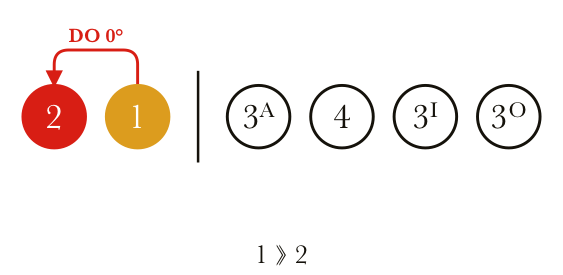
The interlocal retrograde alignment (-emm-at) is fixed, meaning it can only ever refer to ‘I Ø you’:
| tsṇegemmat | ‘I see you’ | neg- |
| tsṇuṡkvemmat | ‘I kill you’ | nuṡkv- |
| tsangemmat | ‘I help you’ | ang- |
| tsakoṃṃỉgemmat | ‘I visit you’ | koṃṃỉg- |
| tsapiskemmat | ‘I listen to you’ | pisk- |
| 0˚ interlocal retrograde | indicative | dubitative | optative | conditional | potential |
| autonomous | |||||
| present | -emmat | -immut | -immuts | -ϕattṡemmat | -ϕuḷḷemmat |
| past | -vannat | -vannut | -vannuts | -ϕutṡannat | -ϕilannat |
| perfect | -ummat | -ummut | -ummuts | ||
| future | -immutṡ | ||||
| hyponomous | |||||
| present | -ϕiddut | -ϕiddut | -ϕidduts | -ϕuttṡimmut | -ϕiḷḷimmut |
| past | -ϕiddun | -ϕiddun | -ϕiddun | -ϕuttṡimmun | -ϕiḷḷimmun |
| perfect | -ϕummiddut | -ϕummiddut | -ϕummidduts | ||
| pluperfect | -ϕaniddun | -ϕattsiddun | |||
| future | -ϕiddutṡ | ||||
§8.4.1.1.1.2 1˚ Interlocal Retrograde: 3a⟫2/1
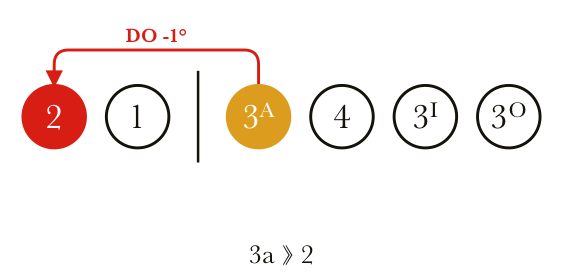
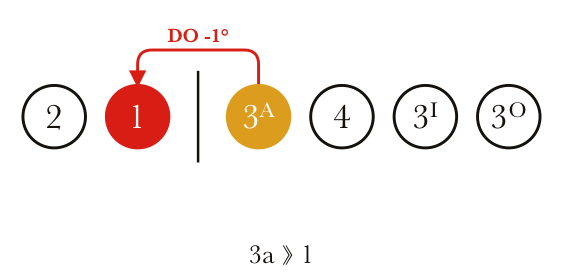
First degree local proximal retrograde alignment (-em-i) always refers to a third-person animate subject, with either a first or second-person object: ’s/he Øs me’ or ’s/he Øs you’:
| tsṇegemi | ‘s/he sees you’ |
| ganegemi | ‘s/he sees me’ |
| tsṇuṡkvemi | ‘s/he kills you’ |
| ganuṡkvemi | ‘s/he kills me’ |
| tsangemi | ‘s/he helps you’ |
| gangemi | ‘s/he helps me’ |
| tsapiskemi | ‘s/he listens to you’ |
| gapiskemi | ‘s/he listens to me’ |
| 1˚ interlocal retrograde | indicative | dubitative | optative | conditional | potential |
| autonomous | |||||
| present | -emi | -eme | -imis | -ϕattṡemi | -ϕuḷḷemi |
| past | -vannin | -vannen | -vannin | -ϕutṡannin | -ϕilannin |
| perfect | -ummi | -umme | -ummis | ||
| future | -emeṡ | ||||
| hyponomous | |||||
| present | -ϕimmit | -ϕimmet | -ϕimmits | -ϕuttṡimmit | -ϕiḷḷimmit |
| past | -ϕimmin | -ϕimmen | -ϕimmin | -ϕuttṡimmin | -ϕiḷḷimmin |
| perfect | -ϕummit | -ϕummet | -ϕummits | ||
| pluperfect | -ϕanimmen | -ϕattsimmin | |||
| future | -ϕimmetṡ | ||||
§8.4.1.1.1.3 2˚ Local Proximal Retrograde: 4⟫2/1
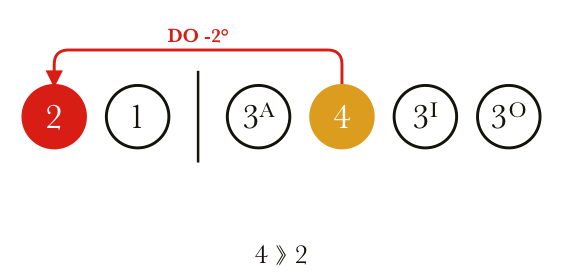
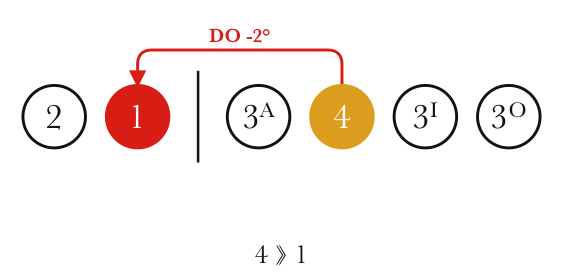
The second degree local proximal retrograde alignment (-em-a) likewises only refers to a fourth-person subject with either a first or second-person object: ‘(some)one Øs you/me’.
| tsṇegema | ‘(some)one sees you’ |
| ganegema | ‘(some)one sees me’ |
| tsapiskema | ‘(some)one listens to you’ |
| gapiskema | ‘(some)one listens to me’ |
| 2˚ interlocal retrograde | indicative | dubitative | optative | conditional | potential |
| autonomous | |||||
| present | -ema | -emo | -imus | -ϕattṡema | -ϕuḷḷema |
| past | -vannan | -vannon | -vannun | -ϕutṡannan | -ϕilannan |
| perfect | -umma | -ummo | -ummus | ||
| future | -emoṡ | ||||
| hyponomous | |||||
| present | -ϕimmut | -ϕimmot | -ϕimmuts | -ϕuttṡimmut | -ϕiḷḷimmut |
| past | -ϕimmun | -ϕimmon | -ϕimmun | -ϕuttṡimmun | -ϕiḷḷimmun |
| perfect | -ϕummut | -ϕummot | -ϕummuts | ||
| pluperfect | -ϕanimmon | -ϕattsimmun | |||
| future | -ϕimmotṡ | ||||
§8.4.1.1.1.4 3˚ Local Distal Retrograde: 3i⟫2/1
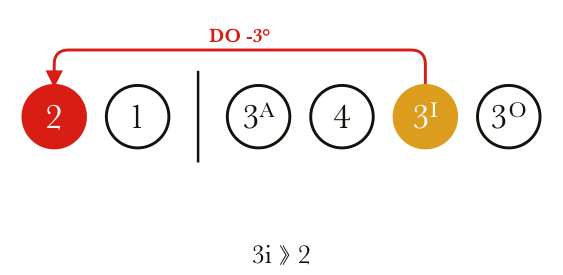
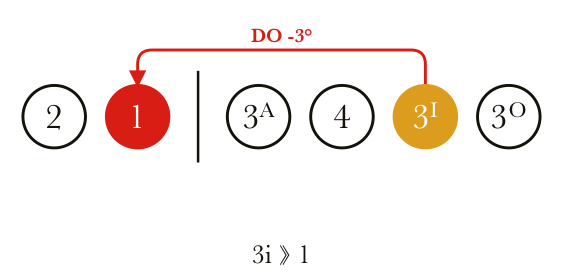
The third degree local distal retrograde alignment (-es-et) has a subject which is one degree further from the local pronouns, meaning a third-person inanimate subject and either a first or second-person object: ‘it Øs me/you’. Because the object is inanimate, the suprapositional pronoun is generally in the unagentive to reflect the unagentivity of the subject.
| pinegeset | ‘it sees you’ |
| ṇenegeset | ‘it sees me’ |
| pangeset | ‘it helps you’ |
| ṇangeset | ‘it helps me’ |
| 3˚ interlocal retrograde | indicative | dubitative | optative | conditional | potential |
| autonomous | |||||
| present | -eset | -isit | -isits | -ϕattṡeset | -ϕuḷḷeset |
| past | -vassit | -vassit | -vassits | -ϕutṡassit | -ϕilassit |
| perfect | -ummeset | -ummisit | -ummisits | ||
| future | -isitṡ | ||||
| hyponomous | |||||
| present | -ϕiddit | -ϕiddit | -ϕiddits | -ϕuttṡiddit | -ϕiḷḷiddit |
| past | -ϕiddin | -ϕiddin | -ϕiddin | -ϕuttṡiddin | -ϕiḷḷiddin |
| perfect | -ϕummiddit | -ϕummiddit | -ϕuddits | ||
| pluperfect | -ϕaniddin | -ϕattsiddin | |||
| future | -ϕimmidditṡ | ||||
§8.4.1.1.1.5 4˚ Local Distal Retrograde: 3o⟫2/1
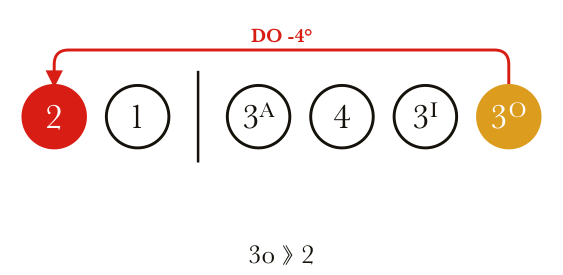
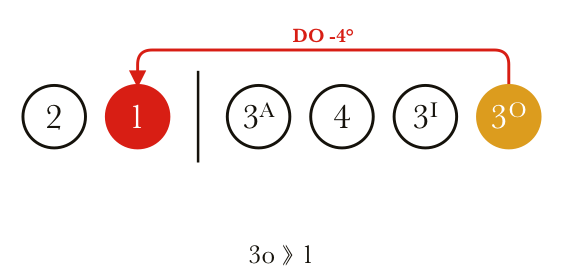
The fourth degree local distal retrograde alignment (-em-i-nin) exclusively indicates that the subject of the phrase is a third-person obviate and the object is either a first or second person: ’s/he2 Øs me/you’.
| tsṇuṡkveminin | ’s/he2 kills you’ |
| ganuṡkveminin | ’s/he2 kills me’ |
| tsỏkeminin | ’s/he2 watches you’ |
| gỏkeminin | ’s/he2 watches me’ |
| 1˚ interlocal retrograde | indicative | dubitative | optative | conditional | potential |
| autonomous | |||||
| present | -eminin | -emenin | -iminis | -ϕattṡeminin | -ϕuḷḷeminin |
| past | -vanninin | -vannenin | -vanninin | -ϕutṡanninin | -ϕilanninin |
| perfect | -umminin | -ummenin | -umminis | ||
| future | -emeṡ | ||||
| hyponomous | |||||
| present | -ϕimminit | -ϕimmenit | -ϕimminits | -ϕuttṡimminit | -ϕiḷḷimminit |
| past | -ϕimminin | -ϕimmenin | -ϕimminin | -ϕuttṡimminin | -ϕiḷḷimminin |
| perfect | -ϕumminit | -ϕummenit | -ϕumminits | ||
| pluperfect | -ϕanimmenin | -ϕattsimminin | |||
| future | -ϕimmenitṡ | ||||
§8.4.1.1.2 Non-Local Retrograde Objects
Non-local retrograde verbs cannot involve the first or second person.
§8.4.1.1.2.1 0˚ Interdistal Retrograde: 41⟫42
In the zeroth degree interdistal retrograde alignment (mi-Ø-emm-a=t), both participants are the fourth person, which like its local counterpart has the default form -emm-at. It does not refer to two identical participants however, and it can often be understood to be an indeterminate subject with an indeterminate object (someone/something Øs someone/something, though without further use of independent pronouns, the most common reading is ‘someone Øs something’, unless the marked pronoun is unagentive, in which the subject can be interpreted as a person or a thing). As such, it is not a true retrograde semantically, nor is it ipsigrade.
| minegemmat | ‘someone sees something’ |
| minuṡkvemmat | ‘someone kills someone/something’ |
§8.4.1.1.2.2 1˚ Interdistal Retrograde: 3i1⟫3i2
| The first degree interdistal retrograde alignment (-i) is also not purely retrograde semantically. This grade is identical to the 1˚ non-local proximal prograde alignment. When semantically retrograde, both the subject and the object are a third-person inanimate (it1 Øs it2). When prograde, the subject is a third-person inanimate and the object is a third-person obviate (it Øs her/him2). However, because both forms are indistinguishable, this difference cannot be infered from the alignment alone, and speakers must rely on the context of the utterance. Because the 1˚ interdistal retrograde alignment is not a true retrograde alignment due to the absence of a retrograde marker, it is included in the prograde alignment description instead. | ṇegi | ‘it1 sees it/her/him2’ | ṇuṡkvi | ‘it1 kills it/her/him2’ |
| hangi | ‘it1 helps it/her/him2’ |
§8.4.1.1.2.3 1˚ Non-Local Proximal Retrograde: 4⟫3a, 3i⟫4, 3o⟫3i
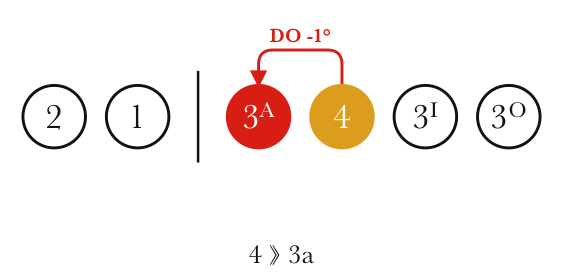
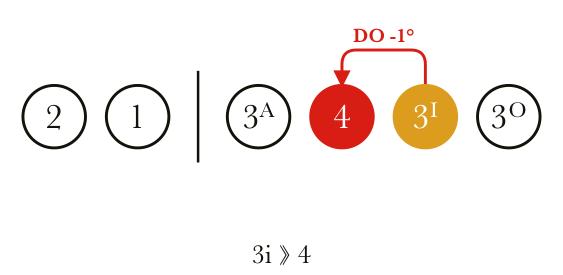
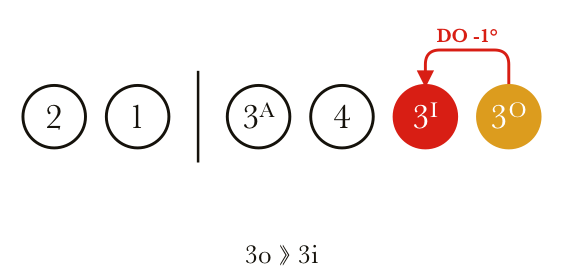
The first degree non-local proximal retrograde alignment (-em-i) can refer to three different combinations of participants. It can refer to a fourth-person subject acting on a third-person animate object (t/s-Ø-em-i ‘someone Øs her/him’), a third-person inanimate subject and a fourth-person object (mi-Ø-em-i ‘it Øs someone/something’) or a third-person obviate subject acting on a third-person inanimate (ḥ-/h-Ø-em-i ’s/he2 Øs it’). In other words, any non-local pronoun subject acting on an object one retrograde degree above itself.
4⟫3a
| tṇegemi | ‘someone sees her/him’ |
| piskemi | ‘someone listens to her/him’ |
| ṇuṡkvemi | ‘something kills her/him’ |
3i⟫4
| minegemi | ‘it sees someone/something’ |
| mipiskemi | ‘it listens to someone/something’ |
| minuṡkvemi | ‘it kills someone/something’ |
3o⟫3i
| negemi | ’s/he2 sees it’ |
| piskemi | ’s/he2 listens to it’ |
| ṇuṡkvemi | ’s/he2 kills it’ |
§8.4.1.1.2.4 2˚ Non-Local Proximal Retrograde: 3i⟫3a, 3o⟫4
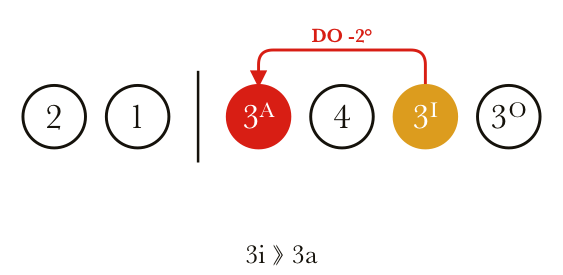
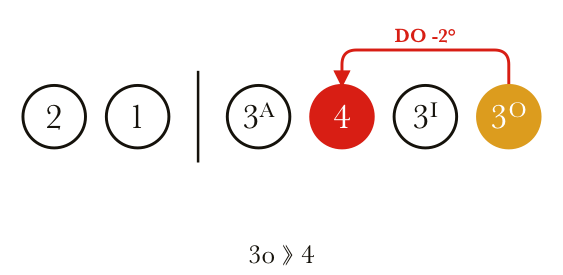
The second degree non-local proximal retrograde alignment (-em-a) can refer to a third-person inanimate subject acting on a third-person animate (‘it Øs her/him’) or a third-person obviate subject acting on fourth person (’s/he2 Øs someone/something’). In other words, this retrograde alignment always has an inanimate subject and always refers to an object which is not the main focus, whether the animate obviate or a second inanimate object, different from the subject. As such, this is not an ipsigrade alignment.
| negema | ‘it sees her/him’ |
| minuṡkvema | ‘s/he kills someone’ |
§8.4.1.1.2.5 3˚ Non-Local Distal Retrograde: 3o⟫3a
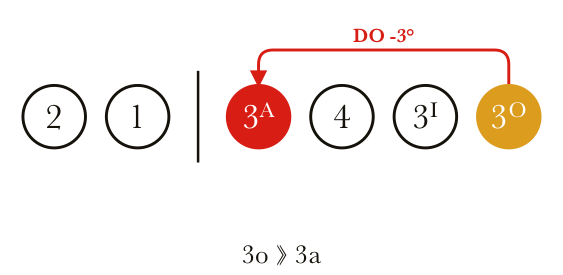
The third degree non-local distal retrograde alignment (-es-et) involves a third-person obviate subject acting on a third-person animate object (’s/he2 Øs her/him1’). It is also sometimes simply called the obviate retrograde alignment.
| tṇegeset | ‘s/he2 sees her/him1’ |
| tṇuṡkveset | ‘s/he2 kills her/him1’ |
| tangeset | ‘s/he2 helps her/him1’ |
| tỉleset | ‘s/he2 knows her1/him1’ |
§8.4.1.1.3 Retrograde Alignment Table
To give a better idea of how this table translates into actual retrograde markers, examples from the indicative autonomous are given in the table below. The pronominal set used here is the agentive set for simplicity’s sake.
| subject↓ | object → | |||||
| 2 | 1 | 3a | 4 | 3i | ||
| 1 | interlocal 0˚ | |||||
| tsa-Ø-emm-a-t ‘I Ø you’ | ||||||
| 3a | local proximal 1˚ | |||||
| tsa-Ø-em-i ’s/he Øs you’ | ga-Ø-em-i ’s/he Øs me’ | |||||
| 4 | local proximal 2˚ | non-local proximal 1˚ | interdistal 0˚ | |||
| tsa-Ø-em-a ‘someone Øs you’ | ga-Ø-em-a ‘someone Øs me’ | t-Ø-em-i ‘someone Øs her/him’ | mi-Ø-emm-a-t ‘someone Øs something’ | |||
| 3i | local distal 3˚ | non-local proximal 2˚ | non-local proximal 1˚ | |||
| tsa-Ø-es-e-t ‘it Øs you’ | ga-Ø-es-e-t ‘it Øs me’ | t-Ø-em-a ‘it Øs her/him’ | mi-Ø-em-i ‘it Øs someone/something’ | |||
| 3o | local distal 4˚ | non-local distal 3˚ | non-local proximal 2˚ | non-local proximal 1˚ | ||
| tsa-Ø-em-i-nin ’s/he Øs you’ | ga-Ø-em-i-nin ’s/he Øs me’ | t-Ø-es-et ’s/he Øs her/him’ | mi-Ø-em-a ’s/he Øs someone/something’ | ḥ-Ø-em-i ’s/he Øs it’ | ||
§8.4.1.2 Retrograde Marker Conjugation
Besides pronominal sets and stem vowel changes, transitive verbs are mostly conjugated by changing the form of their retro- and prograde markers. Retrograde markers for transitive verbs are listed below in all their forms. With this information, the stem vowel and pronominal sets, one can fully conjugate the vast majority of transitive verbs in Pine.
| mood/order | tense | proximal | distal | interlocal | interdistal | ||
| 1˚ | 2˚ | 3˚ | 4˚ | 0˚ | |||
| indicative | |||||||
| autonomous | present | -emi | -ema | -eset | -eminin | -emmat | |
| past | -vannin | -vannan | -vassit | -vanninin | -vannat | ||
| perfect | -ummi | -umma | -ummeset | -umminin | -ummat | ||
| hyponomous | present | -ϕimmit | -ϕimmut | -ϕiddit | -ϕimminit | -ϕiddut | |
| past | -ϕimmin | -ϕimmun | -ϕiddin | -ϕimminin | -ϕiddun | ||
| perfect | -ϕummit | -ϕummut | -ϕummiddit | -ϕumminit | -ϕummiddut | ||
| dubitative | |||||||
| autonomous | present | -eme | -emo | -isit | -emenin | -immut | |
| past | -vannen | -vannon | -vassit | -vannenin | -vannut | ||
| perfect | -umme | -ummo | -ummisit | -ummenin | -ummut | ||
| future | -emeṡ | -emoṡ | -issitṡ | -emeniṡ | -immutṡ | ||
| hyponomous | present | -ϕimmet | -ϕimmot | -ϕiddit | -ϕimmenit | -ϕiddut | |
| past | -ϕimmen | -ϕimmon | -ϕiddin | -ϕimmenin | -ϕiddun | ||
| perfect | -ϕummet | -ϕummot | -ϕummiddit | -ϕummenit | -ϕummiddut | ||
| pluperfect | -ϕanimmen | -ϕanimmon | -ϕaniddin | -ϕanimmenin | -ϕaniddun | ||
| future | -ϕimmetṡ | -ϕimmotṡ | -ϕidditṡ | -ϕimmenitṡ | -ϕiddutṡ | ||
| optative | |||||||
| autonomous | present | -imis | -imus | -isits | -iminis | -immuts | |
| past | -vannin | -vannun | -vassits | -vanninin | -vannuts | ||
| perfect | -ummis | -ummus | -ummisits | -umminis | -ummuts | ||
| hyponomous | present | -ϕimmits | -ϕimmuts | -ϕiddits | -ϕimminits | -ϕidduts | |
| past | -ϕimmin | -ϕimmun | -ϕiddin | -ϕimminin | -ϕiddun | ||
| perfect | -ϕummits | -ϕummuts | -ϕummiddits | -ϕumminits | -ϕummidduts | ||
| pluperfect | -ϕattsimmin | -ϕattsimmun | -ϕattsiddin | -ϕattsimminin | -ϕattsiddun | ||
| conditional | |||||||
| autonomous | present | -ϕattṡemi | -ϕattṡema | -ϕattṡeset | -ϕattṡeminin | -ϕattṡemmat | |
| past | -ϕutṡannin | -ϕutṡannan | -ϕutṡassit | -ϕutṡanninin | -ϕutṡannat | ||
| hyponomous | present | -ϕuttṡimmit | -ϕuttṡimmut | -ϕuttṡiddit | -ϕuttṡimminit | -ϕuttṡimmiddut | |
| past | -ϕuttṡimmin | -ϕuttṡimmun | -ϕuttṡiddin | -ϕuttṡimminin | -ϕuttṡimmiddun | ||
| potential | |||||||
| autonomous | present | -ϕuḷḷemi | -ϕuḷḷema | -ϕuḷḷeset | -ϕuḷḷeminin | -ϕuḷḷemmat | |
| past | -ϕilannin | -ϕilannan | -ϕilassit | -ϕilanninin | -ϕilannat | ||
| hyponomous | present | -ϕiḷḷimmit | -ϕiḷḷimmut | -ϕiḷḷiddit | -ϕiḷḷimminit | -ϕiḷḷimmiddut | |
| past | -ϕiḷḷimmin | -ϕiḷḷimmun | -ϕiḷḷiddin | -ϕiḷḷimminin | -ϕiḷḷimmiddun | ||
§8.4.2 Prograde Transitive Verbs
Prograde transitive verbs are those whose suprapositional pronoun is the subject. In other words, the object will always be hierarchically lower. Prograde verbs differ from retrograde verbs in that they lack the retrograde markers. They still possess positional markers and marker finals, however, and they do not behave exactly the same way as their retrograde counterparts. The positional coordination is identical but reversed to that of retrograde verbs - the retrograde 2˚ local proximal alignment corresponds to 4⟫2/1 (fourth-person subject acts on a local object) while the prograde is simply inverted, 2/1⟫4 (a local subject acts on a fourth-person object). An important difference is that the 0˚ interdistal does not exist in the prograde, and the 1˚ interdistal alignment is identical in either grade, but is generally considered to be a part of the retrograde alignment system rather than the prograde. As such, interdistal alignment is not found in the prograde.
| local object | ||||
| interlocal | 0˚ | |||
| 2⟫1 | ||||
| local proximal | 1˚ | 2˚ | ||
| 2 | 1 | 2 | 1 | |
| 2⟫3a | 1⟫3a | 2⟫4 | 1⟫4 | |
| local distal | 3˚ | 4˚ | ||
| 2 | 1 | 2 | 1 | |
| 2⟫3i | 1⟫3i | 2⟫3o | 1⟫3o | |
| non-local object | ||||
| non-local proximal | 1˚ | 2˚ | ||
| 3a⟫4 | 3a⟫3i | |||
| 4⟫3i | 4⟫3o | |||
| 3i⟫3o | Ø | |||
| non-local distal | 3˚ | |||
| 3a⟫3o | ||||
§8.4.2.1 0˚ Interlocal Prograde: 2⟫1
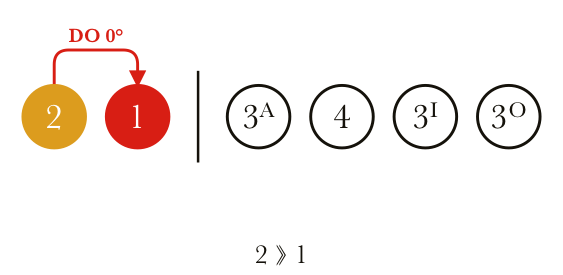
The interlocal retrograde alignment (-at) is fixed, meaning it can only ever refer to ‘you Ø me’:
| tsṇegat | ‘you see me’ | neg- |
| tsṇuṡkvat | ‘you kill me’ | nuṡkv- |
| tsangat | ‘you help me’ | ang- |
| tsakoṃṃỉgat | ‘you visit me’ | koṃṃỉg- |
| tsapiskat | ‘you listen to me’ | pisk- |
§8.4.2.2 1˚ Interlocal Prograde: 2/1⟫3a
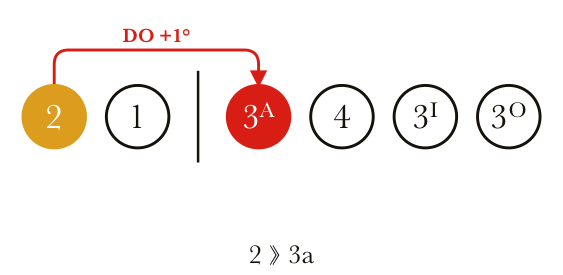
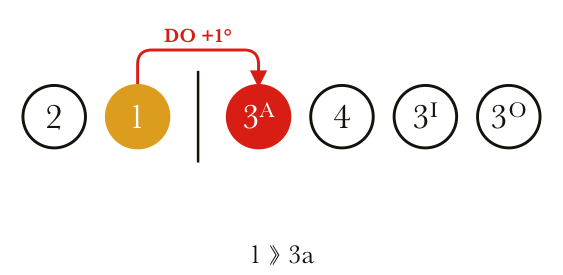
First degree local proximal prograde alignment (-i) always refers to a local subject and a third-person animate object, or ’I/you Ø her/him’:
| tsṇegi | ’you see her/him’ |
| ganegi | ’I see her/him’ |
| tsṇuṡkvi | ’you kill her/him’ |
| ganuṡkvi | ’I kill her/him’ |
| tsakeubbi | ’you help her/him’ |
| gangi | ’I help her/him’ |
| tsapiski | ’you listen to her/him’ |
| gapiski | ’I listen to her/him’ |
§8.4.2.3 2˚ Local Proximal Prograde: 2/1⟫4
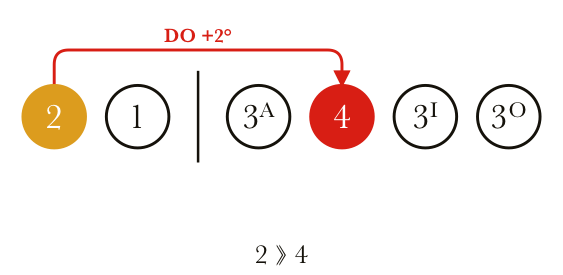
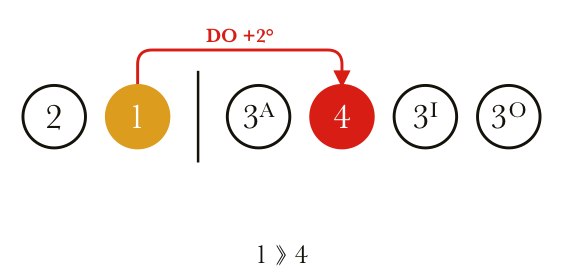
The second degree local proximal prograde alignment (-a) likewises only refers to local subject and a fourth object: ‘I/you Ø someone/something’.
| tsṇega | ‘you see someone/something’ |
| ganega | ‘I see someone/something’ |
| tsapiska | ‘you listen to someone/something’ |
| gapiska | ‘I listen to someone/something’ |
§8.4.2.4 3˚ Local Distal Prograde: 2/1⟫3i
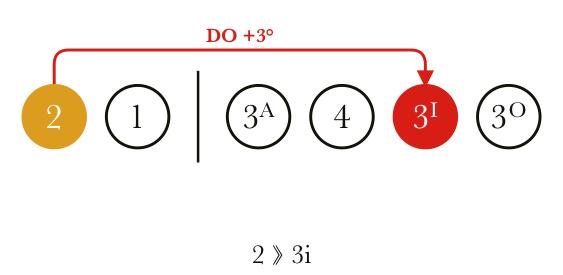
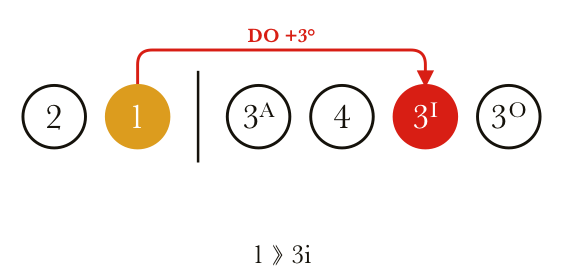
The third degree local distal prograde alignment (-et) has a local subject and a third-person inanimate object: ‘I/you Ø it’.
| tsṇeget | ‘you see it’ |
| ganeget | ‘I see it’ |
| tsanget | ‘you help it’ |
| ganget | ‘I help it’ |
§8.4.2.5 4˚ Local Distal Prograde: 2/1⟫3o
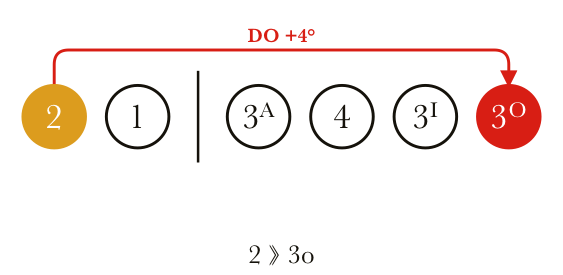
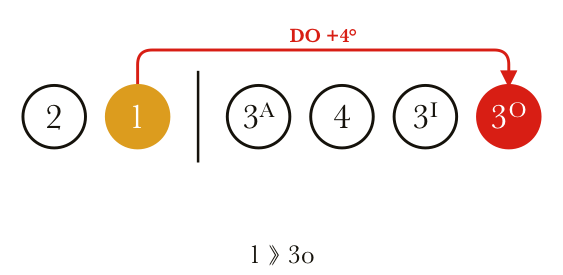
The fourth degree local distal prograde alignment (-i-mi) exclusively indicates that the subject of the phrase is a local person and the object is a third-person obviate: ’I/you Ø her/him2’.
| tsṇuṡkvimi | ‘you kill her/him2’ |
| ganuṡkvimi | ‘I kill her/him2’ |
| tsỏkimi | ‘you watch her/him2’ |
| gỏkimi | ‘I watch her/him2’ |
§8.4.2.6 1˚ Non-Local Proximal Prograde: 3a⟫4, 4⟫3i, 3i⟫3o
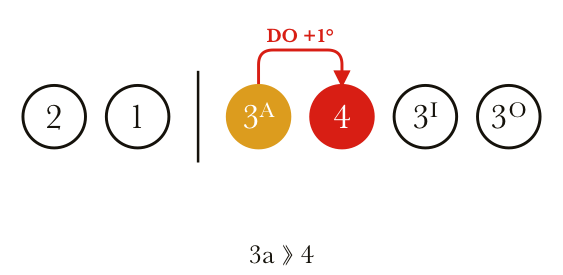
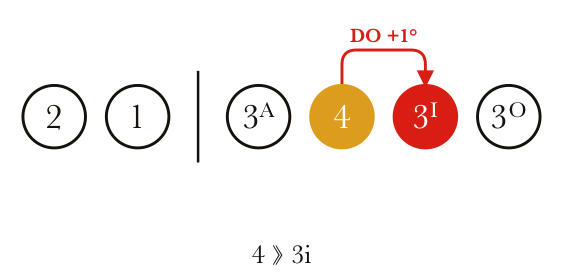
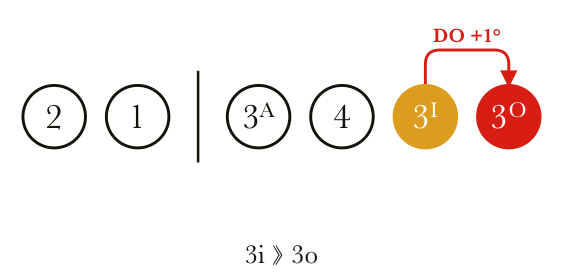
The first degree non-local proximal prograde alignment (-i) can refer to three different combinations of participants. It can refer to a third-person animate acting on a fourth-person object (t/s-Ø-i ’s/he Øs something/someone’), a fourth-person subject and a third-person inanimate object (mi-Ø-i ‘someone/something Øs it’) or a third-person inanimate subject acting on a third-person obviate (ḥ-/h-Ø-i ’it Øs her/him2’). In other words, any non-local pronoun subject acting on an object one retrograde degree above itself. The 1˚non-local proximal prograde is identical in surface form to the 1˚ interdistal retrograde alignment that corresponds to 3i1⟫3i2.
3a⟫4
| tṇegi | ‘s/he sees someone/something’ |
| piski | ‘s/he listens to someone/something’ |
| tṇuṡkvi | ‘s/he kills someone/something’ |
4⟫3i
| minegi | ‘someone sees it’ |
| mipiski | ‘someone listens to it’ |
| minuṡkvi | ‘someone kills it’ |
3i⟫3o
| negi | ‘it sees her/him2’ | or | ‘it1 sees it2’ |
| piski | ‘it listens to her/him2’ | or | ‘it1 listens to it2’ |
| ṇuṡkvi | ‘it kills her/him2’ | or | ‘it1 kills it2’ |
§8.4.2.7 2˚ Non-Local Proximal Prograde: 3a⟫3i, 4⟫3o
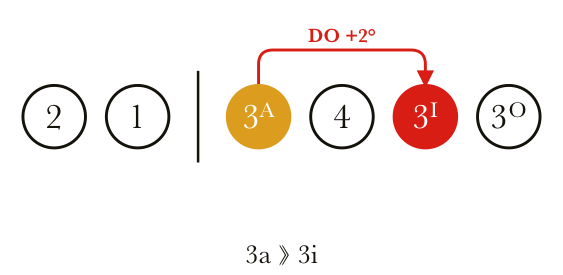
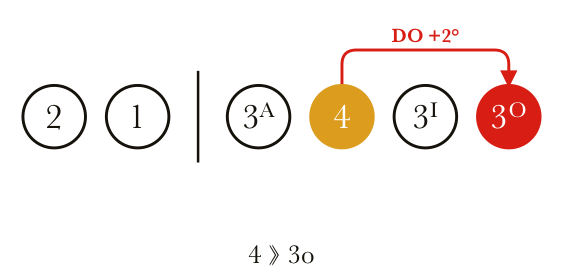
The second degree non-local proximal prograde alignment (-a) can refer to a third-person animate subject acting on a third-person inanimate object (’s/he Øs it’) or a fourth-person subject acting on third-person obviate object (’someone/something Øs her/him2’).
| nega | ‘s/he sees it’ |
| minuṡkva | ‘someone kills her/him2’ |
§8.4.2.8 3˚ Non-Local Distal Prograde: 3a⟫3o
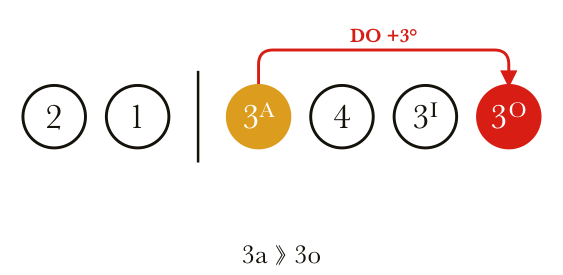
The third degree non-local distal retrograde alignment (-et) involves a third-person animate subject acting on a third-person obviate object (’s/he1 Øs her/him2’).
| tṇeget | ‘s/he1 sees her/him2’ |
| tṇuṡkvet | ‘s/he1 kills her/him2’ |
| tanget | ‘s/he1 helps her/him2’ |
| tỉlet | ‘s/he1 knows her/him2’ |
To give a better idea of how this table translates into actual retrograde markers, examples from the indicative autonomous are given in the table below. The pronominal set used here is the agentive set for simplicity’s sake.
| subject↓ | object → | |||||
| 1 | 3a | 4 | 3i | 3o | ||
| 2 | interlocal 0˚ | local proximal 1˚ | local proximal 2˚ | local distal 3˚ | local distal 4˚ | |
| tsa-Ø-a-t ‘you Ø me’ | tsa-Ø-i ‘you Ø her/him’ | tsa-Ø-a ‘you Ø someone/something’ | tsa-Ø-et ‘you Ø it’ | tsa-Ø-imin ‘you Ø her/him2’ | ||
| 1 | ga-Ø-i ‘I Ø her/him’ | ga-Ø-a ‘I Ø someone/something’ | ga-Ø-et ‘I Ø it’ | ga-Ø-imin ‘I Ø her/him2’ | ||
| 3a | non-local proximal 1˚ | non-local proximal 2˚ | non-local proximal 3˚ | |||
| t-Ø-i ‘s/he Øs someone/something’ | t-Ø-a ‘s/he Øs it’ | t-Ø-et ‘s/he Øs her/him2’ | ||||
| 4 | non-local proximal 1˚ | non-local proximal 2˚ | ||||
| mi-Ø-i ‘someone/something Øs it’ | mi-Ø-a ‘someone/something Øs her/him2’ | |||||
| 3i | non-local proximal 1˚ | |||||
| ḥ-Ø-i ‘it Øs him/her2’ or ‘it1 Øs it2’ | ||||||
§8.4.3 Prograde Marker Conjugation
Prograde markers are given here in a table showing all their possible forms for all tenses.
| mood/order | tense | proximal | distal | interlocal | ||
| 1˚ | 2˚ | 3˚ | 4˚ | 0˚ | ||
| indicative | ||||||
| autonomous | present | -i | -a | -et | -imi | -at |
| past | -vin | -van | -vet | -vimin | -vat | |
| perfect | -ungi | -unga | -unget | -ungimi | -ungat | |
| hyponomous | present | -ϕit | -ϕut | -ϕisit | -ϕimit | -ϕusut |
| past | -ϕin | -ϕun | -ϕisin | -ϕimin | -ϕusun | |
| perfect | -ϕungit | -ϕungut | -ϕungisit | -ϕungimit | -ϕungusut | |
| dubitative | ||||||
| autonomous | present | -e | -o | -it | -emi | -ut |
| past | -ven | -von | -vit | -vemin | -vut | |
| perfect | -unge | -ungo | -ungit | -ungemi | -ungut | |
| future | -eṡ | -oṡ | -itṡ | -emiṡ | -utṡ | |
| hyponomous | present | -ϕet | -ϕot | -ϕisit | -ϕemit | -ϕusut |
| past | -ϕen | -ϕon | -ϕisin | -ϕemin | -ϕusun | |
| perfect | -ϕunget | -ϕungot | -ϕungisit | -ϕungemit | -ϕungusut | |
| pluperfect | -ϕanen | -ϕanon | -ϕanisin | -ϕanemin | -ϕanusut | |
| future | -ϕetṡ | -ϕotṡ | -ϕisitṡ | -ϕemitṡ | -ϕusutṡ | |
| optative | ||||||
| autonomous | present | -is | -us | -its | -imis | -uts |
| past | -vin -vis | -vun -vus | -vits | -vimin -vimis | -vuts | |
| perfect | -ungis | -ungus | -ungits | -ungimis | -unguts | |
| hyponomous | present | -ϕits | -ϕuts | -ϕisits | -ϕimits | -ϕusuts |
| past | -ϕin -ϕis | -ϕun -ϕus | -ϕisin -ϕisis | -ϕimin -ϕimis | -ϕusun -ϕusus | |
| perfect | -ϕungits | -ϕunguts | -ϕungisits | -ϕungimits | -ϕungusuts | |
| pluperfect | -ϕattsin | -ϕattsun | -ϕattsisin | -ϕattsimin | -ϕattsusun | |
| conditional | ||||||
| autonomous | present | -ϕattṡi | -ϕattṡa | -ϕattṡet | -ϕattṡimi | -ϕattṡat |
| past | -ϕutṡen | -ϕutṡon | -ϕutṡit | -ϕuṡemin | -ϕutṡut | |
| hyponomous | present | -ϕuttṡit | -ϕuttṡut | -ϕuttṡisit | -ϕuttṡimit | -ϕuttṡusut |
| past | -ϕuttṡin | -ϕuttṡun | -ϕuttṡisin | -ϕuttṡimin | -ϕuttṡusun | |
| potential | ||||||
| autonomous | present | -ϕuḷḷi | -ϕuḷḷa | -ϕuḷḷet | -ϕuḷḷimi | -ϕuḷḷat |
| past | -ϕilin | -ϕilan | -ϕilet | -ϕilimin | -ϕilat | |
| hyponomous | present | -ϕiḷḷit | -ϕiḷḷut | -ϕiḷḷisit | -ϕiḷḷimit | -ϕiḷḷusut |
| past | -ϕiḷḷin | -ϕiḷḷun | -ϕiḷḷisin | -ϕiḷḷimin | -ϕiḷḷusun | |
§8.4.4 Polyvalent Imperative
The imperative mood is has an autonomous present conjugation which differs from normal polyvalent conjugation. It makes use of an auxiliary copula with the form naϕ-Ø1-Ø2 where -Ø1- houses a fortified version of personal pronouns, and -Ø2- houses the actual inflectional endings. The imperative must appear with the dependent form of the main verb. The pronouns are as follow:
| agentive | unagentive | |
| 2 | na-tts-Ø | na-pp-Ø |
| 1 | na-kk-Ø | na-tṇ-Ø |
| 3a | na-tt-Ø | na-ss-Ø |
| 4 | na-mm-Ø | na-mm-Ø |
| 3i | na-(tġ)-Ø | na-hh-Ø |
The prohibitive imperative works very similarly, but has the form nuϕ-Ø1-oh-Ø2. The prohibitive imperative must appear with the connegative form of the main verb.
| agentive | unagentive | |
| 2 | nu-tts-oh-Ø | nu-pp-oh-Ø |
| 1 | nu-kk-oh-Ø | nu-tṇ-oh-Ø |
| 3a | nu-tt-oh-Ø | nu-ss-oh-Ø |
| 4 | nu-mm-oh-Ø | nu-mm-oh-Ø |
| 3i | nu-tġ-oh-Ø | nu-hh-oh-Ø |
The imperative auxiliary copula can be found in the hyponomous order, though only in the optative and only in two very specific cases, neither of which are universally accepted and both of which are relegated to rather formal or archaic registers. Namely, such forms are only ever used with dependent infinitives, either in relative asyllogous infinitive constructions or in discongruent dependent infinitives.
§8.4.5 Transitive Alignment Table
The alignment of transitive verbs is shown in the table below. With this table at hand, together with the past forms of the verb and knowing when to apply the two forms (assertive autonomous uses fronting wile inferential autonomous uses backing, and irrealis is unaffected, while the assertive hyponomous uses backing while the inferential hyponomous uses backing), the vast majority of transitive verbs can be conjugated in all their basic forms using this table. Looking at this table, one can see many small patterns emerging. For example, the retrograde 0˚ interlocal and interdistal forms in the autonomous are based on the proximal (-em-) in the autonomous while the hyponomous instead uses the distal (-dd-).
| subject↓ | object → | |||||
| present indicative | ||||||
| autonomous | ||||||
| 2 | 1 | 3a | 4 | 3i | 3o | |
| 2 | tsa-Ø-a-t | tsa-Ø-i | tsa-Ø-a | tsa-Ø-e-t | tsa-Ø-i-mi | |
| 1 | tsa-Ø-emm-a-t | ga-Ø-i | ga-Ø-a | ga-Ø-e-t | ga-Ø-i-mi | |
| 3a | tsa-Ø-em-i | ga-Ø-em-i | t-Ø-i | t-Ø-a | t-Ø-e-t | |
| 4 | tsa-Ø-em-a | ga-Ø-em-a | t-Ø-em-i | mi-Ø-emm-a-t | mi-Ø-i | mi-Ø-a |
| 3i | tsa-Ø-es-e-t | ga-Ø-es-e-t | t-Ø-em-a | mi-Ø-em-i | ḥ-Ø-i | |
| 3o | tsa-Ø-em-i-nin | ga-Ø-em-i-nin | t-Ø-es-et | mi-Ø-em-a | ḥ-Ø-em-i | |
| past indicative | ||||||
| 2 | 1 | 3a | 4 | 3i | 3o | |
| 2 | tse-Ø-v-a-t | tse-Ø-v-i-n | tse-Ø-v-a-n | tse-Ø-v-e-t | tse-Ø-v-i-mi-n | |
| 1 | tse-Ø-vann-a-t | ge-Ø-v-i-n | ge-Ø-v-a-n | ge-Ø-v-e-t | ge-Ø-v-i-mi-n | |
| 3a | tse-Ø-vann-i-n | ge-Ø-vann-i-n | Ø-v-i-n | Ø-v-a-n | Ø-v-e-t | |
| 4 | tse-Ø-vann-a-n | ge-Ø-vann-a-n | Ø-vann-i-n | mi-Ø-vann-a-t | mi-Ø-v-i-n | mi-Ø-v-a-n |
| 3i | tse-Ø-vass-i-t | ge-Ø-vass-i-t | Ø-vann-a-n | mi-Ø-vann-i-n | h-Ø-v-i-n | |
| 3o | tse-Ø-vann-i-ni-n | ge-Ø-vann-i-ni-n | Ø-vass-i-t | mi-Ø-vann-a-n | ḥ-Ø-vann-i-n | |
| perfect indicative | ||||||
| 2 | 1 | 3a | 4 | 3i | 3o | |
| 2 | tsa-Ø-ung-a-t | tsa-Ø-ung-i | tsa-Ø-ung-a | tsa-Ø-ung-e-t | tsa-Ø-ung-i-mi | |
| 1 | tsa-Ø-umm-a-t | ga-Ø-ung-i | ga-Ø-ung-a | ga-Ø-ung-e-t | ga-Ø-ung-i-mi | |
| 3a | tsa-Ø-umm-i | ga-Ø-umm-i | t-Ø-ung-i | t-Ø-ung-a | t-Ø-ung-e-t | |
| 4 | tsa-Ø-umm-a | ga-Ø-umm-a | t-Ø-umm-i | mi-Ø-umm-a-t | mi-Ø-ung-i | mi-Ø-ung-a |
| 3i | tsa-Ø-umm-es-e-t | ga-Ø-umm-es-e-t | t-Ø-umm-a | mi-Ø-umm-i | ḥ-Ø-ung-i | |
| 3o | tsa-Ø-umm-i-nin | ga-Ø-umm-i-nin | t-Ø-umm-es-e-t | mi-Ø-umm-a | ḥ-Ø-umm-i | |
| imperative | ||||||
| 2 | 1 | 3a | 4 | 3i | 3o | |
| 2 | na-tts-a-t | na-tts-i | na-tts-a | na-tts-e-t | na-tts-i-mi | |
| 1 | na-tts-emm-a-t | na-kk-i | na-kk-a | na-kk-e-t | na-kk-i-mi | |
| 3a | na-tts-em-i | na-kk-em-i | na-tt-i | na-tt-a | na-tt-et | |
| 4 | na-tts-em-a | na-kk-em-a | na-tt-em-i | na-mm-emm-a-t | na-mm-i | na-mm-a |
| 3i | na-tts-es-e-t | na-kk-es-e-t | na-tt-em-a | na-mm-em-i | na-tġ-i | |
| 3o | na-tts-em-i-nin | na-kk-em-i-nin | na-tt-es-e-t | na-mm-em-a | na-tġ-em-i | |
| prohibitive imperative | ||||||
| 2 | 1 | 3a | 4 | 3i | 3o | |
| 2 | nu-tts-oh-a-t | nu-tts-oh-i | nu-tts-oh-a | nu-tts-oh-e-t | nu-tts-oh-i-mi | |
| 1 | nu-tts-oh-emm-a-t | nu-kk-oh-i | nu-kk-oh-a | nu-kk-oh-e-t | nu-kk-oh-i-mi | |
| 3a | nu-tts-oh-em-i | nu-kk-oh-em-i | nu-tt-oh-i | nu-tt-oh-a | nu-tt-oh-et | |
| 4 | nu-tts-oh-em-a | nu-kk-oh-em-a | nu-tt-oh-em-i | nu-mm-oh-emm-a-t | nu-mm-oh-i | nu-mm-oh-a |
| 3i | nu-tts-oh-es-e-t | nu-kk-oh-es-e-t | nu-tt-oh-em-a | nu-mm-oh-em-i | nu-tġ-oh-i | |
| 3o | nu-tts-oh-em-i-nin | nu-kk-oh-em-i-nin | nu-tt-oh-es-e-t | nu-mm-oh-em-a | nu-tġ-oh-em-i | |
| hyponomous | ||||||
| present indicative | ||||||
| 2 | 1 | 3a | 4 | 3i | 3o | |
| 2 | tsa-Ø-ϕ-usu-t | tsa-Ø-ϕ-i-t | tsa-Ø-ϕ-u-t | tsa-Ø-ϕ-isi-t | tsa-Ø-ϕ-i-mi-t | |
| 1 | tsa-Ø-ϕ-idd-u-t | ga-Ø-ϕ-i-t | ga-Ø-ϕ-u-t | ga-Ø-ϕ-isi-t | ga-Ø-ϕ-i-mi-t | |
| 3a | tsa-Ø-ϕ-imm-i-t | ga-Ø-ϕ-imm-i-t | t-Ø-ϕ-i-t | t-Ø-ϕ-u-t | t-Ø-ϕ-isi-t | |
| 4 | tsa-Ø-ϕ-imm-u-t | ga-Ø-ϕ-imm-u-t | t-Ø-imm-i-t | mi-Ø-ϕ-idd-u-t | mi-Ø-ϕ-i-t | mi-Ø-ϕ-u-t |
| 3i | tsa-Ø-ϕ-idd-i-t | ga-Ø-ϕ-idd-i-t | t-Ø-imm-u-t | mi-Ø-imm-i-t | ḥ-Ø-ϕ-i-t | |
| 3o | tsa-Ø-ϕ-imm-i-ni-t | ga-Ø-ϕ-imm-i-ni-t | t-Ø-i-dd-i-t | mi-Ø-imm-u-t | ḥ-Ø-imm-i-t | |
| past indicative | ||||||
| 2 | 1 | 3a | 4 | 3i | 3o | |
| 2 | tse-Ø-ϕ-usu-n | tse-Ø-ϕ-i-n | tse-Ø-ϕ-u-n | tse-Ø-ϕ-isi-n | tse-Ø-ϕ-i-mi-n | |
| 1 | tse-Ø-ϕ-idd-u-n | ge-Ø-ϕ-i-n | ge-Ø-ϕ-u-n | ge-Ø-ϕ-isi-n | ge-Ø-ϕ-i-mi-n | |
| 3a | tse-Ø-ϕ-imm-i-n | ge-Ø-ϕ-imm-i-n | Ø-ϕ-i-n | Ø-ϕ-u-n | Ø-ϕ-isi-n | |
| 4 | tse-Ø-ϕ-imm-u-n | ge-Ø-ϕ-imm-u-n | Ø-ϕ-imm-i-n | mi-Ø-ϕ-idd-u-n | mi-Ø-ϕ-i-n | mi-Ø-ϕ-u-n |
| 3i | tse-Ø-ϕ-idd-i-n | ge-Ø-ϕ-idd-i-n | Ø-ϕ-imm-u-n | mi-Ø-ϕ-imm-i-n | h-Ø-v-i-an | |
| 3o | tse-Ø-ϕ-imm-i-ni-n | ge-Ø-ϕ-imm-i-ni-n | Ø-ϕ-idd-i-n | mi-Ø-ϕ-imm-u-n | ḥ-Ø-ϕ-imm-i-n | |
| perfect indicative | ||||||
| 2 | 1 | 3a | 4 | 3i | 3o | |
| 2 | tsa-Ø-ϕ-ung-usu-t | tsa-Ø-ϕ-ung-i-t | tsa-Ø-ϕ-ung-u-t | tsa-Ø-ϕ-ung-isi-t | tsa-Ø-ϕ-ung-i-mi-t | |
| 1 | tsa-Ø-ϕ-umm-idd-u-t | ga-Ø-ϕ-ung-i-t | ga-Ø-ϕ-ung-u-t | ga-Ø-ϕ-ung-isi-t | ga-Ø-ϕ-ung-i-mi-t | |
| 3a | tsa-Ø-ϕ-umm-i-t | ga-Ø-ϕ-umm-i-t | t-Ø-ϕ-ung-i-t | t-Ø-ϕ-ung-u-t | t-Ø-ϕ-ung-isi-t | |
| 4 | tsa-Ø-ϕ-umm-u-t | ga-Ø-ϕ-umm-u-t | t-Ø-umm-i-t | mi-Ø-ϕ-umm-idd-u-t | mi-Ø-ϕ-ung-i-t | mi-Ø-ϕ-ung-u-t |
| 3i | tsa-Ø-ϕ-umm-idd-i-t | ga-Ø-ϕ-umm-idd-i-t | t-Ø-imm-u-t | mi-Ø-umm-i-t | ḥ-Ø-ϕ-ung-i-t | |
| 3o | tsa-Ø-ϕ-umm-i-ni-t | ga-Ø-ϕ-umm-i-ni-t | t-Ø-umm-idd-i-t | mi-Ø-umm-u-t | ḥ-Ø-umm-i-t | |
| autonomous | ||||||
| present dubitative | ||||||
| 2 | 1 | 3a | 4 | 3i | 3o | |
| 2 | tsa-Ø-u-t | tsa-Ø-e | tsa-Ø-o | tsa-Ø-i-t | tsa-Ø-e-mi | |
| 1 | tsa-Ø-imm-u-t | ga-Ø-e | ga-Ø-o | ga-Ø-i-t | ga-Ø-e-mi | |
| 3a | tsa-Ø-em-e | ga-Ø-em-e | t-Ø-e | t-Ø-o | t-Ø-i-t | |
| 4 | tsa-Ø-em-o | ga-Ø-em-o | t-Ø-em-e | mi-Ø-imm-u-t | mi-Ø-e | mi-Ø-o |
| 3i | tsa-Ø-is-i-t | ga-Ø-is-i-t | t-Ø-em-o | mi-Ø-em-e | ḥ-Ø-e | |
| 3o | tsa-Ø-em-e-nin | ga-Ø-em-e-nin | t-Ø-is-it | mi-Ø-em-o | ḥ-Ø-em-e | |
| past dubitative | ||||||
| 2 | 1 | 3a | 4 | 3i | 3o | |
| 2 | tse-Ø-v-u-t | tse-Ø-v-e-n | tse-Ø-v-o-n | tse-Ø-v-i-t | tse-Ø-v-e-mi-n | |
| 1 | tse-Ø-vann-u-t | ge-Ø-v-e-n | ge-Ø-v-o-n | ge-Ø-v-i-t | ge-Ø-v-e-mi-n | |
| 3a | tse-Ø-vann-e-n | ge-Ø-vann-e-n | Ø-v-e-n | Ø-v-o-n | Ø-v-i-t | |
| 4 | tse-Ø-vann-o-n | ge-Ø-vann-o-n | Ø-vann-e-n | mi-Ø-vann-u-t | mi-Ø-v-e-n | mi-Ø-v-o-n |
| 3i | tse-Ø-vass-i-t | ge-Ø-vass-i-t | Ø-vann-o-n | mi-Ø-vann-e-n | h-Ø-v-e-n | |
| 3o | tse-Ø-vann-e-ni-n | ge-Ø-vann-e-ni-n | Ø-vass-i-t | mi-Ø-vann-o-n | ḥ-Ø-vann-e-n | |
| perfect dubitative | ||||||
| 2 | 1 | 3a | 4 | 3i | 3o | |
| 2 | tsa-Ø-ung-u-t | tsa-Ø-ung-e | tsa-Ø-ung-o | tsa-Ø-ung-i-t | tsa-Ø-ung-e-mi | |
| 1 | tsa-Ø-umm-u-t | ga-Ø-ung-e | ga-Ø-ung-o | ga-Ø-ung-i-t | ga-Ø-ung-e-mi | |
| 3a | tsa-Ø-umm-e | ga-Ø-umm-e | t-Ø-ung-e | t-Ø-ung-o | t-Ø-ung-i-t | |
| 4 | tsa-Ø-umm-o | ga-Ø-umm-o | t-Ø-umm-e | mi-Ø-umm-u-t | mi-Ø-ung-e | mi-Ø-ung-o |
| 3i | tsa-Ø-umm-is-i-t | ga-Ø-umm-is-i-t | t-Ø-umm-o | mi-Ø-umm-e | ḥ-Ø-ung-e | |
| 3o | tsa-Ø-umm-e-nin | ga-Ø-umm-e-nin | t-Ø-umm-is-i-t | mi-Ø-umm-o | ḥ-Ø-umm-e | |
| future dubitative | ||||||
| 2 | 1 | 3a | 4 | 3i | 3o | |
| 2 | tsa-Ø-u-t-ṡ | tsa-Ø-e-ṡ | tsa-Ø-o-ṡ | tsa-Ø-i-t-ṡ | tsa-Ø-e-mi-ṡ | |
| 1 | tsa-Ø-imm-u-t-ṡ | ga-Ø-e-ṡ | ga-Ø-o-ṡ | ga-Ø-i-t-ṡ | ga-Ø-e-mi-ṡ | |
| 3a | tsa-Ø-em-e-ṡ | ga-Ø-em-e-ṡ | t-Ø-e-ṡ | t-Ø-o-ṡ | t-Ø-i-t-ṡ | |
| 4 | tsa-Ø-em-o-ṡ | ga-Ø-em-o-ṡ | t-Ø-em-e-ṡ | mi-Ø-imm-u-t-ṡ | mi-Ø-e-ṡ | mi-Ø-o-ṡ |
| 3i | tsa-Ø-is-i-t-ṡ | ga-Ø-is-i-t-ṡ | t-Ø-em-o-ṡ | mi-Ø-em-e-ṡ | ḥ-Ø-e-ṡ | |
| 3o | tsa-Ø-em-e-ni-ṡ | ga-Ø-em-e-ni-ṡ | t-Ø-is-it-ṡ | mi-Ø-em-o-ṡ | ḥ-Ø-em-e-ṡ | |
| hyponomous | ||||||
| present dubitative | ||||||
| 2 | 1 | 3a | 4 | 3i | 3o | |
| 2 | tsa-Ø-ϕ-usu-t | tsa-Ø-ϕ-e-t | tsa-Ø-ϕ-o-t | tsa-Ø-ϕ-isi-t | tsa-Ø-ϕ-e-mi-t | |
| 1 | tsa-Ø-ϕ-idd-u-t | ga-Ø-ϕ-e-t | ga-Ø-ϕ-o-t | ga-Ø-ϕ-isi-t | ga-Ø-ϕ-e-mi-t | |
| 3a | tsa-Ø-ϕ-imm-e-t | ga-Ø-ϕ-imm-e-t | t-Ø-ϕ-e-t | t-Ø-ϕ-o-t | t-Ø-ϕ-isi-t | |
| 4 | tsa-Ø-ϕ-imm-o-t | ga-Ø-ϕ-imm-o-t | t-Ø-imm-e-t | mi-Ø-ϕ-idd-u-t | mi-Ø-ϕ-e-t | mi-Ø-ϕ-o-t |
| 3i | tsa-Ø-ϕ-idd-i-t | ga-Ø-ϕ-idd-i-t | t-Ø-imm-o-t | mi-Ø-imm-e-t | ḥ-Ø-ϕ-e-t | |
| 3o | tsa-Ø-ϕ-imm-e-ni-t | ga-Ø-ϕ-imm-e-ni-t | t-Ø-i-dd-i-t | mi-Ø-imm-o-t | ḥ-Ø-imm-e-t | |
| past dubitative | ||||||
| 2 | 1 | 3a | 4 | 3i | 3o | |
| 2 | tsa-Ø-ϕ-usu-n | tsa-Ø-ϕ-e-n | tsa-Ø-ϕ-o-n | tsa-Ø-ϕ-isi-n | tsa-Ø-ϕ-e-mi-n | |
| 1 | tsa-Ø-ϕ-idd-u-n | ga-Ø-ϕ-e-n | ga-Ø-ϕ-o-n | ga-Ø-ϕ-isi-n | ga-Ø-ϕ-e-mi-n | |
| 3a | tsa-Ø-ϕ-imm-e-n | ga-Ø-ϕ-imm-e-n | t-Ø-ϕ-e-n | t-Ø-ϕ-o-n | t-Ø-ϕ-isi-n | |
| 4 | tsa-Ø-ϕ-imm-o-n | ga-Ø-ϕ-imm-o-n | t-Ø-imm-e-n | mi-Ø-ϕ-idd-u-n | mi-Ø-ϕ-e-n | mi-Ø-ϕ-o-n |
| 3i | tsa-Ø-ϕ-idd-i-n | ga-Ø-ϕ-idd-i-n | t-Ø-imm-o-n | mi-Ø-imm-e-n | ḥ-Ø-ϕ-e-n | |
| 3o | tsa-Ø-ϕ-imm-e-ni-n | ga-Ø-ϕ-imm-e-ni-n | t-Ø-i-dd-i-n | mi-Ø-imm-o-n | ḥ-Ø-imm-e-n | |
| perfect dubitative | ||||||
| 2 | 1 | 3a | 4 | 3i | 3o | |
| 2 | tsa-Ø-ϕ-ung-usu-t | tsa-Ø-ϕ-ung-e-t | tsa-Ø-ϕ-ung-o-t | tsa-Ø-ϕ-ung-isi-t | tsa-Ø-ϕ-ung-e-mi-t | |
| 1 | tsa-Ø-ϕ-umm-idd-u-t | ga-Ø-ϕ-ung-e-t | ga-Ø-ϕ-ung-o-t | ga-Ø-ϕ-ung-isi-t | ga-Ø-ϕ-ung-e-mi-t | |
| 3a | tsa-Ø-ϕ-umm-e-t | ga-Ø-ϕ-umm-e-t | t-Ø-ϕ-ung-e-t | t-Ø-ϕ-ung-o-t | t-Ø-ϕ-ung-isi-t | |
| 4 | tsa-Ø-ϕ-umm-o-t | ga-Ø-ϕ-umm-o-t | t-Ø-umm-e-t | mi-Ø-ϕ-umm-idd-u-t | mi-Ø-ϕ-ung-e-t | mi-Ø-ϕ-ung-o-t |
| 3i | tsa-Ø-ϕ-umm-idd-i-t | ga-Ø-ϕ-umm-idd-e-t | t-Ø-imm-o-t | mi-Ø-umm-e-t | ḥ-Ø-ϕ-ung-e-t | |
| 3o | tsa-Ø-ϕ-umm-e-ni-t | ga-Ø-ϕ-umm-e-ni-t | t-Ø-umm-idd-i-t | mi-Ø-umm-o-t | ḥ-Ø-umm-e-t | |
| pluperfect dubitative | ||||||
| 2 | 1 | 3a | 4 | 3i | 3o | |
| 2 | tsa-Ø-ϕ-an-usu-n | tsa-Ø-ϕ-an-e-n | tsa-Ø-ϕ-an-o-n | tsa-Ø-ϕ-an-isi-n | tsa-Ø-ϕ-an-e-mi-n | |
| 1 | tsa-Ø-ϕ-an-idd-u-n | ga-Ø-ϕ-an-e-n | ga-Ø-ϕ-an-o-n | ga-Ø-ϕ-an-isi-n | ga-Ø-ϕ-an-e-mi-n | |
| 3a | tsa-Ø-ϕ-an-imm-e-n | ga-Ø-ϕ-an-imm-e-n | t-Ø-ϕ-an-e-n | t-Ø-ϕ-an-o-n | t-Ø-ϕ-an-isi-n | |
| 4 | tsa-Ø-ϕ-an-imm-o-n | ga-Ø-ϕ-an-imm-o-n | t-Ø-an-imm-e-n | mi-Ø-ϕ-an-idd-u-n | mi-Ø-ϕ-an-e-n | mi-Ø-ϕ-an-o-n |
| 3i | tsa-Ø-ϕ-an-idd-i-n | ga-Ø-ϕ-an-idd-i-n | t-Ø-an-imm-o-n | mi-Ø-an-imm-e-n | ḥ-Ø-ϕ-an-e-n | |
| 3o | tsa-Ø-ϕ-an-imm-e-ni-n | ga-Ø-ϕ-an-imm-e-ni-n | t-Ø-an-i-dd-i-n | mi-Ø-an-imm-o-n | ḥ-Ø-an-imm-e-n | |
| future dubitative | ||||||
| 2 | 1 | 3a | 4 | 3i | 3o | |
| 2 | tsa-Ø-ϕ-usu-t-ṡ | tsa-Ø-ϕ-e-t-ṡ | tsa-Ø-ϕ-o-t-ṡ | tsa-Ø-ϕ-isi-t-ṡ | tsa-Ø-ϕ-e-mi-t-ṡ | |
| 1 | tsa-Ø-ϕ-idd-u-t-ṡ | ga-Ø-ϕ-e-t-ṡ | ga-Ø-ϕ-o-t-ṡ | ga-Ø-ϕ-isi-t-ṡ | ga-Ø-ϕ-e-mi-t-ṡ | |
| 3a | tsa-Ø-ϕ-imm-e-t-ṡ | ga-Ø-ϕ-imm-e-t-ṡ | t-Ø-ϕ-e-t-ṡ | t-Ø-ϕ-o-t-ṡ | t-Ø-ϕ-isi-t-ṡ | |
| 4 | tsa-Ø-ϕ-imm-o-t-ṡ | ga-Ø-ϕ-imm-o-t-ṡ | t-Ø-imm-e-t-ṡ | mi-Ø-ϕ-idd-u-t-ṡ | mi-Ø-ϕ-e-t-ṡ | mi-Ø-ϕ-o-t-ṡ |
| 3i | tsa-Ø-ϕ-idd-i-t-ṡ | ga-Ø-ϕ-idd-i-t-ṡ | t-Ø-imm-o-t-ṡ | mi-Ø-imm-e-t-ṡ | ḥ-Ø-ϕ-e-t-ṡ | |
| 3o | tsa-Ø-ϕ-imm-e-ni-t-ṡ | ga-Ø-ϕ-imm-e-ni-t-ṡ | t-Ø-i-dd-i-t-ṡ | mi-Ø-imm-o-t-ṡ | ḥ-Ø-imm-e-t-ṡ | |
| autonomous | ||||||
| present optative | ||||||
| 2 | 1 | 3a | 4 | 3i | 3o | |
| 2 | tsa-Ø-u-t-s | tsa-Ø-i-s | tsa-Ø-u-s | tsa-Ø-i-t-s | tsa-Ø-i-mi-s | |
| 1 | tsa-Ø-imm-u-t-s | ga-Ø-i-s | ga-Ø-u-s | ga-Ø-i-t-s | ga-Ø-i-mi-s | |
| 3a | tsa-Ø-em-e-s | ga-Ø-em-e-s | t-Ø-i-s | t-Ø-u-s | t-Ø-i-t-s | |
| 4 | tsa-Ø-em-o-s | ga-Ø-em-o-s | t-Ø-em-e-s | mi-Ø-imm-u-t-s | mi-Ø-u-s | mi-Ø-u-s |
| 3i | tsa-Ø-is-i-t-s | ga-Ø-is-i-t-s | t-Ø-em-o-s | mi-Ø-em-e-s | ḥ-Ø-e-s | |
| 3o | tsa-Ø-em-e-ni-s | ga-Ø-em-e-ni-s | t-Ø-is-it-s | mi-Ø-em-o-s | ḥ-Ø-em-e-s | |
| past optative | ||||||
| 2 | 1 | 3a | 4 | 3i | 3o | |
| 2 | tse-Ø-v-u-t-s | tse-Ø-v-i-s | tse-Ø-v-u-s | tse-Ø-v-i-t-s | tse-Ø-v-i-mi-s | |
| 1 | tse-Ø-vann-u-t-s | ge-Ø-v-i-s | ge-Ø-v-u-s | ge-Ø-v-i-t-s | ge-Ø-v-i-mi-s | |
| 3a | tse-Ø-vann-i-s | ge-Ø-vann-i-s | Ø-v-i-s | Ø-v-u-s | Ø-v-i-t | |
| 4 | tse-Ø-vann-u-s | ge-Ø-vann-i-s | Ø-vann-i-s | mi-Ø-vann-u-t-s | mi-Ø-v-i-s | mi-Ø-v-u-s |
| 3i | tse-Ø-vass-i-t-s | ge-Ø-vass-i-t-s | Ø-vann-u-s | mi-Ø-vann-i-s | h-Ø-v-i-n | |
| 3o | tse-Ø-vann-i-ni-s | ge-Ø-vann-i-ni-s | Ø-vass-i-t-s | mi-Ø-vann-u-s | ḥ-Ø-vann-i-n | |
| perfect optative | ||||||
| 2 | 1 | 3a | 4 | 3i | 3o | |
| 2 | tsa-Ø-ung-u-t-s | tsa-Ø-ung-i-s | tsa-Ø-ung-u-s | tsa-Ø-ung-i-t-s | tsa-Ø-ung-i-mi-s | |
| 1 | tsa-Ø-umm-u-t-s | ga-Ø-ung-i-s | ga-Ø-ung-u-s | ga-Ø-ung-i-t-s | ga-Ø-ung-i-mi-s | |
| 3a | tsa-Ø-umm-i-s | ga-Ø-umm-i-s | t-Ø-ung-i-s | t-Ø-ung-u-s | t-Ø-ung-i-t-s | |
| 4 | tsa-Ø-umm-u-s | ga-Ø-umm-u-s | t-Ø-umm-i-s | mi-Ø-umm-u-t-s | mi-Ø-ung-i-s | mi-Ø-ung-u-s |
| 3i | tsa-Ø-umm-is-i-t-s | ga-Ø-umm-is-i-t-s | t-Ø-umm-u-s | mi-Ø-umm-i-s | ḥ-Ø-ung-i-s | |
| 3o | tsa-Ø-umm-i-ni-s | ga-Ø-umm-i-ni-s | t-Ø-umm-is-i-t-s | mi-Ø-umm-u-s | ḥ-Ø-umm-i-s | |
| hyponomous | ||||||
| present optative | ||||||
| 2 | 1 | 3a | 4 | 3i | 3o | |
| 2 | tsa-Ø-ϕ-usu-t-s | tsa-Ø-ϕ-i-t-s | tsa-Ø-ϕ-u-t-s | tsa-Ø-ϕ-isi-t-s | tsa-Ø-ϕ-i-mi-t-s | |
| 1 | tsa-Ø-ϕ-idd-u-t-s | ga-Ø-ϕ-i-t-s | ga-Ø-ϕ-u-t-s | ga-Ø-ϕ-isi-t-s | ga-Ø-ϕ-i-mi-t-s | |
| 3a | tsa-Ø-ϕ-imm-i-t-s | ga-Ø-ϕ-imm-e-t | t-Ø-ϕ-i-t-s | t-Ø-ϕ-u-t-s | t-Ø-ϕ-isi-t-s | |
| 4 | tsa-Ø-ϕ-imm-u-t-s | ga-Ø-ϕ-imm-o-t | t-Ø-ϕ-imm-e-t | mi-Ø-ϕ-idd-u-t | mi-Ø-ϕ-i-t-s | mi-Ø-ϕ-u-t-s |
| 3i | tsa-Ø-ϕ-idd-i-t-s | ga-Ø-ϕ-idd-i-t | t-Ø-ϕ-imm-o-t | mi-Ø-ϕ-imm-e-t | ḥ-Ø-ϕ-i-t-s | |
| 3o | tsa-Ø-ϕ-imm-i-ni-t-s | ga-Ø-ϕ-imm-e-ni-t | t-Ø-ϕ-idd-i-t | mi-Ø-ϕ-imm-o-t | ḥ-Ø-ϕ-imm-e-t | |
| past optative | ||||||
| 2 | 1 | 3a | 4 | 3i | 3o | |
| 2 | tsa-Ø-ϕ-usu-s | tsa-Ø-ϕ-i-s | tsa-Ø-ϕ-u-s | tsa-Ø-ϕ-isi-s | tsa-Ø-ϕ-i-mi-s | |
| 1 | tsa-Ø-ϕ-idd-u-s | ga-Ø-ϕ-i-s | ga-Ø-ϕ-u-s | ga-Ø-ϕ-isi-s | ga-Ø-ϕ-i-mi-s | |
| 3a | tsa-Ø-ϕ-imm-i-s | ga-Ø-ϕ-imm-i-s | t-Ø-ϕ-i-s | t-Ø-ϕ-u-s | t-Ø-ϕ-isi-s | |
| 4 | tsa-Ø-ϕ-imm-u-s | ga-Ø-ϕ-imm-u-s | t-Ø-ϕ-imm-i-s | mi-Ø-ϕ-idd-u-s | mi-Ø-ϕ-i-s | mi-Ø-ϕ-u-s |
| 3i | tsa-Ø-ϕ-idd-i-s | ga-Ø-ϕ-idd-i-s | t-Ø-ϕ-imm-u-s | mi-Ø-ϕ-imm-i-s | ḥ-Ø-ϕ-i-s | |
| 3o | tsa-Ø-ϕ-imm-i-ni-s | ga-Ø-ϕ-imm-i-ni-s | t-Ø-ϕ-idd-i-s | mi-Ø-ϕ-imm-u-s | ḥ-Ø-ϕ-imm-i-s | |
| perfect optative | ||||||
| 2 | 1 | 3a | 4 | 3i | 3o | |
| 2 | tsa-Ø-ϕ-ung-usu-t-s | tsa-Ø-ϕ-ung-i-t-s | tsa-Ø-ϕ-ung-u-t-s | tsa-Ø-ϕ-ung-isi-t-s | tsa-Ø-ϕ-ung-i-mi-t-s | |
| 1 | tsa-Ø-ϕ-umm-idd-u-t-s | ga-Ø-ϕ-ung-i-t-s | ga-Ø-ϕ-ung-u-t-s | ga-Ø-ϕ-ung-isi-t-s | ga-Ø-ϕ-ung-i-mi-t-s | |
| 3a | tsa-Ø-ϕ-umm-i-t-s | ga-Ø-ϕ-umm-i-t-s | t-Ø-ϕ-ung-i-t-s | t-Ø-ϕ-ung-u-t-s | t-Ø-ϕ-ung-isi-t-s | |
| 4 | tsa-Ø-ϕ-umm-u-t-s | ga-Ø-ϕ-umm-u-t-s | t-Ø-ϕ-umm-i-t-s | mi-Ø-ϕ-umm-idd-u-t-s | mi-Ø-ϕ-ung-i-t-s | mi-Ø-ϕ-ung-u-t-s |
| 3i | tsa-Ø-ϕ-umm-idd-i-t-s | ga-Ø-ϕ-umm-idd-i-t-s | t-Ø-ϕ-imm-u-t-s | mi-Ø-ϕ-umm-i-t-s | ḥ-Ø-ϕ-ung-i-t-s | |
| 3o | tsa-Ø-ϕ-umm-i-ni-t-s | ga-Ø-ϕ-umm-i-ni-t-s | t-Ø-ϕ-umm-idd-i-t-s | mi-Ø-ϕ-umm-u-t-s | ḥ-Ø-ϕ-umm-i-t-s | |
| pluperfect optative | ||||||
| 2 | 1 | 3a | 4 | 3i | 3o | |
| 2 | tsa-Ø-ϕ-atts-usu-n | tsa-Ø-ϕ-atts-i-n | tsa-Ø-ϕ-atts-u-n | tsa-Ø-ϕ-atts-isi-n | tsa-Ø-ϕ-atts-i-mi-n | |
| 1 | tsa-Ø-ϕ-atts-idd-u-n | ga-Ø-ϕ-atts-i-n | ga-Ø-ϕ-atts-u-n | ga-Ø-ϕ-atts-isi-n | ga-Ø-ϕ-atts-i-mi-n | |
| 3a | tsa-Ø-ϕ-atts-imm-i-n | ga-Ø-ϕ-atts-imm-i-n | t-Ø-ϕ-atts-i-n | t-Ø-ϕ-atts-u-n | t-Ø-ϕ-atts-isi-n | |
| 4 | tsa-Ø-ϕ-atts-imm-i-n | ga-Ø-ϕ-atts-imm-u-n | t-Ø-ϕ-atts-imm-i-n | mi-Ø-ϕ-atts-idd-u-n | mi-Ø-ϕ-atts-i-n | mi-Ø-ϕ-atts-u-n |
| 3i | tsa-Ø-ϕ-atts-idd-i-n | ga-Ø-ϕ-atts-idd-i-n | t-Ø-ϕ-atts-imm-u-n | mi-Ø-ϕ-atts-imm-i-n | ḥ-Ø-ϕ-atts-i-n | |
| 3o | tsa-Ø-ϕ-atts-imm-i-ni-n | ga-Ø-ϕ-atts-imm-i-ni-n | t-Ø-ϕ-atts-i-dd-i-n | mi-Ø-ϕ-atts-imm-u-n | ḥ-Ø-ϕ-atts-imm-i-n | |
| autonomous | ||||||
| present conditional | ||||||
| 2 | 1 | 3a | 4 | 3i | 3o | |
| 2 | tsa-Ø-ϕ-attṡ-a-t | tsa-Ø-ϕ-attṡ-i | tsa-Ø-ϕ-attṡ-a | tsa-Ø-ϕ-attṡ-e-t | tsa-Ø-ϕ-attṡ-i-mi | |
| 1 | tsa-Ø-ϕ-attṡ-emm-a-t | ga-Ø-ϕ-attṡ-i | ga-Ø-ϕ-attṡ-a | ga-Ø-ϕ-attṡ-e-t | ga-Ø-ϕ-attṡ-i-mi | |
| 3a | tsa-Ø-ϕ-attṡ-em-i | ga-Ø-ϕ-attṡ-em-i | t-Ø-ϕ-attṡ-i | t-Ø-ϕ-attṡ-a | t-Ø-ϕ-attṡ-e-t | |
| 4 | tsa-Ø-ϕ-attṡ-em-a | ga-Ø-ϕ-attṡ-em-a | t-Ø-ϕ-attṡ-em-i | mi-Ø-ϕ-attṡ-emm-a-t | mi-Ø-ϕ-attṡ-i | mi-Ø-ϕ-attṡ-a |
| 3i | tsa-Ø-ϕ-attṡ-es-e-t | ga-Ø-ϕ-attṡ-es-e-t | t-Ø-ϕ-attṡ-em-a | mi-Ø-ϕ-attṡ-em-i | ḥ-Ø-ϕ-attṡ-i | |
| 3o | tsa-Ø-ϕ-attṡ-em-i-nin | ga-Ø-ϕ-attṡ-em-i-nin | t-Ø-ϕ-attṡ-es-e-t | mi-Ø-ϕ-attṡ-em-a | ḥ-Ø-ϕ-attṡ-em-i | |
| past conditional | ||||||
| 2 | 1 | 3a | 4 | 3i | 3o | |
| 2 | tse-Ø-ϕ-utṡ-a-t | tse-Ø-ϕ-utṡ-e-n | tse-Ø-ϕ-utṡ-o-n | tse-Ø-ϕ-utṡ-i-t | tse-Ø-ϕ-utṡ-e-mi-n | |
| 1 | tsa-Ø-ϕ-utṡ-ann-a-t | ge-Ø-ϕ-utṡ-e-n | ge-Ø-ϕ-utṡ-o-n | ge-Ø-ϕ-utṡ-i-t | ge-Ø-ϕ-utṡ-e-mi-n | |
| 3a | tsa-Ø-ϕ-utṡ-ann-i-n | ga-Ø-ϕ-utṡ-ann-i-n | t-Ø-ϕ-utṡ-e-n | t-Ø-ϕ-utṡ-o-n | t-Ø-ϕ-utṡ-i-t | |
| 4 | tsa-Ø-ϕ-utṡ-ann-a-n | ga-Ø-ϕ-utṡ-ann-a-n | t-Ø-ϕ-utṡ-ann-i-n | mi-Ø-ϕ-utṡ-ann-a-t | mi-Ø-ϕ-utṡ-e-n | mi-Ø-ϕ-utṡ-o-n |
| 3i | tsa-Ø-ϕ-utṡ-ass-i-t | ga-Ø-ϕ-utṡ-ass-i-t | t-Ø-ϕ-utṡ-ann-a-n | mi-Ø-ϕ-utṡ-ann-i-n | h-Ø-ϕ-utṡ-e-n | |
| 3o | tsa-Ø-ϕ-utṡ-ann-i-ni-n | ga-Ø-ϕ-utṡ-ann-i-ni-n | t-Ø-ϕ-utṡ-asss-i-t | mi-Ø-ϕ-utṡ-ann-a-n | ḥ-Ø-ϕ-utṡ-ann-i-n | |
| hyponomous | ||||||
| present conditional | ||||||
| 2 | 1 | 3a | 4 | 3i | 3o | |
| 2 | tsa-Ø-ϕ-uttṡ-usu-t | tsa-Ø-ϕ-uttṡ-i-t | tsa-Ø-ϕ-uttṡ-u-t | tsa-Ø-ϕ-uttṡ-isi-t | tsa-Ø-ϕ-uttṡ-i-mi-t | |
| 1 | tsa-Ø-ϕ-uttṡ-imm-u-t | ga-Ø-ϕ-uttṡ-i-t | ga-Ø-ϕ-uttṡ-u-t | ga-Ø-ϕ-uttṡ-isi-t | ga-Ø-ϕ-uttṡ-i-mi-t | |
| 3a | tsa-Ø-ϕ-uttṡ-imm-i-t | ga-Ø-ϕ-uttṡ-imm-i-t | t-Ø-ϕ-uttṡ-i-t | t-Ø-ϕ-uttṡ-u-t | t-Ø-ϕ-uttṡ-isi-t | |
| 4 | tsa-Ø-ϕ-uttṡ-imm-u-t | ga-Ø-ϕ-uttṡ-imm-u-t | t-Ø-ϕ-uttṡ-imm-i-t | mi-Ø-ϕ-uttṡ-imm-u-t | mi-Ø-ϕ-uttṡ-i-t | mi-Ø-ϕ-uttṡ-u-t |
| 3i | tsa-Ø-ϕ-uttṡ-idd-i-t | ga-Ø-ϕ-uttṡ-idd-i-t | t-Ø-ϕ-uttṡ-imm-u-t | mi-Ø-ϕ-uttṡ-imm-i-t | ḥ-Ø-ϕ-uttṡ-i-t | |
| 3o | tsa-Ø-ϕ-uttṡ-imm-i-ni-t | ga-Ø-ϕ-uttṡ-imm-i-ni-t | t-Ø-ϕ-uttṡ-idd-i-t | mi-Ø-ϕ-uttṡ-imm-u-t | ḥ-Ø-ϕ-uttṡ-imm-i-t | |
| past conditional | ||||||
| 2 | 1 | 3a | 4 | 3i | 3o | |
| 2 | tsa-Ø-ϕ-uttṡ-usu-n | tsa-Ø-ϕ-uttṡ-i-n | tsa-Ø-ϕ-uttṡ-u-n | tsa-Ø-ϕ-uttṡ-isi-n | tsa-Ø-ϕ-uttṡ-i-mi-n | |
| 1 | tsa-Ø-ϕ-uttṡ-imm-u-n | ga-Ø-ϕ-uttṡ-i-n | ga-Ø-ϕ-uttṡ-u-n | ga-Ø-ϕ-uttṡ-isi-n | ga-Ø-ϕ-uttṡ-i-mi-n | |
| 3a | tsa-Ø-ϕ-uttṡ-imm-i-n | ga-Ø-ϕ-uttṡ-imm-i-n | t-Ø-ϕ-uttṡ-i-n | t-Ø-ϕ-uttṡ-u-n | t-Ø-ϕ-uttṡ-isi-n | |
| 4 | tsa-Ø-ϕ-uttṡ-imm-u-n | ga-Ø-ϕ-uttṡ-imm-u-n | t-Ø-ϕ-uttṡ-imm-i-n | mi-Ø-ϕ-uttṡ-imm-u-n | mi-Ø-ϕ-uttṡ-i-n | mi-Ø-ϕ-uttṡ-u-n |
| 3i | tsa-Ø-ϕ-uttṡ-idd-i-n | ga-Ø-ϕ-uttṡ-idd-i-n | t-Ø-ϕ-uttṡ-imm-u-n | mi-Ø-ϕ-uttṡ-imm-i-n | ḥ-Ø-ϕ-uttṡ-i-n | |
| 3o | tsa-Ø-ϕ-uttṡ-imm-i-ni-n | ga-Ø-ϕ-uttṡ-imm-i-ni-n | t-Ø-ϕ-uttṡ-idd-i-n | mi-Ø-ϕ-uttṡ-imm-u-n | ḥ-Ø-ϕ-uttṡ-imm-i-n | |
| autonomous | ||||||
| present potential | ||||||
| 2 | 1 | 3a | 4 | 3i | 3o | |
| 2 | tsa-Ø-ϕ-uḷḷ-a-t | tsa-Ø-ϕ-uḷḷ-i | tsa-Ø-ϕ-uḷḷ-a | tsa-Ø-ϕ-uḷḷ-e-t | tsa-Ø-ϕ-uḷḷ-i-mi | |
| 1 | tsa-Ø-ϕ-uḷḷ-em-a-t | ga-Ø-ϕ-uḷḷ-i | ga-Ø-ϕ-uḷḷ-a | ga-Ø-ϕ-uḷḷ-e-t | ga-Ø-ϕ-uḷḷ-i-mi | |
| 3a | tsa-Ø-ϕ-uḷḷ-em-i | ga-Ø-ϕ-uḷḷ-em-i | t-Ø-ϕ-uḷḷ-i | t-Ø-ϕ-uḷḷ-a | t-Ø-ϕ-uḷḷ-e-t | |
| 4 | tsa-Ø-ϕ-uḷḷ-em-a | ga-Ø-ϕ-uḷḷ-em-a | t-Ø-ϕ-uḷḷ-em-i | mi-Ø-ϕ-uḷḷ-em-a-t | mi-Ø-ϕ-uḷḷ-i | mi-Ø-ϕ-uḷḷ-a |
| 3i | tsa-Ø-ϕ-uḷḷ-es-e-t | ga-Ø-ϕ-uḷḷ-es-e-t | t-Ø-ϕ-uḷḷ-em-a | mi-Ø-ϕ-uḷḷ-em-i | ḥ-Ø-ϕ-uḷḷ-i | |
| 3o | tsa-Ø-ϕ-uḷḷ-em-i-nin | ga-Ø-ϕ-uḷḷ-em-i-nin | t-Ø-ϕ-uḷḷ-es-e-t | mi-Ø-ϕ-uḷḷ-em-a | ḥ-Ø-ϕ-uḷḷ-em-i | |
| past potential | ||||||
| 2 | 1 | 3a | 4 | 3i | 3o | |
| 2 | tse-Ø-ϕ-il-a-t | tse-Ø-ϕ-il-i-n | tse-Ø-ϕ-il-a-n | tse-Ø-ϕ-il-e-t | tse-Ø-ϕ-il-i-mi-n | |
| 1 | tsa-Ø-ϕ-il-ann-a-t | ge-Ø-ϕ-il-i-n | ge-Ø-ϕ-il-a-n | ge-Ø-ϕ-il-e-t | ge-Ø-ϕ-il-i-mi-n | |
| 3a | tsa-Ø-ϕ-il-ann-i-n | ga-Ø-ϕ-il-ann-i-n | t-Ø-ϕ-il-i-n | t-Ø-ϕ-il-a-n | t-Ø-ϕ-il-e-t | |
| 4 | tsa-Ø-ϕ-il-ann-a-n | ga-Ø-ϕ-il-ann-a-n | t-Ø-ϕ-il-ann-i-n | mi-Ø-ϕ-il-ann-a-t | mi-Ø-ϕ-il-i-n | mi-Ø-ϕ-il-a-n |
| 3i | tsa-Ø-ϕ-il-ass-e-t | ga-Ø-ϕ-il-ass-e-t | t-Ø-ϕ-il-ann-a-n | mi-Ø-ϕ-il-ann-i-n | h-Ø-ϕ-il-i-n | |
| 3o | tsa-Ø-ϕ-il-ann-i-ni-n | ga-Ø-ϕ-il-ann-i-ni-n | t-Ø-ϕ-il-ass-e-t | mi-Ø-ϕ-il-ann-a-n | ḥ-Ø-ϕ-il-ann-i-n | |
| hyponomous | ||||||
| present potential | ||||||
| 2 | 1 | 3a | 4 | 3i | 3o | |
| 2 | tsa-Ø-ϕ-iḷḷ-usu-t | tsa-Ø-ϕ-iḷḷ-i-t | tsa-Ø-ϕ-iḷḷ-u-t | tsa-Ø-ϕ-iḷḷ-isi-t | tsa-Ø-ϕ-iḷḷ-i-mi-t | |
| 1 | tsa-Ø-ϕ-iḷḷ-idd-u-t | ga-Ø-ϕ-iḷḷ-i-t | ga-Ø-ϕ-iḷḷ-u-t | ga-Ø-ϕ-iḷḷ-isi-t | ga-Ø-ϕ-iḷḷ-i-mi-t | |
| 3a | tsa-Ø-ϕ-iḷḷ-imm-i-t | ga-Ø-ϕ-iḷḷ-imm-i-t | t-Ø-ϕ-iḷḷ-i-t | t-Ø-ϕ-iḷḷ-u-t | t-Ø-ϕ-iḷḷ-isi-t | |
| 4 | tsa-Ø-ϕ-iḷḷ-imm-u-t | ga-Ø-ϕ-iḷḷ-imm-u-t | t-Ø-ϕ-iḷḷ-imm-i-t | mi-Ø-ϕ-iḷḷ-idd-u-t | mi-Ø-ϕ-iḷḷ-i-t | mi-Ø-ϕ-iḷḷ-u-t |
| 3i | tsa-Ø-ϕ-iḷḷ-idd-i-t | ga-Ø-ϕ-iḷḷ-idd-i-t | t-Ø-ϕ-iḷḷ-imm-u-t | mi-Ø-ϕ-iḷḷ-imm-i-t | ḥ-Ø-ϕ-iḷḷ-i-t | |
| 3o | tsa-Ø-ϕ-iḷḷ-imm-i-ni-t | ga-Ø-ϕ-iḷḷ-imm-i-ni-t | t-Ø-ϕ-iḷḷ-idd-i-t | mi-Ø-ϕ-iḷḷ-imm-u-t | ḥ-Ø-ϕ-iḷḷ-imm-i-t | |
| past potential | ||||||
| 2 | 1 | 3a | 4 | 3i | 3o | |
| 2 | tsa-Ø-ϕ-iḷḷ-usu-n | tsa-Ø-ϕ-iḷḷ-i-n | tsa-Ø-ϕ-iḷḷ-u-n | tsa-Ø-ϕ-iḷḷ-isi-n | tsa-Ø-ϕ-iḷḷ-i-mi-n | |
| 1 | tsa-Ø-ϕ-iḷḷ-imm-u-n | ga-Ø-ϕ-iḷḷ-i-n | ga-Ø-ϕ-iḷḷ-u-n | ga-Ø-ϕ-iḷḷ-isi-n | ga-Ø-ϕ-iḷḷ-i-mi-n | |
| 3a | tsa-Ø-ϕ-iḷḷ-imm-i-n | ga-Ø-ϕ-iḷḷ-imm-i-n | t-Ø-ϕ-iḷḷ-i-n | t-Ø-ϕ-iḷḷ-u-n | t-Ø-ϕ-iḷḷ-isi-n | |
| 4 | tsa-Ø-ϕ-iḷḷ-imm-u-n | ga-Ø-ϕ-iḷḷ-imm-u-n | t-Ø-ϕ-iḷḷ-imm-i-n | mi-Ø-ϕ-iḷḷ-imm-u-n | mi-Ø-ϕ-iḷḷ-i-n | mi-Ø-ϕ-iḷḷ-u-n |
| 3i | tsa-Ø-ϕ-iḷḷ-idd-i-n | ga-Ø-ϕ-iḷḷ-idd-i-n | t-Ø-ϕ-iḷḷ-imm-u-n | mi-Ø-ϕ-iḷḷ-imm-i-n | ḥ-Ø-ϕ-iḷḷ-i-n | |
| 3o | tsa-Ø-ϕ-iḷḷ-imm-i-ni-n | ga-Ø-ϕ-iḷḷ-imm-i-ni-n | t-Ø-ϕ-iḷḷ-idd-i-n | mi-Ø-ϕ-iḷḷ-imm-u-n | ḥ-Ø-ϕ-iḷḷ-imm-i-n | |
§8.5 Ditransitive Verb Conjugation
Ditransitive verbs are verbs that have one subject but two objects – a direct object and an indirect object, to whom, for whom or from whom the direct object is transferred. However, Pine distinguishes three types of ditransitive-like verbs: ditransitive verbs (subject, direct object, indirect object), hemiditransitive verbs (subject, verbal anti-ergative indirect object with transitive verbs) and anthemiditransitive verbs (subject, raised indirect object, intransitive). The difference between hemiditransitive and anthemiditransitive verbs is that hemiditransitive verbs are ditransitive verbs whose direct object is dropped and whose indirect object is treated as a direct object, while an anthemiditransitive verb is a verb, normally intransitive, with an indirect object only which has been raised from either being the possessor of the subject or the patient of a verb or the benefactor or experiencer of adjectival verbs. Only ditransitive and hemiditransitive verbs require the kinetic preverb.
| subject | direct object | indirect object | kinetic preverb | |
| intransitive | yes | no | no | no |
| transitive | yes | yes | no | no |
| ditransitive | yes | yes | yes | yes |
| hemiditransitive | yes | no | yes (anti-ergative) | yes |
| anthemiditransitive | yes | no | yes (patient raising) | no |
Ditransitive verbs in Pine are used for the transfer of ownership or possession, as in gimalkettit ‘I give it to her/him’, but also for transfer of location, as in gigilkettit ‘I send it to her/him’ and may also depict a benefactive relation between the subject and the indirect object, for example gipalġettit ‘I build it for him’. One object is called the indirect object and functions are the beneficiary (for whom), recipient (to whom) or ablative object (from whom) of the action. The other is called the direct object, and is the true object of the verb, corresponding in meaning to the object of a transitive verb. Pine treats indirect objects of ditransitive differently than it treats objects of transitive verbs. This is called indirectivity, and it only applies to the polyvalent alignment internal to the verb – the alignment of a ditransitive verb indicates the indirect object through the use of special ditransitive paragogic finals, but outside the verb, the indirect object is indicated with the illative case, for example gimalkettit bįůeƛƛet ‘I give it to the boy’, or in the case of so-called ablative ditransitive verbs, with the elative case, either on independent pronouns or on nouns, for example ginįikvettit bįůeƛƛinnit ‘I take it away from the boy’. Outside the verb, independent pronominal and nominal direct objects are treated like objects of transitive verbs, while the indirect object is found in the illative. Ablative ditransitive verbs have a direct object and an indirect object, which is not a recipient of an object but rather an indirect object from whom something is taken away.
Although ditransitive verbs are indirective with regard to the alignment of the direct object, such verbs do differ from transitive verbs in one important way – when the non-local direct object is found outside the verb, either as pronoun, noun or determiner, it is usually either excluded from the verb (such that the verb lacks any polyvalent markings for the indirect object) or found in the verb as an incomplete object represented by the kinetic preverb -i(m)-, in essence resulting in a hemiditransitive form. Ditransitive finals are often missing in the case of an indirect object present outside the verb – it is mostly relegated to formal or very formal language registers. For example, gimalkettit ‘I give it to her/him’ but gimalkettit~gimalket bįůeƛƛet ‘I give it to the boy’, where bįůeƛƛet ‘to the boy’ is the indirect object, which causes the ditransitive final -tit to be dropped. Similarly, the kinetic preverb may also be missing: galket bįůeƛƛet ‘I give it to the boy’. The presence of the preverb -i-/-im- is usually required in such cases, but in more colloquial registers it can be dropped. Local indirect objects are still more commonly found with polyvalent markings rather than independent pronouns, as independent pronouns alone are considered overly informal in most cases, or simply incorrect. In some cases however, the direct object is still found inside the verb. This is common with possessor raising, for example gikuskvet bįůeƛƛinnit hỉktṡo ‘I cut the boys hair’, which is more standard than gekuskvet bįůeƛƛinnit hỉktṡo.
In gimalkettit ‘I give it to her/him’, the Ø-et indicates a prograde third degree alignment, which in combination with the subject pronoun g-Ø indicates that direct object is a third-person inanimate. The ditransitive final -tit shows 1˚ degree to the subject, and the absence of a ditransitive retrograde marker means that the direct object is one degrees prograde from the suprapositional pronoun, or the third-person animate. If we specify further by using nominal arguments, the verb itself is unchanged, but the indirect object is now found in the illative instead of the expect sematic case of the patient, while the direct object will be treated like the object of a transitive verb: g(im)alkettit bįůeƛƛet ‘I give it to the boy’ or g(im)alket bįůeƛƛet mi tsuoġne na ‘I give the knife to the boy’ .
A number of ditransitive verbs have an indirect object for whom the direct object is intended. Such ditransitive verbs are called benefactive ditransitive verbs and do not differ from fully ditransitive verbs morphosyntactically. Examples of such benefactive ditransitives:
| (258) | gilįeḍḍittṡu(ppu)t uḷḷon |
| giL-i-t--tic--cupput uLLu-n | |
| [gɪˈʎɛðːɪt͡ʃːʊ(ʰpʊ)h ˈʊɬːɔn] | |
| g-i-lįeḍḍ-ittṡ-upput uḷḷo-n | |
| 1.ag-kin-boil-3˚.fut-dit.2 coffee-acc | |
| ‘I will brew some coffee for you’ |
| (259) | ibminkkvapput ḷinkka ṇikkava |
| ipmiN-kkfapput LiNkka n-ikkafa | |
| [ɪˈʔpmɪŋːkʷaʰpʊt ˈɬɪŋːkɑ ˈn̥ɪʰkɑːwɑ] | |
| Ø-iθ-minkk-van-pput ḷinkk-a ṇ-ikka-Ø-va | |
| 3a.ag.pst-kin-fix-2˚.pst-dit.2 boat-acc 1.poss-father-act-poss.loc | |
| ‘my father fixed the boat for you’ |
| (260) | irrekvet saselůvůdan soalkken mi roktu įo |
| irri-kfi-t sasi-lu--fu--t-an su-alkki-n mi ru-ktu ju- | |
| [ɪˈrːɛʰkᶣɛt sɑˈsɛːlœɥœːdan ˈsɑːlːkɛn mɪ ˈrɔkːtʊ jɔː] | |
| Ø-iθ-rekk-vet sa-selů-vůt-an soalkk-en s mi roktu-Ø įo | |
| 3a.ag.pst-kin-open-3˚.pst poss.3a-bride-illat-poss.nloc door-acc det groom-act pron.3a | |
| ‘the groom opened the door for his bride’ |
| (261) | imuktattsetṇut nįiįįet ~ uktat nįiįįet inattsetṇut |
| imuktac-ci-t-n-ut n--ijji-t // uktat n--ijji-t inac-ci-t-n-ut | |
| [ɪmˈʊkːtat͡sːɛtːn̥ʊt ˈɲɪjːɛt ~ ɑsˈʊkːtat ˈɲɪjːɛt ɪˈnat͡sːɛtːn̥ʊt] | |
| im-ukt-atts-et-tṇut nįiįį-et ~ odd-ukt-at nįiįį-et i-na=tts-et-tṇut | |
| kin-put-imp.2.sg-3˚.prs-1.io there-illat ~ dit-put-dep there-illat dit-imp.aux.2.sg-3˚.prs-1.io | |
| ‘put it there for me’ |
§8.5.1 Ditransitive Alignment
Ditransitive verbs are polypersonal and as such indicate both their direct and indirect object through relative coordinate alignment. Both the direct and indirect objects are indicated as a function of their distance and direction from the suprapositional pronoun. For example, in ‘they give it to me’, the suprapositional pronoun is the first person. This means that the indirect object will is encoded through the absolute first-person ditransitive paragogic final (⟫1). The direct object ‘it’ is infrapositional to the subject ‘they’ (3a.pl⟫⟫3i). Therefore, we know that the verb must have the t-Ø-a-s as well as the final -tṇut ‘to me’ and the ditransitive initial (-i-/-a-).
| (262) | timalkassutṇut |
| timaLkassut-n-ut | |
| [tɪmˈsaɬːkasːʊtːn̥ʊt] | |
| t-im-alk-a-s-ssutṇut | |
| 3a.ag-give-2˚.prs-pl.supra-1.io | |
| ‘they give it to me’ |
Although the degrees of separation from the suprapositional pronoun function in very much the same way for direct objects of ditransitive verbs as they do with transitive verbs, there is one important difference. For transitive verb, the direction of the grade is determined by the subject’s relation to the suprapositional pronoun. If the subject is downstream of the object, the retrograde is used, and vice versa. The grade direction allows us to know the subject-object relation between the supra- and infrapositional participants. Ditransitive indirect objects on the other hand are always objects. As such, the grade direction is purely based on the hierarchical position of the indirect object to the suprapositional participant, not whether the suprapositional pronoun is acting as the subject or object.
The grade markers -kin-/-nu(n)- distinguish ditransitive verbs from transitive verbs. These are housed in the thematic subslot 2d in the autonomous order and 2e in the hyponomous order (due to the shift caused by the splitting of the nucleic theme in the hyponomous order). The direct object retrograde marker -kin- indicates that the indirect object is hierarchically higher than the suprapositional pronoun. The ipsigrade marker -nun-/-non- indicates that there is a 0˚ grade difference between the suprapositional pronoun and the indirect object.
| function | grade markers |
| retrograde | -kin- |
| ipsigrade | -(n)un- -(n)on- |
Both the retrograde and ipsigrade markers only occur with the fourth and third-person animate and inanimate. In the case of a fourth-person direct and indirect object, the indirect object generally indicates ‘to /for/from someone’ (in the absence of a pronoun requiring the fourth person), while a fourth-person direct object generally translates to ‘something’ (also in the absence of a pronoun requiring the fourth person). There is no such distinction for the third-person inanimate, which cannot be obviated. The ditransitive retrograde marker is not used with the first or second-person direct object ditransitive preverbs, as the indirect object is automatically infrapositional. As such, -tṇut- and -pput- never co-occur with -kin-. Grade markers cannot occur with the third-person obviate either, as it cannot be suprapositional to any other participant.
| subj⟫io | retrograde ditransitive marker | |
| 4⟫3a | m-i-niṡ-i-kin=nit | ‘someone brings it to her/him’ |
| 3i⟫4 | id-niṡ-i-kin=nit | ‘it brings it/her/him2 to someone’ |
| 3i⟫3a | id-niṡ-i-kin=nat | ‘it brings it/her/him2 to her/him’ |
| 3o⟫3i | id-niṡ-emi-kin=nit | ‘s/he2 brings it to it’ |
| 3o⟫4 | id-niṡ-emi-kin=nat | ‘s/he2 brings it to someone’ |
| 3o⟫3a | id-niṡ-emi-kin=nut | ‘s/he2 brings it to her/him’ |
| subj⟫io | ipsigrade ditransitive marker | |
| 4⟫4 | m-i-niṡ-i-nun=nit | ‘someone brings it to someone’ |
| 3i⟫3i | id-niṡ-i-nun=nit | ‘it brings it to it’ |
The table below (using word-internal forms before vowels for simplicity) illustrates the correspondance between the suprapositional pronoun, the indirect object and the ditransitive elements.
| suprapositional pronoun | indirect object | |||||
| 2 | 1 | 3a | 4 | 3i | 3o | |
| 2 | -nu=pput | -tṇut | -vit | -vat | -vut | -vamit |
| 1 | -pput | -nu-tṇut | ||||
| 3a | -tṇut | -nun=nit | -vit | -vat | ||
| 4 | -kin-nit | -nun=nit | -vit | |||
| 3i | -kin-nat | -kin-nit | -nun=nit | |||
The ditransitive finals coalesce with preceding sound. The following table shows how the six different ditransitive markers combine with the verb onto which they are added.
| relative ditransitive markers | absolute ditransitive markers | ipsigrade | retrograde | |||||
| 1˚ | 2˚ | 3˚ | 3o | 2 | 1 | |||
| -V- | -vit | -vat | -vut | -vamit | -pput | -tṇut | -nun- | -kin- |
| -t- -θ- | -ttit | -ttat | -ttut | -ttamit | -nnun- | -kkin- | ||
| -n- | -nnit | -nnat | -nnut | -nnamit | -nnun- | -kin- | ||
| -s- | -ssit | -ssat | -ssut | -ssamit | -ssupput | -ssutṇut | -ssun- | -skin- |
| -ṡ- | -ṡṡit | -ṡṡat | -ṡṡut | -ṡṡamit | -ṡṡupput | -ṡṡutṇut | -ṡṡun- | -ṡkin- |
| -ts- | -ttsit | -ttsat | -ttsut | -ttsamit | -ttsupput | -ttsutṇut | -ttsun- | -skin- |
| -tṡ- | -ttṡit | -ttṡat | -ttṡut | -ttṡamit | -ttṡupput | -ttṡutṇut | -ttṡun- | -ṡkin- |
Considering that ditransitive verbs treat direct objects the same way that transitive verbs treat their objects, the conjugation of ditransitive verbs with regard to direct objects is entirely identical to that of transitive verbs.
In cases where a ditransitive verb is in its dependent form, indirect object markers can either but attached to the dependent verb using the semifinitive marker -aθ-, or they can be dropped all together in favour of independent pronouns:
| (263) | simalkassisittit gaskanna |
| simaLkassisittit gaskanna | |
| [sɪːsɪmˈaɬːkasːɪsɪʰtɪt gaˈskanːɑ] | |
| s-im-alk-aθ-ϕisit-tit ga-skan-va | |
| cis-kin-give-sam-3˚.hyp-1˚.io 1.ag-want-loc.prs | |
| ‘I want give it to her/him’ |
or
| (264) | daįįet ai simalkat gaskanna |
| t-ajji-t ai simaLkat gaskanna | |
| [ˈdajːɛh æɪ̯ sɪmˈaɬːkat gaˈskanːɑ] | |
| da=įįet ai s-im-alk-at-visit ga-skan-va | |
| pron.3a.illat pron.3i.acc cis-kin-give-dep 1.ag-want-loc.prs | |
| ‘I want give it to her/him’ |
It is also possible to transfer the ditransitive markers onto the finite verb which governs the dependent ditransitive verbs. In such cases, the kinetic initial is usually transferred onto the finite verb, but it can also remain on the dependent verb, in which case a non-ditransitive verbs without a kinetic initial hosts ditransitive indirect object suffixes.
| (265) | simalkat gaskannavit |
| simaLkat gaskannafit | |
| [æɪ̯ sɪmˈaɬːkat gaˈskanːɑːɥɪt] | |
| ai s-im-alk-at ga-skan-va-vit | |
| pron.3i-acc cis-kin-give-dep 1.ag-want-loc.prs-1˚.dit | |
| ‘I want to give it to her/him’ (less formal) |
| (266) | ai sisalkat giskannavit |
| ai sisaLkat giskannafit | |
| [æɪ̯ sɪsˈaɬːkat gɪˈskanːɑːɥɪt] | |
| ai sis-alk-at g-i-skan-va-vit | |
| pron.3i-acc cis-give-dep 1.ag-kin-want-loc.prs-1˚.dit | |
| ‘I want to give it to her/him’ (more formal) |
Negative or prohibitive imperatives of ditransitive verbs can have the ditransitive preverb either on the connegated main verb (ipeġuppu vuoddet nuttsoha ‘don’t tell anyone’) or on the negative prohibitive auxiliary verb (peġupput vuoddet inuttsoha ‘don’t tell anyone’), which is more common in formal language. In fusional prohibitive imperatives, the kinetic initial is found on the verb (ipeġupputtsoha vuoddet).
§8.5.2 Ditransitive Alignment Table
The combination of the relative coordinate alignment of the indirect object and the ditransitive preverb, which itself is relative to the indirect object and the two ditransitive retrograde markers gives rise to a large number of possible combinations (just under 160). However, one does not need to memorise these as they are predictably formed. The table below gives the present indicative agentive singular combined forms of all possible combinations of subject, direct object and indirect object of ditransitive verbs. The only thing left is to conjugate the verb as needed. The table shows the participants for each possible combination in the following way, with the suprapositional (or ipsigrade) pronoun in bold:
subject ⟫ indirect object ⟫⟫ direct object
The long form of the ditransitive direct object marker (found before consonants) is used below.
| direct object | indirect object | |||||||
| 2 | 1 | 3a | 4 | 3i | 3o | |||
| subject | 2 | 2 | Ø | Ø | Ø | Ø | Ø | Ø |
| 1 | 2⟫2⟫⟫1 ts-i-Ø-a-nnupput ‘you Ø me to yourself’ | 2⟫1⟫⟫1 ts-i-Ø-a-nnutṇut ‘you Ø me to myself’ | 2⟫4⟫⟫1 ts-i-Ø-at-tat ‘you Ø me to someone’ | 2⟫3i⟫⟫1 ts-i-Ø-at-tut ‘you Ø me to it’ | 2⟫3o⟫⟫1 ts-i-Ø-at-tamit ‘you Ø to her/him2’ | |||
| 3a | 2⟫2⟫⟫3a ts-i-Ø-i-nupput ‘you Ø her/him to yourself’ | 2⟫1⟫⟫3a ts-i-Ø-i-tṇut ‘you Ø her/him to me’ | Ø | 2⟫4⟫⟫3a ts-i-Ø-i-vat ‘you Ø her/him to someone’ | 2⟫3i⟫⟫3a ts-i-Ø-i-vut ‘you Ø her/him to it’ | 2⟫3o⟫⟫3a ts-i-Ø-i-vamit ‘you Ø her/him to her/him2’ | ||
| 4 | 2⟫2⟫⟫4 ts-i-Ø-a-nupput ‘you Ø something to yourself’ | 2⟫1⟫⟫4 ts-i-Ø-a-tṇut ‘you Ø something to me’ | 2⟫3a⟫⟫4 ts-i-Ø-a-vit ‘you Ø something to her/him’ | 2⟫4⟫⟫4 ts-i-Ø-a-vat ‘you Ø something to someone’ | 2⟫3i⟫⟫4 ts-i-Ø-a-vut ‘you Ø something to it’ | 2⟫3o⟫⟫4 ts-i-Ø-a-vamit ‘you Ø something to her/him2’ | ||
| 3i | 2⟫2⟫⟫3i ts-i-Ø-e-nnupput ‘you Ø it to yourself’ | 2⟫1⟫⟫3i ts-i-Ø-e-tṇut ‘you Ø it to me’ | 2⟫3a⟫⟫3i ts-i-Ø-et-tit ‘you Ø it to her/him’ | 2⟫4⟫⟫3i ts-i-Ø-et-tat ‘you Ø it to someone’ | 2⟫3i⟫⟫3i ts-i-Ø-et-tut ‘you Ø it to it’ | 2⟫3o⟫⟫3i ts-i-Ø-et-tamit ‘you Ø it to her/him2’ | ||
| 3o | 2⟫2⟫⟫3o ts-i-Ø-imi-nnupput ‘you Ø her/him2 to yourself’ | 2⟫1⟫⟫3o ts-i-Ø-imi-tṇut ‘you Ø her/him2 to me’ | 2⟫3a⟫⟫3o ts-i-Ø-imi-vit ‘you Ø her/him2 to me’ | 2⟫4⟫⟫3o ts-i-Ø-imi-vat ‘you Ø her/him2 to someone’ | 2⟫3i⟫⟫3o ts-i-Ø-imi-vut ‘you Ø her/him2 to it’ | Ø | ||
| 1 | 2 | Ø | 1⟫1⟫⟫2 ts-i-Ø-emma-nnutṇut ‘I Ø you to myself’ | 1⟫3a⟫⟫2 ts-i-Ø-emmat-tit ‘I Ø you to her/him’ | 1⟫4⟫⟫2 ts-i-Ø-emmat-tat ‘I Ø you to someone’ | 1⟫3i⟫⟫2 ts-i-Ø-emmat-tut ‘I Ø you to it’ | 1⟫3o⟫⟫2 ts-i-Ø-emmat-tamit ‘I Ø you to her/him2’ | |
| 1 | Ø | Ø | Ø | Ø | Ø | |||
| 3a | 1⟫2⟫⟫3a g-i-Ø-i-pput ‘I Ø her/him to you’ | 1⟫1⟫⟫3a g-i-Ø-i-nutṇut ‘I Ø her/him to myself’ | 1⟫4⟫⟫3a g-i-Ø-i-vat ‘I Ø her/him to someone’ | 1⟫3i⟫⟫3a g-i-Ø-i-vut ‘I Ø her/him to it’ | 1⟫3o⟫⟫3a g-i-Ø-i-vamit ‘I Ø her/him to her/him2’ | |||
| 4 | 1⟫2⟫⟫4 g-i-Ø-a-pput ‘I Ø something to you’ | 1⟫1⟫⟫4 g-i-Ø-a-nutṇut ‘I Ø something to myself’ | 1⟫3a⟫⟫4 g-i-Ø-a-vit ‘I Ø something to her/him’ | 1⟫4⟫⟫4 g-i-Ø-a-vat ‘I Ø something to someone’ | 1⟫3i⟫⟫4 g-i-Ø-a-vut ‘I Ø something to it’ | 1⟫3o⟫⟫4 g-i-Ø-a-vamit ‘I Ø something to her/him2’ | ||
| 3i | 1⟫2⟫⟫3i g-i-Ø-e-pput ‘I Ø it to you’ | 1⟫1⟫⟫3i g-i-Ø-e-nnu-tṇut ‘I Ø it to myself’ | 1⟫3a⟫⟫3i g-i-Ø-et-tit ‘I Ø it to her/him’ | 1⟫4⟫⟫3i g-i-Ø-et-tat ‘I Ø it to someone’ | 1⟫3i⟫⟫3i g-i-Ø-et-tut ‘I Ø it to it’ | 1⟫3o⟫⟫3i g-i-Ø-et-tamit ‘I Ø it to her/him2’ | ||
| 3o | 1⟫2⟫⟫3o g-i-Ø-imi-pput ‘I Ø her/him2 to you’ | 1⟫1⟫⟫3o g-i-Ø-imi-nu-tṇut ‘I Ø her/him2 to myself’ | 1⟫3a⟫⟫3o g-i-Ø-imi-vit ‘I Ø her/him2 to her/him’ | 1⟫4⟫⟫3o g-i-Ø-imi-vat ‘I Ø her/him2 to someone’ | 1⟫3i⟫⟫3o g-i-Ø-imi-vut ‘I Ø her/him2 to it’ | Ø | ||
| 3a | 2 | Ø | 3a⟫1⟫⟫2 ts-i-Ø-em-i-tṇut ‘s/he Øs you to me’ | 3a⟫3a⟫⟫2 ts-i-Ø-em-i-nun-nit ‘s/he Øs you to herself/himself’ | 3a⟫4⟫⟫2 ts-i-Ø-emi-vat ‘s/he Øs you to someone’ | 3a⟫3i⟫⟫2 ts-i-Ø-emi-vut ‘s/he Øs you to it’ | 3a⟫3o⟫⟫2 ts-i-Ø-emi-vamit ‘s/he Øs you to her/him2’ | |
| 1 | 3a⟫2⟫⟫1 g-i-Ø-em-i-pput ‘s/he Øs me to you’ | Ø | 3a⟫3a⟫⟫1 g-i-Ø-em-i-nun-nit ‘s/he Øs me to herself/himself’ | 3a⟫4⟫⟫1 g-i-Ø-emi-vat ‘s/he Øs me to someone’ | 3a⟫3i⟫⟫1 g-i-Ø-emi-vut ‘s/he Øs me to it’ | 3a⟫3o⟫⟫1 g-i-Ø-emi-vamit ‘s/he Øs me to her/him2’ | ||
| 3a | Ø | Ø | Ø | Ø | Ø | |||
| 4 | 3a⟫2⟫⟫4 t-i-Ø-i-pput ‘s/he Øs something to you’ | 3a⟫1⟫⟫4 t-i-Ø-i-tṇut ‘s/he Øs something to me’ | 3a⟫3a⟫⟫4 t-i-Ø-i-nun-nit ‘s/he Øs something to herself/himself’ | 3a⟫4⟫⟫4 t-i-Ø-i-vat ‘s/he Øs something to someone’ | 3a⟫3i⟫⟫4 t-i-Ø-i-vut ‘s/he Øs something to it’ | 3a⟫3o⟫⟫4 t-i-Ø-i-vamit ‘s/he Øs something to her/him2’ | ||
| 3i | 3a⟫2⟫⟫3i t-i-Ø-a-pput ‘s/he Øs it to you’ | 3a⟫1⟫⟫3i t-i-Ø-a-tṇut ‘s/he Øs it to me’ | 3a⟫3a⟫⟫3i t-i-Ø-a-nun-nit ‘s/he Øs it to herself/himself’ | 3a⟫4⟫⟫3i t-i-Ø-a-vat ‘s/he Øs it to someone’ | 3a⟫3i⟫⟫3i t-i-Ø-a-vut ‘s/he Øs it to it’ | 3a⟫3o⟫⟫3i t-i-Ø-a-vamit ‘s/he Øs it to her/him2’ | ||
| 3o | 3a⟫2⟫⟫3o t-i-Ø-e-pput ‘s/he Øs her/him2 to you’ | 3a⟫1⟫⟫3o t-i-Ø-e-tṇut ‘s/he Øs her/him2 to me’ | 3a⟫3a⟫⟫3o t-i-Ø-e-nun-nit ‘s/he Øs her/him2 to herself/himself’ | 3a⟫4⟫⟫3o t-i-Ø-et-tit ‘s/he Øs her/him2 to someone’ | 3a⟫3i⟫⟫3o t-i-Ø-et-tat ‘s/he Øs her/him2 to it’ | Ø | ||
| 4 | 2 | Ø | 4⟫1⟫⟫2 ts-i-Ø-ema-tṇut ‘someone Øs you to me’ | 4⟫3a⟫⟫2 ts-i-Ø-ema-vit ‘someone Øs you to her/him’ | 4⟫4⟫⟫2 ts-i-Ø-ema-vat ‘someone Øs you to someone’ | 4⟫3i⟫⟫2 ts-i-Ø-ema-vut ‘someone Øs you to it’ | 4⟫3o⟫⟫2 ts-i-Ø-ema-vamit ‘someone Øs you to her/him2’ | |
| 1 | 4⟫2⟫⟫1 g-i-Ø-ema-pput ‘someone Øs me to you’ | Ø | 4⟫3a⟫⟫1 g-i-Ø-emi-vit ‘someone Øs me to her/him’ | 4⟫4⟫⟫1 g-i-Ø-ema-vat ‘someone Øs me to someone’ | 4⟫3i⟫⟫1 g-i-Ø-ema-vut ‘someone Øs me to it’ | 4⟫3o⟫⟫1 g-i-Ø-ema-vamit ‘someone Øs me to her/him2’ | ||
| 3a | 4⟫2⟫⟫3a t-i-Ø-emi-pput ‘someone Øs her/him you’ | 4⟫1⟫⟫3a t-i-Ø-emi-tṇut ‘someone Øs her/him to me’ | 4⟫3a⟫⟫3a t-i-Ø-emi-nun-nit ‘someone Øs her/him to herself/himself’ | 4⟫4⟫⟫3a t-i-Ø-emi-vat ‘someone Øs her/him to someone’ | 4⟫3i⟫⟫3a t-i-Ø-emi-vut ‘someone Øs her/him to it’ | 4⟫3o⟫⟫3a t-i-Ø-emi-vamit ‘someone Øs her/him to her/him2’ | ||
| 4 | 4⟫2⟫⟫4 m-i-Ø-emma-pput ‘someone Øs something to you’ | 4⟫1⟫⟫4 m-i-Ø-emma-tṇut ‘someone Øs something to me’ | 4⟫3a⟫⟫4 m-i-Ø-emma-kkin-nit ‘someone Øs something to her/him’ | 4⟫4⟫⟫4 m-i-Ø-emma-nun-nit ‘someone Øs something to someone’ | 4⟫3i⟫⟫4 m-i-Ø-emmat-tit ‘someone Øs someone to it’ | 4⟫3o⟫⟫4 m-i-Ø-ema-vamit ‘someone Øs something to her/him2’ | ||
| 3i | 4⟫2⟫⟫3i m-i-Ø-i-pput ‘someone Øs it to you’ | 4⟫1⟫⟫3i m-i-Ø-i-tṇut ‘someone Øs it to me’ | 4⟫3a⟫⟫3i m-i-Ø-i-kin-nit ‘someone Øs something to her/him’ | 4⟫4⟫⟫3i m-i-Ø-i-nun-nit ‘someone Øs it to someone’ | 4⟫3i⟫⟫3i m-i-Ø-i-vit ‘someone Øs it to it’ | 4⟫3o⟫⟫3i m-i-Ø-i-vamit ‘someone Øs it to her/him2’ | ||
| 3o | 4⟫2⟫⟫3o m-i-Ø-a-pput ‘someone Øs her/him2 to you’ | 4⟫1⟫⟫3o m-i-Ø-a-tṇut ‘someone Øs her/him2 to me’ | 4⟫3a⟫⟫3o m-i-Ø-a-kin-nit ‘someone Øs her/him2 to her/him’ | 4⟫4⟫⟫3o m-i-Ø-a-nun-nit ‘someone Øs her/him2 to someone’ | 4⟫3i⟫⟫3o m-i-Ø-a-vit ‘someone Øs her/him2 to it’ | Ø | ||
| 3i | 2 | Ø | 3i⟫1⟫⟫2 ts-i-Ø-ese-tṇut ‘it Øs you to me’ | 3i⟫3a⟫⟫2 ts-i-Ø-eset-tit ‘it Øs you to her/him’ | 3i⟫4⟫⟫2 ts-i-Ø-eset-tat ‘it Øs you to someone’ | 3i⟫3i⟫⟫2 ts-i-Ø-eset-tut ‘it Øs you to it’ | 3i⟫3o⟫⟫2 ts-i-Ø-eset-tamit ‘it Øs you to her/him2’ | |
| 1 | 3i⟫2⟫⟫1 g-i-Ø-ese-pput ‘it Øs me to you’ | Ø | 3i⟫3a⟫⟫1 g-i-Ø-eset-tit ‘it Øs me to her/him’ | 3i⟫4⟫⟫1 g-i-Ø-eset-tat ‘it Øs me to someone’ | 3i⟫3i⟫⟫1 g-i-Ø-eset-tut ‘it Øs me to it’ | 3i⟫3o⟫⟫1 g-i-Ø-eset-tamit ‘it Øs me to her/him2’ | ||
| 3a | 3i⟫2⟫⟫3a t-i-Ø-ema-pput ‘it Øs her/him to you’ | 3i⟫1⟫⟫3a t-i-Ø-ema-tṇut ‘it Øs her/him to me’ | 3i⟫3a⟫⟫3a t-i-Ø-ema-nun-nit ‘it Øs her/him to herself/himself’ | 3i⟫4⟫⟫3a t-i-Ø-ema-vit ‘it Øs her/him to someone’ | 3i⟫3i⟫⟫3a t-i-Ø-ema-vat ‘it Øs her/him to it’ | 3i⟫3o⟫⟫3a t-i-Ø-ema-vamit ‘it Øs her/him to her/him2’ | ||
| 4 | 3i⟫2⟫⟫4 m-i-Ø-emi-pput ‘it Øs something to you’ | 3i⟫1⟫⟫4 m-i-Ø-emi-tṇut ‘it Øs something to me’ | 3i⟫3a⟫⟫4 m-i-Ø-emi-kin-nit ‘it Øs something to her/him’ | 3i⟫4⟫⟫4 m-i-Ø-emi-nun-nit ‘it Øs something to someone’ | 3i⟫3i⟫⟫4 m-i-Ø-emi-vit ‘it Øs something to it’ | 3i⟫3o⟫⟫4 m-i-Ø-emi-vamit ‘it Øs something to her/him2’ | ||
| 3i | 3i⟫2⟫⟫3i ḥ-i-Ø-i-pput ‘it Øs it to you’ | 3i⟫1⟫⟫3i ḥ-i-Ø-i-tṇut ‘it Øs it to me’ | 3i⟫3a⟫⟫3i ḥ-i-Ø-i-kin-nat ‘it Øs it to her/him’ | 3i⟫4⟫⟫3i ḥ-i-Ø-i-kin-nit ‘it Øs it to someone’ | 3i⟫3i⟫⟫3i ḥ-i-Ø-i-nun-nit ‘it Øs it to it’ | 3i⟫3o⟫⟫3i ḥ-i-Ø-i-vamit ‘it Øs it to her/him2’ | ||
| 3o | 3i⟫2⟫⟫3o ḥ-i-Ø-i-pput ‘it Øs her/him2 to you’ | 3i⟫1⟫⟫3o ḥ-i-Ø-i-tṇut ‘it Øs her/him2 to me’ | 3i⟫3a⟫⟫3o ḥ-i-Ø-i-kin-nat ‘it Øs her/him2 to her/him’ | 3i⟫4⟫⟫3o ḥ-i-Ø-i-kin-nit ‘it Øs her/him2 to someone’ | 3i⟫3i⟫⟫3o ḥ-i-Ø-i-nun-nit ‘it Øs her/him2 to it’ | Ø | ||
| 3o | 2 | Ø | 3o⟫1⟫⟫2 g-i-Ø-emi-ni-tṇut ‘s/he2 Øs you to me’ | 3o⟫3a⟫⟫2 ts-i-Ø-emi-nin-nit ‘s/he2 Øs you to her/him’ | 3o⟫4⟫⟫2 ts-i-Ø-emi-nin-nat ‘s/he2 Øs you to someone’ | 3o⟫3i⟫⟫2 ts-i-Ø-emi-nin-nut ‘s/he2 Øs you to it’ | Ø | |
| 1 | 3o⟫2⟫⟫1 ts-i-Ø-emi-ni-pput ‘s/he2 Øs me to you’ | Ø | 3o⟫3a⟫⟫1 g-i-Ø-emi-nin-nit ‘s/he2 Øs me to her/him’ | 3o⟫4⟫⟫1 g-i-Ø-emi-nin-nat ‘s/he2 Øs me to someone’ | 3o⟫3i⟫⟫1 g-i-Ø-emi-nin-nut ‘s/he2 Øs me to it’ | |||
| 3a | 3o⟫2⟫⟫3a t-i-Ø-ese-pput ‘s/he2 Øs her/him to you’ | 3o⟫1⟫⟫3a t-i-Ø-ese-tṇut ‘s/he2 Øs her/him to me’ | 3o⟫3a⟫⟫3a t-i-Ø-ese-nun-nit ‘s/he2 Øs her/him to herself/himself’ | 3o⟫4⟫⟫3a t-i-Ø-eset-tit ‘s/he2 Øs her/him to someone’ | 3o⟫3i⟫⟫3a t-i-Ø-eset-tat ‘s/he2 Øs her/him to it’ | |||
| 4 | 3o⟫2⟫⟫4 n-i-Ø-ema-pput ‘s/he2 Øs something to you’ | 3o⟫1⟫⟫4 n-i-Ø-ema-tṇut ‘s/he2 Øs something to me’ | 3o⟫3a⟫⟫4 m-i-Ø-ema-kin-nit ‘s/he2 Øs something to her/him’ | 3o⟫4⟫⟫4 m-i-Ø-ema-nun-nit ‘s/he2 Øs something to someone’ | 3o⟫3i⟫⟫4 n-i-Ø-ema-vit ‘s/he2 Øs something to it’ | |||
| 3i | 3o⟫2⟫⟫3i ḥ-i-Ø-emi-pput ‘s/he2 Øs it to you’ | 3o⟫1⟫⟫3i ḥ-i-Ø-emi-tṇut ‘s/he2 Øs it to me’ | 3o⟫3a⟫⟫3i ḥ-i-Ø-emi-kin-nat ‘s/he2 Øs it to her/him’ | 3o⟫4⟫⟫3i ḥ-i-Ø-emi-kin-nit ‘s/he2 Øs it to someone’ | 3o⟫3i⟫⟫3i ḥ-i-Ø-emi-nun-nit ‘s/he2 Øs it to it’ | |||
| 3o | Ø | |||||||
The combination of h-im-Ø is most commonly realised as ṃ- (ṃalkvinunnit ‘it gave it to it’), while Ø-im-Ø (3a.ag.pst⟫Ø) and ḥ-im-Ø (3i.ag-Ø) are regularly undergoes apharesis to m-Ø. Likewise, in many mostly southeastern and southwestern dialects, the sequence t-i- is realised as tṡ-i-. This has recently become increasingly common in standard language as well.
Finally, when a third-person animate agentive past and a third-person inanimate agentive or unagentive combine with the kinetic preverb -i- before a consonant, the kinetic preverb causes gemination of the following consonant if possible, otherwise only i- appears. In other words, Ø-i-, ḥ-i- and h-i- appear as i(C)-.
| h-im-V | ⟫ | ṃ-V |
| ḥ-im-V | ⟫ | m-V |
| Ø-im-V | ⟫ | m-V |
| t-i(m)- | ⟫ | tṡi(m)- |
| Ø/ḥ/h-i-C | ⟫ | iθ-C |
The direct object is indicated in the examples below, although it would likely be dropped where the direct object also appears in the phrase as a noun.
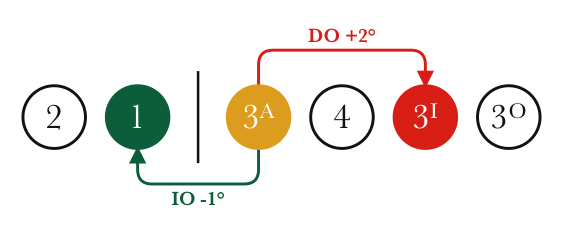
1 indirect object
| (267) | malkvatṇut a nįayrƛƛen de ṇikkava |
| maLkfat-n-tut a/ n--aa--rTTi-n t-i- n-ikkafa | |
| [ˈmaɬːkʷatːn̥ʊt ɑː ˈɲæy̯rːt͡ɬɛn dɛ ˈn̥ɪʰkɑːwɑ] | |
| Ø-m-alk-van-tṇut a nįayrƛƛ-en de ṇ-ikka-va | |
| 3a.ag.pst-kin-give-2˚.pst-1.io pron.3i axe-acc prox.dem poss.1- father-loc.poss | |
| ‘my father gave me this axe’ |
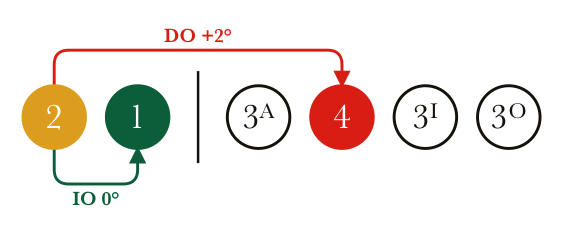
(3a⟫3i⟫⟫1)
| (268) | na tsiniṡṡatṇu-t ken ỏhakittṡu? |
| na c-iniccat-n-u_0 ki-n u-u-hakic--cu? | |
| [nɑ tsɪˈnɪʃːatːn̥ʊk ͜ kɛn ˈoːhɑˈkɪt͡ʃːʊ] | |
| na ts-i-niṡ-van-tṇut–t ken ỏha=kittṡ-u | |
| interr 2.ag-dit.2˚-bring-2˚.pst-1.io interr something-acc | |
| ‘did you bring me something?’ |
(2⟫4⟫⟫1)
| (269) | imaṇṇỉdnut mủppoman muįįitṇut vuoddas |
| iman-nit-nut muuppu-man mujjit-n-ut f-aa-t-tas | |
| [ɪmˈan̥ːiːʔtnʊt ˈmuːʰpɔːman ˈmʊjːɪtːn̥ʊt ˈwuʊ̯tːas] | |
| im-aṇṇỉn-ϕut m-ủppo-ma-n muįįin-tṇut vuoddas | |
| kin-lend-conneg.tr poss.4-pipe-pat-nloc.poss 4.pst-neg.aux-1˚.pst-1.io no.one.act | |
| ‘no one lended me their pipe’ |
(4⟫1⟫⟫3i)
2 indirect object
| (270) | itelkvapput teulkon pinennenna |
| iti-Lkfapput ti-ulku-n pini-nni-nna | |
| [ɪˈtɛɬːkʷaʰpʊt ˈtɛu̯ɬːkɔn pɪˈnɛnːɛnːɑ] | |
| Ø-i-telk-van-pput teulk-on pi-nennen-Ø-va | |
| 3a.ag.pst-kin-write-2˚.pst-2.io letter-pat poss.2-friend-act-loc.poss | |
| ‘your friend wrote you a letter’’ |
(3a⟫2⟫⟫3i)
| (271) | ṃaltsvippu-t ga nįukku huokkukka na mi tảbmi na |
| m-aLc-fippu_0 ga n--ukkut haa-kkukka na mi taapmi na | |
| [m̥ˈaɬːt͡sᶣɪʰpʊg ͜ gɑ ˈɲʊʰkʊ ˈhʊu̯ʰkʊʰkɑ nɑː mɪ ˈtæːʔpmɪ nɑː] | |
| h=im-alts-vin-pput–t ga nįukku huokku-kka na mi tảbm-i na | |
| 3i.unag.pst-kin-cause-1˚.pst-2.io part much.det sorrow-acc pron.3i det situation-pat pron.3i | |
| ‘this situation did cause you a lot of sorrow’ |
(3i⟫2⟫⟫3i)
| (272) | tṡitṡỉbmapput hikva dảƛƛen, a ṇummava-t da |
| c--ic--iipmapput hikfa t-aaTTi-n, a n-ummafa_0 t-a | |
| [t͡ʃɪˈt͡ʃiːʔpmaʰpʊt ˈhɪʰkʷɑ ˈdæːt͡ɬːɛn ɑ ˈn̥ʊmːɑːwɑd ͜ dɑ] | |
| t-i-tṡỉbm-a-pput hikva dảƛƛ-en a ṇ-umma-Ø-va–t da | |
| 3a.ag-kin-wish-2˚.prs-2.io good health-acc top poss.1-mother-act-poss.loc top | |
| ‘my mother wishes you good health’ |
(3a⟫2⟫⟫3i)
3a indirect object
| (273) | maįeddannninnit mi niṡput hảltti na sikkaġan |
| maji-t-tanninnit mi nicput haaltti na sikkag-an | |
| [ˈmɑːjɛtːanːɪnːɪt mɪ ˈnɪʃːpʊt ˈhæːlːtɪ nɑː ˈsɪʰkɑːɣan] | |
| ḥ-im-aįed-vannin-nit mi niṡput hảltt-i na s-ikkaġa-Ø-n | |
| 3i.ag.pst-kin-show-1˚.ret.past-1˚.dit det secret place-acc pron.3i poss.3a-father-act-nloc.poss | |
| ‘his father showed him the secret spot’ |
(3o⟫3a⟫⟫3i)
| (274) | gipeġummettsit piġảġġaidda piniṡpotsảlenna |
| gipi-g-ummi-c-cit pig-aag-gait-ta pinicpu-c-aali-nna | |
| [gɪˈpɛːɣʊmːɛt͡sːɪt pɪˈɣæːɣːæɪ̯tːɑ pɪˈnɪʃːpɔˈt͡sæːlɛnːɑ] | |
| g-i-peġuθ-vet-s-it pi-ġảġġa-it-va pi-niṡpo=tsảl-en-va | |
| 1.ag.pst-kin-tell-3˚.pst-pl.supra-1˚.dit poss.2-brother-illat-poss.loc poss.2-secret-acc-poss.loc | |
| ‘we told your brother your secret’ |
(1l.excl⟫3a⟫⟫3i)
(more commonly as: gipeġummets piġảġġaidda piniṡpotsảlenna)
| (275) | mimaįįeggikinnit saƛƛemet saƛƛaƛƛat nin ai ỏhakammi |
| mimajji-ggikinnit saTTi-mi-t saTTaTTat nin ai u-u-hakammi | |
| [mɪmˈɑːjːɛkːɪkɪnːɪt ˈsat͡ɬːɛːmɛt ˈsat͡ɬːat͡ɬːɑt ˈmɛːgiː ˈoːhɑˈkamːɪ] | |
| m-im-aįįeg-vin-kin=nit saƛƛ=ϕem-et saƛƛ-aƛƛ-at nin ai ỏha=kammi | |
| 4-kin-teach-1˚.pst-1˚.ret.dit. fisherman-illat fish-freq-dep cop.hyp.prs pron.3i.acc someone.act | |
| ‘someone taught the fisherman to fish’ |
(4⟫3a⟫⟫3i)
(more commonly as: mimảįįeggin saƛƛemet saƛƛaƛƛat nin ai ỏhakammi)
4 indirect object
| (276) | timỉldoṡṡit ỏhadaddet ṃakƛul mỉkvoga hikva ỉltti |
| timiilt-u-ccit u-u-hat-at-ti-t m-akTul miikfu-ga hikfa iiltti | |
| [tɪmˈiːlːdoʃːɪt ˈoːhɑdatːɛt ˈm̥akːt͡ɬʊɬ ˈmiːʰkʷɔːgɑ ˈhɪʰkʷɑ ˈiːlːtɪ] | |
| t-im-ỉld-oṡ-ṡit ỏhadadd-et ṃakƛul mỉkvo-ga hikva ỉld=ven-a | |
| 3a.ag-kin-offer-2˚.fut-1˚.dit anyone-illat delicious food-acc good host-act | |
| ‘a good host will feed anyone delicious food’ |
(3a⟫4⟫⟫3i)
(more commonly as: timỉldoṡ ỏhadaddet ṃakƛul mỉkvoga hikva ỉltti)
| (277) | ỉlgimatṇettat gvaiddyttyt ṇảngenna |
| iilgimat-n-i-ttat gfait-ta-tta-t n-aaN-i-nna | |
| [iːlgɪmˈæ:tːn̥ɛʰtat ˈgᶣæɪ̯tːʏʰtʏt ˈn̥æːŋːɛnːɑ] | |
| ỉl_g-im-atṇ-vet-tat gvaidd-yttyt ṇ-ảng-en-va | |
| 1.ag.pst-kin-offer-3˚.pst-2˚.dit everyone-illat.pl poss.1-help-acc-poss.loc | |
| ‘I offered my help to everyone’ |
(1⟫4⟫⟫3i)
(more commonly as: ỉlgimatṇet gvaiddyttyt ṇảngenna)
| (278) | ipeġupput vuoddet mi gilkkin naįįet ai nuttsohavat |
| ip-u-g-upput f-aa-t-ti-t mi gilkkin najji-t ai nuc-cu-hafat | |
| [ˈpɛːɣʊʰpʊt ˈwuʊ̯tːɛt mɪ ˈgɪlːkɪn ˈkajːɛh æɪ̯ mɑˈnʊt͡sːɔhɑːwɑt] | |
| i-peġuθ-ϕut vuodd-et mi g-ilg-ϕin kaįį=et ai nu=tts=oh-a-vat | |
| kin-tell-conneg.tr no.one-illat det 1.ag.pst-go-loc.hyp.pst where-illat pron.3i.acc neg.imp.2-2˚.prs-2˚.dit | |
| ‘don’t tell anyone where I went’ |
3i indirect object
| (279) | tṡitṡendavat kỉkot tsỉdden ḷảġi mi maḍḍi įo |
| c--ic--i-nt-afat kiiku-t c-iit-ti-n Laag-i mi mat--ti ju- | |
| [t͡ʃɪˈt͡ʃɛnːdɑːwɑt ˈkiːkɔt ˈt͡siːtːɛn ˈɬæːɣɪ mɪ ˈmaðːɪ jɔː] | |
| t-i-tṡend-a-vat kỉk-ot tṡỉdden ḷảġ-i mi maḍḍi-Ø įo | |
| 3a.ag-kin-offer-2˚.prs-2˚.dit forest-illat right paw-acc det hunter.act pron.3a | |
| ‘the hunter offers the right paw to the forest’ |
(3a⟫3i⟫⟫3i)
(more commonly as: tṡitṡenda kỉkot tsỉdden ḷảġi mi maḍḍi įo)
| (280) | ỉtsimalkkut pilįomedda vuogga tuįįinnat nenudda |
| iic-imalkkut piL-u-mi-t-ta faa-gga tujjinnat ni-nut-ta | |
| [iːt͡sɪmˈalːkʊt ˈpɪːʎɔmɛtːɑ ˈwuʊ̯kːɑ ˈtʊjːɪnːat ˈnɛːnʊtːɑ] | |
| ỉts_im_alk-ϕut p-ilįom-et-va vuogg-a t-uįį-vin-nat nenut-Ø-va | |
| kin-promisse-conneg.tr poss.2-family-illat-poss.loc nothing-acc 3a.pst-neg.aux.pst-1˚.pst-2˚.dit son-act- poss.loc | |
| ‘my son promissed nothing to your family’ |
(3a⟫4⟫⟫3i)
(more commonly as: ỉtsimalkkut pilįomedda vuogga tuġuttin nenudda)
| (281) | gipalġġettut kảtṡet kỉ lỏdna |
| gipalg-gi-ttut kaac--i-t kii lu-u-t-na | |
| [gɪ palːɣɛʰtʊt ˈkæːt͡ʃɛt kiː ˈloːʔtna] | |
| g-i-palġ-vet-tut kảtṡ-et kỉ lỏdn-a | |
| 1.ag.pst-kin-make-3˚.pst-3˚.dit hammer-illat new handle-acc | |
| ‘I made the hammer a new handle’ |
(1⟫3i⟫⟫3i)
(more commonly as: gepalġġet kảtṡet kỉ lỏdna)
3o indirect object
| (282) | ipeġummannamit ṃairgit hįỉƛo |
| ipi-g-ummannamit m-airgit h-iiTu- | |
| [ɪˈpɛːɣʊmːanːɑːmɪt ˈm̥æɪ̯rːgɪt ˈɕiːt͡ɬɔ] | |
| Ø-i-peġuθ-van-namit ṃairgit hįỉƛ-o | |
| 3a.ag.pst-kin-tell-2˚.pst-3o.io funny story-acc | |
| ‘s/he told him a funny story’ |
(3a⟫3o⟫⟫3i)
| (283) | malkvinnamit kuoka ỏhakittṡu na mi nįelli įo |
| maLkfinnamit kaa-ka u-u-hakic--cu na mi n--i-lli ju- | |
| [ˈmaɬːkᶣɪnːɑːmɪt ˈkuʊ̯kɑ ˈoːhɑˈkɪt͡ʃːʊ nɑː mɪ ˈɲɛlːɪ jɔː] | |
| Ø-im-alk-vin-namit kuoka ỏha=kittṡ-u na mi nįelli-Ø įo | |
| 3a.ag.pst-kin-give-1˚.pst-3o.io other something-acc pron.3i det chief-act pron.3a | |
| ‘the chief gave her/him2 something else’ |
(3a⟫3o⟫⟫4)
| (284) | gitekkeddinnamit |
| giti-kki-t-tinnamit | |
| [gɪˈtɛʰkɛtːɪnːɑːmɪt] | |
| g-i-tekk=ed-vin-namit | |
| 1.ag.pst-kin-introduce-1˚.pst-3o.io | |
| ‘I introduced my friend1 to her/him2’’ |
(1⟫3o⟫⟫3a)
§8.5.3 Hemiditransitive Verbs
Hemiditransitive verbs are transitive verbs whose object is an antergate – the indirect object of a ditransitive verb found in a transitive verb as the direct object in the absence of a real direct object. The antergate can only appear within the verb. In older forms of the language, the antergate could be found in the accusative, and this is still allowed when it is relativised with non-restrictive relative pronoun nama ‘whom, which’ instead of namet ‘to whom/which’. In most varieties of informal or colloquial Pine, if the antergate appears as an independent pronoun or a nominal argument, hemiditransitivity is not used and a regular transitive form is found instead, but in more formal language, the presence of a pronominal or nominal antergate outside the verb does not reduce hemiditransitive verbs to a transitive form:
| colloquial | galkket bįůeƛƛet | ‘I gave it to the boy’ |
| formal | gimalkkettit bįůeƛƛet | ‘I gave it to the boy’ |
Therefore, hemiditransitive verbs are normal transitive verbs whose object is in fact an indirect object (and therefore requires the kinetic preverb), and whose direct object is omitted entirely. Morphosyntactically, they differ from transitive verbs solely by the presence of the kinetic preverb, and by the use of a locative case on nouns and pronouns (in formal registers).
For example, the verb peġuθ- ‘tell’ can appear with or without an overt direct object. By promoting the indirect object to an anti-ergative function, the focus is moved from the direct object to the indirect object, resulting in a different nuance in many cases. Both ditransitive and hemiditransitive forms are often completely acceptable, but the hemiditransitive may be more common in familiar of colloquial speech. Generally, hemiditransitive verbs are seen as less formal.
| edda gipeġummannin | ‘s/he told me already’ | hemiditransitive form |
| edda ipeġummatṇut | ‘s/he told me already about it’ | fully ditransitive form |
With the verb peġuθ- ‘tell’, the hemiditransitive form found with an oblique direct object in the elative can have a slightly different meaning:
ditransitive
| (285) | gipeġummettsit piġảġġaidda |
| gipu-g-ummi-c-cit pig-aag-gait-ta | |
| [gɪˈpɛːɣʊmːɛt͡sːɪt pɪˈɣæːɣːæɪ̯tːɑ] | |
| g-i-peġuθ-vet-s-it pi-ġảġġa-it-va | |
| 1.ag.pst-kin-tell-3˚.pst-pl.supra-1˚.dit poss.2-brother-illat-poss.loc | |
| ‘we told it to your brother’ |
(1l.excl⟫3a⟫⟫3i)
(more commonly gepeġummet piġảġġaidda)
| (286) | gineskvepput alttsema |
| gini-skfi-pput alc-ci-ma | |
| [gɪˈnɛsːkᶣɛʰpʊh ˈalːt͡sɛːmɑ] | |
| g-i-nesk-vet-pput alttsem-a | |
| 1.ag.pst-kin-ask-3˚.pst-2.io reason-acc | |
| ‘I asked you about it’ |
hemiditransitive without direct object
| (287) | gipeġummis piġảġġaidda |
| gipi-g-ummic- pig-aag-gait-ta | |
| [gɪˈpɛːɣʊmːɪs pɪˈɣæːɣːæɪ̯tːɑ] | |
| g-i-peġuθ-vin-s pi-gảġġa-it-va | |
| 1.ag.pst-kin-tell-1˚.pst-pl.supra poss.2-brother-illat-poss.loc | |
| ‘we told your brother’ |
(1l.excl⟫3a⟫⟫Ø)
(more commonly gepeġummet piġảġġaidda)
| (288) | tsineskvannat |
| c-ini-skfannat | |
| [t͡sɪˈnɛsːkʷanːat] | |
| ts-i-nesk-vannat | |
| 2.ag.pst-kin-ask-0˚.loc.pst | |
| ‘I asked you (about it)’ |
hemiditransitive with elative direct object
| (289) | gipeġummis piġảġġaidda piniṡpotsảlỉnna |
| gipu-g-ummis pig-aag-gait-ta pinic-pu-c-aaliinna | |
| [gɪˈpɛːɣʊmːɪs pɪˈɣæːɣːæɪ̯tːɑ pɪˈnɪʃːpɔˈt͡sæːliːnːɑ] | |
| g-i-peġuθ-vin-s pi-ġảġġa-it-va pi-niṡpo=tsảl-ỉn-va | |
| 1.ag.pst-kin-tell-1˚.pst-pl.supra poss.2-brother-illat-poss.loc poss.2-secret-elat-poss.loc | |
| ‘we told your brother about your secret’ |
(more commonly gepeġummets piġảġġaidda piniṡpotsảlenna)
| (290) | tsineskvannat alttsemunnit |
| c-ini-skfannat alc-ci-munnit | |
| [t͡sɪˈnɛsːkʷanːah ˈalːt͡sɛːmʊnːɪt] | |
| ts-i-nesk-vannat alttsem-unnit | |
| 2.ag.pst-kin-ask-0˚.loc.pst reason-elat | |
| ‘I asked you about the reason’ |
In the former fully ditransitive example, the assumption is that the secret was revealed. In the hemiditransitive example, one could assume that the existence of a secret was revealed, but its content may not necessarily have been exposed completely. However, both phrases can and often do have the exact same reading, and only an issue of formality or register separates them.
Typically, hemiditransitive verbs often have introduce a complementised clause which acts as the direct object of such verbs. In more elevated or more formal speech, complementised clause can have the fourth person as main clause referent, but this is not common in normal, colloquial speech, which is why such verbs are commonly found as hemiditransitives. The indirect object of such verbs often corresponds more closely to a beneficiary or recipient than a true indirect object.
Verbs commonly found as hemiditransitives include:
| peġuθ- | ‘tell (someone)’ |
| aįed- | ‘explain (to someone)’ |
| aįįeg- | ‘teach (someone)’ |
| alk- | ‘allow’ |
| ỉts-alk- | ‘promise (to someone)’ |
| haḍg- | ‘swear (to someone)’ |
| mieg- | ‘let (someone) know, inform (someone)’ |
| nesk- | ‘ask (someone)’ |
| rits- | ‘complain (to someone)’ |
| ỉl-tekked- | ‘propose’ |
§8.5.4 Anthemiditransitive Verbs
Whereas ditransitive verbs have both a direct and an indirect object, and hemiditransitive verbs have no direct object and an anti-ergative indirect object, anthemiditransitive verbs are originally intransitive verbs with an indirect object. Anthemiditransitive verbs completely lack the kinetic preverb. Anthemiditransivity is also involved in patient raising with a non-local object. Patient raising is the promotion of an experiencer or benefactor, often of an adjectival verb to indirect object. Only already intransitive verbs that remain intransitive are anthemiditransitive. When patient raising occurs with a local object, it is promoted to the object position without any other changes. Such verbs are sometimes also called inversive verbs, as the subject is usually a third-person inanimate but the object is often animate, for example ṇepakkeset ‘it hurts me’ (inversive with a local object) but pakkakinnat ‘it hurts her/him’ (anthemiditransitive with a non-local indirect object). Adjectival verbs only occur as inversive verbs if they are found with the opinionative, and sometimes aspective medial – otherwise, they are fully anthemiditransitive with both local and non-local experiencers.
| promoted object | type of verb | transitivitiy | promotion to |
| local | intransitive verb to transitive pakkami ‘it hurts’ | reversive ṇepakkeset ‘it hurts me’ | (direct) object |
| opinionative adjectival verb aspective adjectival verb tammegami ‘it is big’ | standard transitive gatammegendet ‘I find it big’ | subject | |
| non-local | intransitive pakkami ‘it hurts’ | anthemiditransitive pakkakinnat ‘it hurts her/him’ | indirect object |
With anthemiditransitive verbs, the third-person inanimate -mi is most commonly dropped, but ditransitive paragogic finals are added onto the verb as if it ended in -n, such that -ami-vut is instead found as -ammut, and -ami-vamit becomes -ammamit.
Taking the adjectival verb tammeg- ‘be big’, we can derive an intransitive form (tammegami ‘it is big’), an anthemiditransitive form (tammegakinnat ‘it is big to/for her/him’) and a reversive form with an opinionative medial (gatammegendatseset ‘it is big enough for me’) or aspective medial (gatammittoġeset ‘it appears big to me’).
| intransitive | tammegami | ‘it is big’ |
| anthemiditransitive | tammegakinnat | ‘it is big to/for her/him’ |
| tammittoġatṇut | ‘it appears big to me’ | |
| pakkakinnat | ‘it hurts her/him’ | |
| reversive | gatammegendautseset | ‘it is big enough for me’ |
| gatammittoġeset | ‘it appears big to me’ | |
| ṇepakkeset | ‘it hurts me’ |
Below are examples of anthemiditransitive forms of intransitive verbs, mostly adjectival verbs.
| beyƛis | ‘important’ | ⟫ | beyƛissakinnat | ‘it is important to her/him’ |
| meurra | ‘difficult’ | ⟫ | na meurrauggappi-t ke? | ‘is it too difficult for you?’ |
| giṡṡerit | ‘complicated’ | ⟫ | giṡṡirůttůġůmůtṇůt | ‘it could seem complicated to me’ |
§8.5.4.1 Anthemiditransitive Copula
The copula can accept ditransitive paragogic finals, resulting in an anthemiditransitive copula, either the true copula or the translative copula aḷḷ-. This is not very common outside of formal registers and fixed expressions. Such expressions often have a benefactive meaning, for example gammapput deįįa ‘I am here for you’. Sematic predicates of the copula are common in such expressions Below are some examples of common expressions with an anthemiditransitive copula.
| ỉkinnat puoge na | ‘it was too much for her/him, it is beyond her/him’ | |
| uġun mỉto ủkinnat | a | ‘unbeknownst to her/him, without her/his knowledge’ |
| uġun oaḷḷen ủkinnat a | ‘s/he does not care’ | |
| nảkinnat~aḷḷakinnat ůṇṇen~utṇa (a) | ‘s/he looks like…’ | |
| nảkinnat neiktson a | ‘s/he wonders about it, is uncertain about it’ | |
| nảkinnat nảḥả na | ‘it is advantageous to her/him, to her/his advantage’ | |
| nảkinnat tảtsen~ỷṛen a | ‘it is unclear to her/him (memory, recollection)’ | |
| nảkinnat ỷhỷ na | ‘s/he is disgusted by’ | |
| nảkinnat tṡulmitsảlen a | ‘it is a matter of great importance to her/him’ | |
| ỉkinnat ukkummit a | ‘it was in vain (for her/him)’ | |
| aḷḷikinnat nannit ṡủṡuts | ‘s/he has heard rumors about it’ | |
| aḷḷikinnat tảlknen | ‘s/he became emotional, was on the verge of tears’ | |
| aḷḷikinnat nannit tảhả | ‘s/he became curious about it’ | |
| aḷḷikinnat mỉtả | ‘s/he became aware’ | |
| aḷakinnat teukkus~tsỉkkus | ‘s/he needs to go (urine)’ | |
| aḷakinnat tsảlen | ‘s/he needs to go (bowel movement)’ | |
| aḷḷikinnat tủlủ | ‘s/he had the idea, thought of’ | |
| aḷḷikinnat tṡalpủ | ‘s/he began having trouble breathing’ | |
| aḷḷikinnat voiḍḍu | ‘s/he died (unexpectedly)’ | |
| aḷḷikinnat vảlả | ‘s/he got the impression’ | |
| aḷḷikinnat vảḥḥi | ‘s/he was scared, became scared, fearful that…’ | |
| aḷḷikinnat vuoven | ‘s/he was at risk of, s/he nearly…’ | |
| aḷḷikinnat tṡủmme | ‘s/he was threatened, s/he was in danger’ |
§8.5.5 Ditransitive Possessor Raising
Transitive verbs whose object is possessed by someone or something generally see the possessor raised to the position of indirect object of a ditransitive verb. This is called ditransitive possessor raising. For example, ‘s/he cut my hair’ in Pine would be expressed as ‘s/he cut me hair’ or more colloquially as ‘s/he cut me my hair’, where possessor raising does not remove the possessor from its normal position. Possessor raising is common with unalienable possession, and in many cases alienable possessions (generally excluding animate things) that are more intimately related to the possessor are also allowed.
If possessor raising is applied to an object which is the same as the subject, the middle voice medials -uttu(g)-/-atta(g)-/-ůttů(g)- are used, for example gekuskuttuvet hỉktṡo ‘I cut my hair’.
with possessor rising
| (291) | kuskvatṇut hỉktṡo |
| kuskfat-n-ut hiikc--u- | |
| [ˈkʊsːkːʷatːn̥ʊt ˈhiːkːt͡ʃɔ] | |
| Ø-kusk-van-tṇut hỉktṡ-o | |
| 3a.ag.pst-cut-2˚.pst-1.io hair-acc | |
| ‘s/he cut my hair’ |
sakƛeddapput ỉlįon
sakTi-t-tapput iiL-u-n
[ˈsakt͡ɬɛtːaʰpʊh ˈiːʎɔn]
Ø-sakƛ=ed-van-pput ỉlį-on
3a.ag.pst-save-2˚.pst-2.io life-acc
s/he saved your life’
gikkuskvanunnit ảṇṇen
mikkuskfanunnit aan-ni-n
| (292) | meṡkvannamit ảṇṇen |
| meṡkvannamit ảṇṇen mi-ckfannamit aan-ni-n | |
| [ˈmɛʃːkʷanːɑːmɪh ˈæːn̥ːɛn] | |
| Ø-meṡk-van-namit ảṇṇ-en | |
| 3a.ag.pst-kiss-2˚.pst-3o.io hand-acc | |
| ‘s/he1 kissed her/his2 hand’ |
| (293) | ỉgikuskuttuvan ảṇṇen sỉttṡon |
| iigikuskuttufan aan-ni-n siic--cu-n | |
| [iːgɪˈkʊsːkʊʰtʊːwan ˈæːn̥ːɛn sˈiːt͡ʃːɔn] | |
| ỉ_gi-Ø_kusk-uttu-van ảṇṇ-en s-ỉttṡ-u-n | |
| transloc-3a.ag.pst-cut.off-mid-2˚.pst hand- gen poss.3a-own-acc-poss.nloc | |
| ‘s/he cut off her/his own hand’ |
[gɪˈʰkʊsːkʷɑnʊnːɪt ˈæːn̥ːɛn ]
g-Ø-iϕ-kusk-van-nunnit ảṇṇ-en
3.ag.pst-kin-cut-2˚.pst-0˚.dit hand-acc
‘s/he cut off her/his own hand’
| (294) | hirtsvatṇut ṛvůegven |
| hir-c-fat-n-ut r-f-u--i-gfi-n | |
| [ˈhɪr̥ːt͡sʷatːn̥ʊt ˈr̥ᶣyœ̯kᶣːɛn] | |
| Ø-hirts-van-tṇut ṛvůegv-en | |
| 3.ag.pst-steal-2˚.pst-1.io ring-acc | |
| ‘s/he stole my ring’ |
without possessor rising
| (295) | kuskvan ṇihỉktṡova |
| kuskfan n-ihiikc--u-fa | |
| [ˈkʊsːkʷan n̥ɪˈhiːkːt͡ʃɔːwɑ] | |
| Ø-kusk-van ṇi-hỉktṡ-va | |
| 3.ag.pst-cut-2˚.pst poss.1-hair-acc-poss.loc | |
| ‘s/he cut my hair’ |
sakƛeddan ṇỉlįonna
sakTi-t-tan n-iiL-u-nna
[ˈsakt͡ɬɛtːaʰpʊh ˈiːʎɔn]
Ø-sakƛ=ed-van-pput ṇ-ỉlį-on-va
3a.ag.pst-save-2˚.pst poss.1-life-acc-poss.loc
s/he saved your life’
| (296) | meṡkvan sảṇṇenamin |
| mi-ckfan saan-ni-namin | |
| [ˈmɛʃːkʷan ˈsæːn̥ːɛnɑːmɪn] | |
| Ø-meṡk-van s-ảṇṇ-en-amin | |
| 3a.ag.pst-kiss-2˚.pst poss.3a-hand-acc-poss.3o | |
| ‘s/he kissed her/his2 hand’ |
| (297) | ỉgikkuskvan ảṇṇen sỉttṡon |
| iikgikuskfan aa-n-ni-n siic--cu-n | |
| [iːgɪˈʰkʊsːkʷan ˈæːn̥ːɛn ˈsiːt͡ʃːɔn ] | |
| ỉ_g-Ø_-iϕ-kusk-van ảṇṇ-en s-ỉttṡ-u-n | |
| 3a.ag.pst-kin-cut.off-2˚.pst hand-gen poss.3a-own-acc-poss.nloc | |
| ‘s/he cut off her/his own hand’ |
| (298) | hirttsan ṇiṛvůegvenna |
| hirc-can n-ir-fu--i-gfi-nna | |
| [ˈhɪrːt͡san n̥ɪˈr̥ᶣyœ̯kᶣːɛnːɑ] | |
| Ø-hirts-van ṛvůegv-en | |
| 3.ag.pst-steal-2˚.pst poss.1-ring-acc-poss.loc | |
| ‘s/he stole my ring’ |
§8.5.6 Patient Raising
Patient raising specifically refers to cases where the possessor, often of an inalienable possession such as a body part, or an experiencer or recipient of some experience or quality is promoted to object of a verb.
Depending on the locality of the promoted object, patient raising can result in two different constructions: reversive verbs and anthemiditransitive verbs. If patient raising occurs a non-local object, anthemiditransitive forms result. If patient raising occurs with a local object, reversive forms result – even with obligate intransitive verbs. Adjectival verbs only ever undergo reversive patient raising in the presence of the opinionative and aspective medials. This means that locality does not affect patient raising with adjectival verbs, which is unique to this class of verbs. Most verbs that take part in patient raising are unagentive by nature, with the exception of adjectival verbs which are always agentive, although most aspective verbs are in fact unagentive.
patient raising alignment and valency
| 3i⟫⟫2 | p(i)-Ø-eset | reversive transitive |
| 3i⟫⟫1 | ṇ(e)-Ø-eset | reversive transitive |
| 3i⟫⟫3a | Ø-a-kin-nat/-ik-an-nat | anthemiditransitive |
| 3i⟫⟫3o | Ø-a-vamit/-annamit | anthemiditransitive |
| adj.verb | + -end-/-ottoġ-/-ůttůġ- | transitive |
Below are examples of patient raising:
| (299) | na edda-t ke pipakkeset buonne? |
| na i-t-ta_0 ki- pipakki-si-t p-aa-nni-? | |
| [nɑ ˈɛtːɑk ͜ kɛ pɪˈpaʰkɛːsɛt ˈbuʊ̯nːɛ] | |
| na edda–t ke pi-pakk-eset buonn-e | |
| interr still interr 2.unag-hurt-3˚.ret.prs toe-pat | |
| ‘does your toe still hurt?’ |
(3i⟫⟫2)
| (300) | ṇepakkeset ṇůegvi |
| ni-pakki-si-t n-u--i-gfi | |
| [n̥ɛˈpaʰkɛːsɛt ˈn̥ʏy̯kᶣːɪ] | |
| ṇe-pakk-eset ṇůegv-i | |
| 1.unag-hurt-3˚.ret.prs head-pat | |
| ‘my head hurts’ |
(3i⟫⟫1)
| (301) | hįỉgảkkinnat nảltit |
| h-iigaakkinnat naaLtit | |
| [ˈɕiːgæːʰkɪnːat ˈnæːɬːtɪt] | |
| Ø-hįỉg-ả=t-kin-nat nảlt-it | |
| 3i.unag-ache-3i.prs.pl-dit.ret-2˚.dit tooth-pat.pl | |
| ‘her/his teeth ache’ |
(3i⟫⟫3a)
| (302) | hįỉgảkkinnan nảltit |
| h-iigaakkinnan naaLtit | |
| [ˈɕiːgæːʰkɪnːan ˈnæːɬːtɪt] | |
| Ø-hįỉg-ả=t-kin-nat-an nảlt-it | |
| 3i.unag-ache-3i.prs.pl-dit.ret-2˚.dit-pl.infra tooth-pat.pl | |
| ‘their teeth ache’ |
(3i⟫⟫3a)
(3i⟫⟫3a.pl)
| (303) | ṛiḍḍįảkkinnat piskut |
| r-it--tjaakkinnat piskut | |
| [ˈr̥ɪθːjæːʰkɪnːat ˈpɪsːkʊt] | |
| h-ṛiḍḍį-ả=t-kin-nat pisk-ut | |
| 3i.unag-hurt-3i.prs.pl-dit.ret-2˚.dit ear-pat.pl | |
| ‘her/his2 ears hurt, are popping’ |
(3i⟫⟫3o)
| (304) | tiggannamit |
| tiggannamit | |
| [ˈtɪkːanːɑːmɪt] | |
| t-igg-an-namit | |
| 3a.ag-be.good-nloc.prs-3o.io | |
| ‘s/he1 is good for her/him2’ |
(3a⟫⟫3o)
| (305) | pibeyƛisseset |
| pip-i-a-Tissi-si-t | |
| [pɪˈbɛy̯t͡ɬɪsːɛːsɛt] | |
| pi-beyƛiss-eset | |
| 2.unag-be.important-3˚.ret.prs | |
| ‘it is important for you’ |
(3i⟫⟫2)
| (306) | beyƛissakinnat |
| p-i-a-Tissakinnat | |
| [ˈbɛy̯t͡ɬɪsːɑkɪnːat] | |
| Ø-beyƛiss-a-kin-nat | |
| 3i.ag-be.important-3i.prs-dit.ret-2˚.dit | |
| ‘it is important for her/him’ |
(3i⟫⟫3a)
| (307) | beyƛissakinnan |
| p-i-a-Tissakinnan | |
| [ˈbɛy̯t͡ɬɪsːɑkɪnːan] | |
| Ø-beyƛiss-a-kin-nat-an | |
| 3i.ag-be.important-3i.prs-dit.ret-2˚.dit-pl.infra | |
| ‘it is important for them’ |
(3i⟫⟫3a.pl)
| (308) | beyƛissat mủįakinnit vuoggas |
| p-i-a-Tissat muujakinnit faa-ggas | |
| [ˈbɛy̯t͡ɬɪsːat ˈmuːjɑkɪnːɪt ˈwuʊ̯kːas] | |
| beyƛiss-ϕat m-ủ=į-an-kin-nit vuoggas | |
| be.important-conneg.itr 4.ag-neg.aux.4-nloc.prs-dit.ret-1˚.dit nothing.act | |
| ‘nothing is important to her/him’ |
(4⟫⟫3a)
| (309) | beyƛissat vuoddet mủįan vuoggas |
| p-i-a-Tissat f-aa-t-ti-t muujan faa-ggas | |
| [ˈbɛy̯t͡ɬɪsːat ˈwuʊ̯tːɛt ˈmuːjan ˈwuʊ̯kːas] | |
| beyƛiss-ϕat vuodd-et m-ủ=į-an vuoggas | |
| be.important-conneg.itr no_one-illat 4.ag-kin-neg.aux.4-nloc.prs nothing.act | |
| ‘nothing matters to anyone’ |
(non-anthemiditransitive)
| (310) | beyƛissat mủįannit vuoggas |
| p-i-a-Tissat muujannit faa-ggas | |
| [ˈbɛy̯t͡ɬɪsːat ˈmuːjanːɪt ˈwuʊ̯kːas] | |
| beyƛiss-ϕat m-ủ=į-an-nit vuoggas | |
| be.important-conneg.itr 4.ag-kin-neg.aux.4-nloc.prs-1˚.dit nothing.act | |
| ‘nothing matters to it’ |
(4⟫⟫3i)
§8.5.6.1 Reversive Patient Raising: Local Object
When a local participant is promoted to the object of an otherwise intransitive verb through patient raising, the result verb is a transitive, reversive verb. Such verbs are called reversive because the experiencer is the object, while the subject is usually an third-person inanimate. They are typically found with pi-Ø-eset (3i⟫⟫2) and ṇe-Ø-eset (3i⟫⟫1). All adjectival verbs with an opinionative (-end-) or aspective medial (-ottoġ-/-ůttůġ-) are reversive with a local pronoun, and some speakers also allow a third-person animate or obviate to be raised.
Not all reversive verbs are the result of patient raising – some verbs with apparently reversive alignment cannot be found as anthemiditransitive with non-local objects, for example sikvav- ‘attract’ has sitṇikvaveset ‘it attracts me, I am attracted to it’ and sikvavemat ‘it attracts her/him, s/he is attracted to it’, and not *sikvavappit (as it would be if anthemiditransitive). Reversive patient raising is only a feature of the same verbs that are anthemiditransitive with a non-local object.
| intransitive verb | reversive patient raising | ||||||||
| akƛami | ‘it itches’ | ⟫ | ṇakƛeset | ‘my Ø itches’ | |||||
| dollami | ‘it happens’ | ⟫ | ṇedolleset | ‘it happens to me’ | |||||
| gaġnami | ‘it curves’ | ⟫ | ṇegaġneset | ‘I tend to…’ | |||||
| gakvami | ‘it bites’ | ⟫ | ṇegakveset | ‘I feel like, I want to…’ | |||||
| gaiḥḥami | ‘it is necessary’ | ⟫ | ṇegaiḥḥeset | ‘I need it’ | |||||
| skaman | ‘s/he has a vision’ | ⟫ | ṇegameset | ‘I see it in a dream’ | gatsuvami | ‘it is sufficient’ | ⟫ | ṇegatsuveset | ‘it suffices me’ |
| giḷḷami | ‘it is forgotten’ | ⟫ | ṇegiḷḷeset | ‘I forget about it’ | |||||
| humottoġami | ‘it seems dim’ | ⟫ | ṇehumottoġeset | ‘I vaguely recall…’ | |||||
| hįỉgami | ‘it hurts’ | ⟫ | ṇehįỉgeset | ‘it hurts me’ | |||||
| ḥillįami | ‘it is alive’ | ⟫ | ṇillįeset | ‘I vividly remember…’ | |||||
| hintt(uss)ivuttami | ‘it is possible’ | ⟫ | ṇindiveset | ‘it is possible for me…’ | |||||
| hiṡnami | ‘it starts’ | ⟫ | ṇiṡneset | ‘my Ø starts…’ | |||||
| hįeḍḍami | ‘it flows’ | ⟫ | ṇeįeḍḍeset | ‘my Ø is progressing’ | |||||
| ḥỉlulottoġami | ‘it is seems familiar’ | ⟫ | ṇỉlulottoġeset | ‘it is familiar to me’ | |||||
| kaukami | ‘it is striking’ | ⟫ | ṇekaukeset | ‘it strikes me…’ | |||||
| keuvami | ‘it is linked’ | ⟫ | ṇekeuveset | ‘it concerns me…’ | |||||
| kintṡami | ‘it strikes (lightning)’ | ⟫ | ṇekintṡeset | ‘I suddenly realise…’ | |||||
| kįaṡkami | ‘it is barbed’ | ⟫ | ṇekįaṡkeset | ‘I notice…’ | |||||
| koaḷḷami | ‘it rustles’ | ⟫ | ṇekoaḷḷesetan soalmut | ‘I am wheezing’ | |||||
| ḷakkinami | ‘it happens’ | ⟫ | ṇelakk(in)eset | ‘it happens to me’ | |||||
| ƛidnan | ‘s/he says’ | ⟫ | ṇelidneset | ‘it tells me…’ | |||||
| ƛekvami | ‘it bites (fish)’ | ⟫ | ṇeƛekveset | ‘I have the chance to…’ | |||||
| tṃidan | ‘s/he knows’ | ⟫ | ṇemideset | ‘I am aware…’ | |||||
| ṇaḥami | ‘it is advantageous’ | ⟫ | ṇenaḥeset | ‘it is advantageous to me’ | |||||
| eġoṇenami | ‘it is left’ | ⟫ | eġoṇeneset | ‘I have Ø left’ | |||||
| ṇisṇami | ‘it cramps up’ | ⟫ | ṇenisṇeset | ‘my Ø cramps up’ | |||||
| ṇuntṡami | ‘it dies (animal)’ | ⟫ | ṇenuntṡeset | ‘my Ø is killing me’ | |||||
| ṇįirġġami | ‘it shakes, trembles’ | ⟫ | ṇeṇįirġġeset | ‘my Ø is shaking’ | |||||
| hohakkami | ‘it stings’ | ⟫ | ṇohakkeset | ‘I have a feeling that…’ | |||||
| pakkami | ‘it hurts’ | ⟫ | ṇepakkeset | ‘it hurts me’ | |||||
| pispami | ‘it splits’ | ⟫ | pispyt nủtṇesetan | ‘I can’t tell them apart’ | |||||
| pittaġami | ‘it flies off’ | ⟫ | ṇepittaġeset | ‘I’m in a hurry to…’ | |||||
| pỉvỉnami | ‘it sneaks’ | ⟫ | ṇepỉv(ỉn)eset | ‘I suspect…’ | |||||
| ṛaḥḥami | ‘it fails’ | ⟫ | ṇeraḥḥesetan gevvamut | ‘my knees buckles’ | |||||
| ṛaddami | ‘it chafes’ | ⟫ | ṛaddeset | ‘my Ø chafes’ | |||||
| ṛihan | ‘s/he weaves’ | ⟫ | ṇeṛiheset | ‘it confounds me…’ | |||||
| siskva | ‘there is thunder’ | ⟫ | sitṇisiskveset | ‘it dawns on me…’ | |||||
| hiuklami | ‘it is warped’ | ⟫ | ṇesiukleset | ‘I struggle with it’ | |||||
| huttaġami | ‘it seems, it appears’ | ⟫ | ṇuttaġeset | ‘it seems to me…’ | |||||
| huġvami | ‘it is missing’ | ⟫ | ṇuġveset | ‘I miss it, I don’t have it’ | |||||
| hulġami | ‘it flows’ | ⟫ | ṇulġeset ṇįỉrunnit (ảbmả) | ‘my nose is bleeding’ |
§8.5.6.2 Anthemiditransitive Patient Raising: Non-Local Object
When patient raising occurs to a non-local participant and in the absence of opinionative and aspective medials on adjectival verbs and in many other otherwise intransitive verbs, anthemiditransitive alignment is required. The verb is unchanged except for the presence of ditransitive paragogic finals – without any kinetic preverb.
A consequence of this is that intransitive verbs may be found with polypersonal pluralization, for example beyƛissakimma(ta)n ‘it is important to them’, where -an indicates that the raised patient is pluralised, here through the infrapositional plural formant. Most speakers replace the final -t of ditransitive paragogic finals with -n to indicate plurality of the indirect object, but -pput ‘to you’ becomes -ppotṡin ‘to us’ in the plural inclusive. Pluralization is not necessary but may be added for clarity, although some speakers completely avoid pluralization of ditransitive finals.
For a third-person animate patient (3i⟫⟫3a), the 2˚ retrograde indirect object marker Ø-kin=nat is used, where the third-person inanimate final -mi is deleted, for example in tṡulttṡanakinnat suolkken ‘her/his heart is beating (lit. the heart beats her/him)’ (cf. tṡulttṡanami suolkken 'the heart is beating'). Many speakers have replaced -a-kin- by -ik-a(n)-, that is the retrograde ditransitive marker -ki- has been metathesised before the third-person inanimate final and the theme: tṡulttṡanikannat ‘her/his heart is beating’. This metathesis only occurs in the case of such patient raising verbs. Likewise, the third-person plural -t (koaḷḷoat ‘they rustle’) undergoes metathesis and assimilation with -kin-: -t-ki- ⟫ -kkin-, but some speakers (especially in the northeastern dialects) have -ki-t- instead, such that koaḷḷoakkinnat is more commonly heard as koaḷḷoakittat ‘(her/his lungs) are wheezing’ in these dialects.
| intransitive verb | anthemiditransitive patient raising | ||||||||
| akƛami | ‘it itches’ | ⟫ | akƛakinnat | ‘her/his Ø itches’ | |||||
| dollami | ‘it happens’ | ⟫ | dollakinnat | ‘it happens to her/him’ | |||||
| gaġnami | ‘it curves’ | ⟫ | gaġnakinnat | ‘s/he tends to…’ | |||||
| gakvami | ‘it bites’ | ⟫ | gakvakinnat | ‘s/he feels like, wants to…’ | |||||
| gaiḥḥami | ‘it is necessary’ | ⟫ | gaiḥḥakinnat | ‘s/he needs it’ | |||||
| skaman | ‘s/he has a vision’ | ⟫ | gamakinnat | ‘s/he sees it in a dream’ | gatsuvami | ‘it is sufficient’ | ⟫ | gatsuvakinnat | ‘it suffices her/him’ |
| giḷḷami | ‘it is forgotten’ | ⟫ | giḷḷakinnat | ‘s/he forgets about it’ | |||||
| humottoġami | ‘it seems dim’ | ⟫ | humottoġakinnat | ‘s/he vaguely recalls…’ | |||||
| hįỉgami | ‘it hurts’ | ⟫ | hįỉgakinnat | ‘it hurts her/him’ | |||||
| ḥillįami | ‘it is alive’ | ⟫ | hillįakinnat | ‘s/he vividly remembers…’ | |||||
| hinttussivuttami | ‘it is possible’ | ⟫ | hintt(ussi)vuttakinnat | ‘it is possible for her/him…’ | |||||
| hiṡnami | ‘it starts’ | ⟫ | hiṡnakinnat | ‘her/his Ø starts…’ | |||||
| hįeḍḍami | ‘it flows’ | ⟫ | hįeḍḍakinnat | ‘her/his Ø is progressing’ | |||||
| ḥỉlulottoġami | ‘it is seems familiar’ | ⟫ | hỉlulottoġakinnat | ‘it is familiar to her/him’ | |||||
| kaukami | ‘it is striking’ | ⟫ | kaukakinnat | ‘it strikes her/him…’ | |||||
| keuvami | ‘it is linked’ | ⟫ | keuvakinnat | ‘it concerns her/him…’ | |||||
| kintṡami | ‘it strikes (lightning)’ | ⟫ | kintṡakinnat | ‘s/he suddenly realises…’ | |||||
| kįaṡkami | ‘it is barbed’ | ⟫ | kįaṡkakinnat | ‘s/he notices…’ | |||||
| koaḷḷami | ‘it rustles’ | ⟫ | koaḷḷoakkinnat soalmut | ‘s/he am wheezing’ | |||||
| ḷakkinami | ‘it happens’ | ⟫ | ḷakk(in)akinnat | ‘it happens to her/him’ | |||||
| ƛidnan | ‘s/he says’ | ⟫ | ḷidnakinnat | ‘it tells her/him…’ | |||||
| ƛekvami | ‘it bites (fish)’ | ⟫ | ƛekvakinnat | ‘s/he has the chance to…’ | |||||
| tṃidan | ‘s/he knows’ | ⟫ | ṃidakinnat | ‘s/he is aware…’ | |||||
| ṇaḥami | ‘it is favourable’ | ⟫ | ṇaḥakinnat | ‘its favourable to her/him’ | |||||
| eġoṇenami | ‘it is left’ | ⟫ | eġoṇenakinnat | ‘s/he has Ø left’ | |||||
| ṇisṇami | ‘it cramps up’ | ⟫ | ṇisṇakinnat | ‘her/his Ø cramps up’ | |||||
| ṇuntṡami | ‘it dies (animal)’ | ⟫ | ṇuntṡakinnat | ‘her/his Ø is killing me’ | |||||
| ṇįirġġami | ‘it shakes, trembles’ | ⟫ | ṇįirġġakinnat | ‘her/his Ø is shaking’ | |||||
| hohakkami | ‘it stings’ | ⟫ | hohakkakinnat | ‘s/he has a feeling that…’ | |||||
| pakkami | ‘it hurts’ | ⟫ | pakkakinnat | ‘it hurts her/him’ | |||||
| pispami | ‘it splits’ | ⟫ | pispyt nukkakinnat | ‘s/he can’t tell them apart’ | |||||
| pittaġami | ‘it flies off’ | ⟫ | pittaġakinnat | ‘s/he is in a hurry to…’ | |||||
| pỉvỉnami | ‘it sneaks’ | ⟫ | pỉv(ỉn)akinnat | ‘s/he suspects…’ | |||||
| ṛaḥḥami | ‘it fails’ | ⟫ | ṛaḥḥảkkinnat gevvamut | ‘her/his knees buckles’ | |||||
| ṛaddami | ‘it chafes’ | ⟫ | ṛaddakinnat | ‘her/his Ø chafes’ | |||||
| ṛihan | ‘s/he weaves’ | ⟫ | ṛihakinnat | ‘it confounds her/him…’ | |||||
| siskva | ‘there is thunder’ | ⟫ | misiskvakinnat | ‘it dawns on her/him…’ | |||||
| hiuklami | ‘it is warped’ | ⟫ | hiuklakinnat | ‘s/he struggles with it’ | |||||
| huttaġami | ‘it seems, it appears’ | ⟫ | huttaġakinnat | ‘it seems to her/him…’ | |||||
| huġvami | ‘it is missing’ | ⟫ | huġvakinnat | ‘s/he misss it, doesn’t have it’ | |||||
| hulġami | ‘it flows’ | ⟫ | hulġakinnat ṇįỉrunnit (ảbmả)‘her/his nose is bleeding’ |
§8.6 The Copula: naġan
The copula naġan is a unique verb which has varied functions in Pine, but its most fundamental role is functioning as the basic existential verb, ‘to be’. Its connegated form is uġun (or uvun), but the word-final -n is dropped by the clitic -t such that uġun ga ⟫ uġu-t ga ‘not’, which is also true of naġan: naġan ga ⟫ naġa-t ga. The copula is in fact two separate paradigms – a long form in -aθ- (which behaves irregularly based on locality and following phoneme or phonemes) and a short form in n-. The copula is by some margin the most irregular verb in Pine, as the short form in -n- is entirely irregular and the long form in -aθ- follows unique coalescence rules with thematic elements.
Morphosyntactically, the copula naġan is an obligate agentive monotransitive verb, meaning it cannot have polypersonal endings (but can host indirect object markers) and lacks unagentive forms. The third person inanimate uses short n- forms (nearly always lacking -mi), whereas non-inanimate third persons can be found with short n- forms (in which case they do not distinguish amongst non-local participates with the exception of the third person obviate, which always has an obligate -min ending, which distinguishes it from the third person animate whose pronominal prefix they share. The third person animate, the fourth person and the third person obviate also have long forms. Compare the short form nả 'she/he/it/one is' and taġan 's/he is' and maġan 'one is'.
For a local pronoun, the copula has the shape -aθ-, but exceptionally combines with -ϕ- to form -akk- (instead of -app-), and likewise -aθ- combines with opisthophones as -akk- instead of the expected -att-. In other words, -aθ- behaves normally but both stop forms (-pp-/-tt-) of the archephoneme <θ> are merged to -kk-.
For non-local pronouns, -aθ- is more irregular. Before vowels, it becomes -aġ-, and before the -v- versioner, it disappears completely (leaving -v-), as in t-aθ-ven ⟫ taven '(that) s/he is'. The combination -aθ-ϕ- becomes -a- (before -a- and bisyllabic endings in -ϕu-) or -aġ- (before monosyllabic endings in -ϕu- and mono- and bisyllabic endings -ϕi-, although potential forms in -ai- are preferred over forms in -aġi-). The sequence -aθ-ϕ-a- becomes -au- (or -ả- in poetic or formal registers).
With this information summarised in the table below, the long -aθ- copula can be regularly conjugated.
| copula | suffix | form |
| local | ||
| -aθ- | -ϕ- | -akk- |
| -v- | -amm- | |
| antopisthophone | -ass- | |
| opisthophone | -akk- | |
| non-local | ||
| -aθ- | vowel | -aġ- |
| -v- | -av- | |
| -ϕ-i- | -ai-/-assi- | |
| -ϕ-u- | -au-/-akku- | |
| -ϕ-a- | -au-/-ả- | |
The table below shows the autonomous present and past forms to illustrate the staggered two-stem inflection of the copula.
| present | past | |||
| -aθ- | n- | -aθ- | n- | |
| 2 | tsamma | Ø | tsassin | Ø |
| 1 | gamma | gassin | ||
| 3a | taġan tả | nả | tavi | nỉ |
| 4 | maġan mả | nả | mavi | nỉ |
| 3i | Ø | nả(mi) | Ø | nỉ(mi) |
| 3o | taġamin tảmin | nả(min) | tavimin | nỉ(min) |
| 2pl | tsakkon | Ø | tsassinen | Ø |
| 1pl excl. | gakkon | gassinen | ||
| 1pl incl. | tsakkotṡin | tsassinetṡin | ||
| 3a.pl | taġat | nảt | tavit | nỉt |
| 4pl | maġat | nảt | mavit | nỉt |
| 3i.pl | Ø | nả(įįả)t | Ø | niįįat nỉt |
The table below shows the n- forms of the copula in non-local persons.
| autonomous | hyponomous | |
| indicative | ||
| present | nả | nin nẻ |
| past | nỉ | nỉn |
| perfect | nana | ninnan |
| dubitative | ||
| present | nủ | nun |
| past | nỏ | nủn |
| perfect | nanun | ninnun |
| future | nủṡ | nuṡ |
| pluperfect | Ø | nannun |
| optative | ||
| present | nus | nusin |
| past | nỉs | nissun |
| perfect | nutsun | nutsin |
| pluperfect | Ø | nutsisun |
| conditional | ||
| present | nattṡan | natṡin |
| past | nuttṡu | nuttṡin |
| potential | ||
| present | nuḷḷu | nulin |
| past | niḷḷi | niḷḷun |
§8.6.1 There-Existentials vs. Copular Predicates
The copula is used both for there-existential expressions and for regular predicative clauses. What distinguishes them is the presence or absence of an independent pronoun. With the copula introducing a predicate, non-local independent pronouns are required, but with there-existentials they are not allowed. When using non-local specific forms of the copula (taġan ‘s/he is’ instead of nả ‘(s/he/it) is’), pronouns are optional.
| nả sakvin įo | ‘he is a man’ |
| taġan sakvin (įo) | ‘he is a man’ |
| nả sakvin | ‘there is a man’ |
§8.6.2 Copular Conjugation: Indicative
The autonomous indicative mood is the default or citation form of the conjugated copula. By far, nả for the singular and nảt for the plural are much more common than their long forms (taġan, maġan, taġamin) which do not require an independent pronoun. For there-existential type phrases, nả and nảt are exclusively used, but the longer forms may be favoured to distinguish them from there-existential phrases.
For example, nả mitsṇi bỉggumit va taġan oįįa mi sakvin įo ‘there is a cabin in the mountain side, and the man is there’ uses the long form taġan to distinguish it the adjacent a there-existential copula. The same is true of the past autonomous form. The present hyponomous non-local has the same distribution of long and short forms as the autonomous present, and the impersonal form nẻ has an alternative form in nin which is favoured before vowel initial words, so the forms are commonly nẻ na but nin ai. The hyponomous plural of the third-person animate and inanimate does not distinguish animacy.
| (311) | The hyponomous copula therefore often distinguishes two different forms: general non-local forms and long forms. |
The imperative form of the copula has alternative short forms for local pronouns in the singular
| (312) | nả nįiįįa na | ‘it is there’ |
| gamma aṡkva | 'I am outside’ | |
| nả aṡkva mi nįoarƛa na | ‘the axe is outside’ | |
| nả aṡkva nįoarƛa | ‘there is an axe outside’ | |
| nảt aṡkva nįoarƛogi | ‘there are axes outside’ | |
| nỉt deįįa | ‘they were here’ |
| autonomous | hyponomous | ||||||
| present | |||||||
| singular | plural | singular | plural | ||||
| 2 | c-amma tsamma | 2pl | c-akku-n tsakkon | 2 | c-akka tsakka | 2pl | c-akkat tsakkat |
| 1 | gamma gamma | 1pl.incl | c-akku-c--in tsakkotṡin | 1 | gakka gakka | 1pl.incl | c-akkac--it tsakkatṡit |
| 3a | tag-an nả taġan | 1pl.excl | gakku-n gakkon | 3a | tafi-n nin taven | 1pl.excl | gakkat gakkat |
| 4 | mag-an nả maġan | 4pl | mag-at nảt maġat | 4 | mafi-n nin maven | 4pl | mafas nẻs mavas |
| 3i | naami nả(mi) | 3a.pl | tag-at nảt taġat | 3i | nin nin nẻ(mi) | 3a.pl | tafas nẻs tavas |
| 3o | tag-amin nả(min) taġamin | 3i.pl | naat nảt nảįįảt | 3o | tafi-min nimin tavemin | 3i.pl | ni-i-s nẻs natġas |
| imp | naa nả | imp | ni-i- nin nẻ | ||||
| past | |||||||
| singular | plural | singular | plural | ||||
| 2 | c-assin tsassin | 2pl | c-assini-n tsassinen | 2 | c-akkin tsakkin | 2pl | c-akkit tsakkit |
| 1 | gassin gassin | 1pl.incl | c-assini-c--in tsassinetṡin | 1 | gakkin gakkin | 1pl.incl | c-akkic--it tsakkitṡit |
| 3a | tafi nỉ tavi | 1pl.excl | gassini-n gassinen | 3a | tassin nỉn tassin | 1pl.excl | gakkit gakkit |
| 4 | mafi nỉ mavi | 4pl | mafit nỉt mavit | 4 | massin nỉn massin | 4pl | mag-is nỉs maġis |
| 3i | niimi nỉ(mi) | 3a.pl | tafit nỉt tavit | 3i | niimi nỉn nỉ(mi) | 3a.pl | tag-is nỉs taġis |
| 3o | tafimin nỉ(min) tavimin | 3i.pl | niit nỉt niįįat | 3o | tassimin nỉ(mi)n tassimin | 3i.pl | niis nẻs |
| imp | nii nỉ | imp | nỉn | ||||
| perfect | |||||||
| singular | plural | singular | plural | ||||
| 2 | c-ammuN-a tsammunga | 2pl | c-akkuN-u-n tsakkungon | 2 | c-akkuN-a tsakkunga | 2pl | c-akkuN-at tsakkungat |
| 1 | gammuN-a gammunga | 1pl.incl | c-akkuN-u-c--in tsakkungotṡit | 1 | gakkuN-a gakkunga | 1pl.incl | c-akkuN-ac--it tsakkungatṡit |
| 3a | tag-uN-an nanan taġungan tangan | 1pl.excl | gakkuN-u-n gakkungon | 3a | tafuN-i-n ninnan tavungen | 1pl.excl | gakkuN-at gakkungat |
| 4 | mag-uN-an nanan maġungan mangan | 4pl | mag-uN-at nanat maġungat mangat | 4 | mafuN-i-n ninnan mavungen | 4pl | mafuN-as ninnas mavungas |
| 3i | nanami nanan nana(mi) | 3a.pl | tag-uN-at nanat taġungat tangat | 3i | ninnami ninnan ninna(mi) | 3a.pl | tafuN-as ninnas tavungas |
| 3o | tag-uN-amin nana(mi)n taġungamin tangamin | 3i.pl | nanat nanat | 3o | tafuN-i-min ninna(mi)n tavungemin | 3i.pl | ninnas ninnas |
| imp | nanan nanan | imp | ninnan ninnan | ||||
| imperative | |||||||
| singular | plural | ||||||
| 2 | nac-ca nattsa | 2pl | nac-cut nattsut | ||||
| 1 | nakka nakka | 1pl.incl | nac--cut nattṡut | ||||
| 3a | natta natta | 1pl.excl | nakkut nakkut | ||||
| 4 | namma namma | 4pl | nattut nattut | ||||
| 3i | nahf-ami na(tġa)mi | 3a.pl | |||||
| 3o | nattamin nattamin | 3i.pl | |||||
| imp | natġa | ||||||
| dependent forms | |||||||
| connegative | ug-un uġun | ||||||
| relative | nag-an naġan | ||||||
The copula has a special connegative complementised form in įuġġun (or sometimes įủn):
| gamidda, įuġġun oįįa uįįen a | ‘I know that it isn’t there’ |
Some speakers also have a special fusional form found with positive complementised clauses, such that įa and ni- fuse to form į-i-. These contracted forms are normally only found with the indicative present of the hyponomous, but some speakers use them with any copular form that begins with a n-. For example, some speakers may contract įa nỉn ‘that it was’ to į-ỉn. Such contractions outside the indicative present are mostly a feature of the spoken language and are not normally found in literary or formal language.
| gamidda, įa nẻmi~nin deįįa na | ‘I know that it is here’ |
| gamidda, įẻmi~įin deįįa na | ‘I know that it is here’ |
§8.6.3 Copular Conjugation: Dubitative
| autonomous | hyponomous | ||||||
| present | |||||||
| singular | plural | singular | plural | ||||
| 2 | c-ammu tsammu | 2pl | c-akkun tsakkun | 2 | c-akku tsakku | 2pl | c-akkut tsakkut |
| 1 | gammu gammu | 1pl.incl | c-akkuc--in tsakkutṡin | 1 | gakku gakku | 1pl.incl | c-akkuc--it tsakkutṡit |
| 3a | tag-un nủ taġun | 1pl.excl | gakkun gakkun | 3a | tafu-n nun tavon | 1pl.excl | gakkut gakkut |
| 4 | mag-un nủ maġun | 4pl | mag-ut nủt maġut | 4 | mafu-n nun mavon | 4pl | mafus nus mavus |
| 3i | nuumi nủ(mi) | 3a.pl | tag-ut nủt taġut | 3i | numi nun nu(mi) | 3a.pl | tafus nus tavus |
| 3o | tag-umin nủ(min) taġumin | 3i.pl | nuut nủt nủįuat | 3o | tafu-min numin tavomin | 3i.pl | nus nus natġus |
| imp | nuu nủ | imp | nun nun | ||||
| past | |||||||
| singular | plural | singular | plural | ||||
| 2 | c-akkun tsakkun | 2pl | c-akkunnu-n tsakkunnon | 2 | c-akkun tsakkun | 2pl | c-akkut tsakkut |
| 1 | gakkun gakkun | 1pl.incl | c-akkunnu-c--in tsakkunnotṡin | 1 | gakkun gakkun | 1pl.incl | c-akkuc--it tsakkutṡit |
| 3a | tafu nỏ tavu | 1pl.excl | gakkunnu-n gakkunnon | 3a | takkun nủn takkun | 1pl.excl | gakkut gakkut |
| 4 | mafu nỏ mavu | 4pl | mafut nỏt mavut | 4 | makkun nủn makkun | 4pl | makkus nủs makkus |
| 3i | nu-u-mi nỏ(mi) | 3a.pl | tafut nỏt tavut | 3i | nuumi nủn nủ(mi) | 3a.pl | takkus nủs takkus |
| 3o | tafumin nỏ(min) tavumin | 3i.pl | nu-u-t nỏt niįįuat | 3o | takkumin nủ(mi)n takkumin | 3i.pl | nuus nủs |
| imp | nu-u- nỏ | imp | nuun nủn | ||||
| perfect | |||||||
| singular | plural | singular | plural | ||||
| 2 | c-ammuN-u tsammungu | 2pl | c-akkuN-un tsakkungun | 2 | c-akkuN-u tsakkungu | 2pl | c-akkuN-ut tsakkungut |
| 1 | gammuN-u gammungu | 1pl.incl | c-akkuN-uc--in tsakkungutṡit | 1 | gakkuN-u gakkungu | 1pl.incl | c-akkuN-uc--it tsakkungutṡit |
| 3a | tag-uN-un nanun taġungun tangun | 1pl.excl | gakkuN-un gakkungun | 3a | tafuN-u-n ninnun tavungon | 1pl.excl | gakkuN-ut gakkungut |
| 4 | mag-uN-un nanun maġungun mangun | 4pl | mag-uN-ut nanut maġungut mangut | 4 | mafuN-u-n ninnun mavungon | 4pl | mafuN-us ninnus mavungus |
| 3i | nanumi nanun nanu(mi) | 3a.pl | tag-uN-ut nanut taġungut tangut | 3i | ninnumi ninnun ninnu(mi) | 3a.pl | tafuN-us ninnus tavungus |
| 3o | tag-uN-umin nanu(mi)n taġungumin tangumin | 3i.pl | nanut nanut | 3o | tafuN-u-min ninnu(mi)n tavungomin | 3i.pl | ninnus ninnus |
| imp | nanun nanun | imp | ninnun ninnun | ||||
| pluperfect | |||||||
| singular | plural | ||||||
| 2 | c-akkanun tsakkanun | 2pl | c-akkanut tsakkanut | ||||
| 1 | gakkanun gakkanun | 1pl.incl | c-akkanuc--it tsakkanutṡit | ||||
| 3a | taunun nannun taunun | 1pl.excl | gakkanut gakkanut | ||||
| 4 | maunun nannun maunun | 4pl | maunus nannus maunus | ||||
| 3i | nannumi nannun nannu(mi) | 3a.pl | taunus nannus taunus | ||||
| 3o | taunumin nannu(mi)n taunumin | 3i.pl | nimus nannus | ||||
| imp | nannun nannun | ||||||
| future | |||||||
| singular | plural | singular | plural | ||||
| 2 | c-ammuc tsammuṡ | 2pl | c-akkucu-n tsakkuṡon | 2 | c-akkuc tsakkuṡ | 2pl | c-akkucu-t tsakkuṡot |
| 1 | gammuc gammuṡ | 1pl.incl | c-akkucu-c--in tsakkuṡotṡin | 1 | gakkuc gakkuṡ | 1pl.incl | c-akkucu-c--it tsakkuṡotṡit |
| 3a | tag-uc nủṡ taġuṡ | 1pl.excl | gakkucu-n gakkuṡon | 3a | tafuc nuṡ tavuṡ | 1pl.excl | gakkucu-t gakkuṡot |
| 4 | mag-uc nủṡ maġuṡ | 4pl | mag-uc-- nủtṡ maġutṡ | 4 | mafuc nuṡ mavuṡ | 4pl | mafuc nuṡ mavuṡ |
| 3i | nuumic nủ(mi)ṡ | 3a.pl | tag-uc-- nủtṡ taġutṡ | 3i | numic nuṡ nu(mi)ṡ | 3a.pl | tafuc nuṡ tavuṡ |
| 3o | tag-umic nủ(mi)ṡ taġumiṡ | 3i.pl | nuuc-- nủtṡ nủįuatṡ | 3o | tafumic numiṡ tavumiṡ | 3i.pl | nuc nuṡ natġuṡ |
| imp | nuuc nủṡ | imp | nuc nuṡ | ||||
§8.6.4 Copular Conjugation: Optative
The optative mood has far fewer alternative forms than the indicative or the dubitative. The pluperfect form of the first person singular can be found as either iktun or ikkun – the former is slowly falling out of use. The shorter form is more common in all registers.
| (313) | nus gi (įa) oįįa gakkissun | ‘I should have been there’ |
| taġiset kỉkummit | 'they wanted to be in the forest’ | |
| nusin oset | ‘hopefully (so)’ |
| autonomous | hyponomous | ||||||
| present | |||||||
| singular | plural | singular | plural | ||||
| 2 | c-akkusut tsakkusut | 2pl | c-akkusun tsakkusun | 2 | c-akkussin tsakkussin | 2pl | c-akkusi-t tsakkuset |
| 1 | gakkusut gakkusut | 1pl.incl | c-akkusuc--in tsakkusutṡin | 1 | gakkussin gakkussin | 1pl.incl | c-akkusi-c--it tsakkusetṡit |
| 3a | tag-us nus taġus | 1pl.excl | gakkusun gakkusun | 3a | tag-using nusin taġusin | 1pl.excl | gakkusi-t gakkuset |
| 4 | mag-us nus maġus | 4pl | mag-usu-t nussut maġusot | 4 | mag-usin nusin maġusin | 4pl | mag-usis nussis maġusis |
| 3i | numis nu(mi)s | 3a.pl | tag-usu-t nussut taġusot | 3i | nusimi nusin nusi(mi) | 3a.pl | mag-usis nussin taġusis |
| 3o | tag-umis nu(mi)s taġumis | 3i.pl | nussut nussut nussuats | 3o | tag-usimin nusimin taġusimin | 3i.pl | nussis nussis |
| imp | nus nus | imp | nusin nusin | ||||
| past | |||||||
| singular | plural | singular | plural | ||||
| 2 | c-assisit tsassisit | 2pl | c-assissin tsassissin | 2 | c-akkissun tsakkissun | 2pl | c-akkisu-t tsakkisot |
| 1 | gassisit gassisit | 1pl.incl | c-assissic--in tsassissitṡin | 1 | gakkissun gakkissun | 1pl.incl | c-akkisu-c--it tsakkisotṡit |
| 3a | tag-is nỉs taġis | 1pl.excl | gassissin gassissin | 3a | tassisun nissun tassisun | 1pl.excl | gakkisu-t gakkisot |
| 4 | mag-is nỉs maġis | 4pl | mag-isi-t nisset maġiset | 4 | massisun nissun massisun | 4pl | massisus nissus massisus |
| 3i | niimis nỉ(mi)s | 3a.pl | tag-isi-t nisset taġiset | 3i | nissumi nissun nissu(mi) | 3a.pl | tassisus nissus tassisus |
| 3o | tag-imis nỉ(mi)s taġimis | 3i.pl | nissi-t nisset nissiat(s) | 3o | tassisumin nissu(mi)n tassisumin | 3i.pl | nissus nissus |
| imp | niis nỉs | imp | nissun nissun | ||||
| perfect | |||||||
| singular | plural | singular | plural | ||||
| 2 | c-akkuc-ut tsakkutsut | 2pl | c-akkuc-un tsakkutsun | 2 | c-akkuc-cin tsakkuttsin | 2pl | c-akkuc-i-t tsakkutset |
| 1 | gakkuc-ut gakkutsut | 1pl.incl | c-akkuc-uc--in tsakkutsutṡit | 1 | gakkuc-cin gakkuttsin | 1pl.incl | c-akkuc-i-c--it tsakkutsetṡit |
| 3a | tag0uc- nutsun taġuts | 1pl.excl | gakkuc-un gakkutsun | 3a | tag-uc-in nutsin taġutsin | 1pl.excl | gakkuc-i-t gakkutset |
| 4 | mag-uc- nutsun maġuts | 4pl | mag-uc-u-t nutsot maġutsot | 4 | mag-uc-in nutsin maġutsin | 4pl | mag-uc-is nutsis maġutsis |
| 3i | nuc-umi nutsun nutsu(mi) | 3a.pl | tag-uc-u-t nutsot taġutsot | 3i | nuc-imi nutsin nutsi(mi) | 3a.pl | tag-uc-is nutsis taġutsis |
| 3o | tag-umic- nutsu(mi)n taġumits | 3i.pl | nuc-u-t nutsot nutuats | 3o | tag-uc-imin nutsi(min) taġutsimin | 3i.pl | nuc-is nutsis |
| imp | nuc-un nutsun | imp | nuc-in nutsin | ||||
| pluperfect | |||||||
| singular | plural | ||||||
| 2 | c-akkuc-cissun tsakkuttsissun tsakkuttsun | 2pl | c-akkuc-isu-t tsakkutsisot | ||||
| 1 | gakkuc-cissun gakkuttsissun gakkuttsun | 1pl.incl | c-akkuc-isu-c--it tsakkutsisotṡit | ||||
| 3a | tauc-isun nutsisun/nuttsun tautsisun | 1pl.excl | gakkuc-isu-t gakkutsisot | ||||
| 4 | mauc-isun nutsisun/nuttsun mautsisun | 4pl | mauc-isus nutsisus/nuttsus mautsisus | ||||
| 3i | nuc-isumi nutsisun/nuttsun nutsisu(mi)/nuttsu(mi) | 3a.pl | tauc-isus nutsisus/nuttsus tautsisus | ||||
| 3o | tauc-isumin nutsisu(mi)n nuttsu(mi)n tautsisumin | 3i.pl | nuc-isus nutsisus nuttsus | ||||
| imp | nuc-isun nutsisun nuttsun | ||||||
§8.6.5 Copular Conjugation: Conditional
| (314) | gakkutṡut pinennenna | ‘I would have been your friend’ |
| nattṡami aṡkva | 'it would be outside’ | |
| aiḥḥůin tsakkatṡat | ‘you would be wrong’ | |
| nattṡan nannet intta | ‘it would be possible’ |
| autonomous | hyponomous | ||||||
| present | |||||||
| singular | plural | singular | plural | ||||
| 2 | c-akkac--at tsakkatṡat | 2pl | c-akkac--an tsakkatṡan | 2 | c-akkac--cin tsakkattṡin | 2pl | c-akkac--it tsakkatṡit |
| 1 | gakkac--at gakkatṡat | 1pl.incl | c-akkac--ac--in tsakkatṡatṡin | 1 | gakkac--cin gakkattṡin | 1pl.incl | c-akkac--ic--it tsakkatṡitṡit |
| 3a | tauc--ca nattṡan tauttṡa | 1pl.excl | gakkac--an gakkatṡan | 3a | tauc--in natṡin tautṡin | 1pl.excl | gakkac--it gakkatṡit |
| 4 | mauc--ca nattṡan mauttṡa | 4pl | mauc--at natṡat mautṡat | 4 | mauc--in natṡin mautṡin | 4pl | mauc--is natṡis mautṡis |
| 3i | nac--cami nattṡan nattṡa(mi) | 3a.pl | tauc--at natṡat tautṡat | 3i | nac--imi natṡin natṡi(mi) | 3a.pl | tauc--is natṡis tautṡis |
| 3o | tauc--camin nattṡa(mi)n tauttṡamin | 3i.pl | nac--at natṡat | 3o | tauc--imin natṡi(mi)n tautṡimin | 3i.pl | nac--is natṡis |
| imp | nac--can nattṡan | imp | nac--in natṡin | ||||
| past | |||||||
| singular | plural | singular | plural | ||||
| 2 | c-akkuc--ut tsakkutṡut | 2pl | c-akkuc--un tsakkutṡun | 2 | c-akkuc--cin tsakkuttṡin | 2pl | c-akkuc--cit tsakkuttṡit |
| 1 | gakkuc--ut gakkutṡut | 1pl.incl | c-akkuc--uc--in tsakkutṡutṡin | 1 | gakkuc--cin gakkuttṡin | 1pl.incl | c-akkuc--cic--it tsakkuttṡitṡit |
| 3a | tauc--cu nuttṡu tauttṡu | 1pl.excl | gakkuc--un gakkutṡun | 3a | tauc--cin nuttṡin tauttṡin | 1pl.excl | gakkuc--cit gakkuttṡit |
| 4 | mauc--cu nuttṡu mauttṡu | 4pl | mauc--ut nutṡut mautṡut | 4 | mauc--cin nuttṡin mauttṡin | 4pl | mauc--cis nuttṡis mauttṡis |
| 3i | nujjumi nuttṡu(mi) | 3a.pl | tauc--ut nutṡut tautṡut | 3i | nuc--cimi nuttṡin nuttṡi(mi) | 3a.pl | tauc--cis nuttṡis tauttṡis |
| 3o | tauc--cumin nuttṡu(min) tauttṡumin | 3i.pl | nujjut nuįįut nuįįuat | 3o | tauc--cimin nuttṡi(mi)n tauttṡimin | 3i.pl | nuc--cis nuttṡis |
| imp | nuc--cu nuttṡu | imp | nuc--cin nuttṡin | ||||
§8.6.6 Copular Conjugation: Potential
| (315) | nuḷḷumi deįįa na | ‘it could be here’ |
| ikkủ gakkulut | 'I could be fine’ | |
| ủįuin tsakkilit | ‘you could have been right’ | |
| niḷḷi tṡummu | ‘there could have been danger’ |
| autonomous | hyponomous | ||||||
| present | |||||||
| singular | plural | singular | plural | ||||
| 2 | c-akkulut tsakkulut | 2pl | c-akkulun tsakkulun | 2 | c-akkuLLin tsakkuḷḷin | 2pl | c-akkulit tsakkulit |
| 1 | gakkulut gakkulut | 1pl.incl | c-akkuluc--in tsakkulutṡin | 1 | gakkuLLin gakkuḷḷin | 1pl.incl | c-akkulic--it tsakkulitṡit |
| 3a | tauLLu nuḷḷu tauḷḷu | 1pl.excl | gakkulun gakkulun | 3a | taulin nulin taulin | 1pl.excl | gakkulit gakkulit |
| 4 | mauLLu nuḷḷu mauḷḷu | 4pl | maulut nulut maulut | 4 | maulin nulin maulin | 4pl | maulis nulis maulis |
| 3i | nuLLumi nuḷḷu(mi) | 3a.pl | taulut nulut taulut | 3i | nulimi nulin nuli(mi) | 3a.pl | taulis nulis taulis |
| 3o | tauLLumin nuḷḷu(min) tauḷḷumin | 3i.pl | nulut nulut nuluat | 3o | taulimin nuli(mi)n taulimin | 3i.pl | nulis nulis |
| imp | nuLLu nuḷḷu | imp | nulin nulin | ||||
| past | |||||||
| singular | plural | singular | plural | ||||
| 2 | c-akkilit tsakkilit | 2pl | c-akkilin tsakkilin | 2 | c-akkiLLun tsakkiḷḷun | 2pl | c-akkiLLut tsakkiḷḷut |
| 1 | gakkilit gakkilit | 1pl.incl | c-akkilic--in tsakkilitṡin | 1 | gakkiLLun gakkiḷḷun | 1pl.incl | c-akkiLLuc--it tsakkiḷḷutṡit |
| 3a | taiLLi niḷḷi taiḷḷi tassiḷḷi | 1pl.excl | gakkilin gakkilin | 3a | taiLLu--n niḷḷun taiḷḷůn tassiḷḷun | 1pl.excl | gakkiLLut gakkiḷḷut |
| 4 | maiLLi niḷḷi maiḷḷi massiḷḷi | 4pl | mailit nilit mailit massilit | 4 | maiLLu--n niḷḷun maiḷḷůn massiḷḷun | 4pl | maiLLu--s niḷḷus maiḷḷůs massiḷḷus |
| 3i | niLLimi niḷḷi(mi) | 3a.pl | tailit nilit tailit tassilit | 3i | niLLumi niḷḷun niḷḷu(mi) | 3a.pl | taiLLu--s niḷḷus taiḷḷůs tassiḷḷus |
| 3o | taiLLimin niḷḷi(min) taiḷḷimin tassiḷḷimin | 3i.pl | nilit nilit niliat | 3o | taiLLu--min niḷḷu(mi)n taiḷḷůmin tassiḷḷumin | 3i.pl | niLLus niḷḷus |
| imp | niLLi niḷḷi | imp | niLLun niḷḷun | ||||
§8.7 Auxiliary Copulas
Pine has a number of copula-like verbs that serve specific functions that are distinguished from other verbs by the fact that they cannot appear alone. Such verbs are called auxiliary copulas. There are four main such auxiliary copulas: the negative auxiliary copula (neg.aux), the semifinitive auxiliary marker (sam) and the imperative auxiliary copula, both positive and prohibitive (imp.aux, imp.neg.aux).
§8.7.1 Negative Auxiliary Copula
The negative auxiliary copula is a type of auxiliary coverb which is required for the negation of verbs in Pine. The main negated verb must appear in a special connegative form, which is -ϕat for monovalent verbs in the autonomous order, -ϕit for monovalent verbs in the hyponomous order and -ϕụt for polyvalent verbs in either order. The connegative suffixes -ϕat/-ϕit/-ϕut/-ϕyt cause fortition due to the phi archephoneme when possible, as in ind-ϕat ⟫ inttat ‘cannot’ and ilg-ϕat ⟫ ilkkat ‘(does) not go’.
The negative auxiliary is commonly found directly following intransitive connegative verbs, but it is more commonly found clause finally with transitive verbs.
| piskan | ‘s/he listens’ |
| piskat tủįan | ‘s/he does not listen’ |
| piskat nủįa(mi) | ‘it does not listen’ |
The negative auxiliary copula is composed of a prefix verbal pronoun, a pronoun-specific (or rather pronoun-incorporating) root and otherwise normal theme and suffixes. It also exists as a stand-alone unconjugated form, either ủt or oat ‘not’, as in ủt~oat kekvot ‘not today’.
The word order of a negative phrase is more or less the same as that of a positive phrase, in that the main verb and all other elements of a positive phrase remain mostly unaffected. The negative auxiliary copula is either found at the very end of the verbal phrase, followed only by the subject nominal phrase, in which case it is slightly more emphatic, or in the position of the verb, clause initially with the connegated verb clause finally, only followed by the subject, or directly preceding the negative auxiliary copula. The latter option is the more neutral and common, although the connegative main verb and the negative auxiliary verb can switch places with only a slight nuance of emphasis. It is common for adverbs that precede the positive verb to be found following the connegative or negative auxiliary verb in negative phrases (which ever is in the verb position), for example ikkủ hiḷḷami ‘it smells good’ is more commonly found as siḷḷat ikkủ nủįa or ủįa ikkủ siḷḷat ‘it does not smell good’ rather than ikkủ siḷḷat nủįa, but both are completely grammatical. In hyponomous clauses, the connegated verb is often in the verb position.
positive phrase
| (316) | negget mi ṡimma hillỉn piuvvin vuogve go mi sakvin įo |
| ni-ggi-t mi cimma hilliin piuffin faa-gfi- gu- mi sakfin ju- | |
| [ˈnɛkːɛt mɪ ˈʃɪmːɑ ˈhɪlːiːn ˈpɪu̯ʋːɪn ˈwuʊ̯kᶣːɛ gɔ mɪ ˈsaʰkᶣɪn jɔː] | |
| Ø-neg-vet mi ṡimm-a hill=ỉn Ø-piuvv-in vuogv-e go mi sakvin-Ø įo | |
| 3a.ag.pst-see-3˚.pst det lake-gen over.elat 3a.ag.pst-swoop.hyp-nloc.hyp.pst bird-acc pron.3o det man-act pron.3a | |
| ‘the man saw the bird that came swooping down over the lake’ |
negative phrase
| (317) | nekkyt mi ṡimma hillỉn piuvvimin vuogve go tuįįet mi sakvin įo |
| ni-kka-t mi cimma hilliin piuffimin faa-gfi- nu-u- tujji-t mi sakfin ju- | |
| [ˈnɛʰkʏt mɪ ˈʃɪmːɑ ˈhɪlːiːn ˈpɪu̯ʋːɪːmɪn ˈwuʊ̯kᶣːɛ gɔː ˈtʊjːɛt mɪ ˈsaʰkᶣɪn jɔː] | |
| neg-ϕyt mi ṡimm-a hill=ỉn Ø-piuvv-ϕimin vuogv-e nỏ t-u=įį-vet mi sakvin-Ø įo | |
| see-conneg.tr det lake-gen over.elat 3a.ag.pst-swoop.hyp-3o.hyp.pst bird-acc pron.3o 3a.ag.pst- neg.aux.pst-3˚.pst det man-act pron.3a | |
| ‘the man didn’t see the bird that came swooping down over the lake’ |
tuįįet mi ṡimma hillỉn oppiuvvin vuogve nỏ nekkyt mi sakvin įo
tujji-t mi cimma hilliin piuffimin faa-gfi- nu-u- ni-kka-t mi sakfin ju-
[ˈtʊjːɛt mɪ ˈʃɪmːɑ ˈhɪlːiːn ˈpɪu̯ʋːɪːmɪn ˈwuʊ̯kᶣːɛ noː ˈnɛʰkʏt mɪ ˈsaʰkᶣɪn jɔː]
t-uįį-vet mi ṡimm-a hill=ỉn Ø-piuvv-ϕimin vuogv-e nỏ neg-ϕyt mi sakvin-Ø įo
3a.ag.pst-neg.aux.pst-3˚.pstd et lake-gen over.elat 3a.ag.pst-swoop-3o.hyp.pst
bird-acc pron.3o see-conneg.tr det man-act pron.3a
‘the man didn’t see the bird that came swooping down over the lake’
nekkyt tuįįet mi ṡimma hillỉn piuvvimin vuogve nỏ mi sakvin įo
ni-kka-t tujji-t mi cimma hilliin piuffimin faa-gfi- nu-u- mi sakfin ju-
[ˈnɛʰkʏt ˈtʊjːɛt mɪ ˈʃɪmːɑ ˈhɪlːiːn ˈpɪu̯ʋːɪːmɪn ˈwuʊ̯kᶣːɛ noː mɪ ˈsaʰkᶣɪn jɔː]
neg-ϕyt t-u=įį-vet įo mi ṡimm-a hill=ỉn Ø-piuvv-ϕimin vuogv-e įo mi sakvin-Ø įo
see-conneg.tr 3a.ag.pst-neg.aux.pst-3˚.pst foc det lake-gen over.elat 3o.ag.pst-swoop-nloc.hyp.pst
bird-acc pron.3o det man-act pron.3a
‘the man did not see the bird that came swooping down over the lake!’
§8.7.1.1 Negative Auxiliary Copula Conjugation
The negative auxiliary copula is an auxiliary verb that houses inflectional affixes. To negate a verb, Pine requires that the main verb be found in its connegative form (-ϕat/-ϕit/-ϕụt), and inflectional endings (and pronominal prefixes) are instead housed in the negative auxiliary copula. Like the copula itself, the negative auxiliary copula is irregular and has two sets of parallel inflectional forms for non-local pronouns.
The negative auxiliary copula has different forms depending on whether it precedes an antopisthophonic vowel, an opisthophonic vowel, a -v- version or a -ϕ- versioner, although local pronouns only distinguish between any vowel and any versioner.
| antopisthophone | opisthophone | -v- versioner | -ϕ- versioner | ||
| agentive | 2 | (n)ủts- | (n)utts- | ||
| 1 | (n)ủk- | (n)ukk- | |||
| 3a/3o | tủġ- | tủį- | tuįį- | tuġġ- | |
| 4 | mủġ- | mủį- | muįį- | muġġ- | |
| 3i | (n)ủġ- | (n)ủį- | (n)uįį- | (n)uġġ- | |
| unagentive | 2 | (n)ủp- | (n)upp- | ||
| 1 | (n)ủtṇ- | (n)utṇ- | |||
| 3a/3o | sủġ- | sủį- | suįį- | suġġ- | |
| 4 | mủġ- | mủį- | muġġ- | muġġ- | |
| 3i | (n)ủġ- | (n)ủį- | (n)uįį- | (n)uġġ- | |
The local forms have an initial n- following vowels and -t/-n, but this initial n- disappears following -s/-ts/-tṡ/-k/-ḳ/-l/-r in most dialects. In most western dialects, the initial n- is always hard.
For the non-local forms (tủ-/tu-, sủ-/su-, mủ-/mu- and (n)ủ-/(n)u-), the presence of a versioner degeminates the vowel. With a -v- versioner, the forms are tuįį-/suįį-/muįį-/(n)uįį-, whereas a -ϕ- versioner appears with tuġġ-/suġġ-/muġġ-/(n)uġġ-. Without a version, the auxiliary copula has the non-inanimate non-local forms in tủġ-/sủġ-/mủġ-/(n)ủġ- before non-opisthophonic vowels, and tủį-/sủį-/mủį-/nủį- before opisthophonic vowels.
Because the negative auxiliary copula can be both monovalent or polyvalent, agentive or unagentive and singular or plural, showing its complete conjugation would be far from efficient in addition to being unwieldy, as all its forms can be regularly derived from the rules given above.
As a guide, the monovalent indicative present and past is given below to illustrate how the negative auxiliary copula behaves.
| autonomous | hyponomous | ||||||||||
| present | |||||||||||
| singular | plural | singular | plural | ||||||||
| ag | unag | ag | unag | ag | unag | ag | unag | ||||
| 2 | (n)uttsa | (n)uppa | 2pl | (n)ủtson | (n)ủpon | 2 | nủtsa | (n)ủpa | 2pl | (n)ủtsat | (n)ủpat |
| 1 | (n)ukka | (n)utṇa | 1pl.incl | (n)ủtsotṡin | (n)ủpotṡin | 1 | nủka | (n)ủtṇa | 1pl.incl | (n)ủtsatṡit | (n)ủpatṡit |
| 3a | tủįan | sủįan | 1pl.excl | (n)ủkon | (n)ủtṇon | 3a | tuįįen | suįįen | 1pl.excl | (n)ủkat | (n)ủtṇat |
| 4 | mủįan | 4pl | mủįat | 4 | muįįen | 4pl | muįįas | ||||
| 3i | (n)ủįa(mi) | 3a.pl | tủįat | sủsat | 3i | (n)uįįe(mi) | 3a.pl | tuįįas | suįįas | ||
| 3o | tủįamin | sủįamin | 3i.pl | (n)ủįat (n)ủįoat | 3o | tuįįemin | suįįemin | 3i.pl | (n)uįįas | ||
| autonomous | hyponomous | ||||||||||
| past | |||||||||||
| singular | plural | singular | plural | ||||||||
| ag | unag | ag | unag | ag | unag | ag | unag | ||||
| 2 | (n)ủtsin | (n)ủpin | 2pl | (n)ủtsinen | (n)ủpinen | 2 | (n)uttsin | (n)uppin | 2pl | (n)uttsit | (n)uppit |
| 1 | (n)ủkin | (n)ủtṇin | 1pl.incl | (n)ủtsinetṡin | (n)ủpinetṡin | 1 | (n)ukkin | (n)utṇin | 1pl.incl | (n)uttsitṡit | (n)uppitṡit |
| 3a | tuįįi | suįįi | 1pl.excl | (n)ủkinen | (n)ủtṇinen | 3a | tuġġin | suġġin | 1pl.excl | (n)ukkit | (n)utṇit |
| 4 | muįįi | 4pl | muįįit | 4 | muġġin | 4pl | muġġis | ||||
| 3i | (n)uįįi(mi) | 3a.pl | tuįįit | suįįit | 3i | (n)uġġi(mi) | 3a.pl | tuġġis | suġġis | ||
| 3o | tuįįimin | suįįimin | 3i.pl | (n)uįįit (n)uįįiat | 3o | tuġġimin | suġġimin | 3i.pl | (n)uġġis | ||
§8.7.1.2 Monovalent Negative Auxiliary Copula
Monovalent verbs that are negated must be found in their connegative form and with the monovalent negative auxiliary copula. The most common autonomous connegative form is in -ϕat in the autonomous and -ϕit in the hyponomous. The sequence -ϕat (n)u-/(n)ủ- (exclusive to the third-person inanimate) often contract to -ϕautġ- in the autonomous and -ϕiutġ- in the hyponomous (much less common) when the connegative auxiliary verb directly follows the connegated verb, and in many cases the fusional negative auxiliary verb occurs even when there would be elements separating the verb and the negative auxiliary, especially in non-formal registers.
This is also true of the copula, where uġun tủįan ‘s/he isn’t’ and uġun nủįa(mi) ‘it isn’t’ may sometimes be found as without the connegative copula, in which case the negative auxiliary copula moves to initial position or fused to a short connegative (uġ-), for example uġủįan (or ủġuįan) from uġun tủįan and uġủįa(mi), uġủįa (or ủġuįa) from uġun nủįa(mi).
The connegative copula has been lexicalised to uḥḥa~ủḥḥa~ủḥa~uḥa~uḥḥu~uḥu ‘no’, more emphatic versions of oat~ủt ‘no’.
| positive | negative | ||
| gamigva | ‘I eat’ | mikvat nukka | ‘I don’t eat’ |
| gemỉgvin | ‘I ate’ | mikvat nủkin | ‘I did not eat’ |
| gamikvatṡat | ‘I would eat’ | mikvat nukkatṡat | ‘I would not eat’ |
| įu tṃigven | ‘when s/he eats’ | įuġu mikvit tuġġen | ‘when s/he doesn't eat’ |
| ƛủlan | ‘s/he speaks’ | ḷủllat tủįan | ‘s/he does not speak’ |
| hellami | ‘it grows’ | ellat nủįa | ‘it does not grow’ |
| iggit hiḷḷami | ‘it smells good’ | siḷḷat iggit nủįa | ‘it does not smell good’ |
| siḷḷautġami iggit | ‘it does not smell good’ | ||
| nả deįįa na | ‘it is here’ | uġun deįįa nủįa(mi) a | ‘it is not here’ |
| ủįa deįįa na | ‘it is not here’ | ||
| nả deįįa įo | ‘s/he is here’ | uġun deįįa tủįan įo | ‘s/he is not here’ |
| tủįan deįįa įo | ‘s/he is not here’ | ||
| ỉ deįįa įo | ‘s/he was here’ | uġun deįįa tuįįi įo | ‘s/he was not here’ |
| uįįi deįįa įo | ‘s/he was not here’ | ||
| nả deįįa misku | ‘there is one here’ | uġun deįįa misku nủįa | ‘there isn’t one here’ |
| ủįa deįįa misku | ‘there isn’t one here’ |
The monovalent negative imperative (n)utġ-, also called the prohibitive imperative, has a special fusional form which is very common in colloquial and poetic registers. The connegative form in -ϕat and the negative auxiliary copula in (n)utġ- are instead fused together to form either -autġ-
| minttat nutġats | ‘don’t come’ |
| minttautġats | ‘do not come’ |
The table below shows the non-fusional and fusional forms of the prohibitive monovalent imperative:
| prohibitive monovalent imperative | |||||||
| non-fusional | fusional | ||||||
| singular | plural | singular | plural | ||||
| 2 | Ø-ϕat (n)utġa(ts) | 2pl | Ø-ϕat (n)utġattsut | 2 | Ø-ϕautġa(ts) | 2pl | Ø-ϕautġattsut |
| 1 | Ø-ϕat (n)utġakka | 1pl.incl | Ø-ϕat (n)utġattṡut | 1 | Ø-ϕautġakka | 1pl.incl | Ø-ϕautġattṡut |
| 3a | Ø-ϕat (n)utġatta | 1pl.excl | Ø-ϕat (n)utġakkut | 3a | Ø-ϕautġatta | 1pl.excl | Ø-ϕautġakkut |
| 4 | Ø-ϕat (n)utġamma | 4pl | Ø-ϕat (n)utġattut | 4 | Ø-ϕautġamma | 4pl | Ø-ϕautġattut |
| 3i | Ø-ϕat (n)utġa(mi) | 3a.pl | 3i | Ø-ϕautġami | 3a.pl | ||
| 3o | Ø-ϕat (n)utġattamin | 3i.pl | 3o | Ø-ϕautġattamin | 3i.pl | ||
| imp | Ø-ϕat (n)utġa | imp | Ø-ϕautġa | ||||
tsṃindva ‘you come’ ⟫ minttat nutġa(ts), minttautġa(ts)
§8.7.1.3 Polyvalent Negative Auxiliary Copula
As with monovalent verbs, polyvalent verbs that are negated are found in their connegative form (-(v)ut/-(v)yt) and the polyvalent negative auxiliary copula, which behaves much like any other polyvalent verb. Third-person animate and inanimate pronouns however are absent.
| positive | negative | ||||||
| gamigvet | ‘I eat it’ | mikvyt nủket | ‘I don’t eat it’ | ||||
| gemỉgvet | ‘I ate it’ | mikvyt nukket | ‘I did not eat’ | ||||
| gamikvattṡet | ‘I would eat it’ | mikvyt nukkattṡet | ‘I would not eat’ | tṃiha | ‘s/he likes it’ | miḍḍyt tủįa | ‘s/he does not like it’ |
| ḥuṡƛi | ‘it hurts her/him2’ | uṡƛut nủįi | ‘it does not hurt her/him2’ |
§8.7.1.4 Polyvalent Imperative Auxiliary Copulas
Both the positive imperative and the prohibitive imperative of polyvalent verbs can either be fusional or copular. Both copular and fusional polyvalent imperatives make use of a special pronominal set only found in imperatives and the cocopula – the pronouns have been either geminated or preglottalised (and in the case of the unagentive first person, -tṇ-). Fusional forms have the copula attached directly to the verb, and are much less formal than copular forms, which use an auxiliary verb (na- with positive imperatives and nu-Ø-oh- in the negative). These imperative copulas are also unique in that they are bipartite, meaning they are made up of two elements. The positive imperative copula has na-Ø1-Ø2 where -Ø1- houses a modified version of personal pronouns, and -Ø2- houses the actual inflectional endings, while the prohibitive copula has nu-Ø1-oh-Ø2. The copular positive imperative must appear with the dependent form of the main verb (-at), while the copular prohibitive imperative requires the connegative form (-ϕut/-ϕyt). Fusional forms lack the n- of the initial element, such that fusional imperative forms are in a-Ø1-Ø2 while fusional prohibitive imperative forms have either -ϕu-Ø1-oh-Ø2 or -ϕů-Ø1-ůh-Ø2 after front-rounded vowels. The element -oh-/-ůh- appears as -utġ-/-ůtġ- before -ϕ-.
The imperative pronominal set is as follows:
| positive | fusional | copular | ||
| agentive | unagentive | agentive | unagentive | |
| 2 | -ϕ-a-tts- | -ϕ-a-pp- | na-tts- | na-pp- |
| 1 | -ϕ-a-kk- | -ϕ-a-tṇ- | na-kk- | na-tṇ- |
| 3a | -ϕ-a-tt- | -ϕ-a-ss- | na-tt- | na-ss- |
| 4 | -ϕ-a-mm- | na-mm- | ||
| 3i | -ϕ-a-tġ- | -ϕ-a-hh- | na-tġ- | na-hh- |
| negative | fusional | copular | ||
| agentive | unagentive | agentive | unagentive | |
| 2 | -ϕu-tts-oh- -ϕů-tts-ůh- | -ϕu-pp-oh- -ϕů-pp-ůh- | nu-tts-oh- | nu-pp-oh- |
| 1 | -ϕu-kk-oh- -ϕů-kk-ůh- | -ϕu-tṇ-oh- -ϕů-tṇ-ůh- | nu-kk-oh- | nu-tṇ-oh- |
| 3a | -ϕu-tt-oh- -ϕů-tt-ůh- | -ϕu-ss-oh- -ϕů-ss-ůh- | nu-tt-oh- | nu-ss-oh- |
| 4 | -ϕu-mm-oh- -ϕů-mm-ůh- | nu-mm-oh- | ||
| 3i | -ϕu-tġ-oh- -ϕů-tġ-ůh- | -ϕu-hh-oh- -ϕů-hh-ůh- | nu-tġ-oh- | nu-hh-oh- |
The prohibitive imperative auxiliary copula has an independent form for the second person, nuttsot, which is used in exclamations without any dependent verb: nuttsot! or uttsot! ‘don’t!’. The positive imperative copula can sometimes also be found in an independent form, nats! which can be translated as ‘come on’ or ‘let’s go’. Imperatives are generally found with an exclamation mark in Pine. Due to the inherently emphatic nature of such imperatives, the prohibitive imperative auxiliary copula is much more commonly found clause finally.
copular
| positive | negative | ||
| migvat nattset! | ‘eat it!’ | mikvyt nuttsohet! | ‘don’t eat it!’ |
| siḷḷuttat nattset! | ‘do it!’ | siḷḷupput nuttsohet! | ‘don’t do it!’ |
| mihat natta! | ‘may s/he like it!’ | miḍḍyt nuttoha! | ‘may s/he not like it!’ |
| uṡƛat natġi! | ‘may it hurt her/him2!’ | uṡƛut nutġohi! | ‘may it not hurt her/him2!’ |
fusional
| positive | negative | ||
| mikvattset! | ‘eat it!’ | mikvuttsohet! | ‘don’t eat it!’ |
| siḷḷuppattset! | ‘do it!’ | siḷḷupputtsohet! | ‘don’t do it!’ |
| miḍḍatta! | ‘may s/he like it!’ | miḍḍuttoha! | ‘may s/he not like it!’ |
| uṡƛatġi! | ‘may it hurt her/him2!’ | uṡƛuhhohi! | ‘may it not hurt her/him2!’ |
To soften the imperative, a moderative suffix in -pi can be added to the dependent form of the verb (then -appi) or the connegative form (-ϕuppi/-ϕyppi) to make the command more polite. An even more polite way of doing this is to either remove the initial n- of either copula (na-Ø ⟫ a-Ø, and nu-Ø-oh- ⟫ u-Ø-oh-), or drop the copula entirely if there is a nominal object, in which case the exclamation mark is usually left out. Dropping the copula is more common in more impersonal or general imperatives, the types you may find on signs. The lack of both the copula and the moderative -pi may make for a much more stern, impersonal command.
Likewise, the clitic -kas (or -t kas) can be used to make the command more polite, less abrasive.
| siḷḷuppappi nattset | ‘do do it, please do it’ |
| siḷḷuppattseppi | ‘please do it’ |
| vaudnappi soalkken nattset | ‘please close the door’ |
| vaudnappi soalkken attset | ‘please close the door’ |
| vaudnappi soalkken | ‘close the door’ |
| vaudnakkas soalkken | ‘please close the door’ |
| vaudnat soalkken! | ‘close door!’ |
| siḷḷuppuppi nuttsohet | ‘please do not do it’ |
| siḷḷupputtsoheppi | ‘please don’t do it’s |
| vaudnuppi soalkken nuttsohet | ‘please do not close the door’ |
| vaudnuppi soalkken uttsohet | ‘please do not close the door’ |
| vaudnuppi soalkken | ‘do not close the door’ |
| vaudnut soalkken! | ‘do not close door!’ |
The moderative -pi or -kas can also be found with the independent forms of the prohibitive imperative auxiliary copula: nuttsoppi~nuttsokkas ‘please don’t’. The independent form of the positive imperative auxiliary copula nats can be found as naspi~na(t)skas ‘come on, please’ or nappi~nakkas or appi~akkas ‘please’.
§8.7.1.5 Negative Auxiliary Copula in Dependent Imperatives
Dependent imperatives are imperative statements that are not in an autonomous clause, but instead are imbedded into a primary clause. For example, ‘I told her/him not to go there’ contains a dependent imperative (‘not to go there’). They generally are found following commands or wishes. Pine handles these in a few different ways, depending on the nature of the verb and the clause. Monovalent verbs usually use the fusional imperative with an optative complementiser, while polyvalent verbs use a special optative form of the imperative along with an optative complementiser.
Dependent imperatives are only allowed in asyllogous imperative auxiliary infinitives governed by a verb that indicates some sort of wish or command, or in discongruent dependent infinitive clauses that also indicate a wish or command:
§8.7.2 Monovalent Dependent Imperatives
If the dependent imperative is found on a monovalent verb, the fusional form of the imperatives is much more common. The dependent imperative is often introduced by the a complementiser, often the optative complementised įus (or įuġus in the case of prohibitive imperatives), but it may also stand as a non-conjunct hyponomous clause before the main verb.
| (318) | gipeġummin įuġus simindautġatta-t kas |
| gipi-g-ummin jug-us simint-auhf-atta_0 kas | |
| [gɪˈpɛːɣʊmːːɪn jʊːɣʊs sɪˈmɪnːdɑu̯xːaʰtɑk ͜ kas] | |
| g-i-peġuθ-vin įu=ġus si-mind-autġ=atta–t kas | |
| 1.ag.pst-kin-tell-1˚.pst that.opt.neg cis-come-neg.imp.3a.sg part | |
| ‘I told her/him to please not come’ |
simindatta sipeġuttassit gemitṡin
simint-atta sipi-g-uttakkassiat gi-mic--in
[sɪˈmɪnːdaʰtɑ sɪˈpɛːɣʊʰtasːɪt gɛˈmɪːt͡ʃɪn]
si-mind-atta s-i-peġuθ-aϕ-ϕit ge-mitṡ-in
cis-come-imp.2a.sg cis-kin-tell-sam-1˚.hyp 1.ag.pst-try-loc.pst
‘I tried to tell her/him to come’
| (319) | simindautġatta gipeġummin |
| simint-auhf-atta gipi-g-ummin | |
| [sɪˈmɪnːdɑu̯xːaʰtɑ gɪˈpɛːɣʊmːːɪn] | |
| si-mind-autġ=atta g-i-peġuθ-vin | |
| cis-come-neg.imp.3a.sg 1.ag.pst-kin-tell-1˚.pst | |
| ‘I told her/him not to come’ |
§8.7.3 Polyvalent Dependent Imperatives
Dependent verbs that require a polyvalent imperative are generally formed by using a special hyponomous optative form of the imperative auxiliary preceded by the optative complementiser įus (or įuġus with prohibitive imperatives). The imperative may also precede the verb as a non-conjunct hyponomous clause. Unlike traditional imperatives, the optative dependent imperative forms will agree in tense with the clause into which they are imbedded. Optative dependent imperative forms may also be non-conjunct, appearing before the main clause.
| (320) | gipeġummin įuġus siḷḷupput nuttutġuts |
| gipi-g-ummin jug-us siLLupput nuttu-hf-uc- | |
| [gɪˈpɛːɣʊmːːɪn ˈjʊːɣʊs ˈsɪɬːʊʰpʊt ˈnʊʰtuxːʊt͡s] | |
| g-i-peġuθ-vin įu=ġus siḷḷuθ-ϕut nu=tt=oh-ϕuts | |
| 1.ag.pst-kin-tell-1˚.pst that.opt.neg do-conneg.tr neg.imp.aux.3a.ag-2˚.hyp.opt.pst | |
| ‘I told her/him not to do it’ |
| (321) | siḷḷuttupputġuts gipeġummin |
| siLLuttuppuhf-uc- gipi-g-ummin | |
| [sɪɬːʊʰtʊʰpʊxːʊt͡s gɪˈpɛːɣʊmːːɪn] | |
| siḷḷuθ-u=θ-oh-ϕuts g-i-peġuθ-vin | |
| do-neg.imp.aux.3a.ag-2˚.hyp.opt.pst 1.ag.pst-kin-tell-1˚.pst | |
| ‘I told her/him not to do it’ |
| (322) | gamittṡuṡ ipeġuttakkit įus kakkat nattuts |
| gamic--cuc ipi-g-uttakkit jus kakkat nattuc- | |
| [gɑˈmɪt͡ʃːʊʃ ɪˈpɛːɣʊʰtaʰkɪt jʊːs kaʰkat ˈnaʰtʊt͡s] | |
| ga-mitṡ-vuṡ i-peġuθ-aϕ-g-ϕit įus kakk-at na=tt-ϕuts | |
| 1.ag.-try.-loc.fut kin-tell-dep-1.ag-1˚.hyp.prs that.opt stop-dep imp.aux.3a.ag-2˚hyp.opt.prs | |
| ‘I will try to tell her/him to stop it’ |
| (323) | tsepeġummannat įuġus peġupput inuttsutġin |
| c-i-pi-g-ummannat jug-us pi-g-upput inuc-cuhf-in | |
| [t͡sɛˈbɛy̯t͡ɬʷːanːah ˈjʊːɣʊs ˈpɛːɣʊʰpʊt ɪˈnʊt͡sːʊxːɪn] | |
| tse-peġuθ -vannat įu=ġus peġuθ-ϕut i-nu=tts=oh-ϕin | |
| 2.ag.pst-tell-0˚.loc.ret.pst that.opt.neg tell-conneg.tr kin-neg.imp.aux.2.ag-1˚.hyp.opt.pst | |
| ‘I told you not to tell her/him’ |
| (324) | ipeġupputtsutġin tsepeġummannat |
| ipi-g-uppuc-cuhf-in c-i-pi-g-ummannat | |
| [ɪˈpɛːɣʊʰpʊt͡sːʊxːɪn t͡sɛˈpɛːɣʊmːːanːaʔ] | |
| i-peġuθ-ϕu=tts=oh-ϕin tse-peġuθ-vannat | |
| kin-tell-neg.imp.aux.2.ag-1˚.hyp.opt.pst 2.ag.pst-tell-0˚.loc.ret.pst | |
| ‘I told you not to tell her/him’ |
nả mi ma, namat peġupput inuttsutġin tsipeġuppidduts a
naa mi ma, namat pi-g-upput inuc-cuhf-in c-ipi-g-uppit-tuc- a/
[næː mɪ mɑː ˈnɑːmat ˈpɛːɣʊʰpʊt ɪˈnʊt͡sːɔhɛːhʊn t͡sɪˈpɛːɣʊʰpɪtːʊt͡s ɑː]
nả mi ma nam-at peġuθ-ϕut i-nu=tts=oh-ϕin ts-i-peġuθ-ϕidduts a
cop.nloc.prs det pron.4.act which.free-acc tell-conneg.tr kin-neg.imp.2.ag-1˚.ret.hyp.opt.pst
2.ag.pst-kin-tell-0˚.ret.loc.hyp pron.3i
‘this is something, which I told you not to tell her/him’
nả mi ma, namat tsipeġuppidduts a įuġus ipeġupputtsutġin
naa mi ma, namat c-ipi-g-uppit-tuc- a/ jug-us ipi-g-uppuc-cuhf-in
[næː mɪ mɑː ˈnɑːmat t͡sɪˈpɛːɣʊʰpɪtːʊt͡s ɑː ˈjʊːɣʊs ɪˈpɛːɣʊʰpʊt͡sːʊxːɪn]
nả mi ma nam-at ts-i-peġuθ-ϕidduts a įu=ġus i-peġuθ-ϕu=tts=oh-ϕin
| cop.nloc.prs det pron.4.act which.free-acc 2.ag.pst-kin-0˚.ret.loc.hyp pron.3i | that.opt.neg |
kin-tell-neg.imp.2.ag-1˚.hyp.opt.pst
‘this is something, which I told you not to tell her/him’
| (325) | nả mi ma, namat ipeġupputtsutġin tsipeġuppidduts a |
| naa mi ma, namat ipi-g-uppuc-cuhf-in c-ipi-g-uppit-tuc- a/ | |
| [næː mɪ mɑː ˈnɑːmah ɪˈpɛːɣʊʰpʊt͡sːʊxːɪn t͡sɪˈpɛːɣʊʰpɪtːʊt͡s ɑː] | |
| nả mi ma nam-at i-peġuθ-ϕu=tts=oh-ϕin ts-i-peġuθ-ϕidduts a | |
| cop.nloc.prs det pron.4.act which.free-acc kin-tell-neg.imp.2.ag-1˚.hyp.opt.pst 2.ag.pst-kin-tell-0˚.ret.loc.hyp pron.3i | |
| ‘this is something, which I told you not to tell her/him’ |
| (326) | nả mi ma, numat ipeġupput nuttsiddun a įus ipeġuttat inattsin |
| naa mi ma, numat ipi-g-upput nuc-cit-tun a/ jus ipi-g-uttat inac-cin | |
| [næː mɪ mɑː ˈnʊːmah ɪˈpɛɣːʊʰpʊt ˈnʊt͡sːɪtːʊn ɑː įʊːs ɪˈpɛːɣʊʰtat ɪːnat͡sːɛːhʊn ] | |
| nả mi ma num-at i-peġuθ-ϕut n=u=ts-ϕiddun a įus i-peġuθ-at i-na=tts-ϕin | |
| cop.nloc.prs det pron.4.act which.neg-acc kin-tell-conneg.tr 2.ag.pst-neg.aux.pst-0˚.hyp.pst pron.3i that.opt kin-tell-dep kin-imp.aux.2.ag-1˚.hyp.pst | |
| ‘this is something, which I didn’t tell you to tell her/him’ |
§8.8 Inchoative Copula
The true copula in Pine cannot express translativity or inchoativity by itself. There does exist a verb, aḷḷ-, which fulfills this role and has some characteristics of the copula. When agentive, the verb aḷḷ- has a general meaning of ‘to change, to become’ and when unagentive, it similarly means ‘to change’. However, it also exists as an impersonal verb used in a similar way to the copula in there-existential clauses. It behaves like a third-person inanimate without any pronominal prefix, and in many speakers the progogic markers -mi/-ỉ(n) are also absent, however plural forms always distinguish animacy agreeing with the semantic subject. The true subject of the clause is always in sematic form, and it can be thought of as being the subject, as plural subjects do cause the copula-like verb to appear in the plural, either animate or inanimate. Its general function is to indicate a change, an occurrence, something happening, arising or otherwise changing state. For that reason, it is termed an inchoative copula and it is used in inchoative existentials.
Because of the inherent change of state of inchoative existentials, non-static locative cases are commonly used instead of the inessive of there-existential clauses. For example, pikkut nả skeunumit ỏhakiṡki ‘you have something in (iness) your eye’ is a normal there-existential clause, but pikkut ảḷḷi skeunot ỏhakittṡu ‘something got/come in your eye’. Note that the pronoun pikkut ‘with you’ does not change in this case, as it indicates possession, not a true location.
| there existentials | inchoative existentials |
| ỉ ġveni ‘there was wind’ | aḷḷi ġveudnu ‘there came wind, it became windy, wind arose’ |
| aįįuo-t ƛi sġeyt kvauġamieṡkaski ‘there will apparently be northern lights tonight’ | aḷḷua-t ƛi sġeyt kvauġamieṡkit ‘there will apparently be northern lights tonight’ |
| ỉt bỉṃṃummit gipispogi ‘there were lumps in the soup’ | aḷḷiat bỉṃṃot gipỉspit ‘there came/were lumps in the soup’ ‘lumps formed in the soup’ |
| įuṡ ṃiġta kaulgu ‘there will be a loud explosion’ | aḷḷuṡ ṃiġta kaulkkoga ‘there will come/be/come to be a loud explosion’ |
§8.9 Irregular Verbs
Pine contains a relatively small number of irregular verbs. Irregularities are for the most part due to exceptions to rules of coalescence of the -v- versioner, the connegative or passive medials. Some irregularities are due to the way medials attach to the root, while yet another group of verbs are irregular in that there are some changes inside the root of the verb itself in certain conditions, so called irregular roots.
irregular coalescence
| -v- versioner | -ϕ- versioner | |||
| eḷḷ-/iḷḷ-/oḷḷ- | ‘be so’ | eḷḷ-/iḷḷ-/oḷḷ- | eƛƛ-/iƛƛ-/oƛƛ- | |
| lull- | ‘leave’ | lull- | lull- | |
| migg- | ‘go, walk’ | mikv- | mikk- | |
| laθ- | ‘intend’ | (west) | labm- | latt- |
| nat- | ‘build, assemble’ | nann- | natt- | |
| tův- | ‘say, tell’ | (west) | tůvv- | tůpp- |
| sủk- | ‘kill’ | sủk- | sủk- |